Ankh Symbol Relief
by Ancient Egyptian (Unknown), -1300
Artwork Details
Details
- Year
- -1300
- Medium
- Limestone relief
Cite or Embed This Work
APA · MLA · Chicago1-click academic citation and embeddable “On View” museum badge for articles, syllabi, and research.
The ankh is ancient Egypt's most recognizable hieroglyph, meaning "life." Shaped this like a cross with a loop at the top, it appears carved into temple walls, painted on coffins, and held in the hands of gods across thousands of years of Egyptian art. In relief carvings, deities often extend the ankh toward a pharaoh's nose, literally giving the breath of life.
The symbol's origin is debated. Some scholars see a sandal strap (the Egyptian word for sandal strap sounds like "ankh"). Others propose a knot, a vertebra, or a stylized combination of male and female symbols. Whatever its origin, the ankh became synonymous with eternal life and was adopted into Coptic Christian iconography as the crux ansata. Relief examples survive at Karnak, Luxor Temple, Abu Simbel, and countless tombs. Standalone ankh amulets in faience, wood, and metal were buried with the dead for protection in the afterlife.
More by Ancient Egyptian (Unknown)
View all →Sculpture
A

Architectural Fragment with Relief Carving
Ancient Egyptian (Unknown), 401
Art Institute of Chicago, Chicago
Sculpture
S
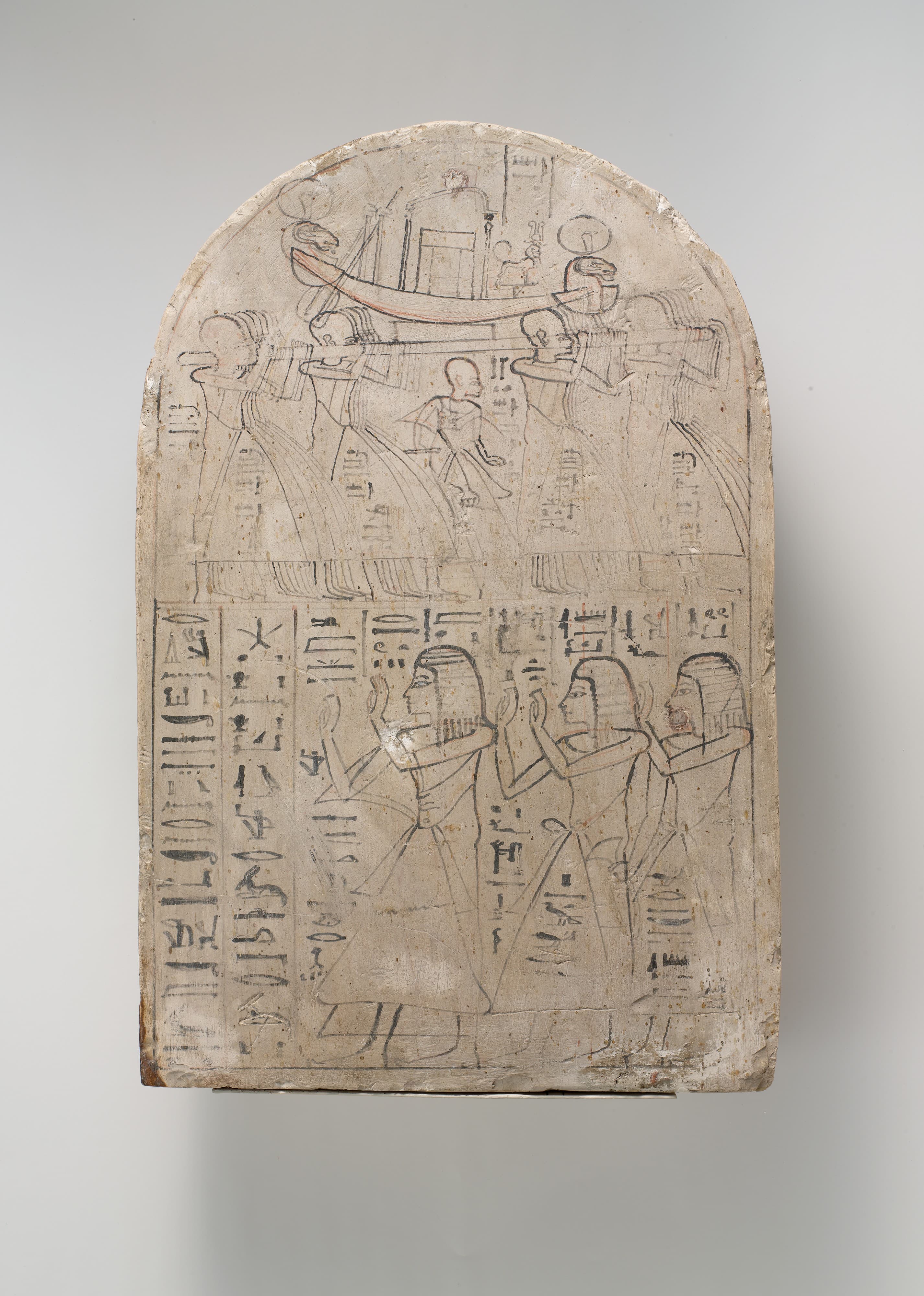
Stela of the royal scribe Amunnakht praising the divine barque of Amun-Re, Lord of the Thrones of the Two Lands
Ancient Egyptian (Unknown), -1070
The Metropolitan Museum of Art, New York