1400 – 1970
Art Movements & Eras
From the Renaissance to Pop Art, explore the movements that shaped art history. Each links to key artists and famous works.
Overview
- 29
- Movements
- 273
- Artists
- 3168
- Artworks
1400 – 1600
Renaissance
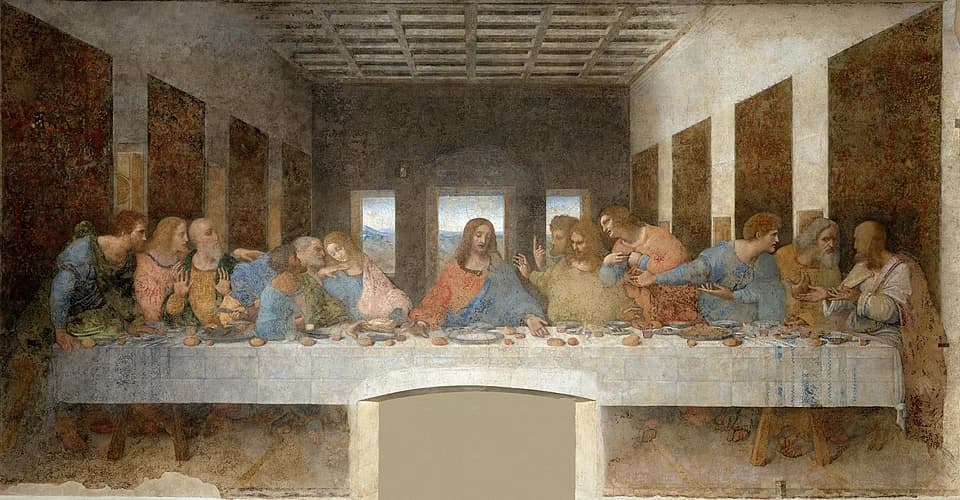
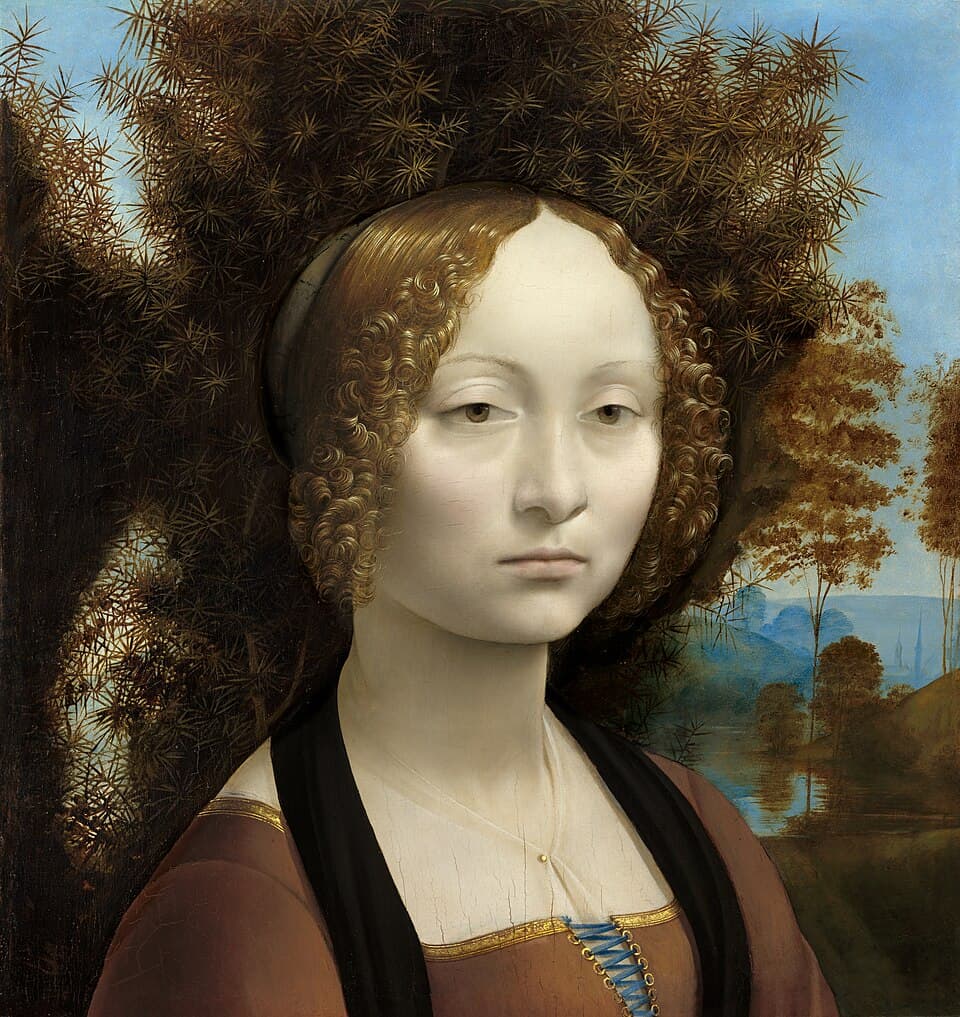
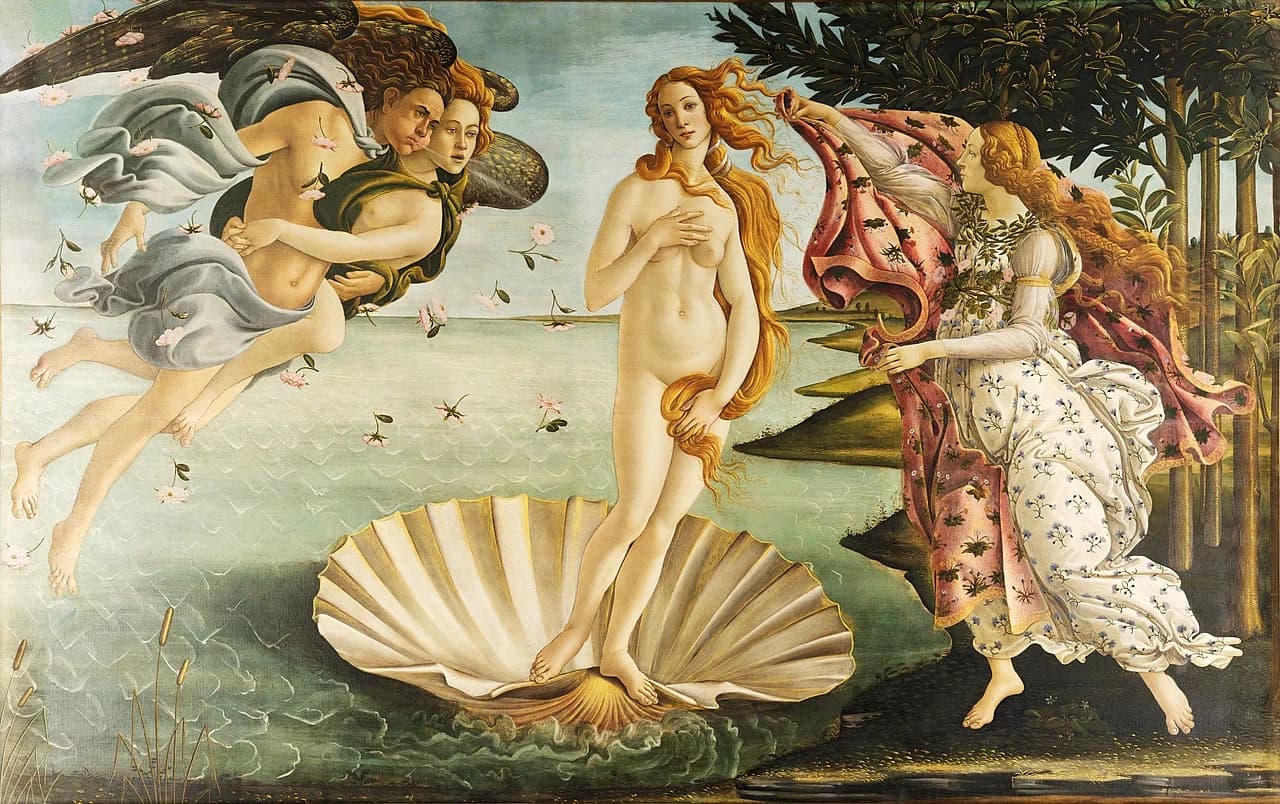
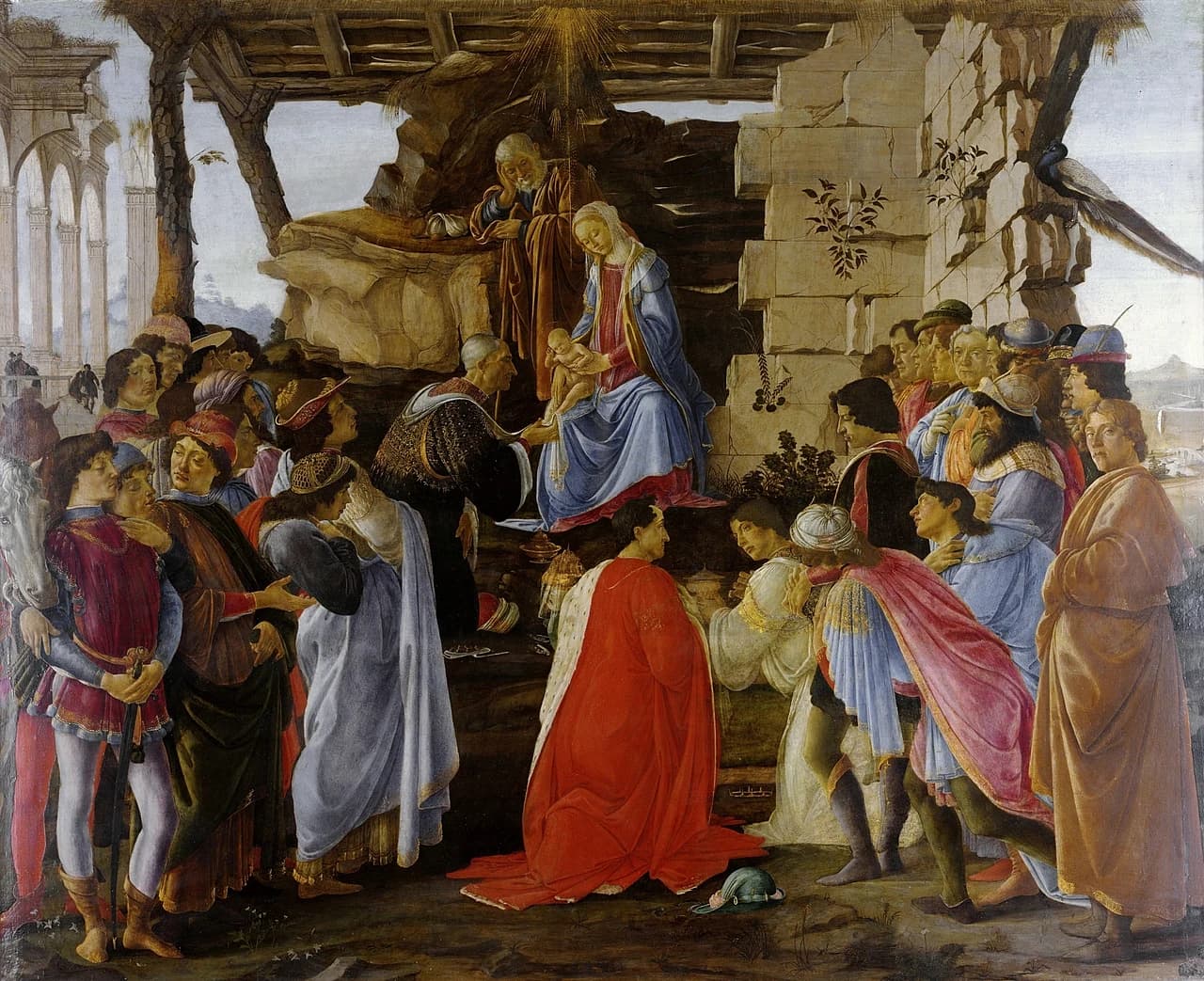
<p>The Renaissance began in Florence in the 14th century and spread across Italy and eventually Europe over the following two centuries, marking a deliberate return to the proportion, order, and human focus of classical Greek and Roman art. Painters developed linear perspective to create convincing depth on a flat surface, studied anatomy directly, and treated the human body as a subject worth rendering with scientific accuracy rather than the flatter, symbolic style of medieval painting.</p> <p><a href="/apps/masterpieces/artist/leonardo-da-vinci"><strong>Leonardo da Vinci</strong></a> combined this scientific curiosity with painterly subtlety, softening outlines through his sfumato technique in works like the <a href="/apps/masterpieces/art/mona-lisa"><strong>Mona Lisa</strong></a> and <a href="/apps/masterpieces/art/the-last-supper"><strong>The Last Supper</strong></a>. <a href="/apps/masterpieces/artist/michelangelo"><strong>Michelangelo</strong></a> approached painting as a sculptor, giving figures like those in <a href="/apps/masterpieces/art/the-creation-of-adam"><strong>The Creation of Adam</strong></a> a physical weight rarely seen before. <a href="/apps/masterpieces/artist/raphael"><strong>Raphael</strong></a> synthesized both approaches into a calm, balanced classicism, visible across the philosophers gathered in <a href="/apps/masterpieces/art/the-school-of-athens"><strong>The School of Athens</strong></a>. <a href="/apps/masterpieces/artist/sandro-botticelli"><strong>Sandro Botticelli</strong></a> painted mythological subjects with a linear grace that looked back to Gothic art even while embracing Renaissance humanism, most famously in <a href="/apps/masterpieces/art/the-birth-of-venus"><strong>The Birth of Venus</strong></a>. Venice developed its own branch of the movement through <a href="/apps/masterpieces/artist/titian"><strong>Titian</strong></a>, who favored rich color and looser brushwork over the precise line drawing preferred in Florence and Rome.</p>
Linear perspectiveNaturalistic human formsClassical themes
33 artists


1430 – 1580
Northern Renaissance
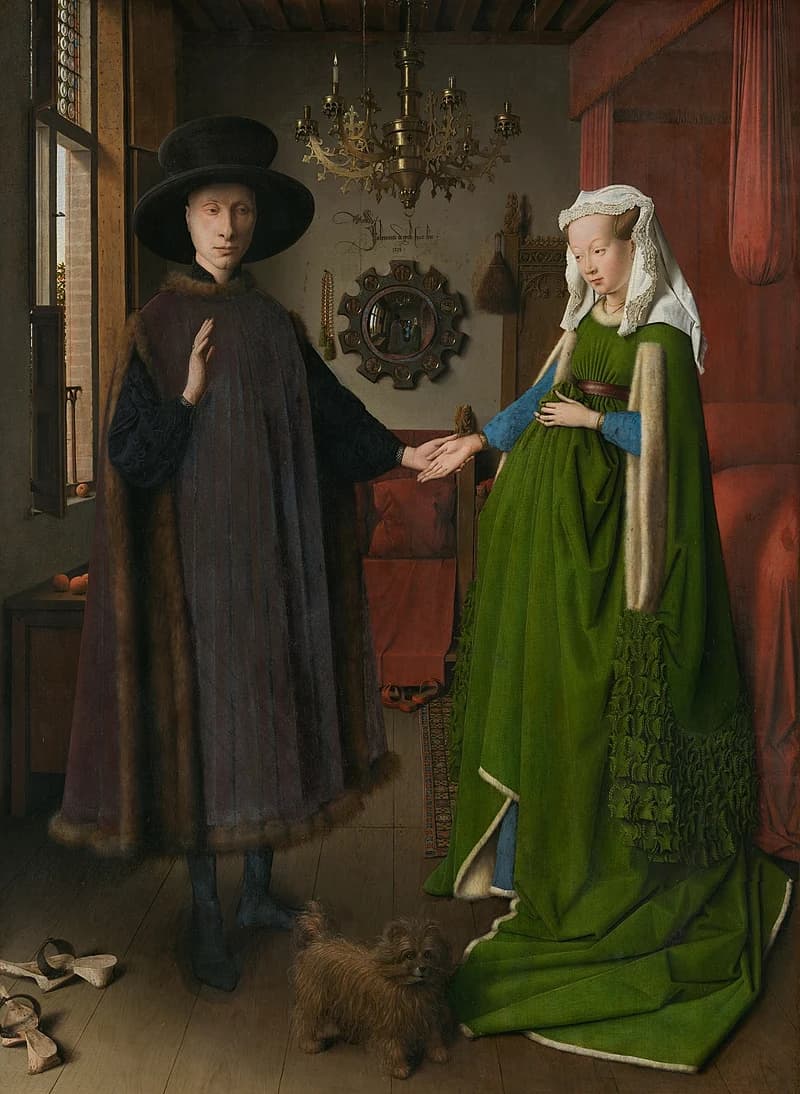
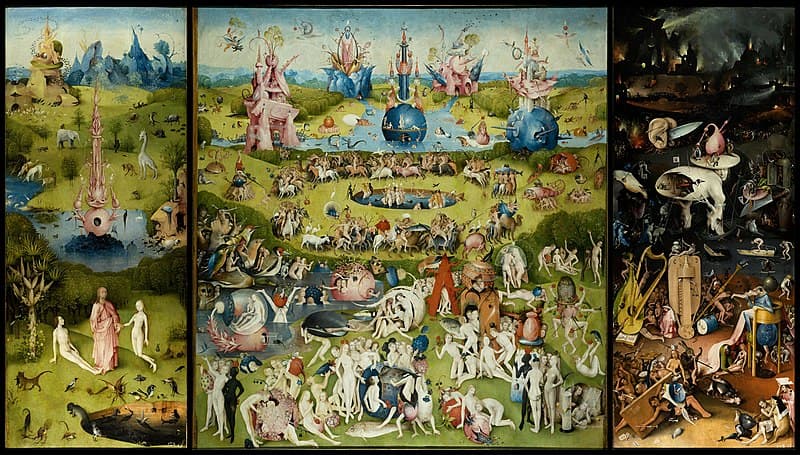
<p>The Northern Renaissance took hold across Flanders, the Netherlands, and Germany between roughly 1430 and 1580, developing alongside the Italian Renaissance but following its own path. Where Italian painters chased idealized proportion, Northern artists built their reputation on close observation: every fold of cloth, strand of hair, and reflection in a mirror rendered with almost obsessive precision. This attention to detail was made possible by a technical breakthrough. Painters in the region refined oil paint into a medium that could hold thin, layered glazes, letting light pass through and bounce back off the panel underneath.</p> <p><a href="/apps/masterpieces/artist/jan-van-eyck"><strong>Jan van Eyck</strong></a> is usually credited as the movement's founding figure. His <a href="/apps/masterpieces/art/arnolfini-portrait"><strong>Arnolfini Portrait</strong></a> and <a href="/apps/masterpieces/art/annunciation-van-eyck"><strong>The Annunciation</strong></a> show how a domestic interior or a shaft of light could carry layers of religious meaning without a single obvious symbol out of place. <a href="/apps/masterpieces/artist/albrecht-durer"><strong>Albrecht Dürer</strong></a> carried the tradition into printmaking and self-portraiture, most famously in his <a href="/apps/masterpieces/art/self-portrait-at-28"><strong>Self-Portrait at Twenty-Eight</strong></a>. <a href="/apps/masterpieces/artist/hieronymus-bosch"><strong>Hieronymus Bosch</strong></a>, <a href="/apps/masterpieces/artist/hugo-van-der-goes"><strong>Hugo van der Goes</strong></a>, and <a href="/apps/masterpieces/artist/lucas-cranach-elder"><strong>Lucas Cranach the Elder</strong></a> each pushed the style in different directions, from fantastical moral allegory to court portraiture, but all shared the same commitment to rendering the physical world exactly as the eye could see it.</p>

1450 – 1800
Venetian School
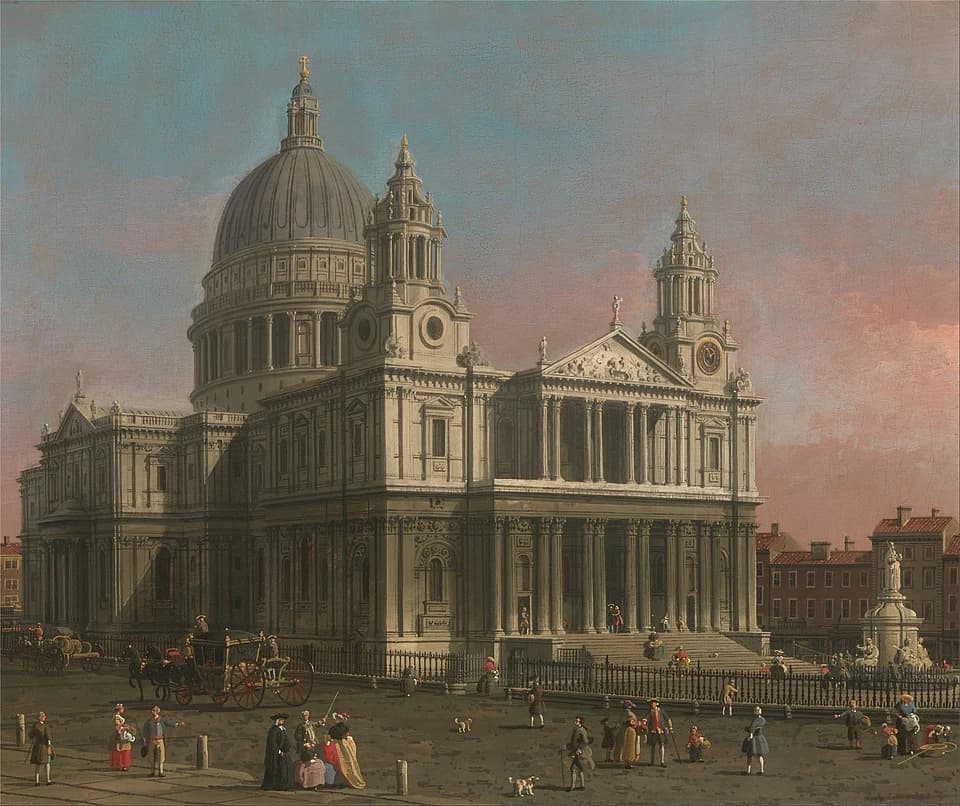
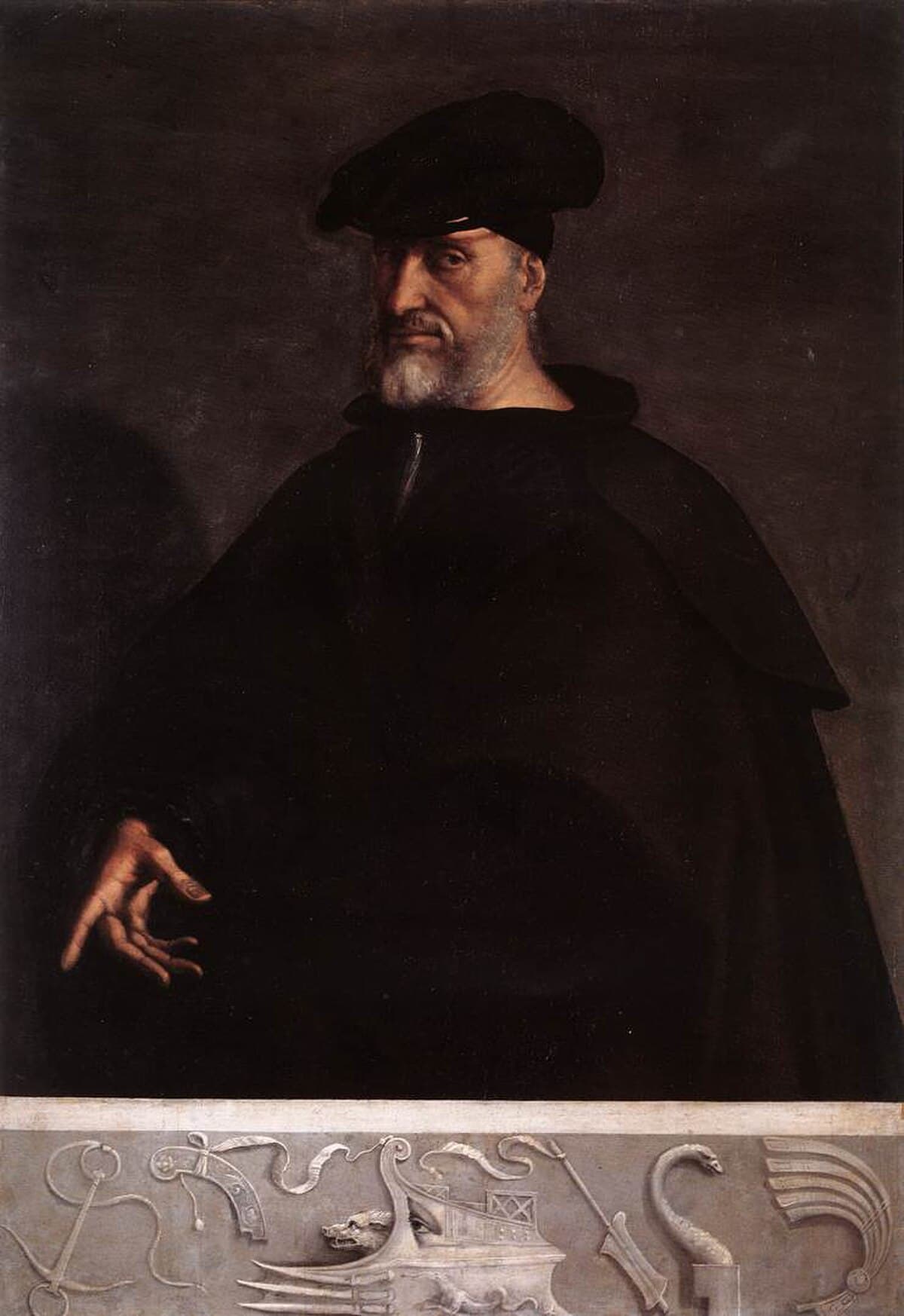
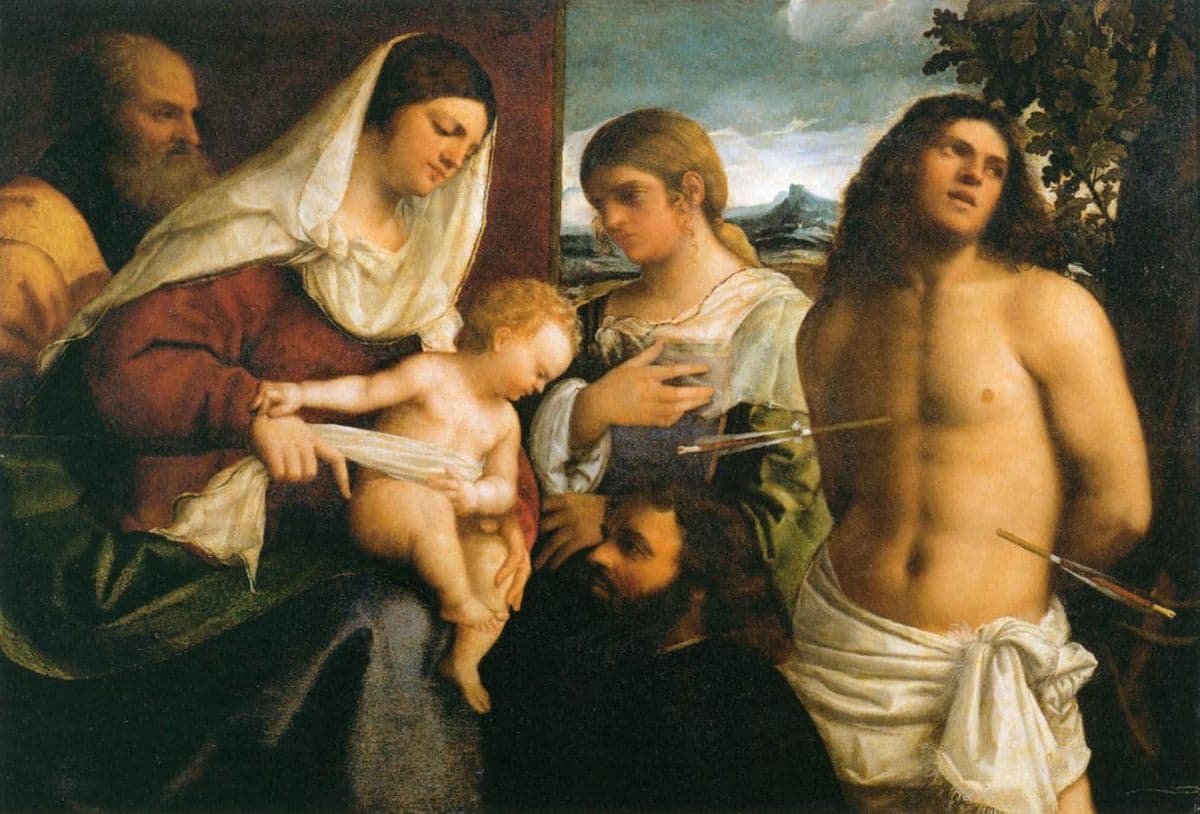
<p>The Venetian School developed alongside the Florentine and Roman branches of the Italian Renaissance but took a distinctly different path, one shaped by Venice's maritime trade, its unique quality of light reflected off the surrounding lagoon, and its access to pigments imported through its port. Where Florentine painters prized precise line and drawing, Venetian painters built their pictures through color and layered brushwork, often applying paint directly onto canvas rather than working out every detail in a preliminary drawing first.</p> <p><a href="/apps/masterpieces/artist/sebastiano-del-piombo"><strong>Sebastiano del Piombo</strong></a> trained in Venice before moving to Rome, carrying the school's rich color sense into his later portraits and religious works. <a href="/apps/masterpieces/artist/palma-vecchio"><strong>Palma Vecchio</strong></a> and <a href="/apps/masterpieces/artist/paris-bordone"><strong>Paris Bordone</strong></a> specialized in half-length female portraits and mythological subjects built around warm, glowing flesh tones, a hallmark of the Venetian approach to color. <a href="/apps/masterpieces/artist/jacopo-bassano"><strong>Jacopo Bassano</strong></a> worked from the nearby town of Bassano del Grappa, bringing rural genre detail into religious scenes. By the 18th century, the tradition had shifted from religious and mythological subjects toward the city itself, with <a href="/apps/masterpieces/artist/canaletto"><strong>Canaletto</strong></a> painting precise, light-filled views of the canals in works like <a href="/apps/masterpieces/art/grand-canal-canaletto"><strong>The Grand Canal and the Church of the Salute</strong></a> and <a href="/apps/masterpieces/art/bucintoro-molo"><strong>The Bucintoro at the Molo</strong></a>, made for wealthy tourists on the Grand Tour.</p>

1520 – 1600
Mannerism
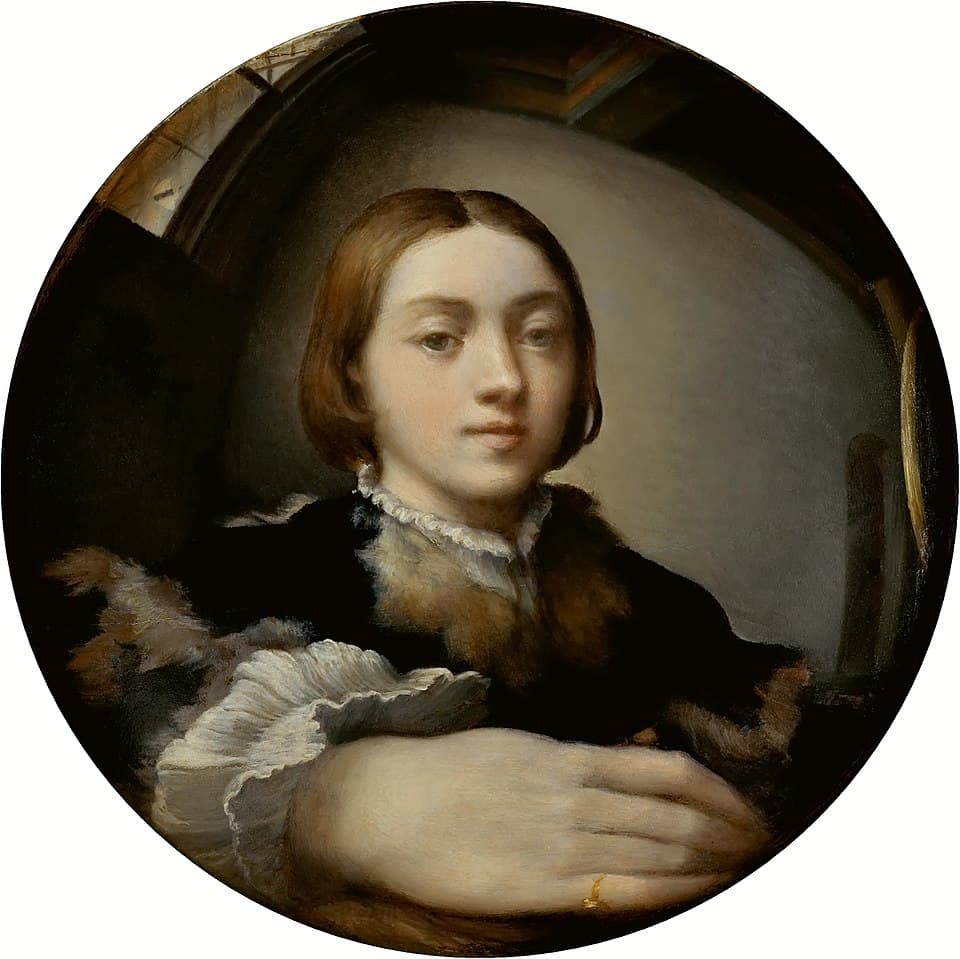
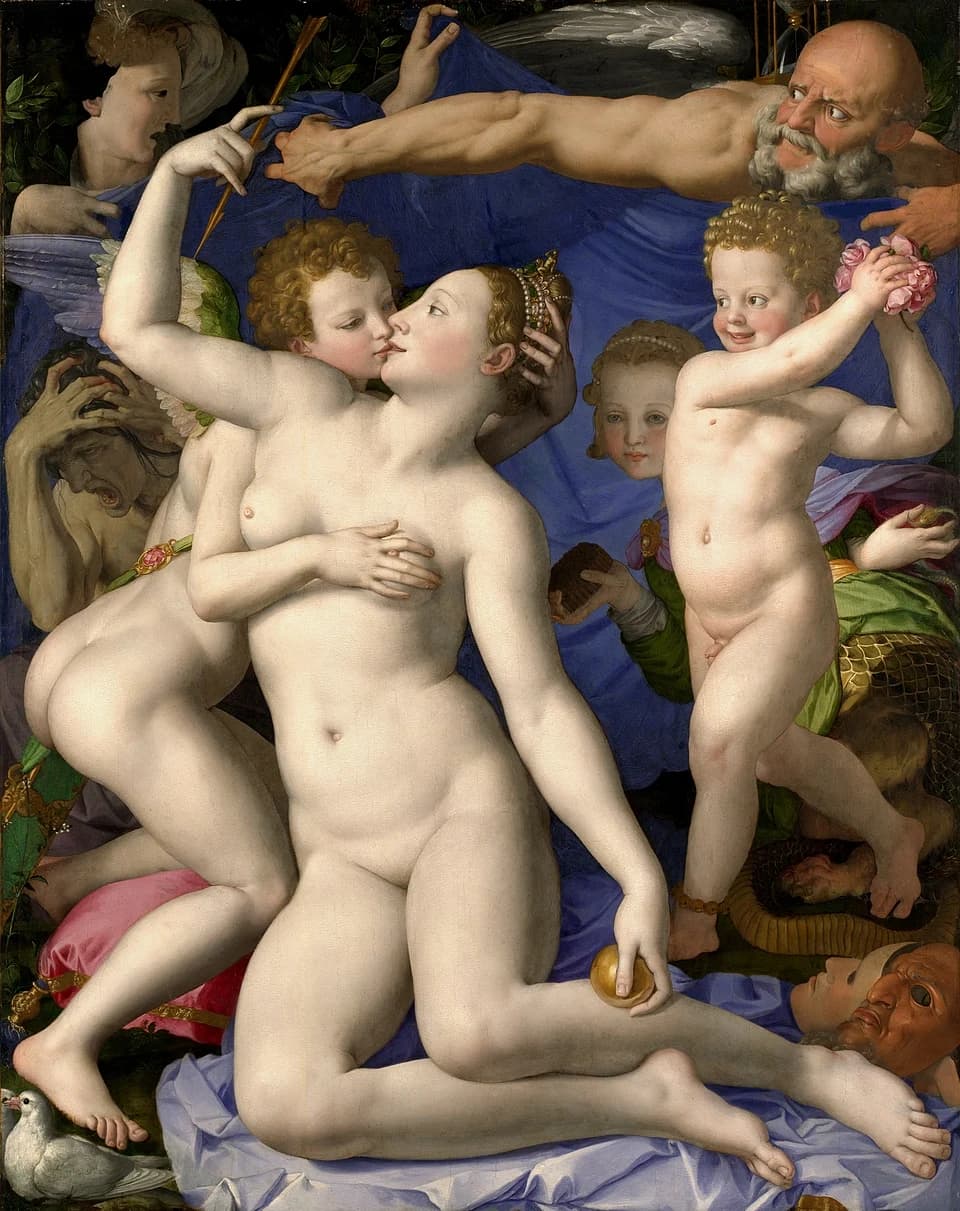
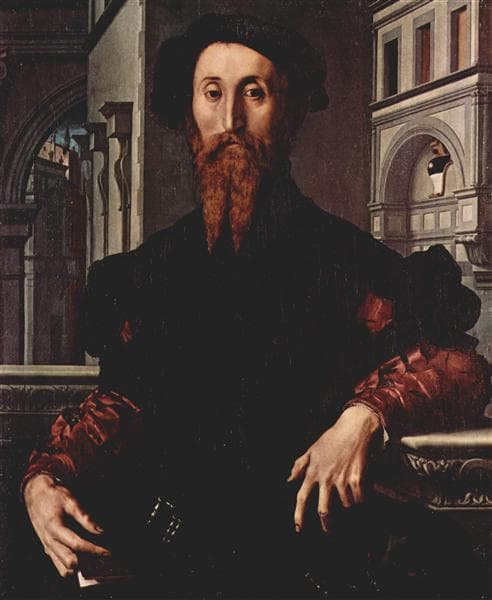
<p>Mannerism took shape in Italy around 1520, in the years after Raphael's death, when a new generation of painters began pushing away from the balanced naturalism of the High Renaissance. Where earlier artists sought harmony and correct proportion, Mannerist painters like <a href="/apps/masterpieces/artist/parmigianino"><strong>Parmigianino</strong></a> and <a href="/apps/masterpieces/artist/bronzino"><strong>Bronzino</strong></a> stretched the human figure into elegant, almost impossible poses. Necks lengthen, limbs curve, and space compresses or twists in ways that favor style over strict realism. It's a deliberate artificiality, and that's the whole point: the term "maniera" originally just meant a refined, self-conscious way of painting.</p> <p>The movement's visual signature includes elongated proportions, crowded and ambiguous spatial arrangements, cool acidic color combinations, and subjects loaded with allegory or private symbolism. Parmigianino's <a href="/apps/masterpieces/art/madonna-with-the-long-neck"><strong>Madonna with the Long Neck</strong></a> is maybe the clearest example: the Virgin's neck and fingers stretch far past anatomical reality, and the architecture behind her makes no logical sense. Bronzino's <a href="/apps/masterpieces/art/venus-cupid-folly-and-time"><strong>Venus, Cupid, Folly and Time</strong></a> layers in coded meanings about desire and deceit that art historians still debate. <a href="/apps/masterpieces/artist/correggio"><strong>Correggio</strong></a> pushed illusionistic ceiling painting further than anyone before him, while <a href="/apps/masterpieces/artist/jacopo-bassano"><strong>Jacopo Bassano</strong></a> brought a rougher, more rustic version of the style to religious scenes.</p> <p>Mannerism thrived at courts in Florence, Parma, and Fontainebleau, where patrons valued wit and sophistication over plain description. By 1600 it gave way to the Baroque, but its taste for distortion and drama never fully disappeared from European painting.</p>
1588 – 1672
Dutch Golden Age
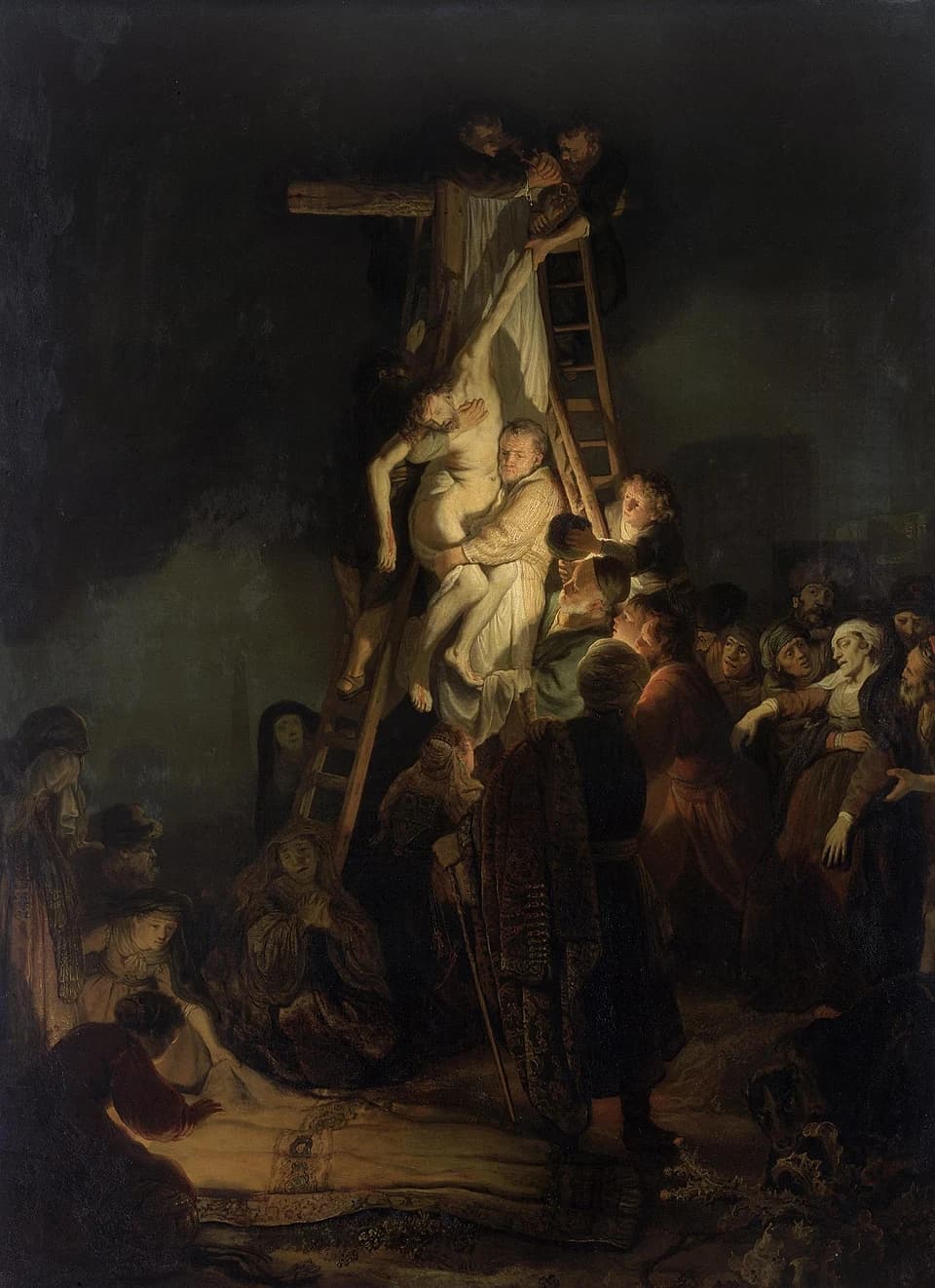
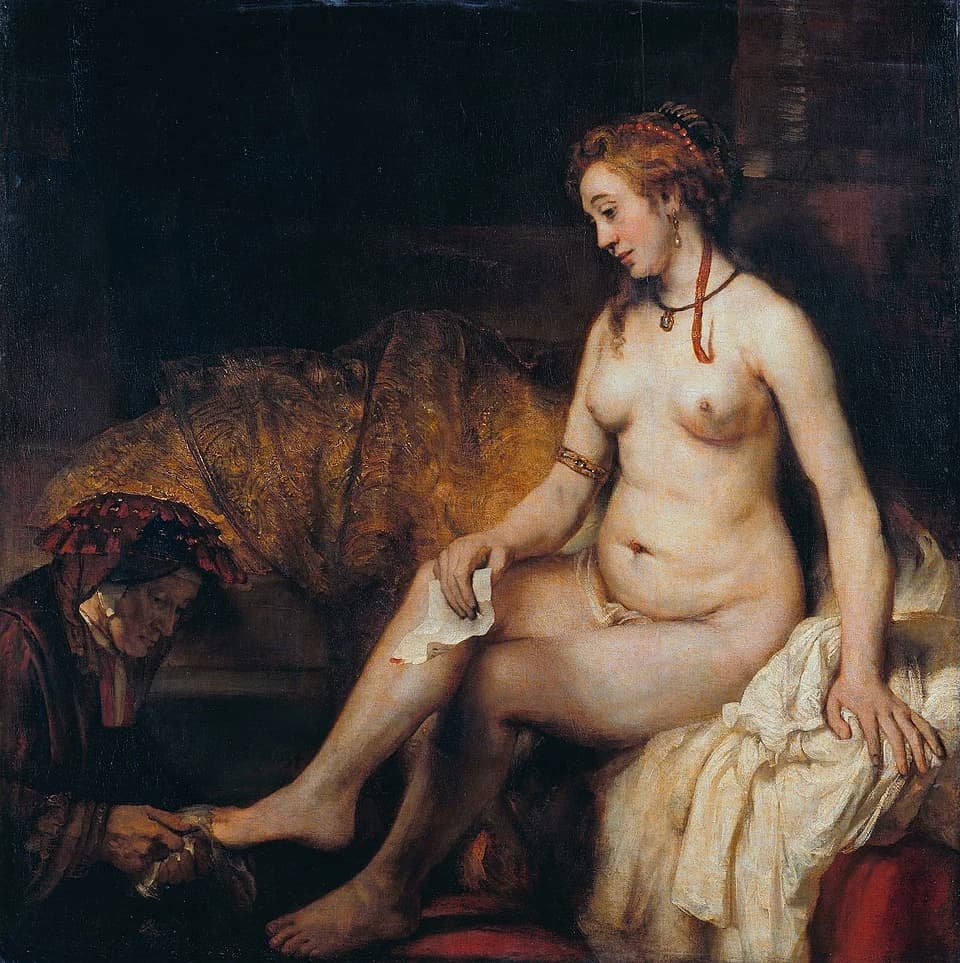
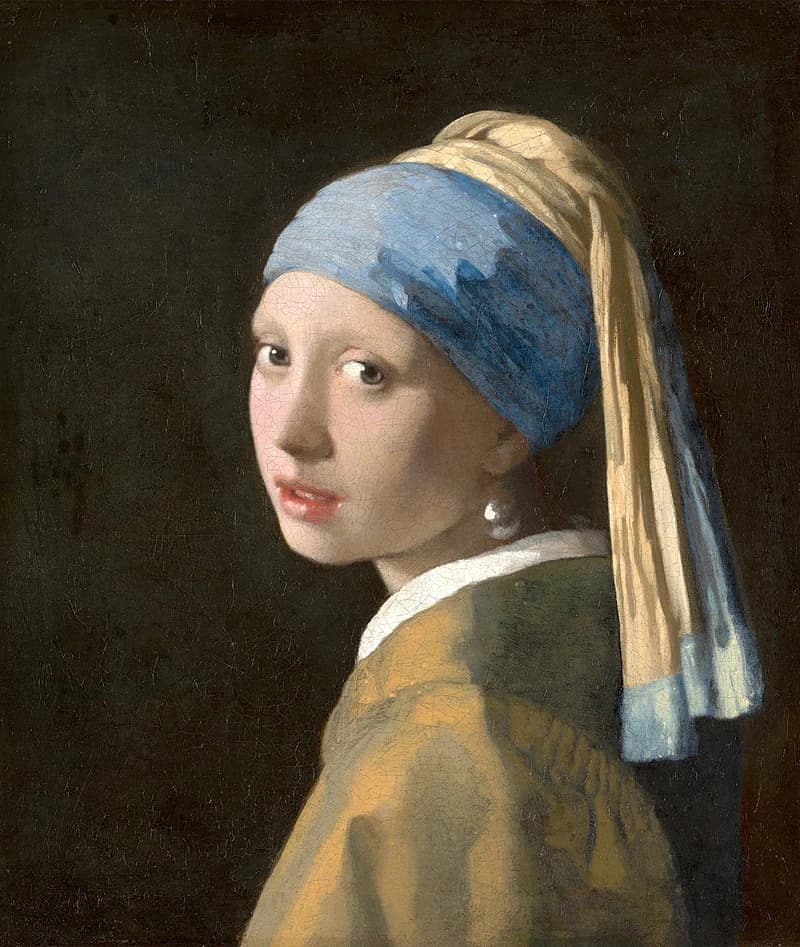
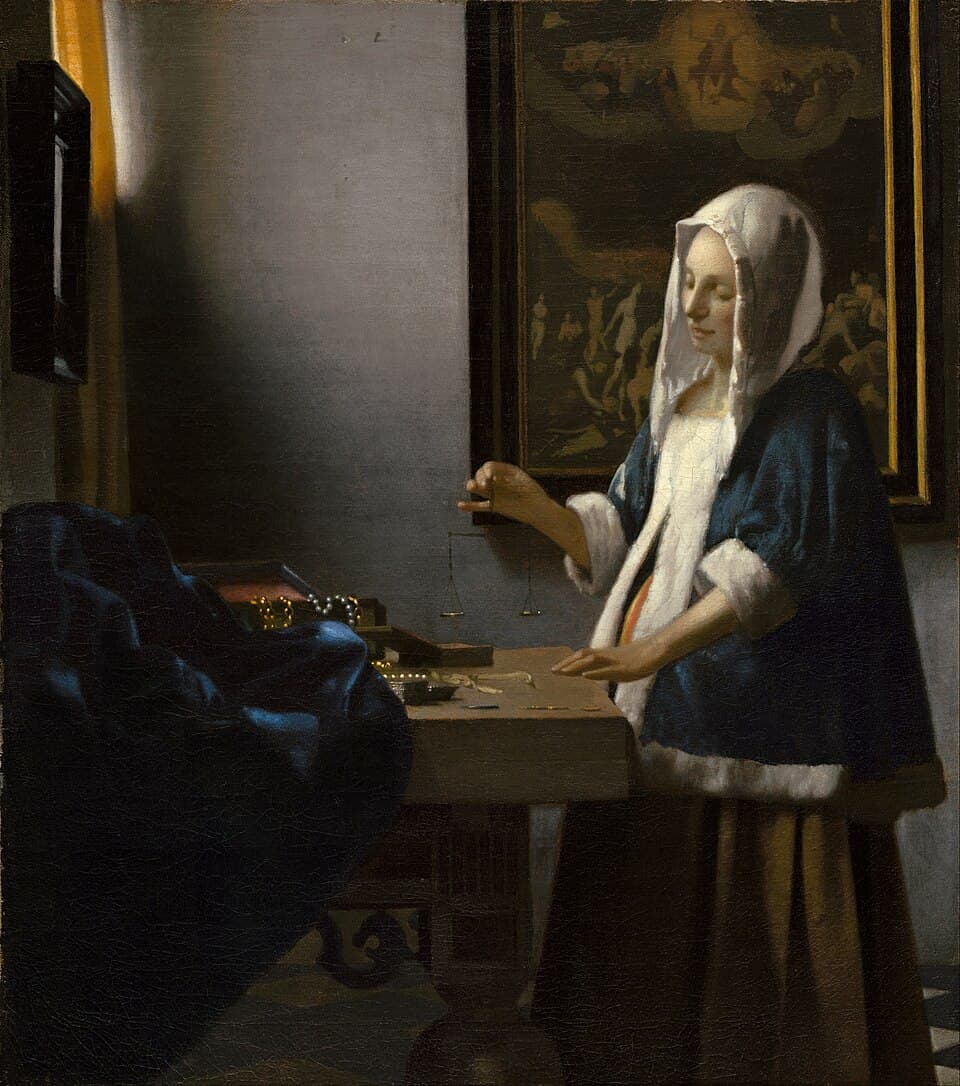
<p>The Dutch Golden Age ran roughly from 1588 to 1672, coinciding with the young Dutch Republic's rise as one of the wealthiest trading powers in the world. Without a royal court or a dominant Catholic Church commissioning religious art, Dutch painters instead sold directly to a growing merchant class, which created strong demand for portraits, landscapes, still lifes, and quiet domestic scenes rather than grand historical subjects.</p> <p><a href="/apps/masterpieces/artist/johannes-vermeer"><strong>Johannes Vermeer</strong></a> specialized in intimate interior scenes lit by a single window, most famously in <a href="/apps/masterpieces/art/girl-with-a-pearl-earring"><strong>Girl with a Pearl Earring</strong></a>, and in quieter works like <a href="/apps/masterpieces/art/woman-holding-balance"><strong>Woman Holding a Balance</strong></a>, where a woman weighs coins under a painting of the Last Judgment. <a href="/apps/masterpieces/artist/rembrandt"><strong>Rembrandt</strong></a> worked on a larger scale, producing portraits, biblical scenes, and self-portraits that traced his own aging face across four decades, all built on his mastery of light and shadow.</p> <p><a href="/apps/masterpieces/artist/jan-steen"><strong>Jan Steen</strong></a> painted crowded, comic household scenes meant as moral warnings dressed up as entertainment, while <a href="/apps/masterpieces/artist/jacob-van-ruisdael"><strong>Jacob van Ruisdael</strong></a> painted landscapes with dramatic skies and windmills that became shorthand for the Dutch countryside itself. <a href="/apps/masterpieces/artist/pieter-de-hooch"><strong>Pieter de Hooch</strong></a> painted courtyards and doorways with the same calm attention to light as Vermeer. Together these painters produced an enormous body of work, more per capita than any other country of the era.</p>
1600 – 1900
Ukiyo-e
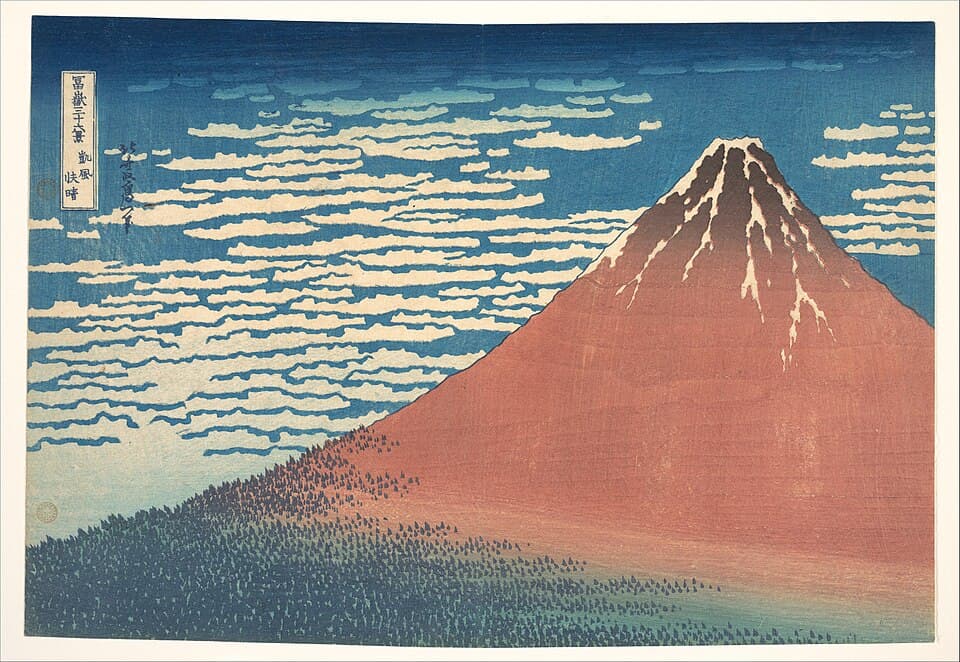
<p>Ukiyo-e, meaning "pictures of the floating world," developed in Japan starting around 1600 and remained popular through the Edo period into the late 19th century. The genre began with paintings of the era's pleasure districts, capturing kabuki actors, courtesans, and city life, before woodblock printing turned it into a mass medium that could reach ordinary buyers rather than only wealthy patrons. Prints were produced through a division of labor between the artist, a block carver, and a printer, allowing thousands of copies of a single design.</p> <p><a href="/apps/masterpieces/artist/katsushika-hokusai"><strong>Katsushika Hokusai</strong></a> pushed the genre toward landscape late in his career, moving away from the actors and courtesans that had dominated earlier ukiyo-e. His <a href="/apps/masterpieces/art/great-wave-off-kanagawa"><strong>The Great Wave off Kanagawa</strong></a> became one of the most recognized images in art history, part of his series depicting Mount Fuji from different vantage points across the Japanese landscape, which also included <a href="/apps/masterpieces/art/red-fuji-hokusai"><strong>Fine Wind, Clear Morning</strong></a>. These prints reached Europe in the second half of the 19th century and had a direct, well-documented influence on painters including Van Gogh, Monet, and Toulouse-Lautrec, who collected them and borrowed their flattened perspective and bold outline.</p>
Woodblock printingFlat color areasBold outlines
1600 – 1750
Baroque
<p>Baroque art emerged in Rome around 1600, largely as a tool of the Catholic Church during the Counter-Reformation, when religious paintings needed to move ordinary worshippers emotionally rather than just instruct them. The style spread quickly across Catholic and Protestant Europe alike, adapting to court portraiture in Spain, still-life painting in the Dutch Republic, and grand ceiling decoration in Italy.</p> <p><a href="/apps/masterpieces/artist/caravaggio"><strong>Caravaggio</strong></a> set the tone with his violent use of chiaroscuro, plunging most of a scene into darkness while a single shaft of light hits the main action. <a href="/apps/masterpieces/artist/peter-paul-rubens"><strong>Peter Paul Rubens</strong></a> brought a more exuberant, muscular version of the style to Flanders, full of movement and rich color. In Spain, <a href="/apps/masterpieces/artist/diego-velazquez"><strong>Diego Velázquez</strong></a> painted the royal court with unmatched psychological subtlety, most famously in <a href="/apps/masterpieces/art/las-meninas"><strong>Las Meninas</strong></a>, a painting still studied for how it plays with the viewer's own position in the room. His <a href="/apps/masterpieces/art/portrait-innocent-x"><strong>Portrait of Innocent X</strong></a> is considered one of the greatest portraits ever painted, and the sitter himself reportedly called it "too truthful."</p> <p><a href="/apps/masterpieces/artist/rembrandt"><strong>Rembrandt</strong></a> and <a href="/apps/masterpieces/artist/johannes-vermeer"><strong>Johannes Vermeer</strong></a> represent the quieter, more introspective Dutch branch of the style, while <a href="/apps/masterpieces/artist/artemisia-gentileschi"><strong>Artemisia Gentileschi</strong></a> pushed Caravaggio's dramatic lighting into some of the era's most forceful depictions of biblical women. Baroque painting eventually softened into the lighter Rococo style during the early 1700s.</p>
1650 – 1900
Academic Art
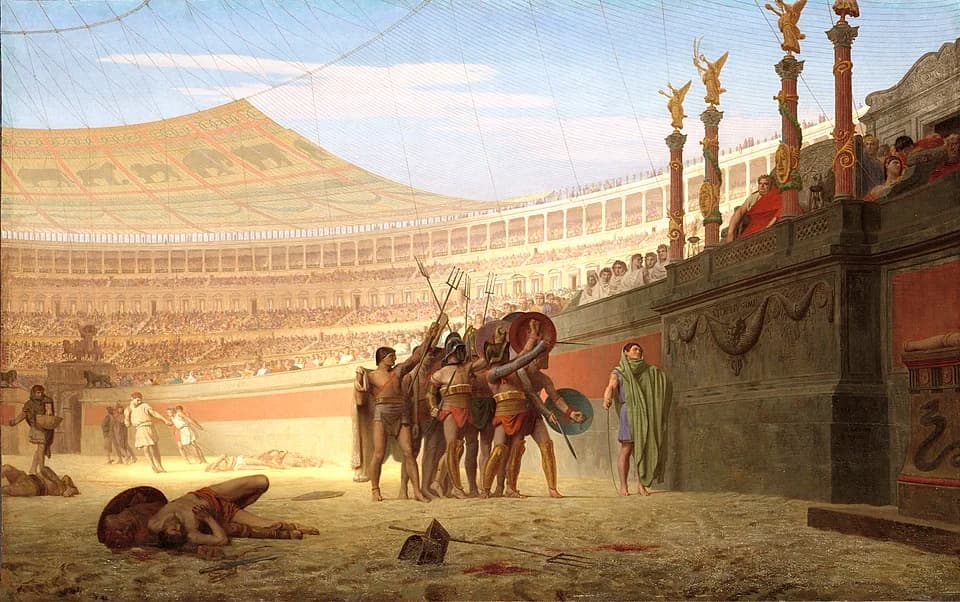
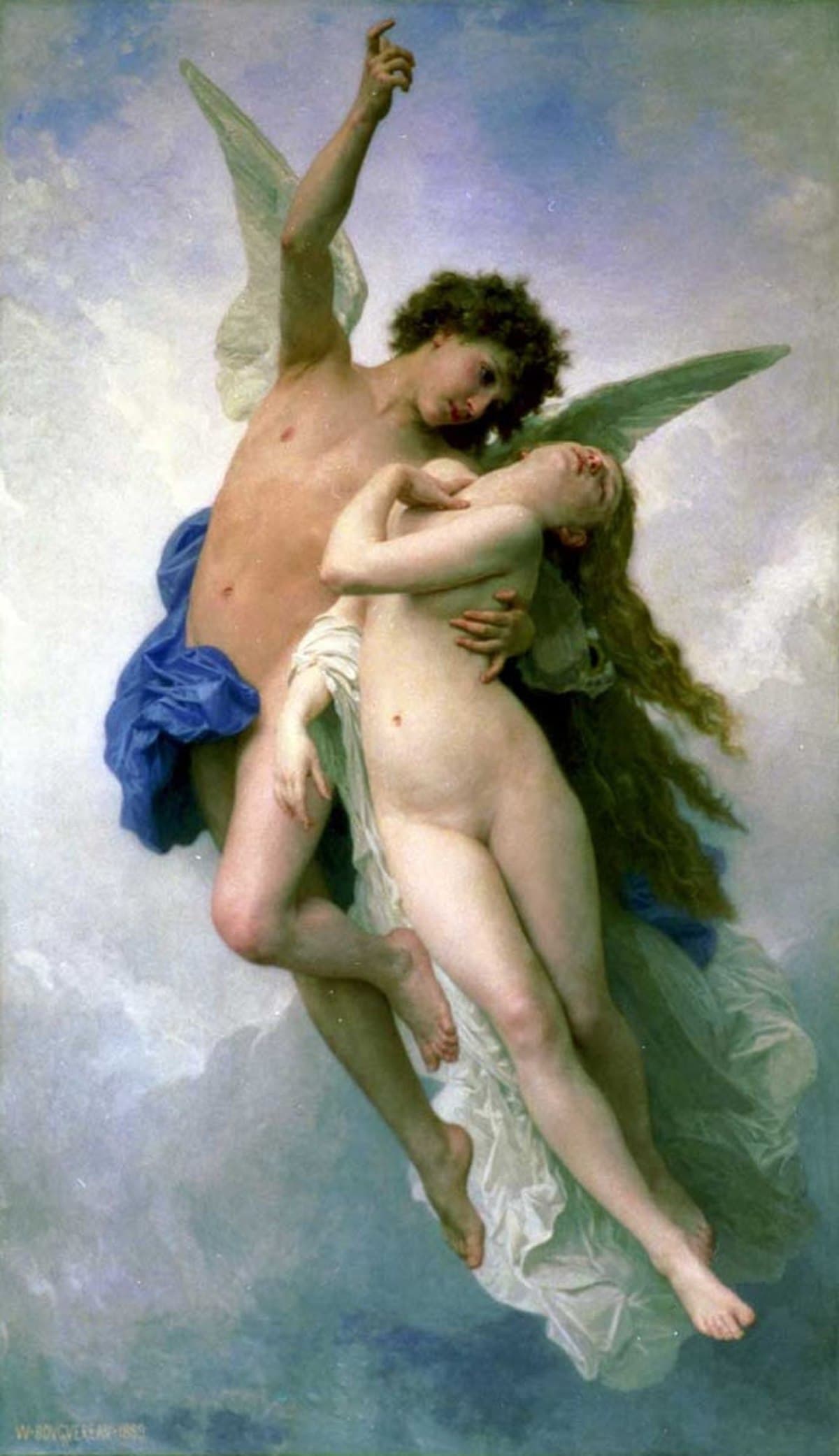
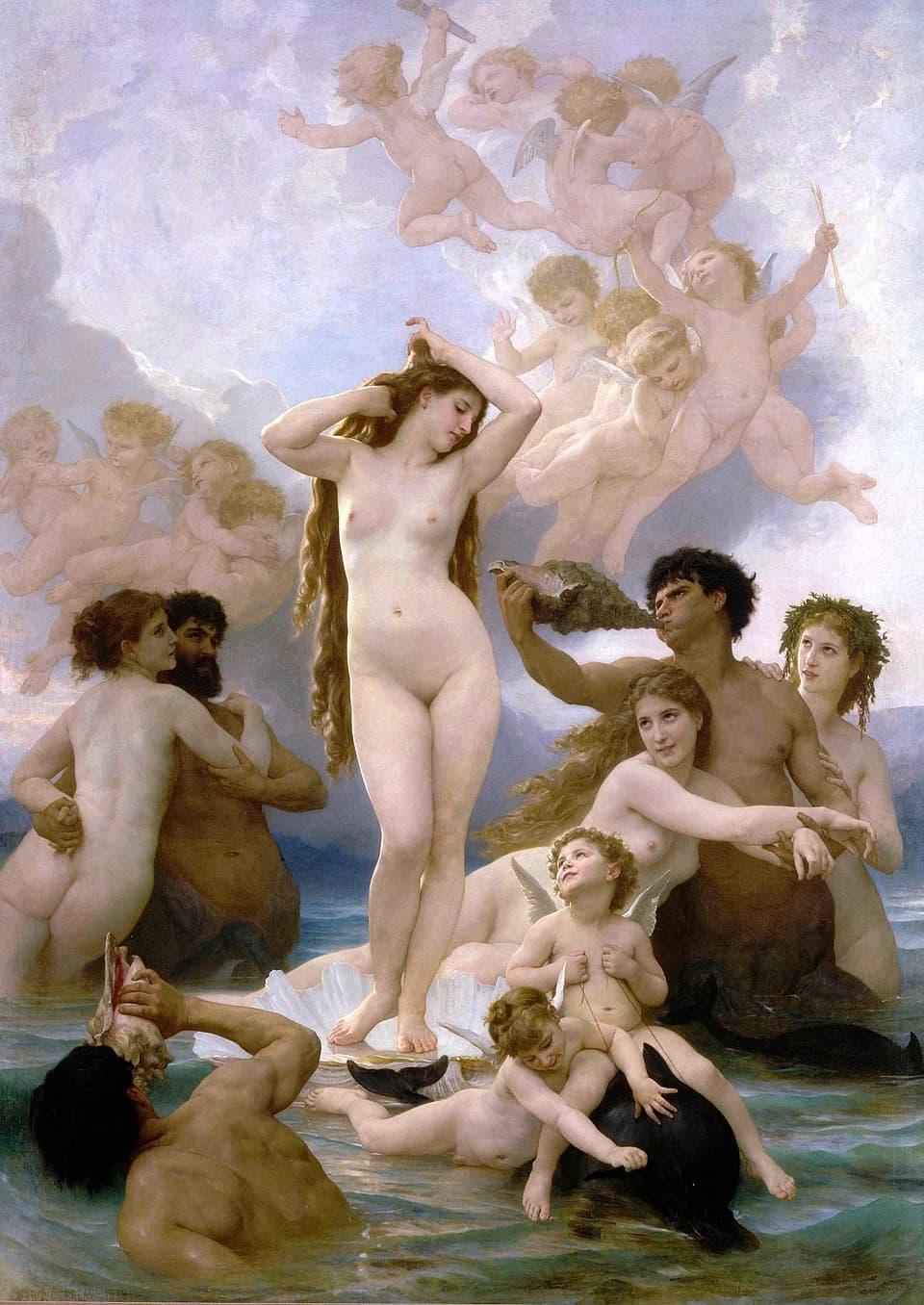
<p>Academic Art describes the polished, rule-bound style taught and rewarded by Europe's official art academies, above all the French Académie des Beaux-Arts, from the mid-1600s through the end of the 1800s. Students trained for years copying classical sculpture and Old Master paintings before earning permission to paint their own subjects, and the academies controlled which works got shown in the annual Salon exhibitions that made or broke careers.</p> <p>The style favored smooth, invisible brushwork, idealized anatomy, and subjects drawn from mythology, ancient history, or moralizing genre scenes. <a href="/apps/masterpieces/artist/william-adolphe-bouguereau"><strong>William-Adolphe Bouguereau</strong></a> became its best-known practitioner, painting flawless nudes and peasant children with a finish so smooth the brushstrokes disappear entirely. <a href="/apps/masterpieces/artist/alexandre-cabanel"><strong>Alexandre Cabanel</strong></a>'s <a href="/apps/masterpieces/art/birth-venus-cabanel"><strong>The Birth of Venus</strong></a> won Napoleon III's personal admiration at the 1863 Salon, the same year the Impressionists were being rejected by the same jury. <a href="/apps/masterpieces/artist/jean-leon-gerome"><strong>Jean-Léon Gérôme</strong></a> specialized in Orientalist and historical scenes rendered with almost photographic precision, as in <a href="/apps/masterpieces/art/pollice-verso"><strong>Pollice Verso</strong></a>, his gladiator arena scene.</p> <p><a href="/apps/masterpieces/artist/frederic-leighton"><strong>Frederic Leighton</strong></a> and <a href="/apps/masterpieces/artist/lawrence-alma-tadema"><strong>Lawrence Alma-Tadema</strong></a> brought the same technical polish to Victorian Britain, imagining ancient Rome and Greece in marble-heavy detail. Academic Art fell out of favor once modernist movements took hold in the early 20th century, dismissed for decades as stiff and sentimental, though its technical skill has drawn renewed appreciation in recent years.</p>
1720 – 1780
Rococo
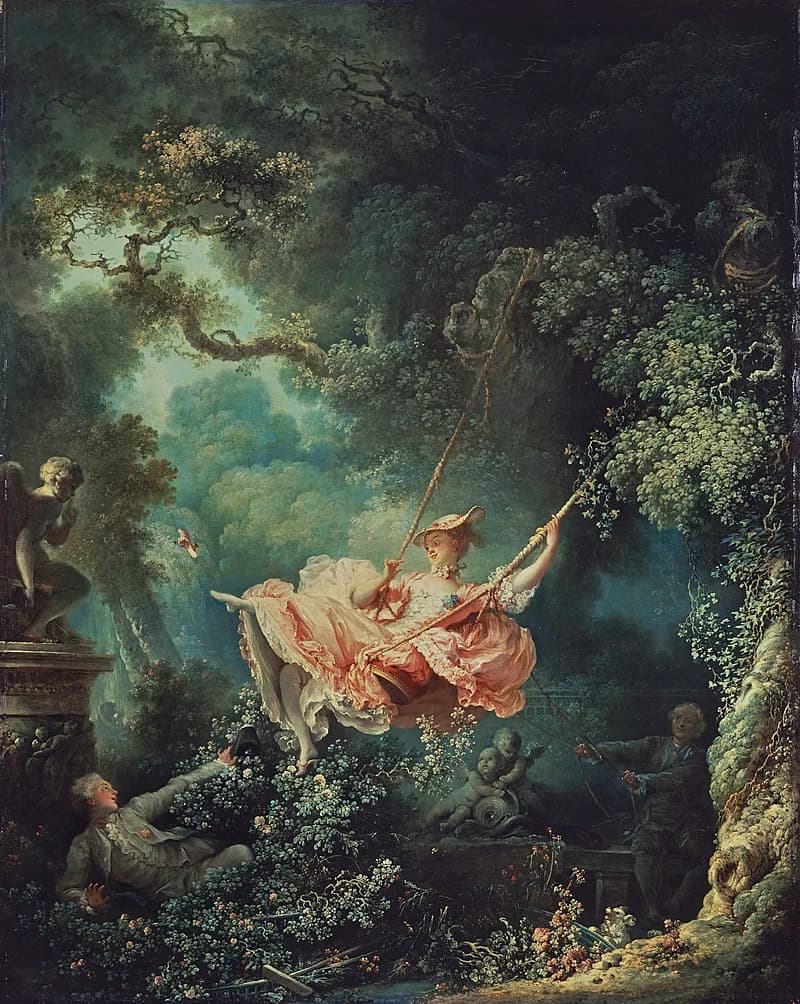
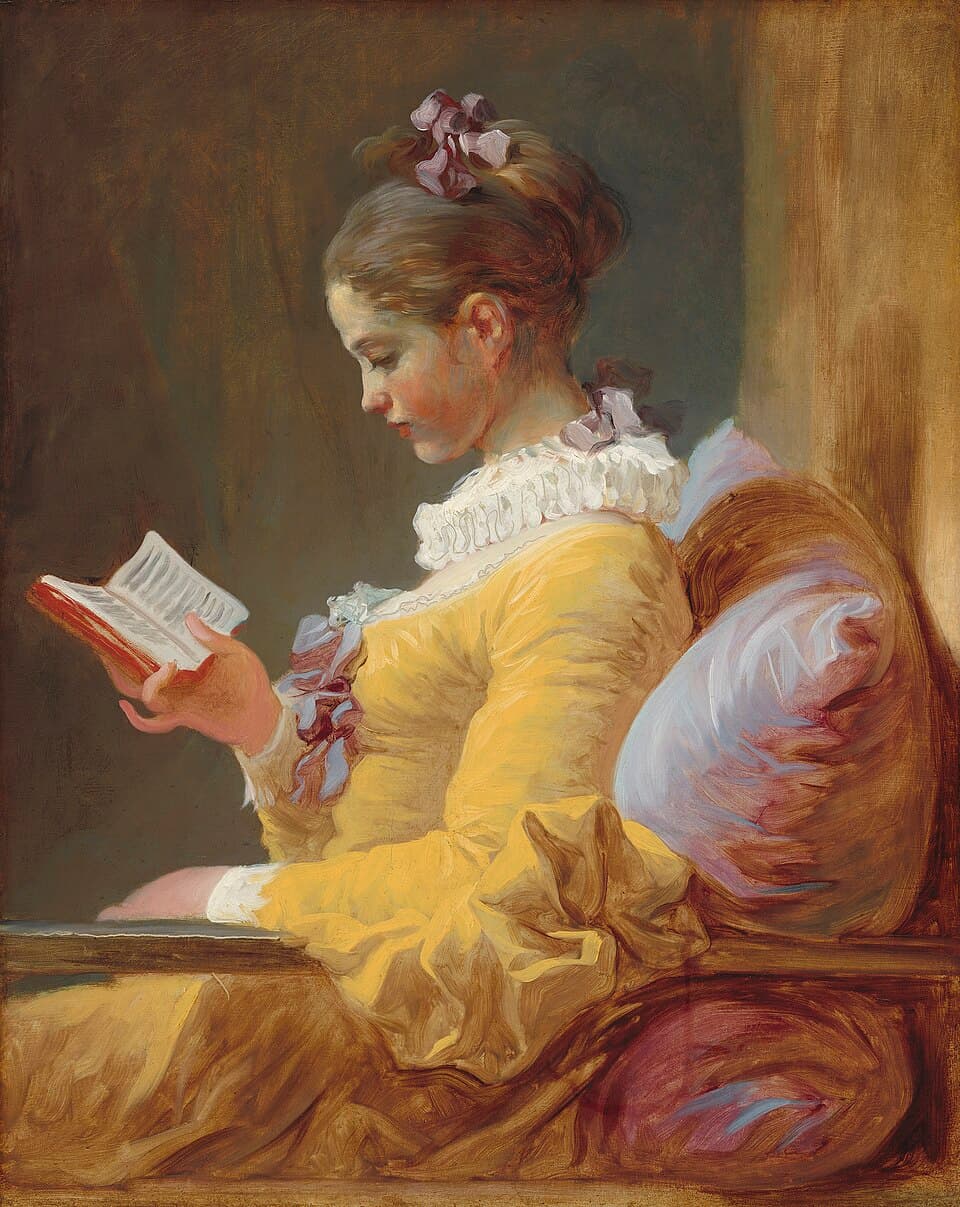
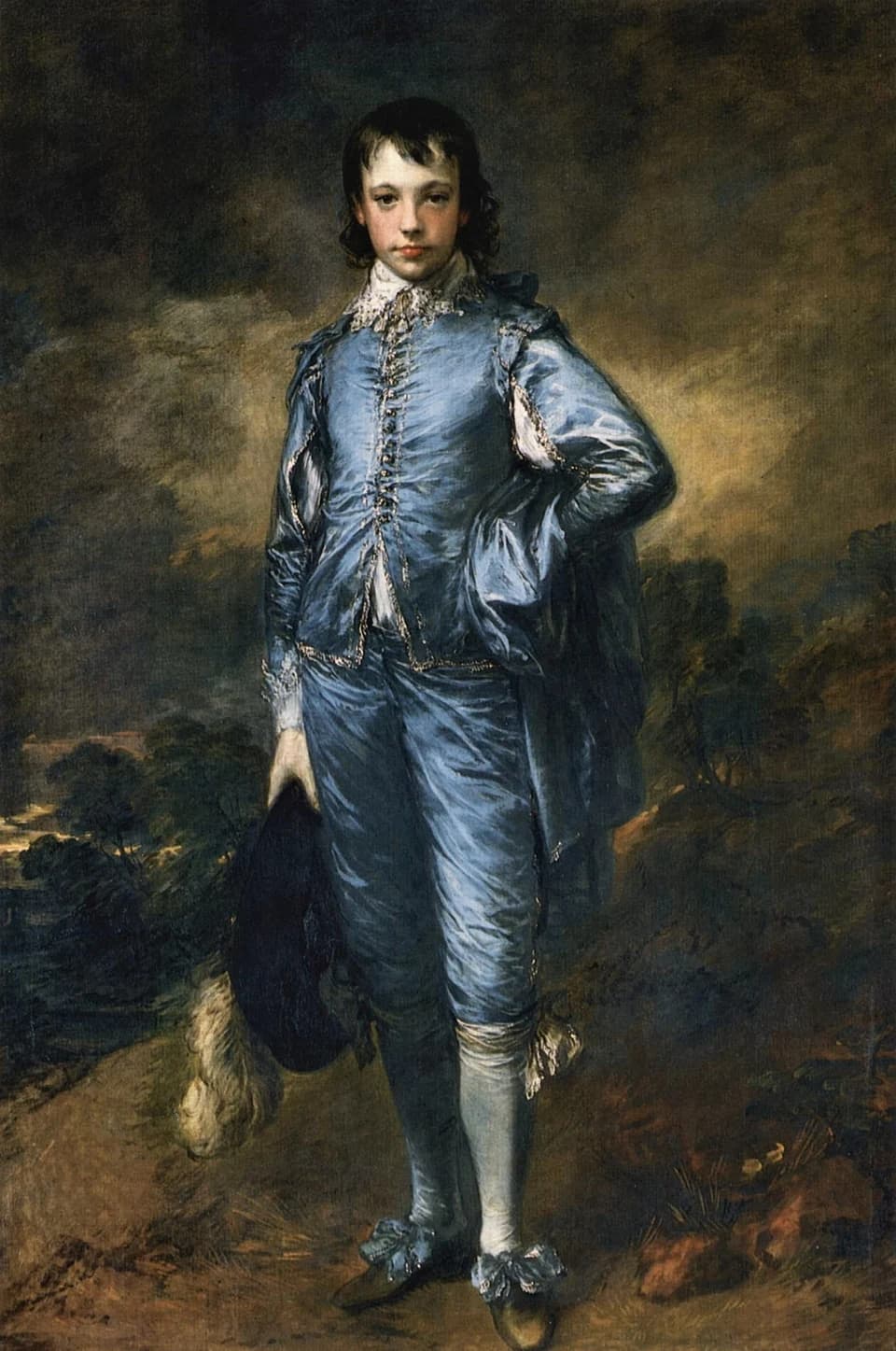
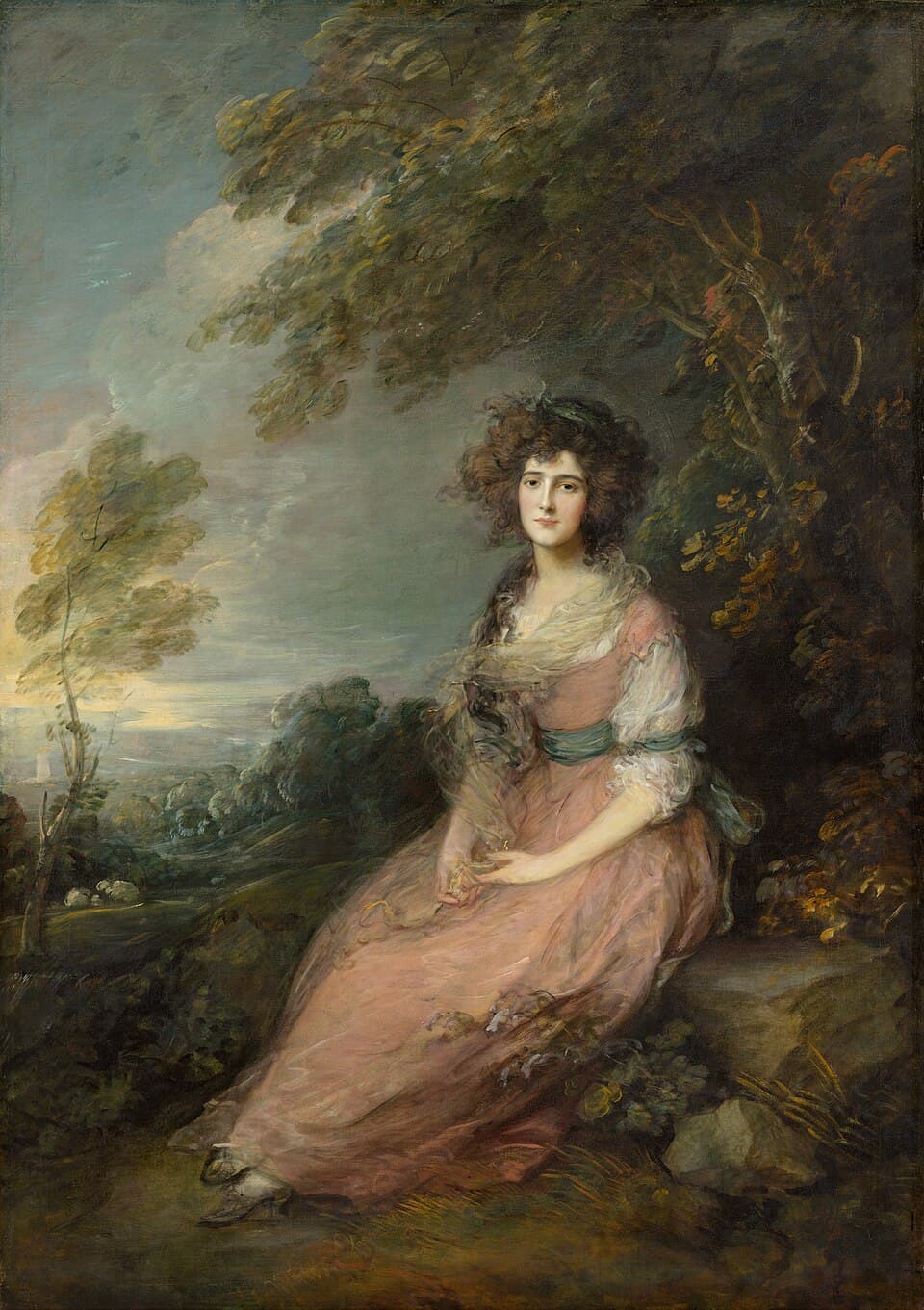
<p>Rococo developed in France in the early 1720s as a lighter, more playful reaction against the grandeur and formality of the Baroque style that had dominated court art under Louis XIV. Where Baroque painting favored drama and weighty religious or historical subjects, Rococo painters turned to romance, flirtation, and leisure, working in pastel colors, curving compositions, and delicate brushwork suited to the smaller, more intimate rooms of aristocratic townhouses rather than palace halls.</p> <p><a href="/apps/masterpieces/artist/jean-honore-fragonard"><strong>Jean-Honoré Fragonard</strong></a> captured the style's playful spirit in <a href="/apps/masterpieces/art/the-swing"><strong>The Swing</strong></a>, where a young woman kicks off her slipper toward a hidden admirer. <a href="/apps/masterpieces/artist/jean-antoine-watteau"><strong>Jean-Antoine Watteau</strong></a> is generally credited with launching the style through his fêtes galantes, paintings of elegantly dressed figures at outdoor gatherings that blur the line between reality and theater. <a href="/apps/masterpieces/artist/francois-boucher"><strong>François Boucher</strong></a> became the preferred painter of the French court under Louis XV, producing mythological scenes with the same soft sensibility found in his portraits. Beyond France, <a href="/apps/masterpieces/artist/thomas-gainsborough"><strong>Thomas Gainsborough</strong></a> adapted Rococo's fluid brushwork to British portraiture, most famously in <a href="/apps/masterpieces/art/the-blue-boy"><strong>The Blue Boy</strong></a>, while <a href="/apps/masterpieces/artist/giovanni-battista-tiepolo"><strong>Giovanni Battista Tiepolo</strong></a> carried the style's lightness into large-scale ceiling frescoes across Italy and Spain.</p>
1760 – 1850
Neoclassicism
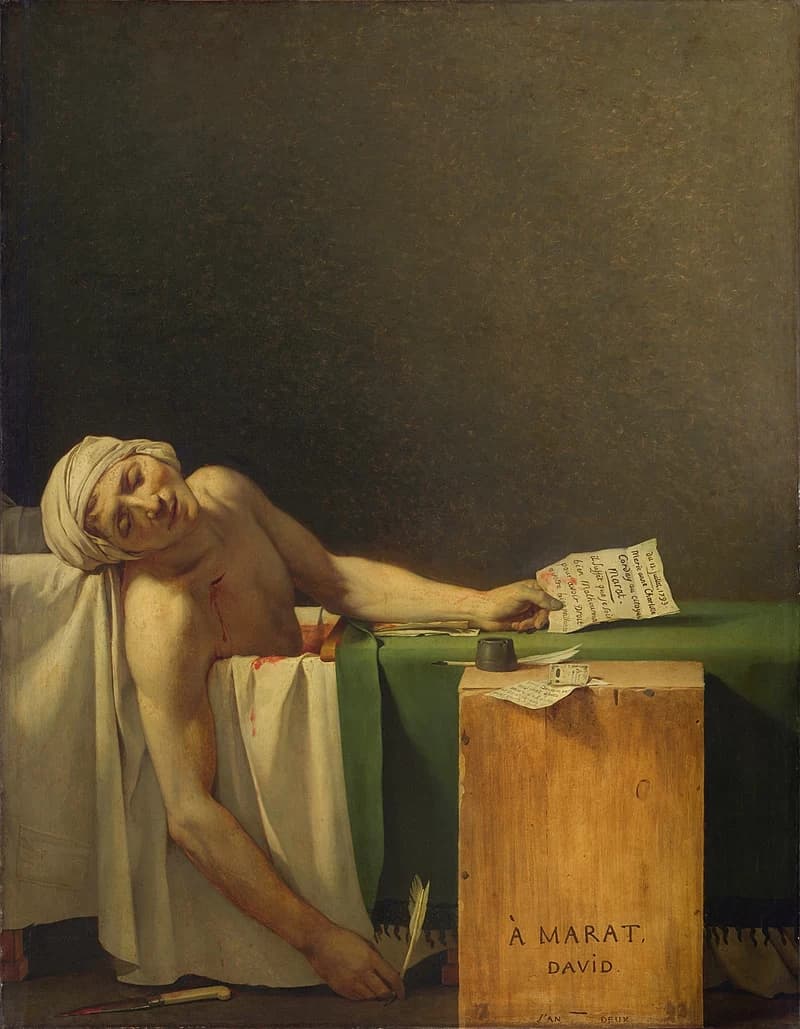
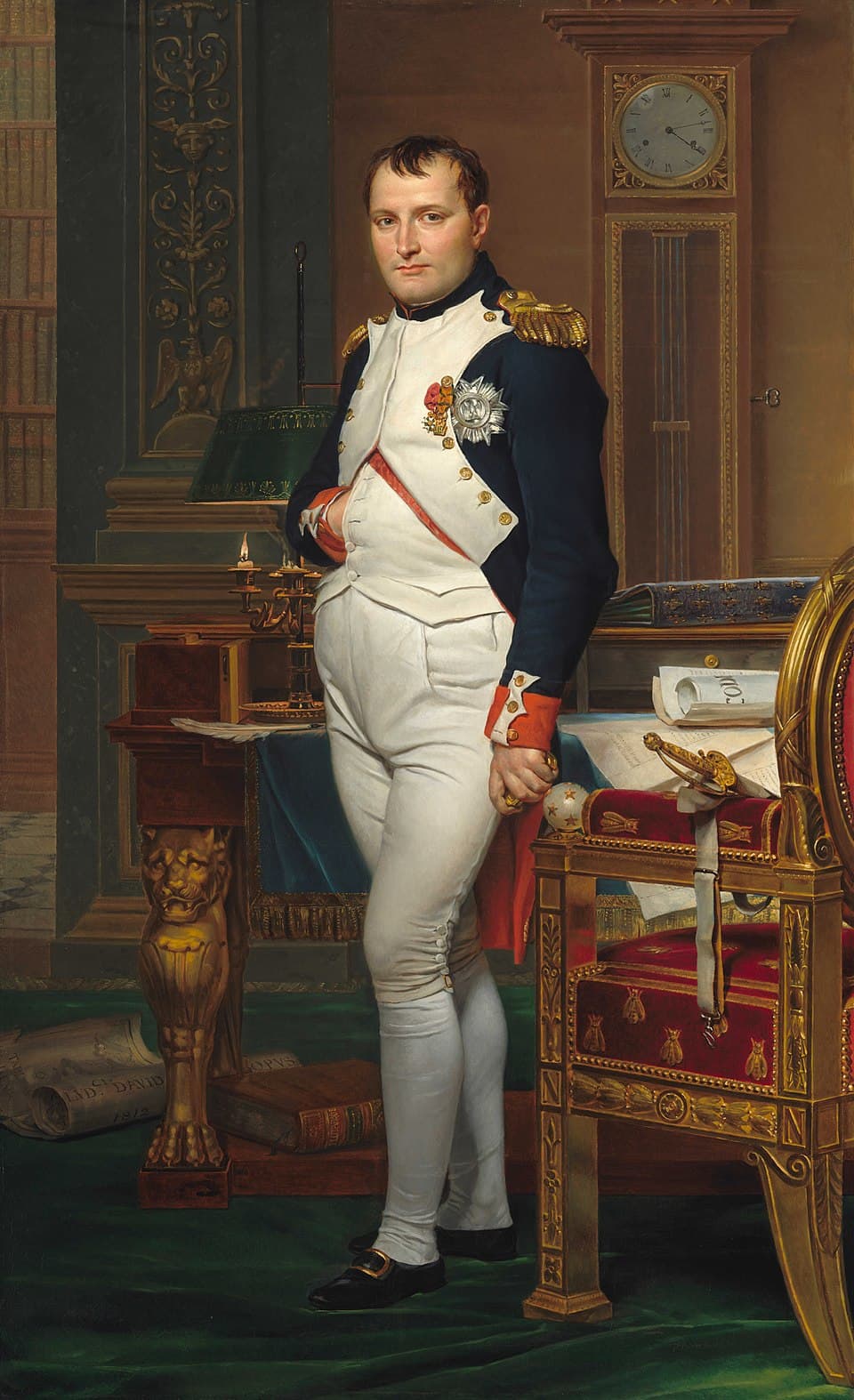
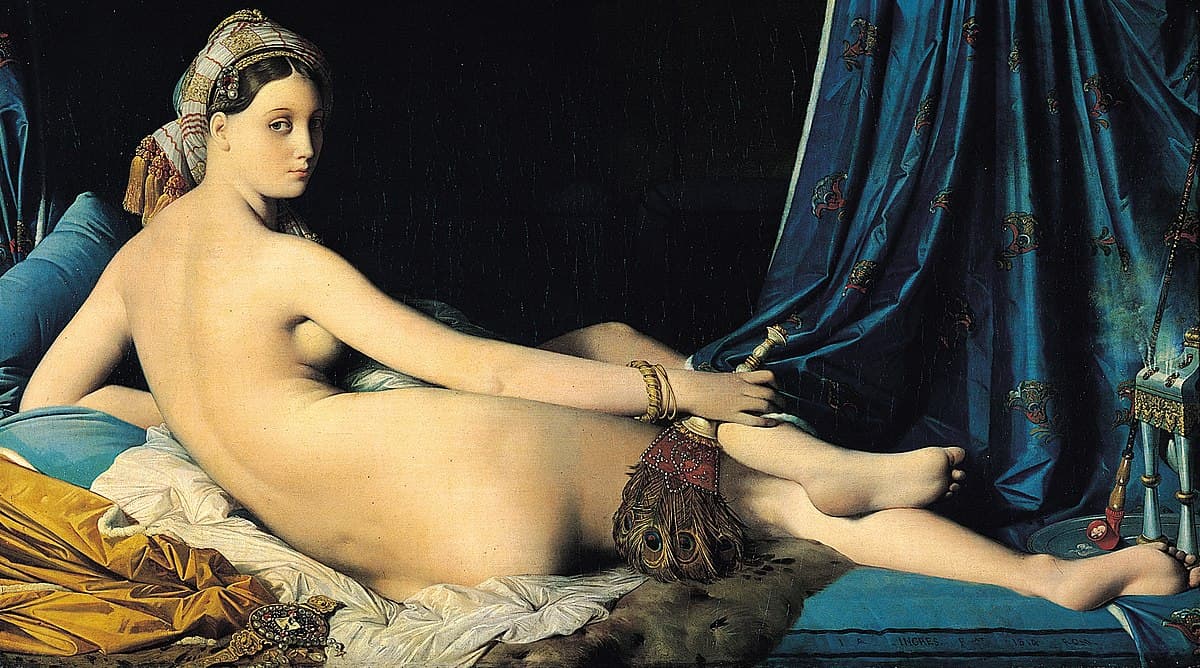
<p>Neoclassicism took hold in the second half of the 18th century, fueled by renewed interest in ancient Greece and Rome following the excavations at Pompeii and Herculaneum. It was also a deliberate reaction against the frivolity of Rococo, replacing pastel colors and playful subjects with sober compositions built around order, clear outlines, and moral seriousness.</p> <p><a href="/apps/masterpieces/artist/jacques-louis-david"><strong>Jacques-Louis David</strong></a> became the movement's central figure in France, using classical restraint to serve revolutionary politics. His <a href="/apps/masterpieces/art/the-death-of-marat"><strong>The Death of Marat</strong></a> turned a murdered radical journalist into a Christ-like martyr, painted with cool precision despite its violent subject. David later became Napoleon's official painter, applying the same classical grandeur to imperial propaganda.</p> <p>His student <a href="/apps/masterpieces/artist/jean-auguste-dominique-ingres"><strong>Jean-Auguste-Dominique Ingres</strong></a> pushed Neoclassical line and idealized form toward something more sensual, most famously in <a href="/apps/masterpieces/art/grande-odalisque"><strong>Grande Odalisque</strong></a>, a reclining nude whose deliberately elongated spine drew criticism at the time for breaking anatomical rules in service of pure elegance. <a href="/apps/masterpieces/artist/elisabeth-vigee-le-brun"><strong>Élisabeth Vigée Le Brun</strong></a> worked in a related, softer classical style as court painter to Marie Antoinette, producing portraits that balanced Neoclassical composure with real warmth. Neoclassicism dominated European painting for decades before Romanticism's emotional intensity began to displace it in the early 1800s.</p>
1780 – 1850
Romanticism
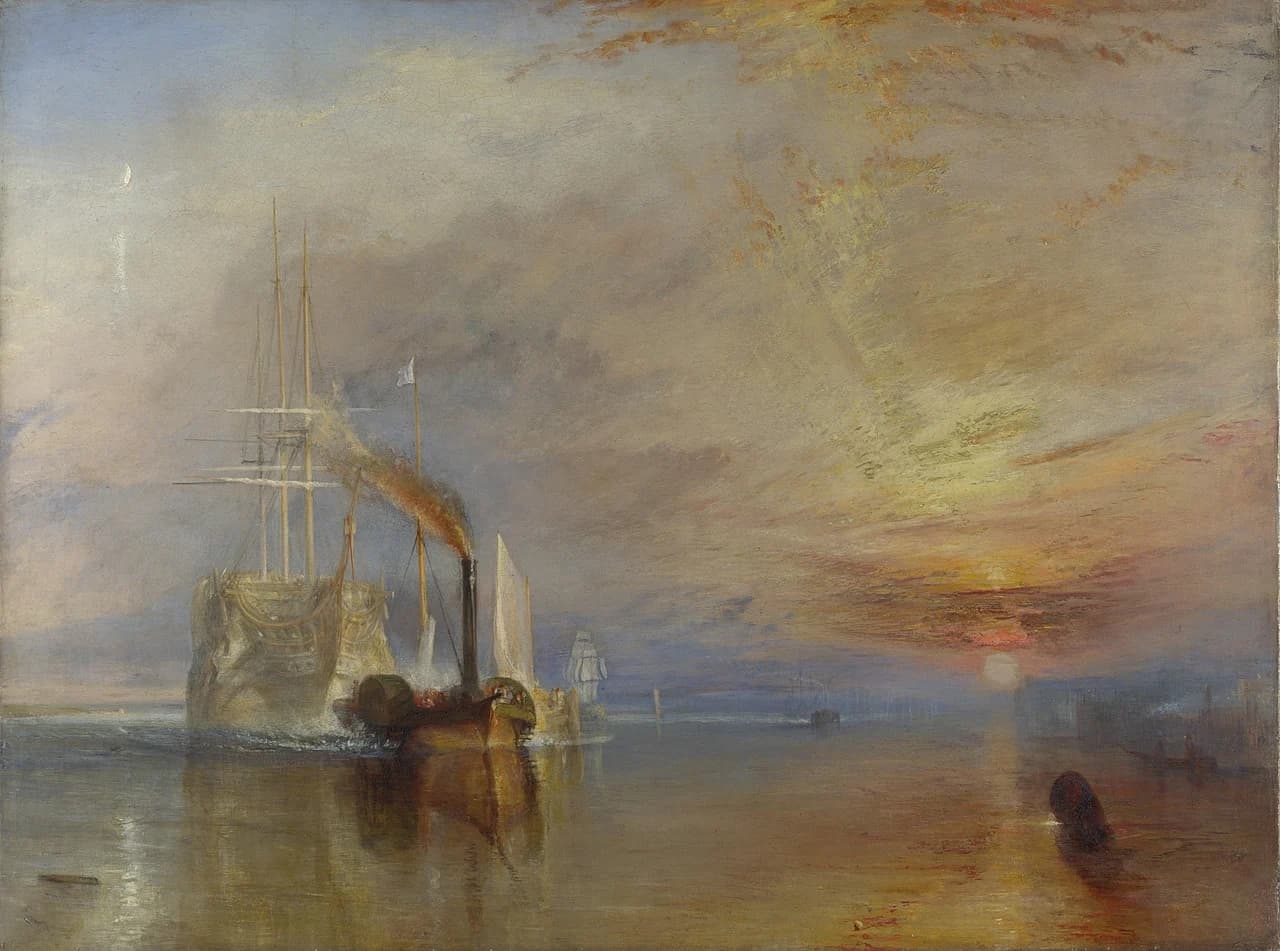
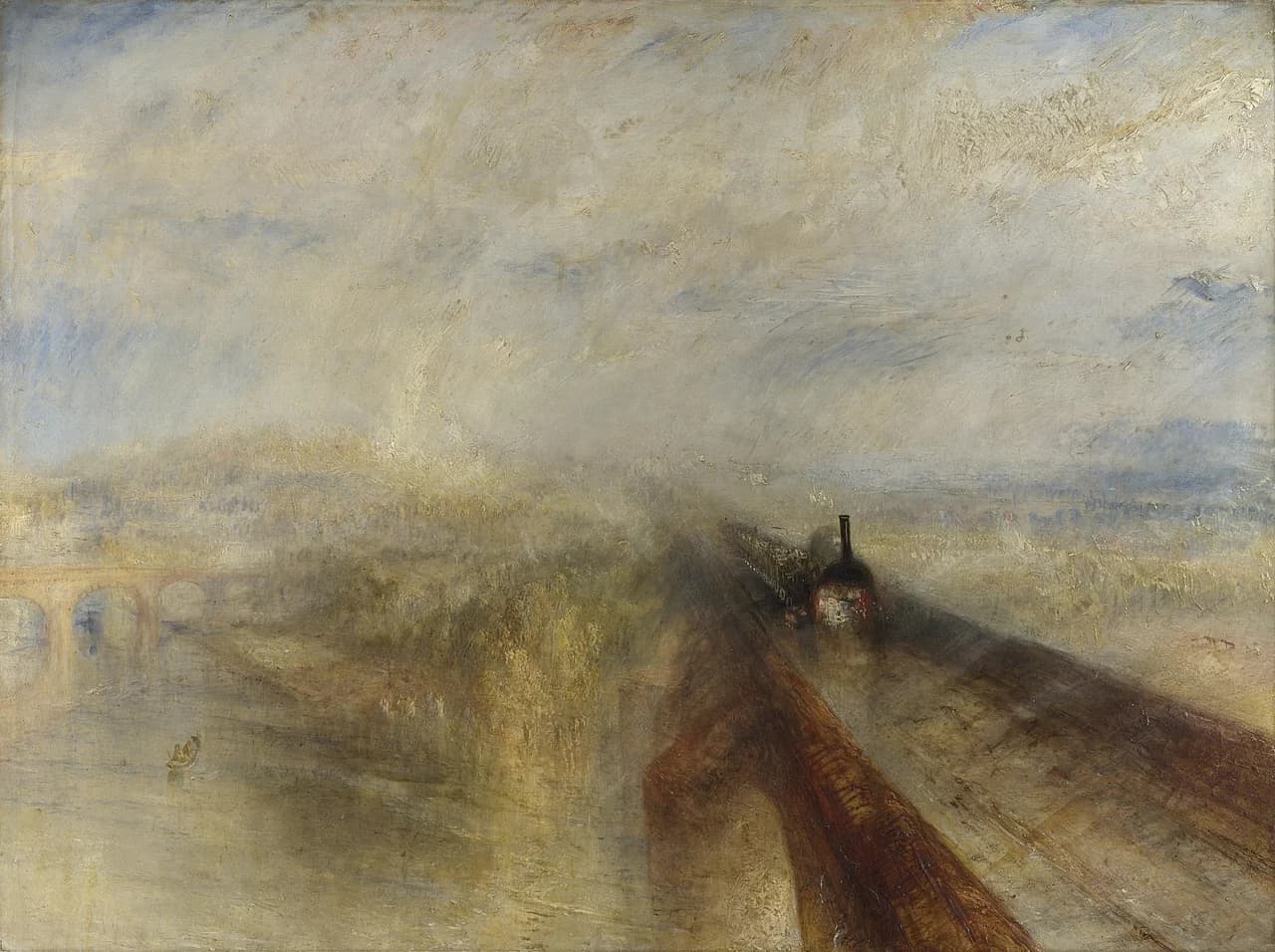
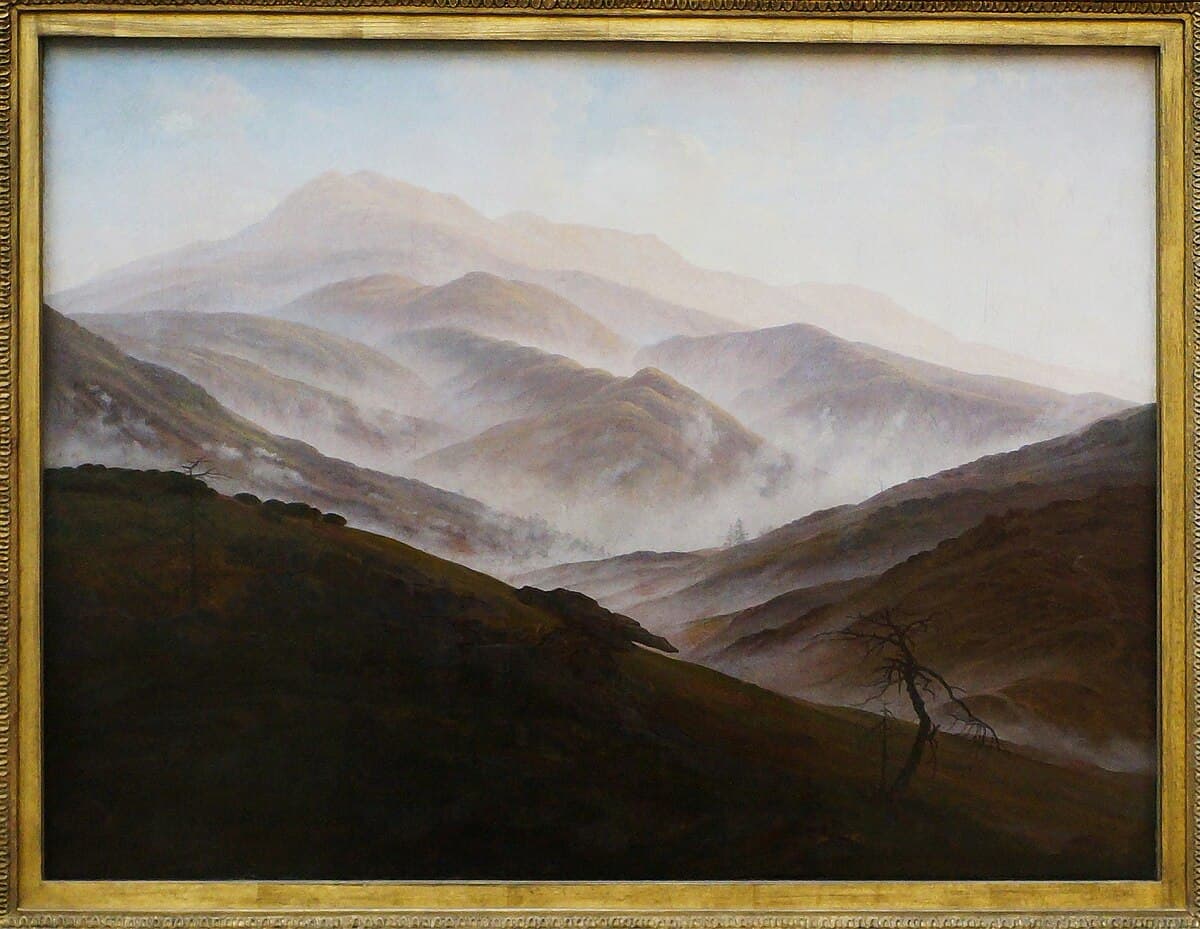
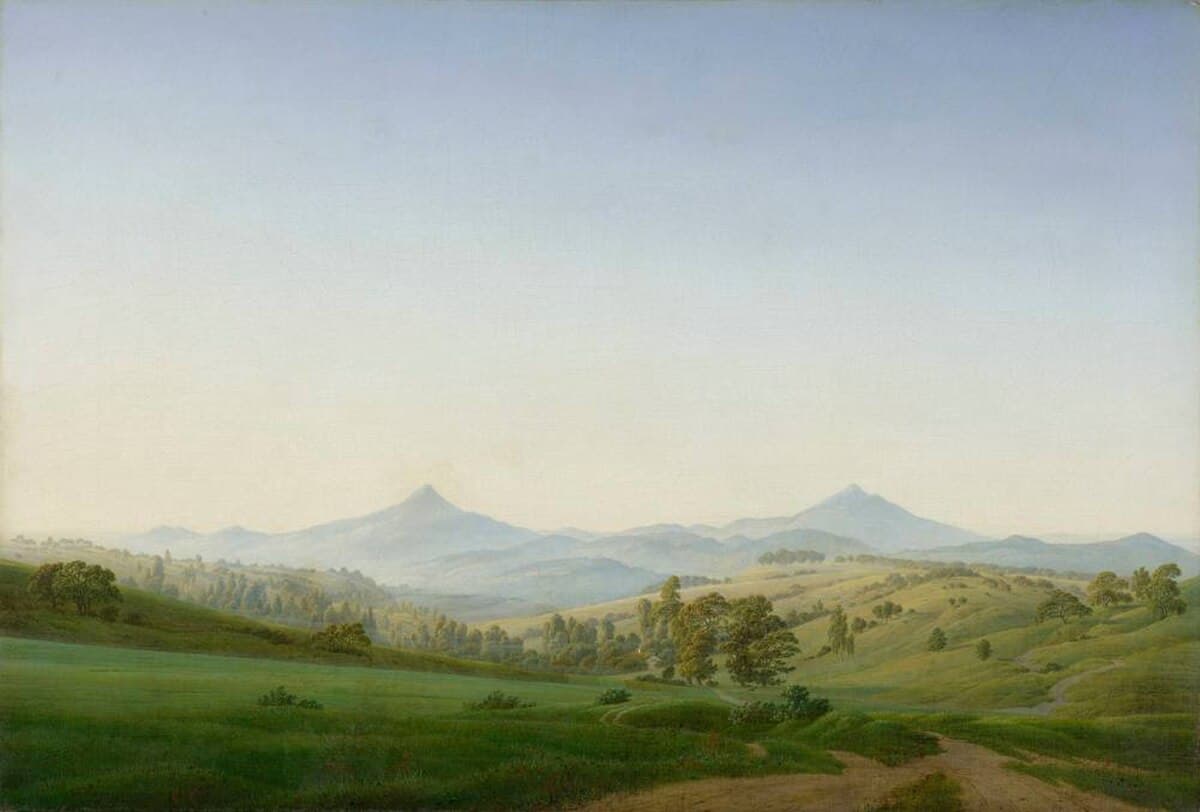
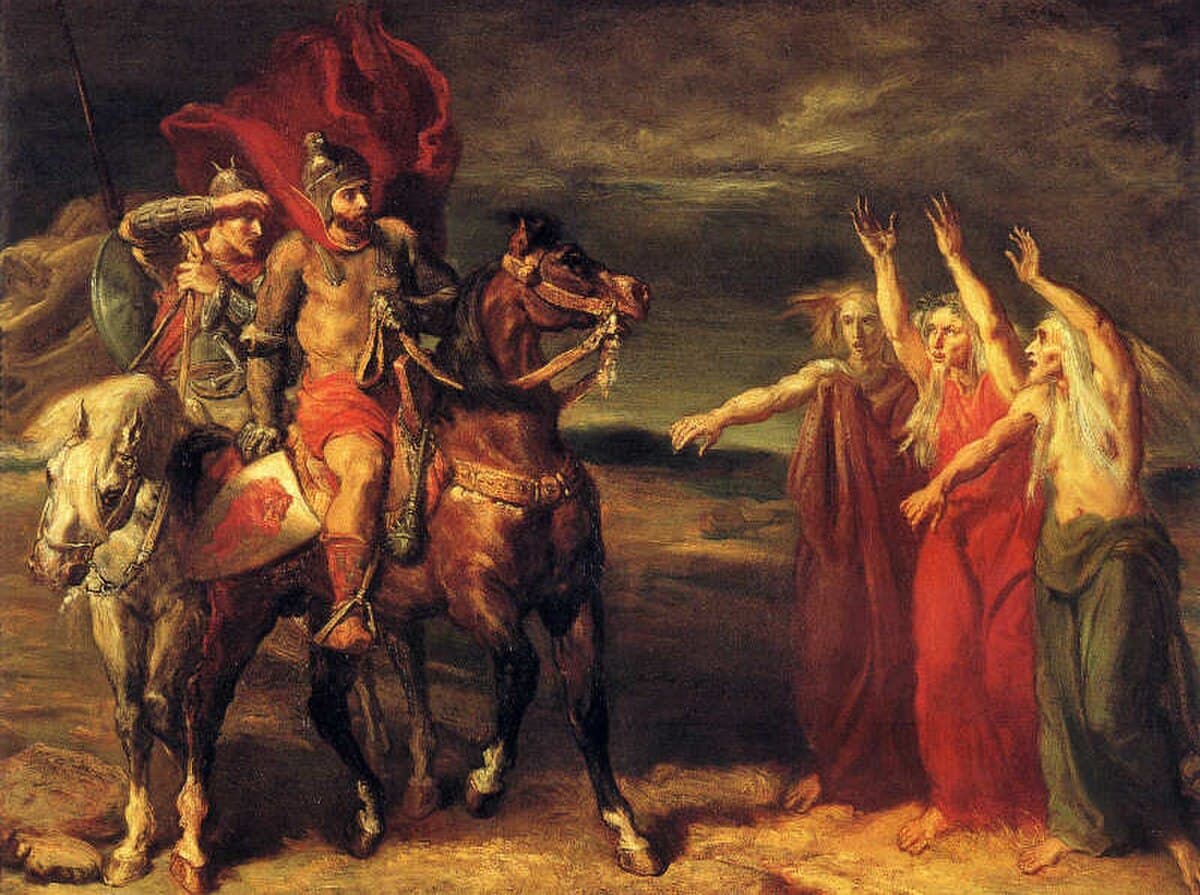
<p>Romanticism took hold across Europe between roughly 1780 and 1850 as a direct reaction to the Enlightenment's faith in reason and the Industrial Revolution's mechanization of daily life. Painters turned instead toward emotion, imagination, and the overwhelming power of nature, often depicting subjects too vast, too violent, or too strange for rational explanation to fully contain.</p> <p><a href="/apps/masterpieces/artist/francisco-goya"><strong>Francisco Goya</strong></a> used the style to confront horror directly, from the firing squad in <a href="/apps/masterpieces/art/the-third-of-may-1808"><strong>The Third of May 1808</strong></a> to the nightmarish <a href="/apps/masterpieces/art/saturn-devouring-his-son"><strong>Saturn Devouring His Son</strong></a>. <a href="/apps/masterpieces/artist/theodore-gericault"><strong>Théodore Géricault</strong></a> turned a real maritime disaster into <a href="/apps/masterpieces/art/the-raft-of-the-medusa"><strong>The Raft of the Medusa</strong></a>, a composition of desperation and survival that scandalized the French public when first shown. <a href="/apps/masterpieces/artist/eugene-delacroix"><strong>Eugène Delacroix</strong></a> brought the same intensity to historical and literary subjects, favoring rich color and dynamic movement over careful outline. In Britain, <a href="/apps/masterpieces/artist/jmw-turner"><strong>J.M.W. Turner</strong></a> dissolved ships and landscapes into atmosphere and light, while <a href="/apps/masterpieces/artist/john-constable"><strong>John Constable</strong></a> found the sublime closer to home, painting the English countryside in works like <a href="/apps/masterpieces/art/the-hay-wain"><strong>The Hay Wain</strong></a>. Later in the period, <a href="/apps/masterpieces/artist/jean-francois-millet"><strong>Jean-François Millet</strong></a> turned Romantic feeling toward rural laborers, dignifying peasant life in paintings like <a href="/apps/masterpieces/art/the-gleaners"><strong>The Gleaners</strong></a>.</p>
1800 – 1920
Orientalism
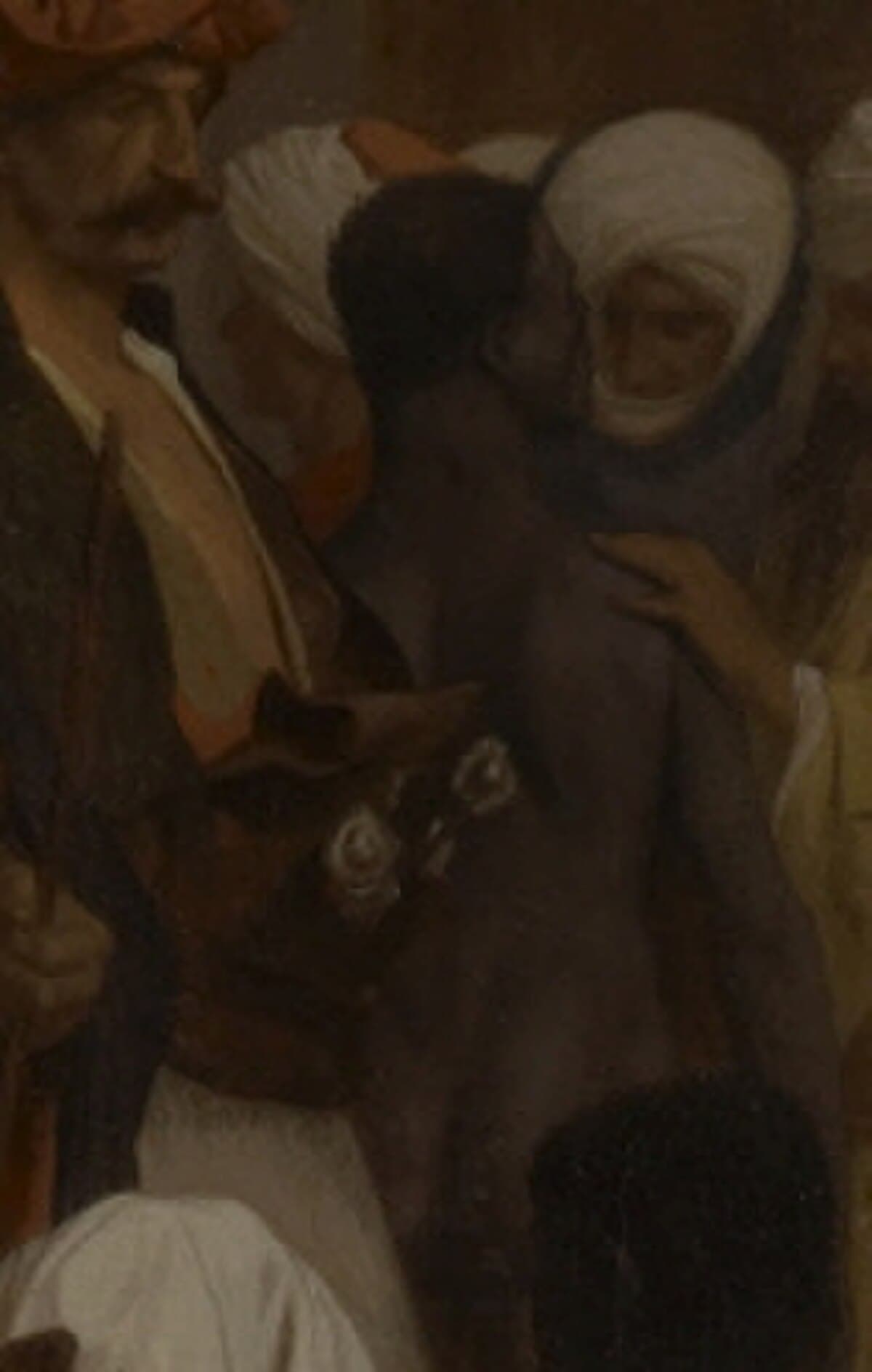
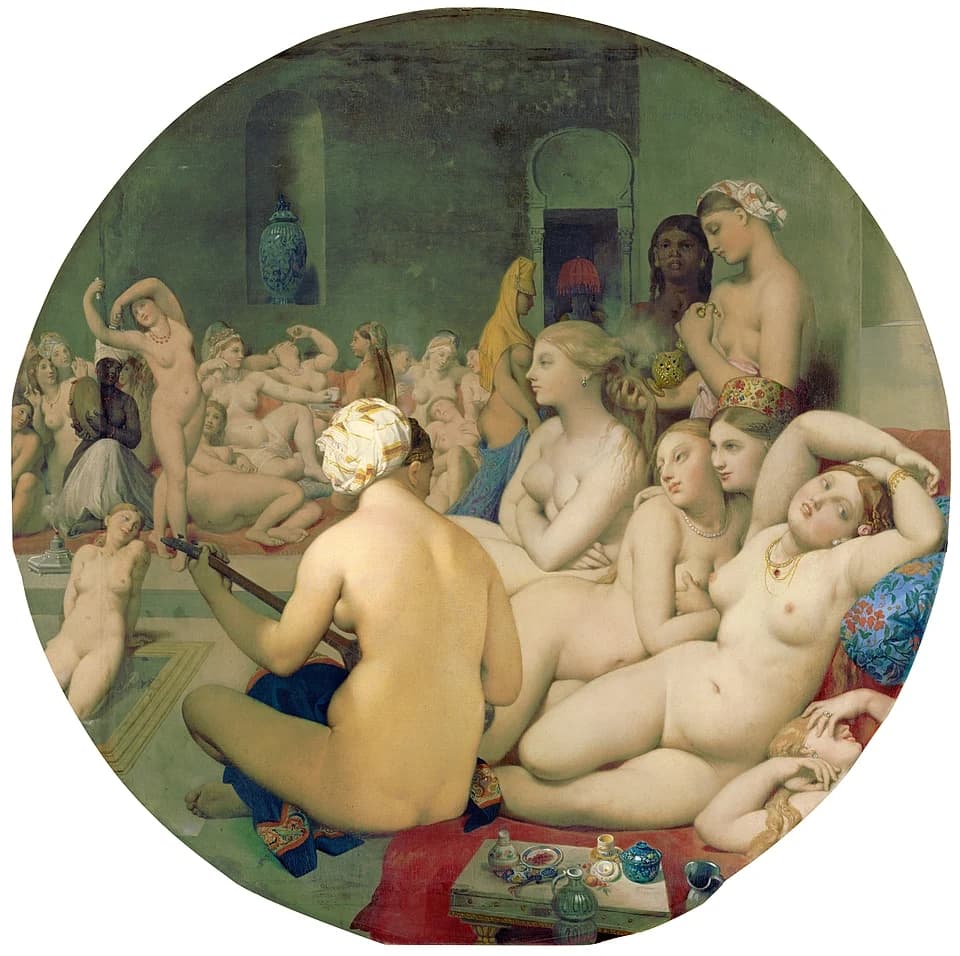
<p>Orientalism describes the way 19th-century European painters depicted the Middle East, North Africa, and parts of Asia, a trend that grew alongside colonial expansion and increased travel between roughly 1800 and 1920. Artists traveled to Cairo, Damascus, and Istanbul, then returned home to paint markets, mosques, and desert scenes for audiences who had never been there. The style favored sharp detail, warm light, and richly patterned surfaces, often applied to genre scenes of daily life rather than grand historical events.</p> <p><a href="/apps/masterpieces/artist/jean-leon-gerome"><strong>Jean-Léon Gérôme</strong></a> was the movement's most technically precise painter, known for scenes like <a href="/apps/masterpieces/art/slave-market-gerome"><strong>The Slave Market</strong></a> and <a href="/apps/masterpieces/art/pollice-verso"><strong>Pollice Verso</strong></a>, both painted with the crisp finish of academic realism. <a href="/apps/masterpieces/artist/theodore-chasseriau"><strong>Théodore Chassériau</strong></a> brought a Romantic sensibility to North African subjects after his own travels through Algeria. Vienna produced its own circle of Orientalist specialists in <a href="/apps/masterpieces/artist/ludwig-deutsch"><strong>Ludwig Deutsch</strong></a> and <a href="/apps/masterpieces/artist/rudolf-ernst"><strong>Rudolf Ernst</strong></a>, who painted interiors and courtyards from studio references rather than firsthand sketches. American painter <a href="/apps/masterpieces/artist/frederick-arthur-bridgman"><strong>Frederick Arthur Bridgman</strong></a> studied under Gérôme in Paris before turning his own attention to Egyptian subjects. Today the movement is read with more skepticism than it once was, since its romanticized version of the region tells us as much about European fantasy as it does about the places depicted.</p>
1825 – 1880
Hudson River School
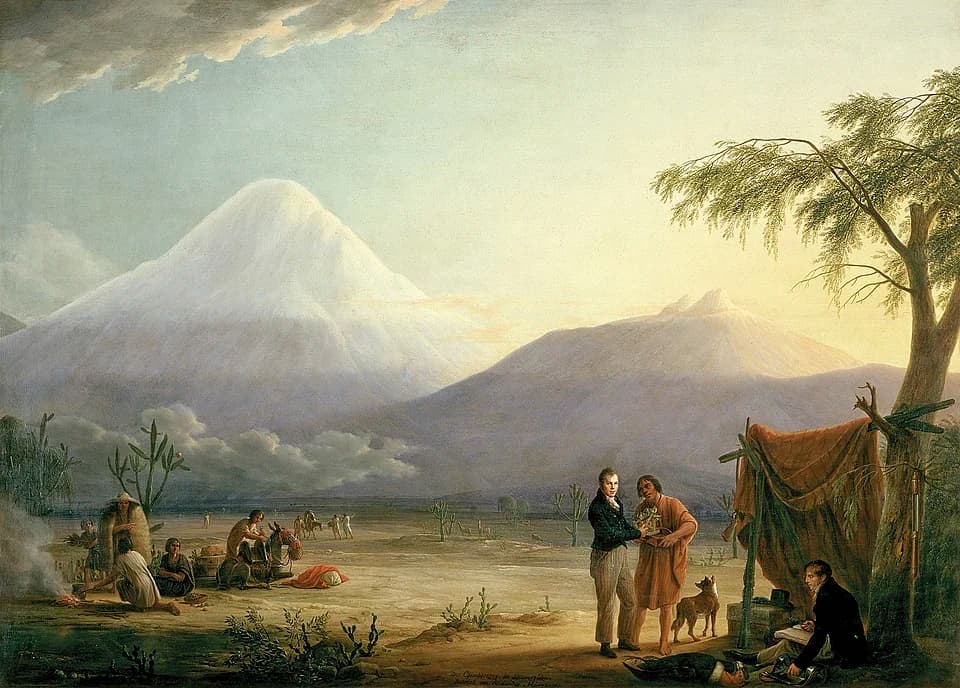
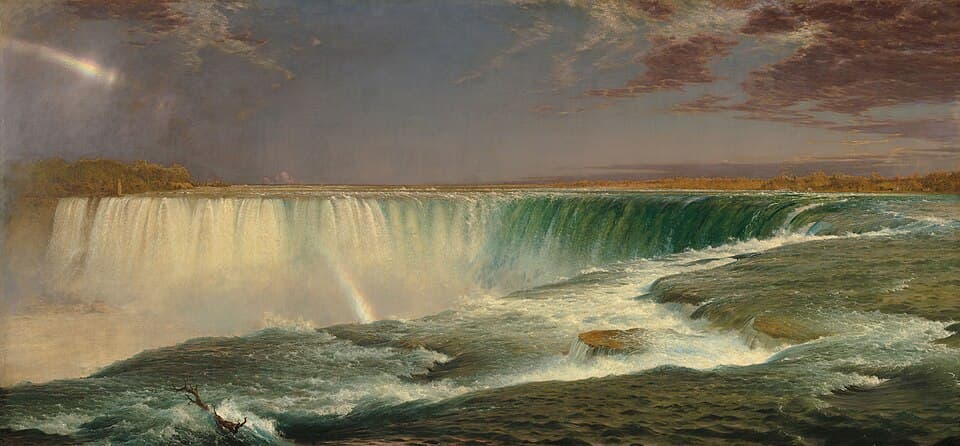
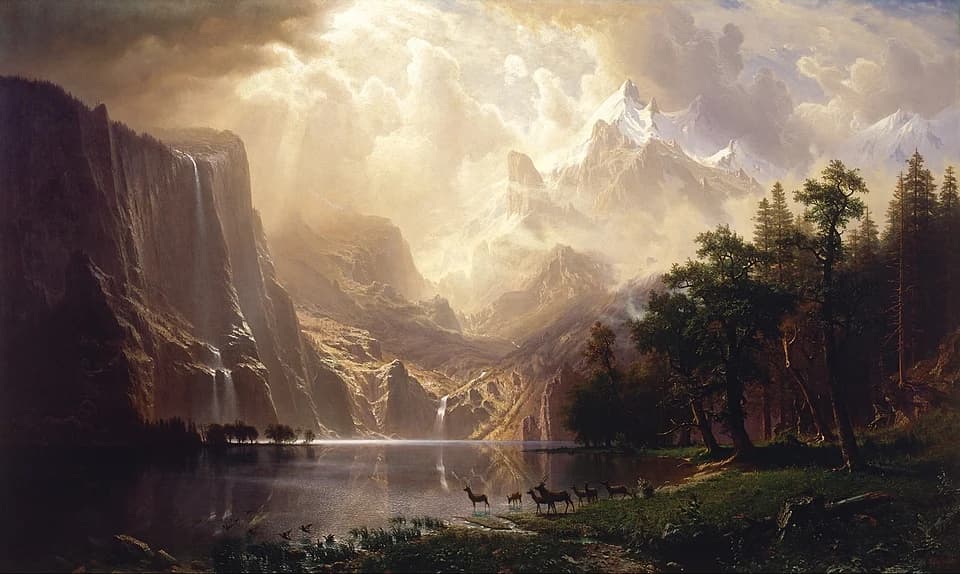
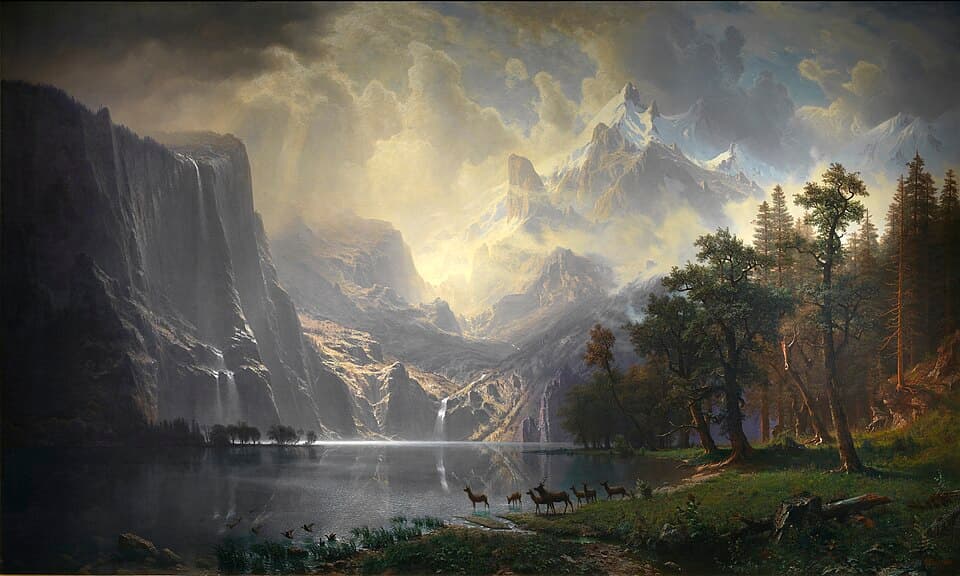
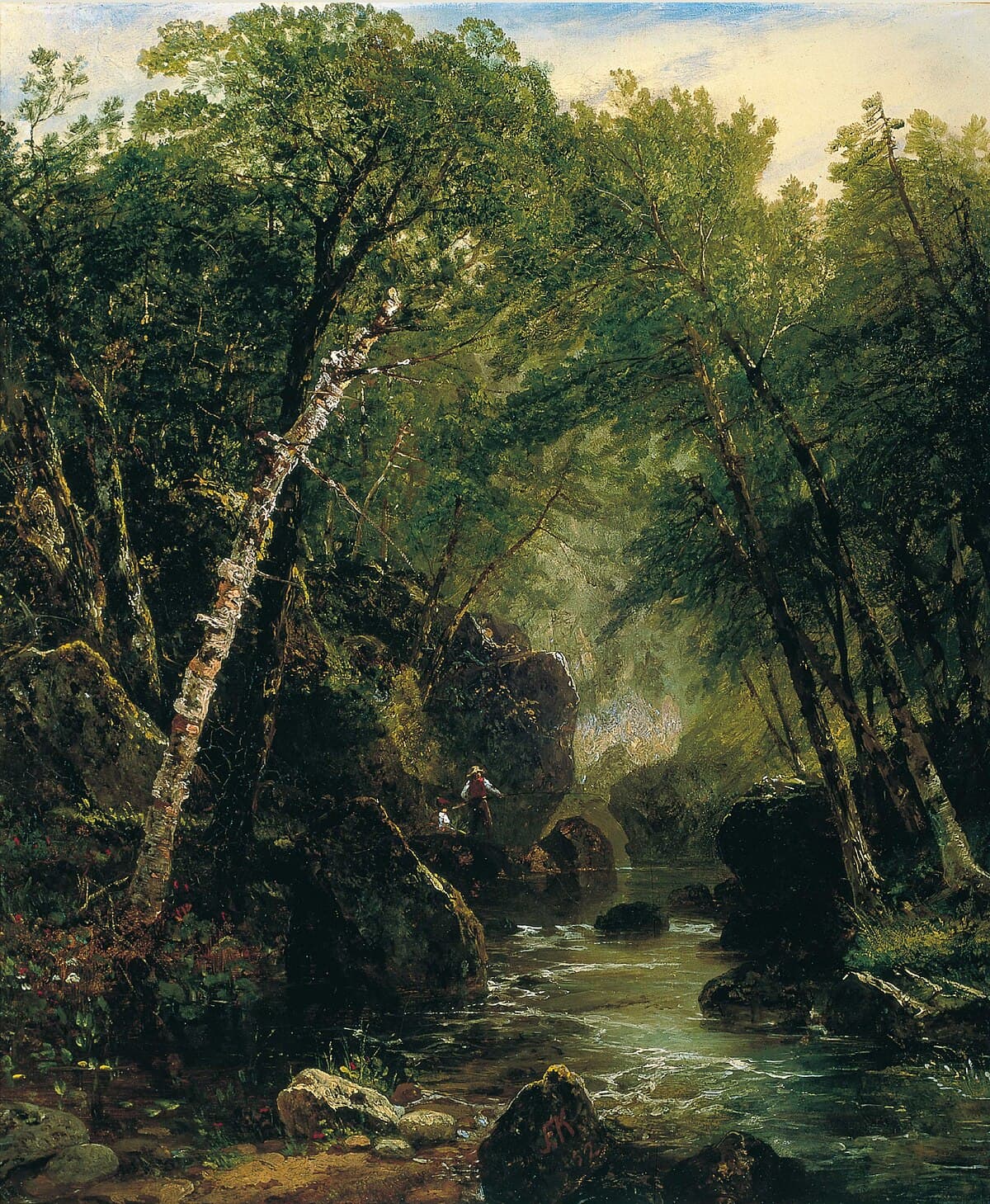
<p>The Hudson River School formed in the 1820s around a group of American landscape painters who found their first subjects in the Hudson River Valley and the Catskill Mountains before pushing further west. Working in the wake of Romanticism, they treated the American wilderness as something close to sacred, worth painting on a grand scale as proof of the young country's natural grandeur.</p> <p><a href="/apps/masterpieces/artist/thomas-cole"><strong>Thomas Cole</strong></a> founded the movement, painting allegorical cycles like <a href="/apps/masterpieces/art/the-voyage-of-life-old-age"><strong>The Voyage of Life: Old Age</strong></a> alongside straightforward wilderness views. <a href="/apps/masterpieces/artist/frederic-edwin-church"><strong>Frederic Edwin Church</strong></a>, his most successful student, traveled to South America and painted <a href="/apps/masterpieces/art/heart-of-andes"><strong>Heart of the Andes</strong></a> on a canvas so large that viewers paid admission to see it displayed alone in a darkened room. Church's <a href="/apps/masterpieces/art/niagara-church"><strong>Niagara</strong></a> made him internationally famous for its scale and detail.</p> <p><a href="/apps/masterpieces/artist/albert-bierstadt"><strong>Albert Bierstadt</strong></a> carried the same theatrical grandeur west to the Rocky Mountains and Yosemite, as seen in <a href="/apps/masterpieces/art/among-sierra-nevada-bierstadt"><strong>Among the Sierra Nevada, California</strong></a>, while <a href="/apps/masterpieces/artist/george-caleb-bingham"><strong>George Caleb Bingham</strong></a> focused on frontier life along the Missouri River in works like <a href="/apps/masterpieces/art/fur-traders-missouri"><strong>Fur Traders Descending the Missouri</strong></a>. <a href="/apps/masterpieces/artist/john-frederick-kensett"><strong>John Frederick Kensett</strong></a> painted quieter coastal scenes that helped bridge the movement into the related style of Luminism. The Hudson River School's paintings helped build public support for landscape preservation, including the eventual creation of national parks.</p>

1848 – 1854
Pre-Raphaelite Brotherhood
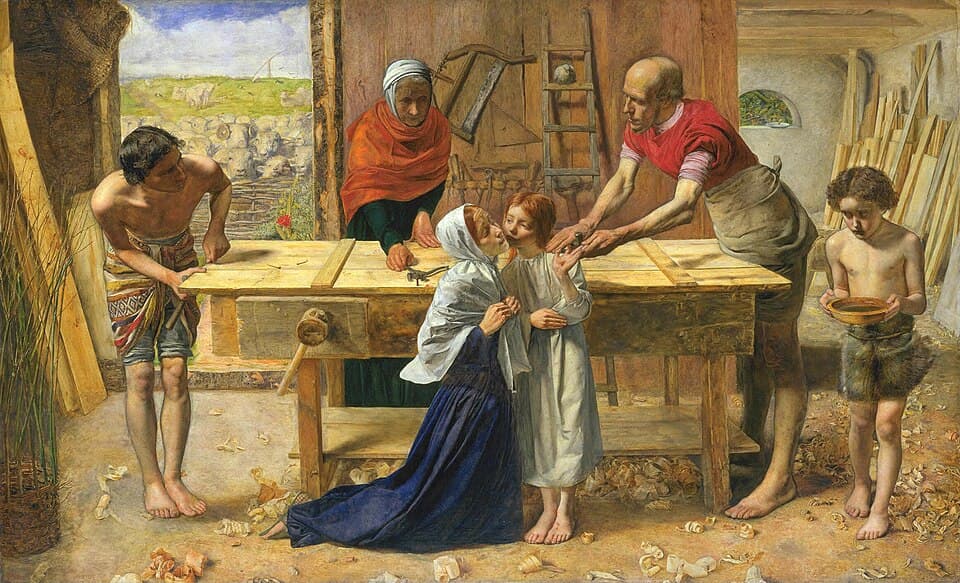
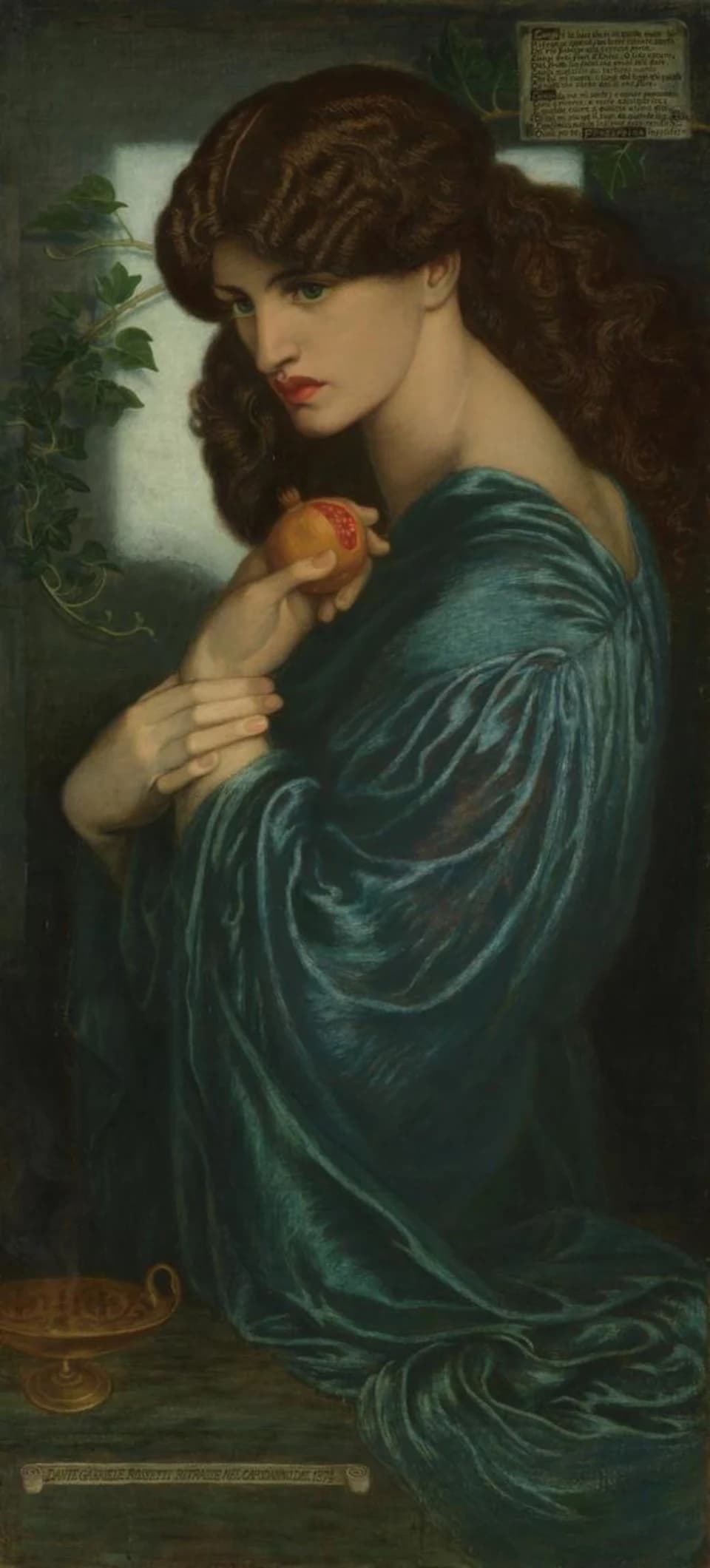
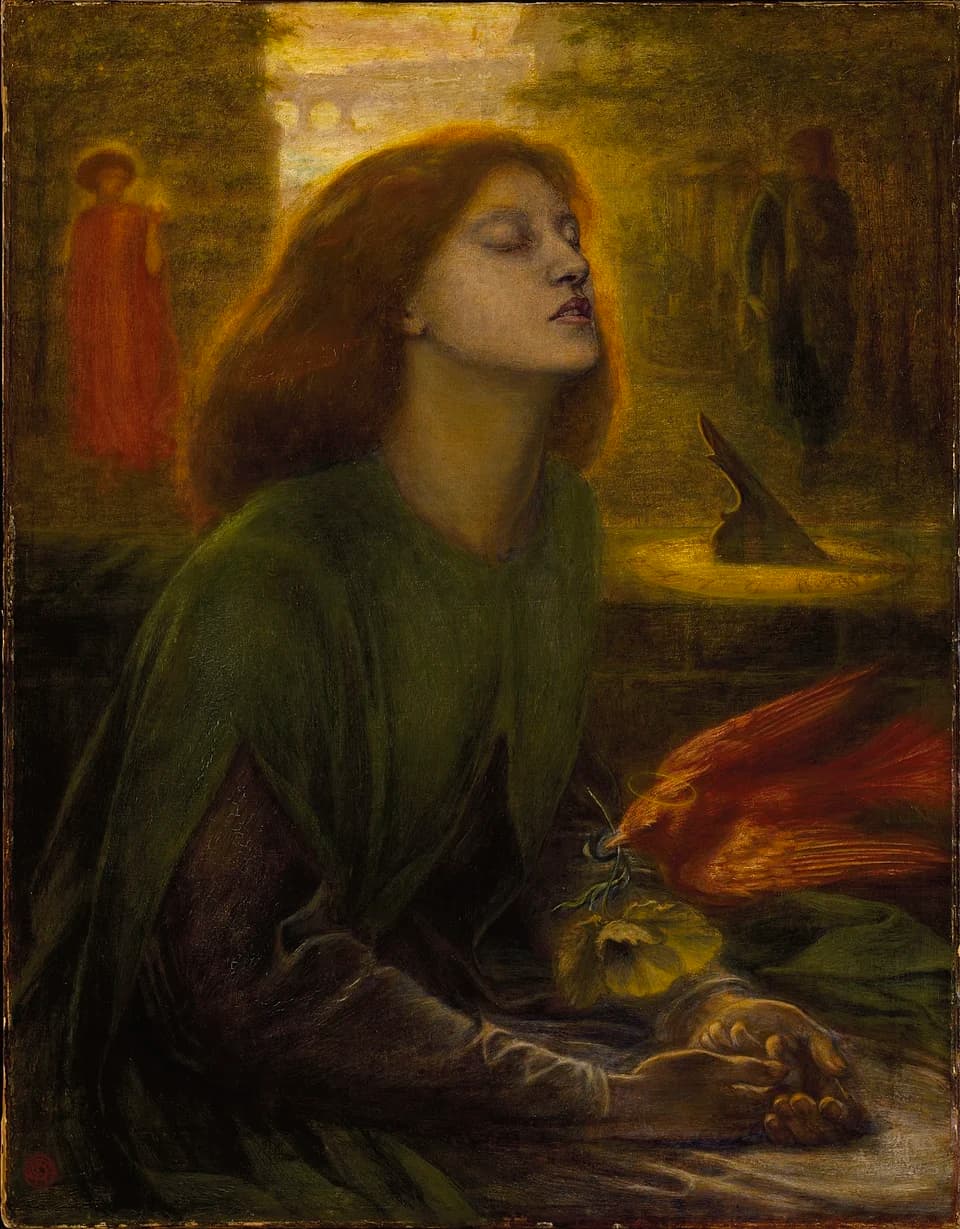
<p>The Pre-Raphaelite Brotherhood formed in London in 1848 when a small group of young English painters decided the art academy's teaching, built around admiration for Raphael and the High Renaissance, had led painting toward formula and dull convention. They looked instead to the detail and sincerity they found in art made before 1500, adopting bright color, sharp focus, and literary or biblical subject matter painted with almost photographic precision. Though the formal Brotherhood only lasted a few years, its influence on British painting ran for decades afterward.</p> <p><a href="/apps/masterpieces/artist/john-everett-millais"><strong>John Everett Millais</strong></a> painted <a href="/apps/masterpieces/art/ophelia"><strong>Ophelia</strong></a>, working outdoors on the riverbank for months to get the plants exactly right before adding the figure in the studio. <a href="/apps/masterpieces/artist/william-holman-hunt"><strong>William Holman Hunt</strong></a> brought the same intensity to religious allegory in <a href="/apps/masterpieces/art/light-of-world"><strong>The Light of the World</strong></a>. <a href="/apps/masterpieces/artist/dante-gabriel-rossetti"><strong>Dante Gabriel Rossetti</strong></a> and, a generation later, <a href="/apps/masterpieces/artist/john-william-waterhouse"><strong>John William Waterhouse</strong></a> turned toward myth and medieval romance, with Waterhouse's <a href="/apps/masterpieces/art/lady-of-shalott"><strong>The Lady of Shalott</strong></a> becoming one of the group's most recognized images. <a href="/apps/masterpieces/artist/edward-burne-jones"><strong>Edward Burne-Jones</strong></a> and <a href="/apps/masterpieces/artist/ford-madox-brown"><strong>Ford Madox Brown</strong></a> extended the style into the 1880s and beyond, keeping its dense detail and moral seriousness alive long after the original Brotherhood had dissolved.</p>
1850 – 1875
Luminism
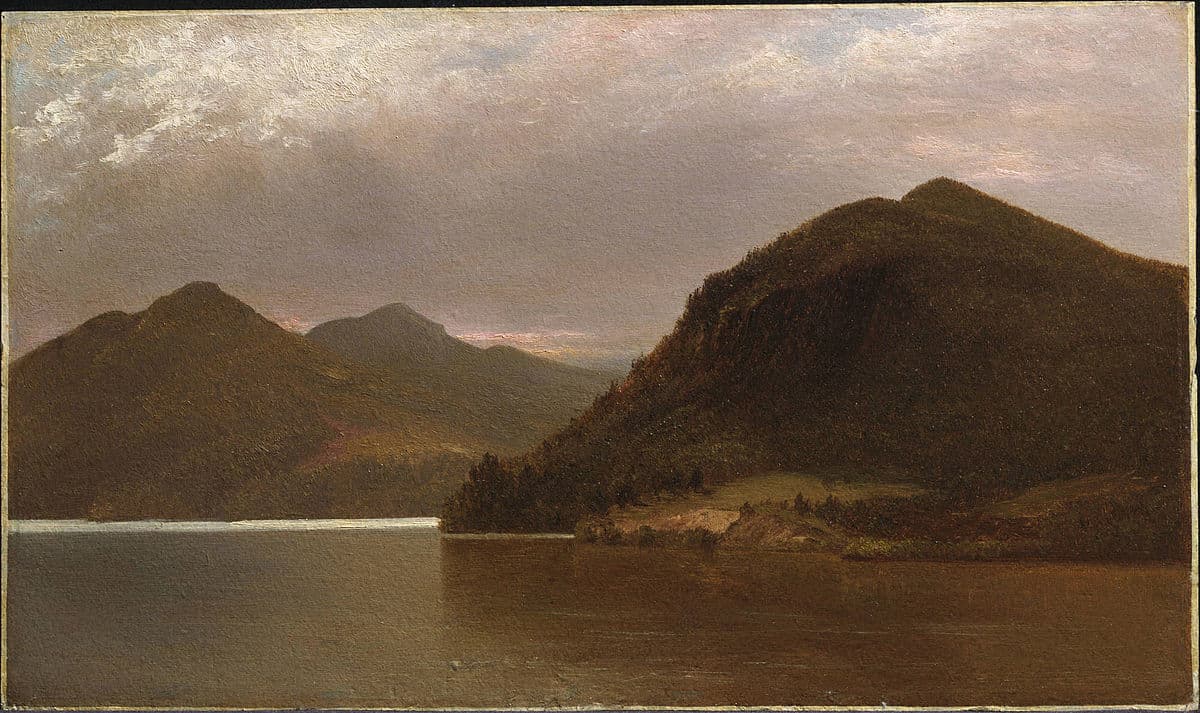
<p>Luminism describes a mid-19th century American landscape style, active roughly from 1850 to 1875, defined less by a formal group than by a shared interest in rendering light with extreme precision. Where the Hudson River School painters often favored drama and scale, Luminist painters worked toward stillness, using smooth, almost invisible brushwork to make paint disappear and let light itself become the subject.</p> <p><a href="/apps/masterpieces/artist/fitz-henry-lane"><strong>Fitz Henry Lane</strong></a> painted calm harbors and coastal inlets under soft, hazy skies, as in <a href="/apps/masterpieces/art/boston-harbor-lane"><strong>Boston Harbor</strong></a>, where glassy water and pale light matter more than any single dramatic event. <a href="/apps/masterpieces/artist/john-frederick-kensett"><strong>John Frederick Kensett</strong></a> painted similarly quiet coastal scenes, including <a href="/apps/masterpieces/art/eatons-neck-long-island"><strong>Eaton's Neck, Long Island</strong></a>, built almost entirely from horizontal bands of water, sand, and sky.</p> <p><a href="/apps/masterpieces/artist/sanford-robinson-gifford"><strong>Sanford Robinson Gifford</strong></a> specialized in a golden, atmospheric haze that softened even active scenes like <a href="/apps/masterpieces/art/kauterskill-falls-gifford"><strong>Kauterskill Falls</strong></a>, while <a href="/apps/masterpieces/artist/alfred-thompson-bricher"><strong>Alfred Thompson Bricher</strong></a> carried the same tranquil light into later coastal works like <a href="/apps/masterpieces/art/time-and-tide-bricher"><strong>Time and Tide</strong></a>. Because these painters worked independently rather than as a named group, the term "Luminism" was only applied by art historians decades later, to describe the shared quality of light they all pursued.</p>
1860 – 1890
Impressionism
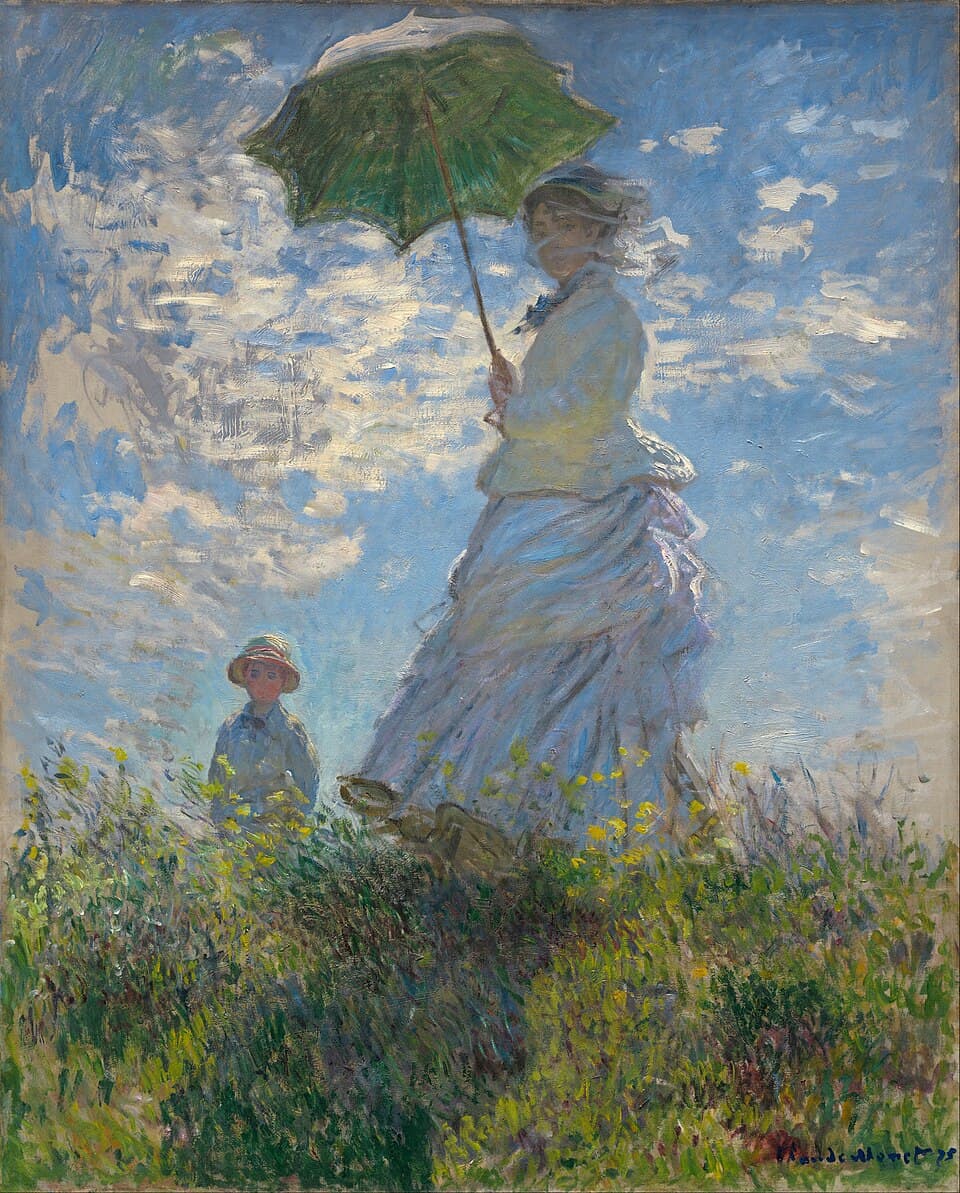
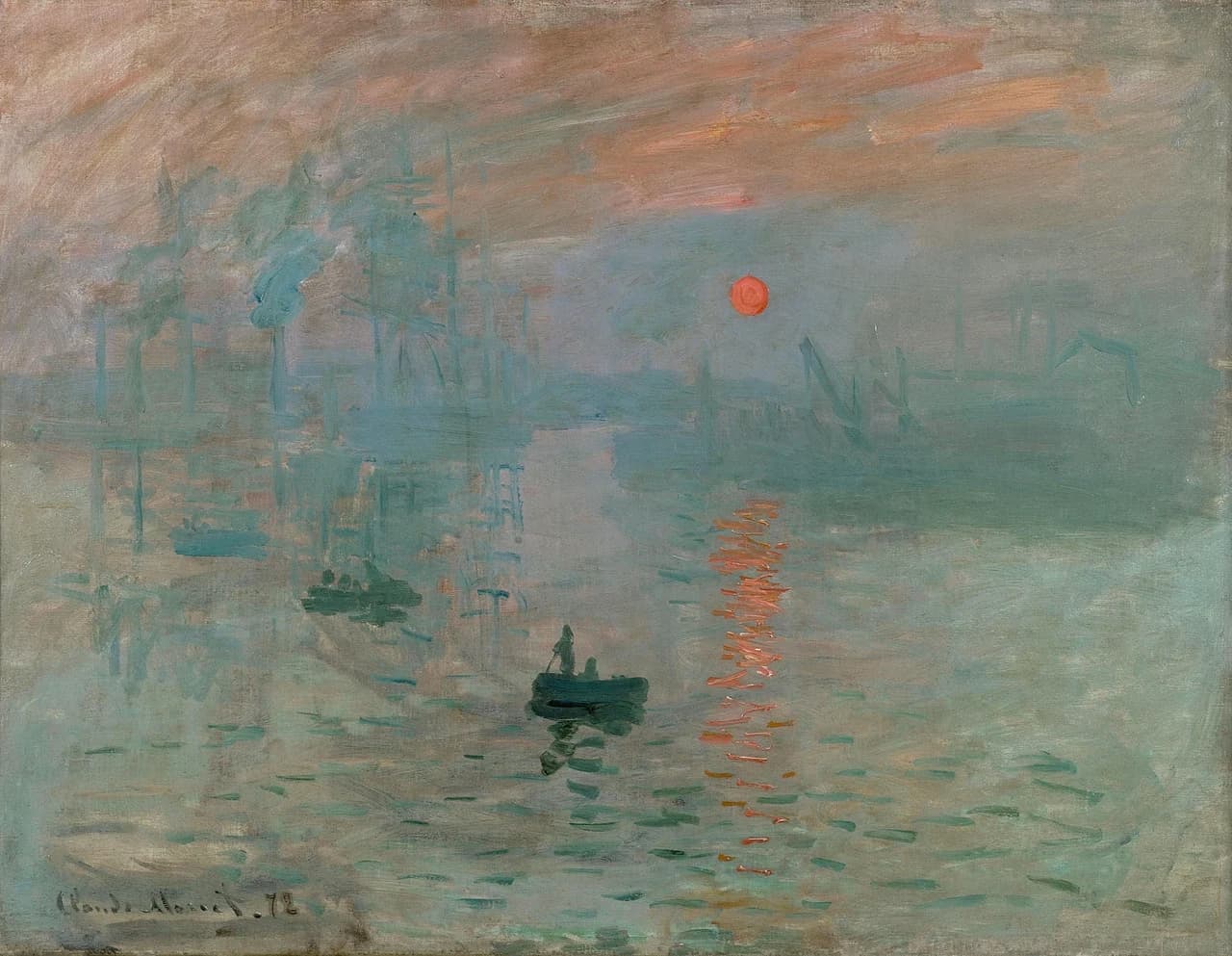
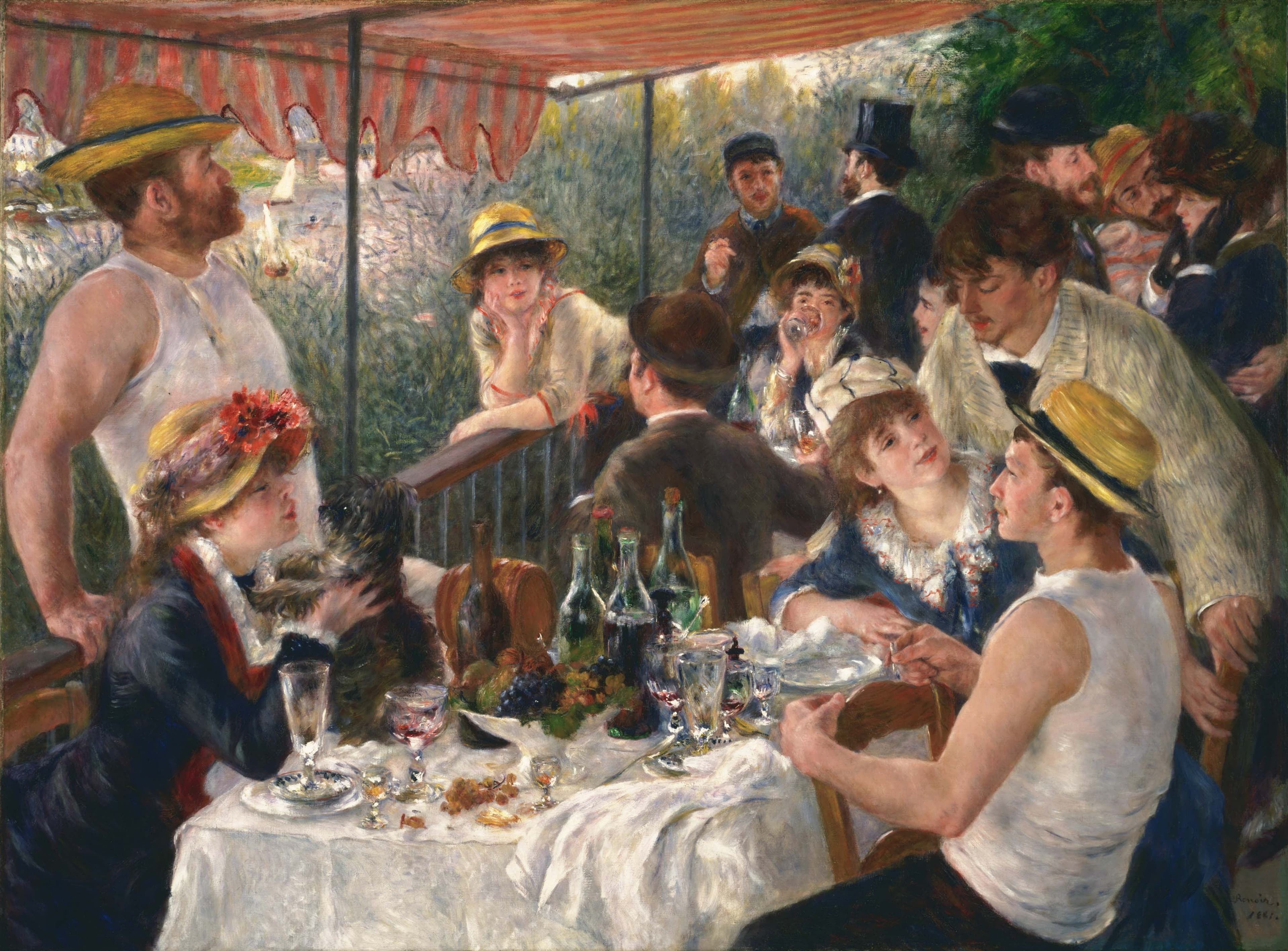
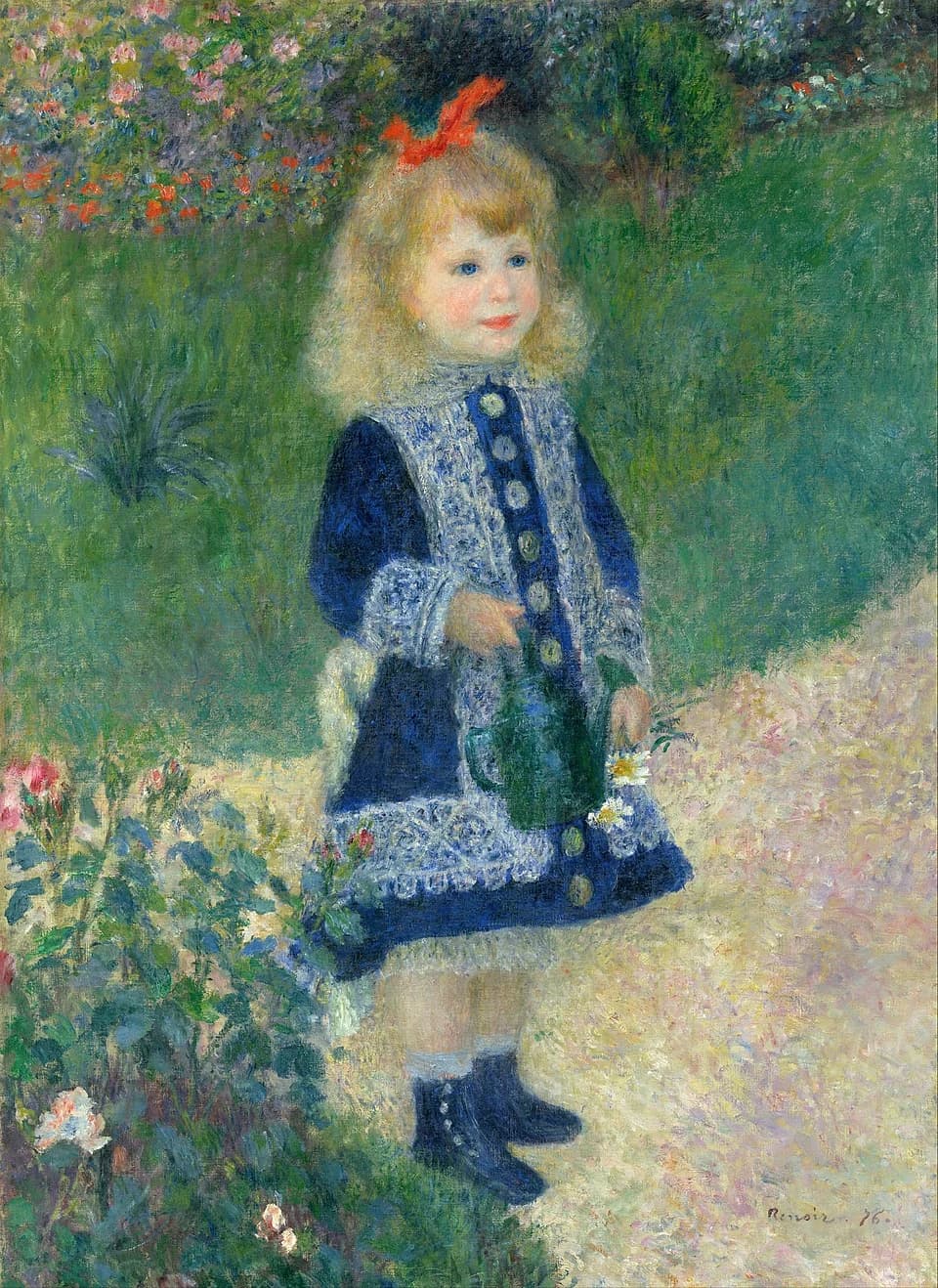
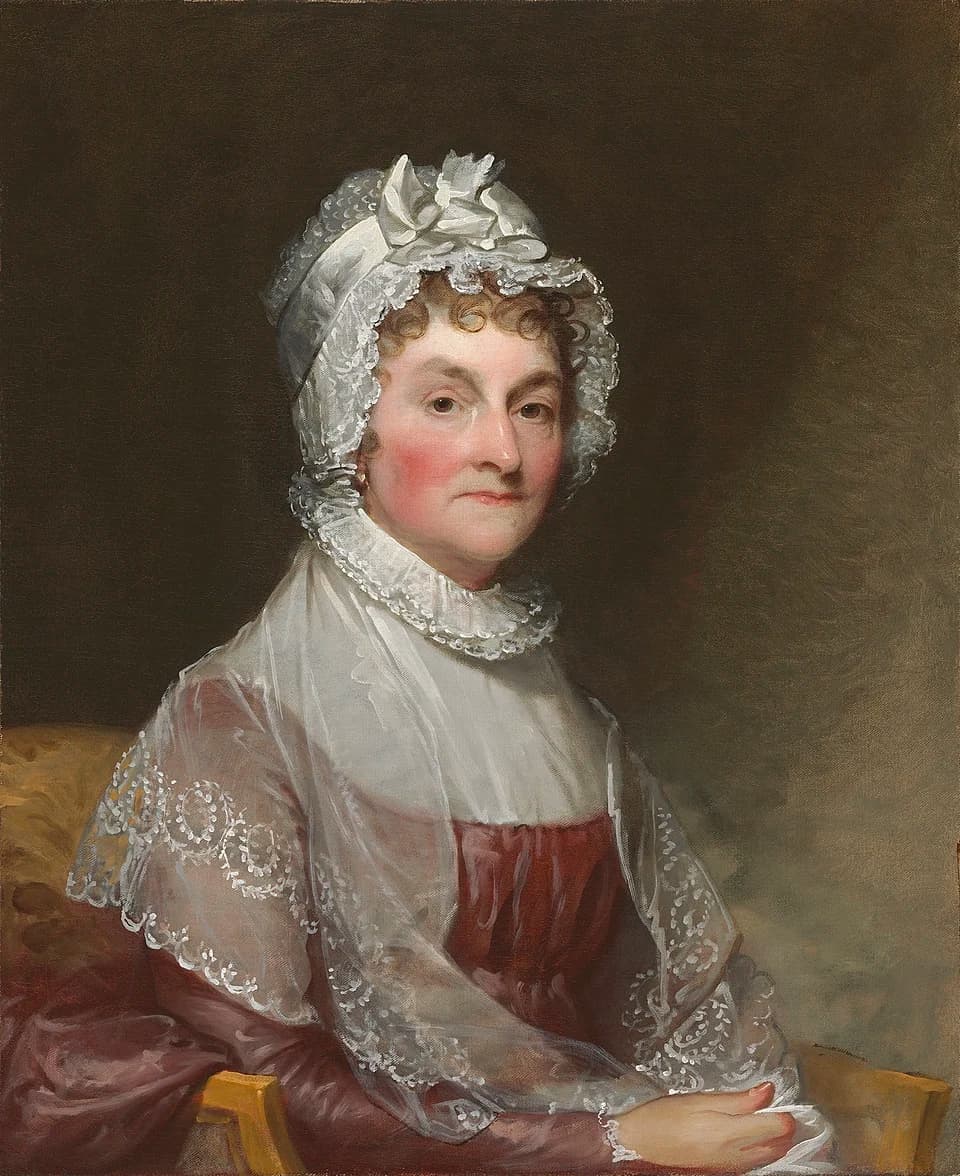
<p>Impressionism took its name from a joke. When <a href="/apps/masterpieces/artist/claude-monet"><strong>Claude Monet</strong></a> showed a hazy harbor scene called "Impression, Sunrise" at an independent exhibition in Paris in 1874, a critic mocked the group as mere "impressionists," and the name stuck. The painters had been rejected repeatedly by the official Salon, so they organized their own shows instead, breaking away from academic painting's polish in favor of visible brushstrokes and everyday subjects.</p> <p>Monet became the movement's most prolific figure, painting the same scenes repeatedly under changing light, from the crowded river bathing spot in <a href="/apps/masterpieces/art/la-grenouillere-monet"><strong>La Grenouillère</strong></a> to the garden at Giverny in <a href="/apps/masterpieces/art/bridge-water-lilies"><strong>Bridge over a Pond of Water Lilies</strong></a> and <a href="/apps/masterpieces/art/japanese-footbridge"><strong>The Japanese Footbridge</strong></a>. His <a href="/apps/masterpieces/art/woman-parasol"><strong>Woman with a Parasol</strong></a> captures a fleeting outdoor moment, wind and sunlight rendered in quick, loaded strokes rather than careful detail.</p> <p><a href="/apps/masterpieces/artist/pierre-auguste-renoir"><strong>Pierre-Auguste Renoir</strong></a> brought warmth and soft color to scenes of Parisian leisure, while <a href="/apps/masterpieces/artist/edgar-degas"><strong>Edgar Degas</strong></a> focused on ballet dancers and horse races, often from unusual, cropped angles borrowed from photography. <a href="/apps/masterpieces/artist/camille-pissarro"><strong>Camille Pissarro</strong></a> painted rural and city scenes with a steady, structural touch that influenced nearly every artist in the group, and <a href="/apps/masterpieces/artist/berthe-morisot"><strong>Berthe Morisot</strong></a> and <a href="/apps/masterpieces/artist/edouard-manet"><strong>Édouard Manet</strong></a> pushed the group's early experiments in modern subject matter. Impressionism went on to open the door for nearly every modern art movement that followed.</p>
1880 – 1915
Tonalism
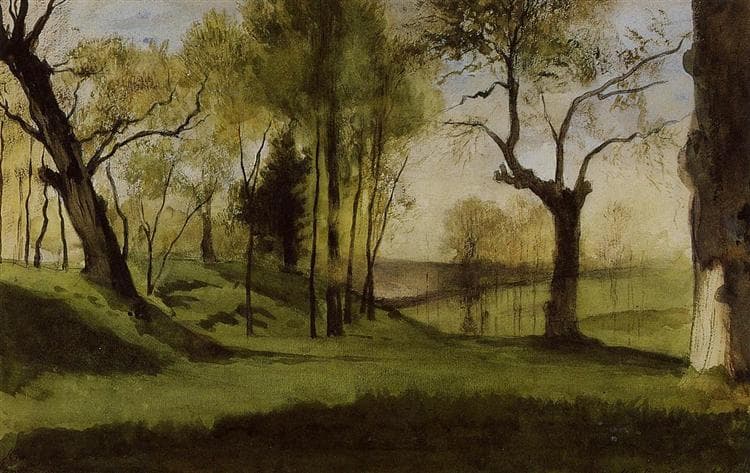
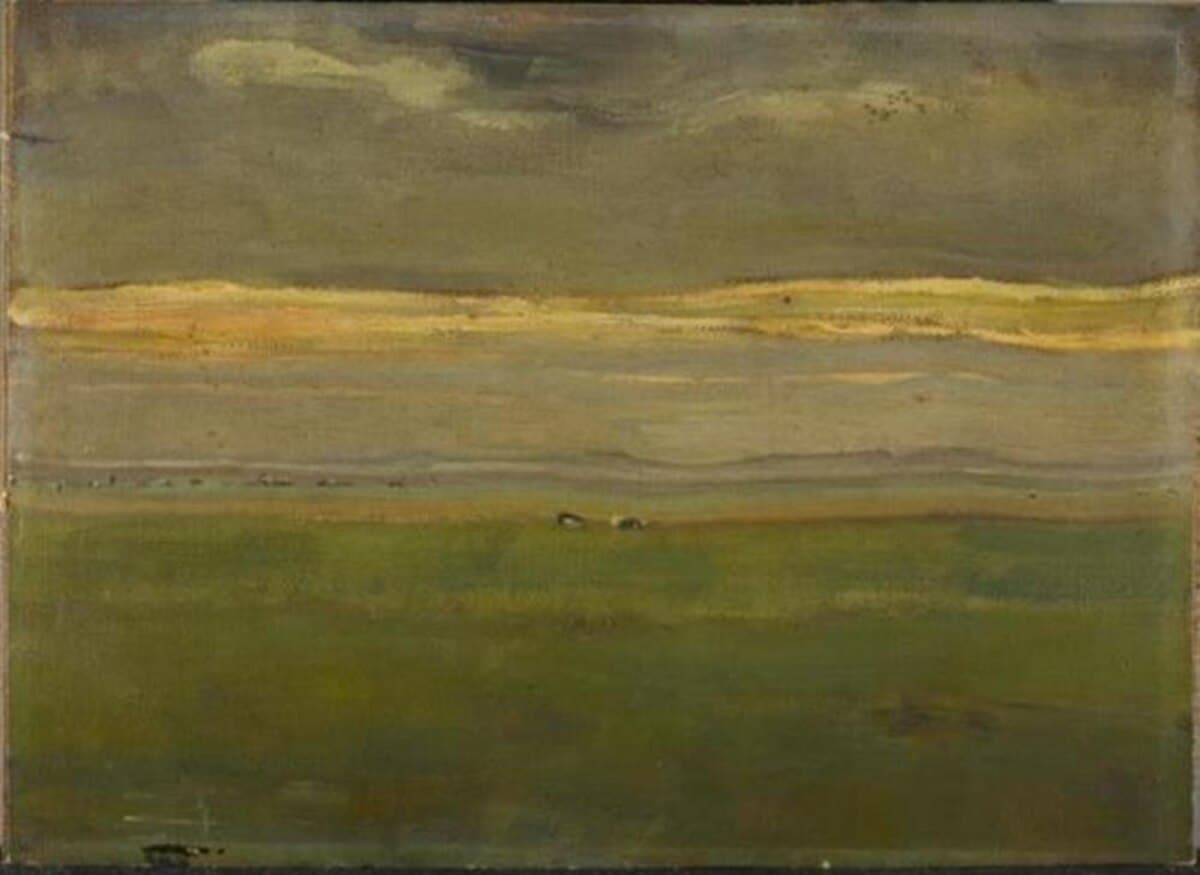
<p>Tonalism emerged among American landscape painters in the 1880s as a quieter alternative to both the detailed realism of the Hudson River School and the brighter palette of Impressionism arriving from France. Painters muted their color into narrow ranges of grey, brown, and blue, often set at dusk or dawn, using soft edges and thin layers of paint to suggest mood and atmosphere rather than describe a scene in sharp detail. The approach favored feeling over topographical accuracy, treating a landscape as something closer to a memory than a record.</p> <p><a href="/apps/masterpieces/artist/george-inness-jr"><strong>George Inness Jr.</strong></a> continued the tradition established by his father, painter George Inness, carrying its soft, atmospheric landscape style into the early 20th century. His <a href="/apps/masterpieces/art/autumn-landscape-inness-jr"><strong>Autumn Landscape</strong></a> shows the movement's characteristic restraint, built from close, muted tones rather than the high-contrast color favored by his European contemporaries. Tonalism never organized into a formal group the way other movements did, and it faded from fashion once modernist styles took hold after 1915, but its emphasis on mood over detail left a lasting mark on American landscape painting.</p>
Muted, narrow color paletteDusk and dawn lightingSoft, atmospheric edges
1 artists
1880 – 1910
Symbolism
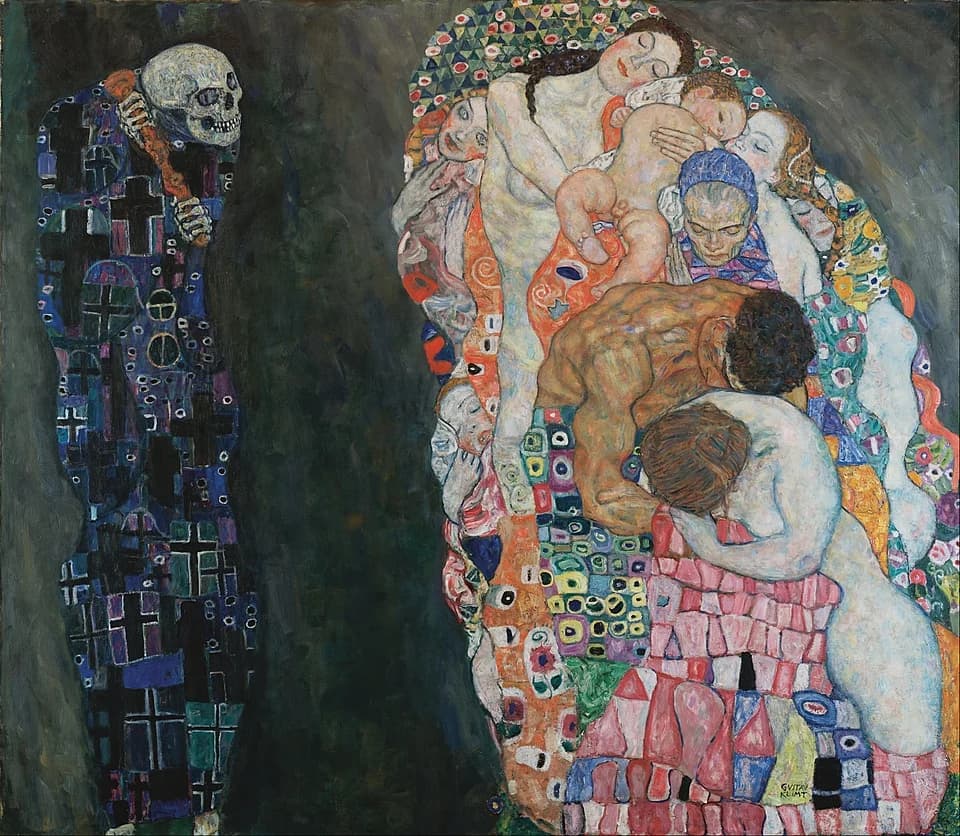
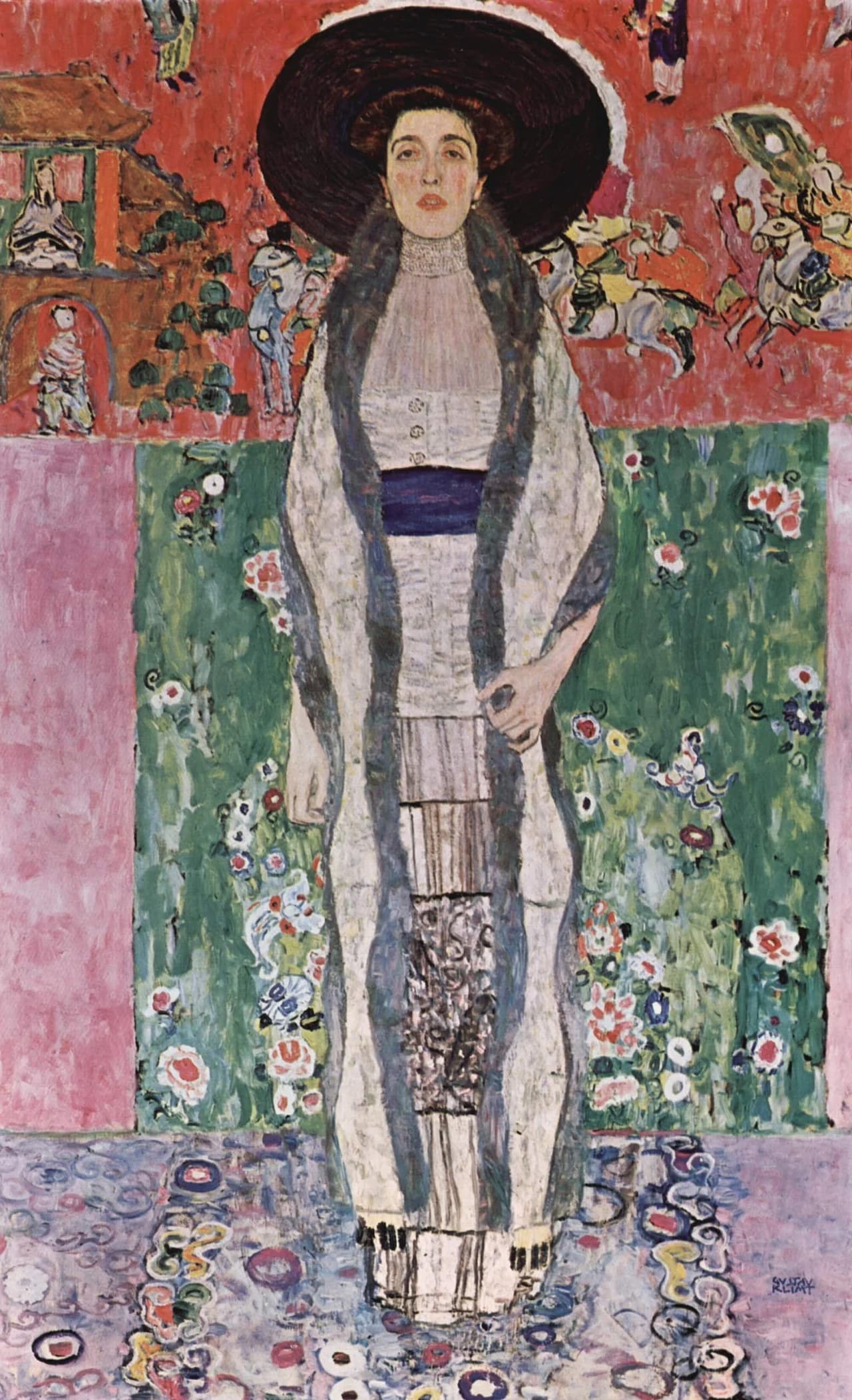
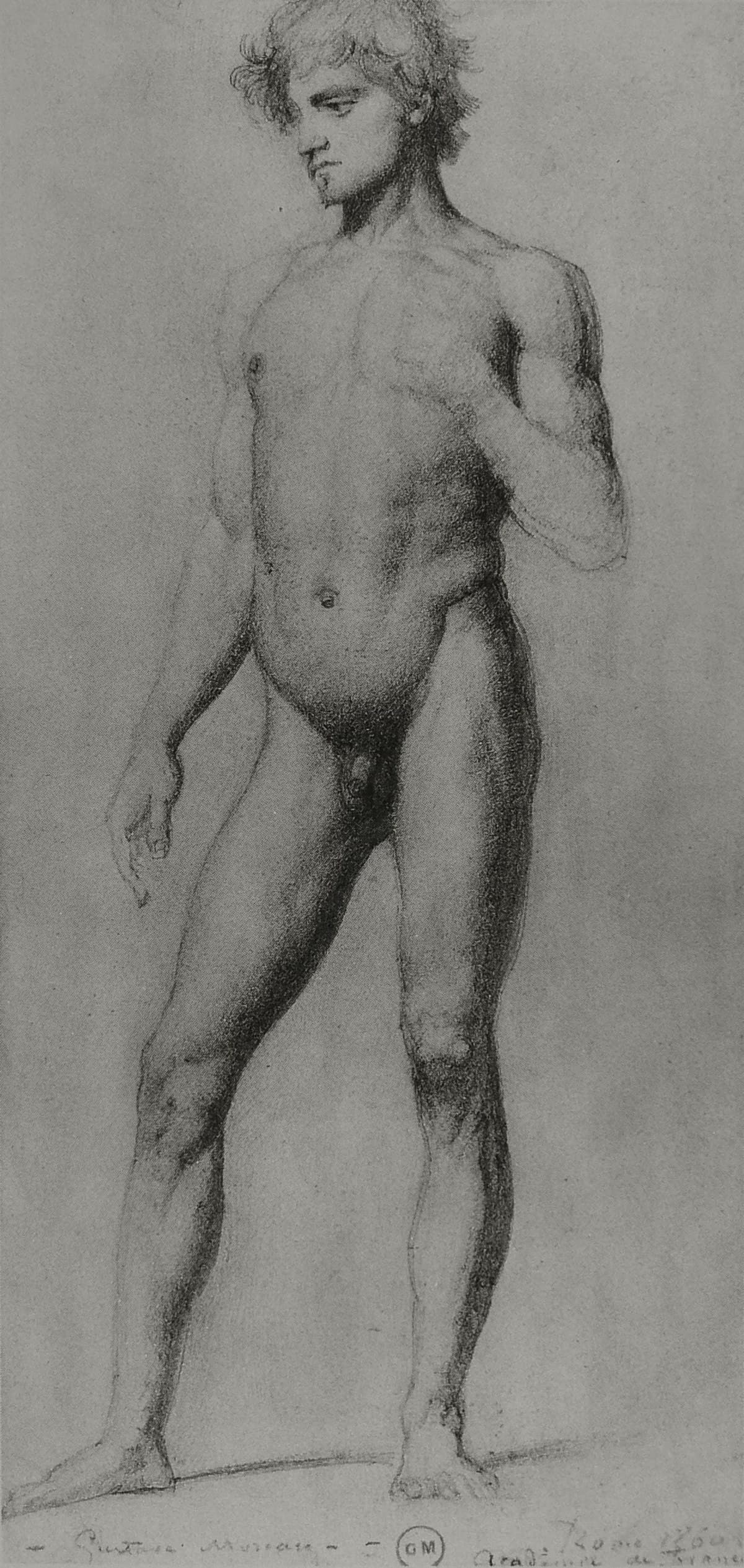
<p>Symbolism took shape in France in the 1880s as a reaction against both realism and Impressionism, which Symbolist painters saw as too concerned with recording the surface appearance of the world. They turned instead toward dreams, myth, religion, and inner psychological states, using suggestive imagery and rich, sometimes strange color to point toward ideas that could not be shown directly. The movement spread quickly beyond France into Belgium, Austria, and Russia, each region developing its own version of the same basic impulse.</p> <p><a href="/apps/masterpieces/artist/gustav-klimt"><strong>Gustav Klimt</strong></a> led the Vienna Secession and became the movement's most recognized painter, covering figures in gold leaf and ornamental pattern in <a href="/apps/masterpieces/art/the-kiss-klimt"><strong>The Kiss</strong></a> and <a href="/apps/masterpieces/art/tree-of-life-klimt"><strong>The Tree of Life</strong></a>, while <a href="/apps/masterpieces/art/death-and-life"><strong>Death and Life</strong></a> shows his darker, more allegorical side. <a href="/apps/masterpieces/artist/gustave-moreau"><strong>Gustave Moreau</strong></a> painted mythological subjects with jewel-like detail, treating figures like Salome as vessels for obsession and dread rather than historical illustration. <a href="/apps/masterpieces/artist/james-ensor"><strong>James Ensor</strong></a> in Belgium turned to masks and skeletons to expose the grotesque beneath polite society, while Russian painter <a href="/apps/masterpieces/artist/mikhail-vrubel"><strong>Mikhail Vrubel</strong></a> returned again and again to demonic subjects drawn from Lermontov's poetry. <a href="/apps/masterpieces/artist/pierre-puvis-de-chavannes"><strong>Pierre Puvis de Chavannes</strong></a> offered a calmer, more classical version of Symbolist ideals, painting flattened, dreamlike murals that influenced a generation of younger artists including Picasso.</p>
1886 – 1910
Post-Impressionism
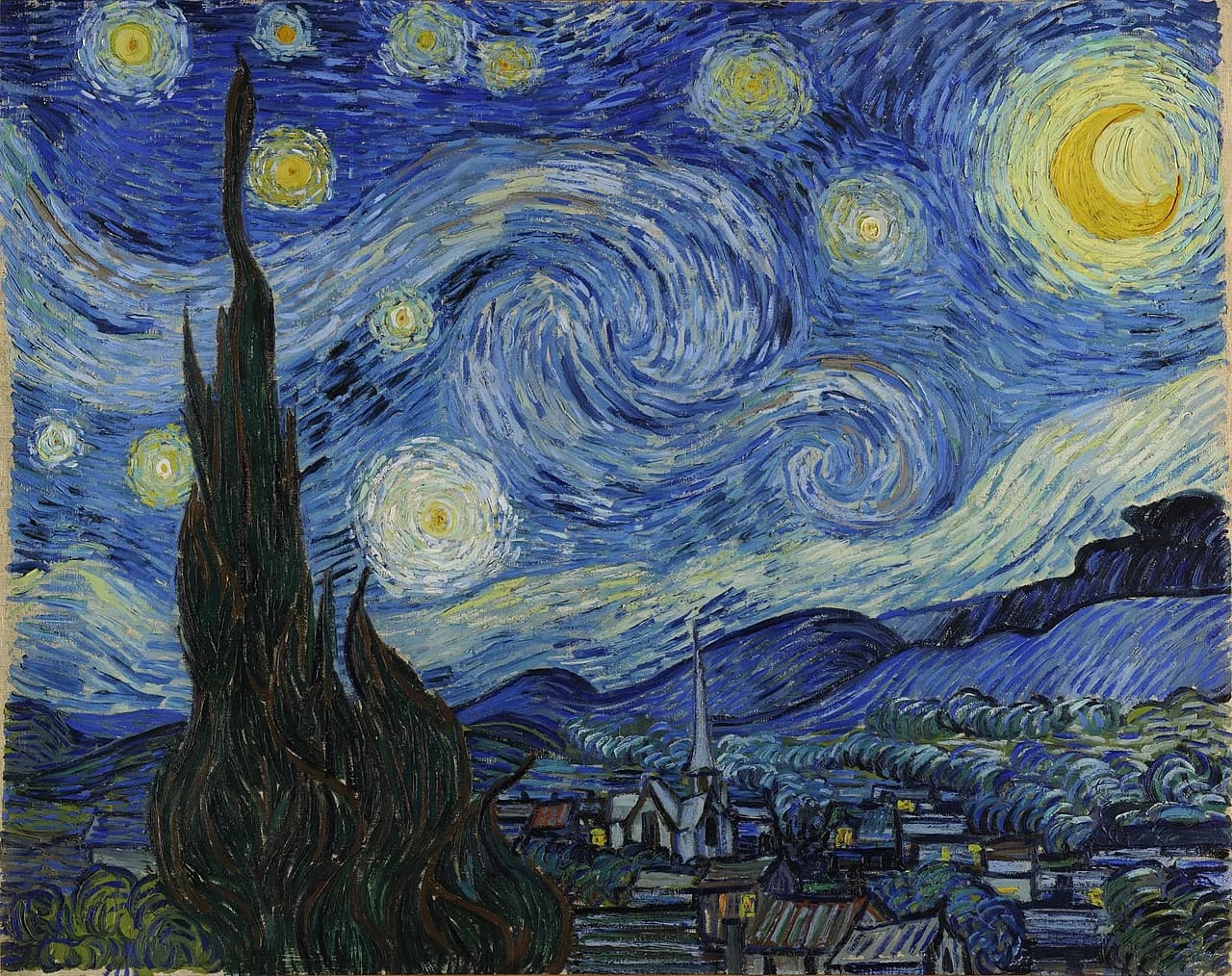
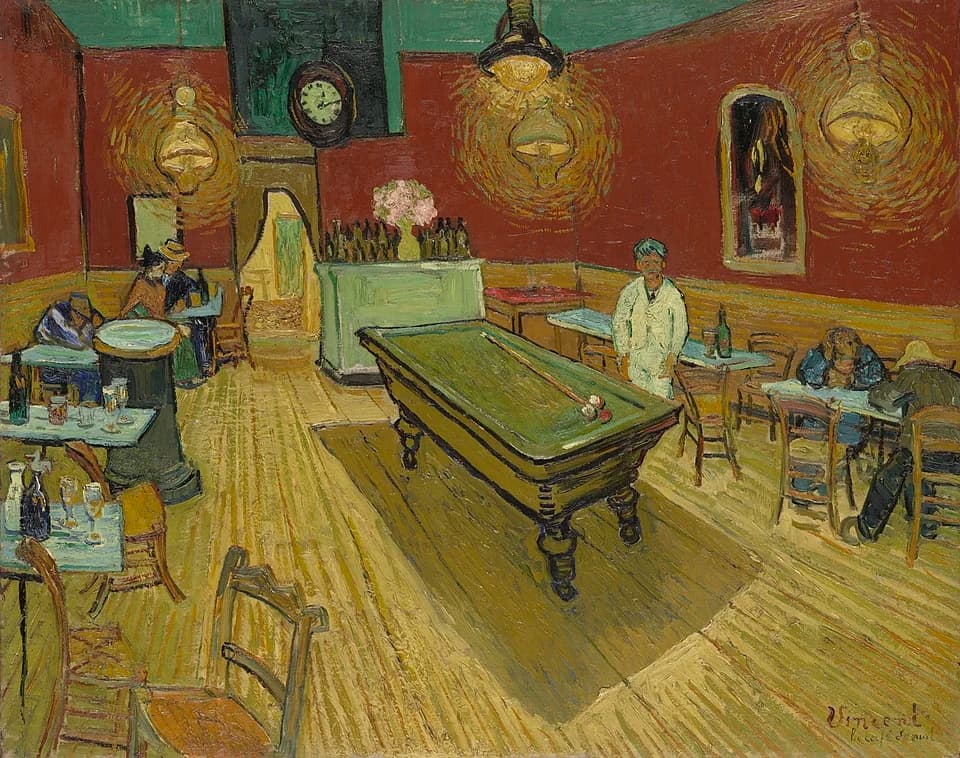
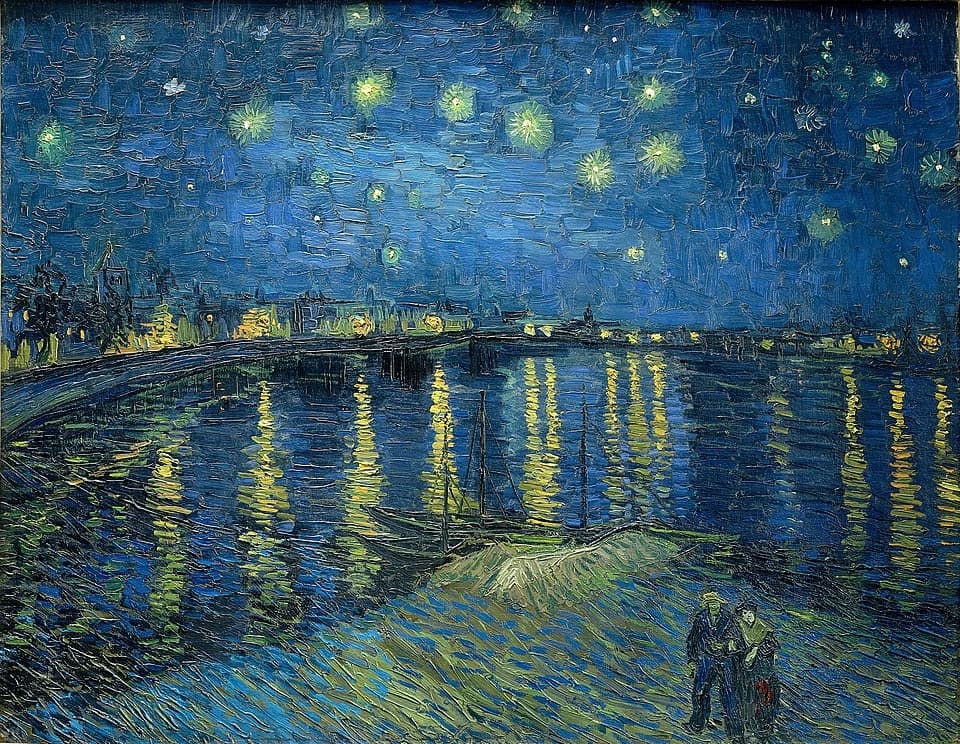
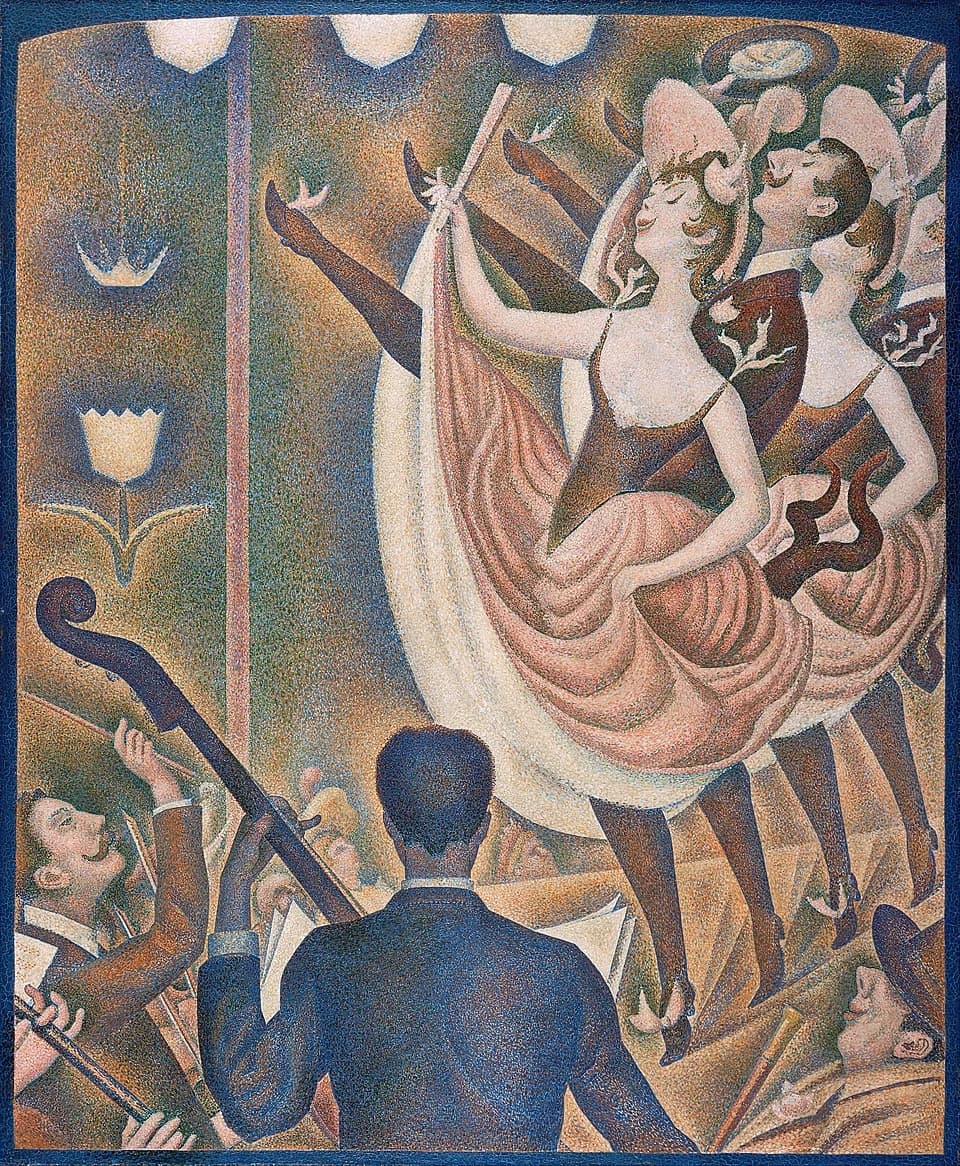
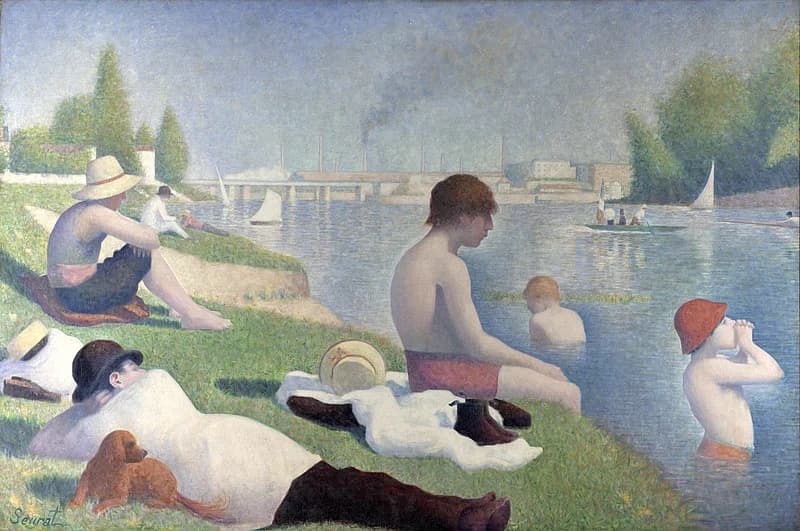
<p>Post-Impressionism is the umbrella term for a group of painters working mostly in France between 1886 and 1910 who had absorbed Impressionism's loose brushwork and bright palette, then pushed past it. Rather than simply recording how light fell on a scene, these artists used color and form to express structure, emotion, or symbolic meaning, often exaggerating what they saw rather than reproducing it.</p> <p><a href="/apps/masterpieces/artist/van-gogh"><strong>Vincent van Gogh</strong></a> used thick, directional brushstrokes to charge ordinary subjects with feeling, visible in <a href="/apps/masterpieces/art/the-starry-night"><strong>The Starry Night</strong></a> and <a href="/apps/masterpieces/art/sunflowers"><strong>Sunflowers</strong></a>. <a href="/apps/masterpieces/artist/paul-cezanne"><strong>Paul Cézanne</strong></a> broke objects down into underlying geometric planes, most clearly in <a href="/apps/masterpieces/art/the-card-players"><strong>The Card Players</strong></a>, laying groundwork that Cubism would later build on. <a href="/apps/masterpieces/artist/georges-seurat"><strong>Georges Seurat</strong></a> developed Pointillism, applying paint in small dots of pure color that blend optically at a distance, seen at full scale in <a href="/apps/masterpieces/art/a-sunday-on-la-grande-jatte"><strong>A Sunday Afternoon on the Island of La Grande Jatte</strong></a>. <a href="/apps/masterpieces/artist/paul-gauguin"><strong>Paul Gauguin</strong></a> flattened his compositions and used unnatural color to suggest symbolic content rather than observed reality. Together these painters proved that Impressionism's break from tradition was a starting point, not an endpoint, and their individual approaches to color and form fed directly into Fauvism, Cubism, and Expressionism in the following decades.</p>
1900 – 1960
American Realism
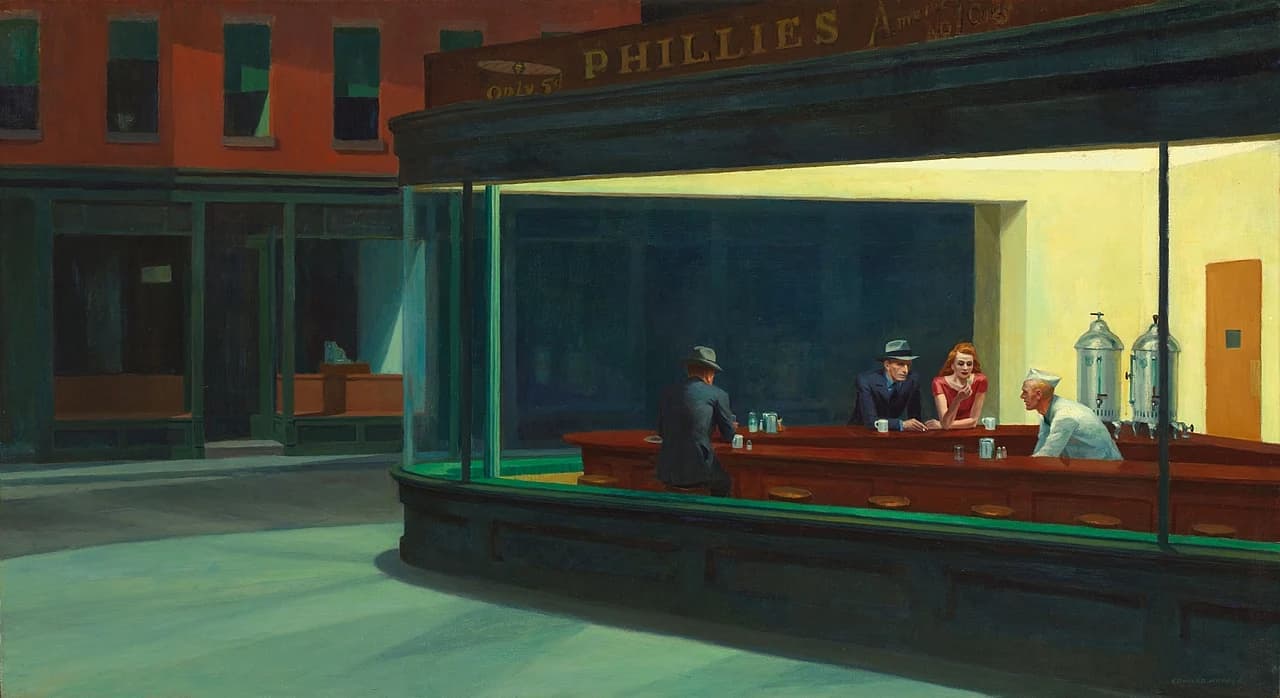
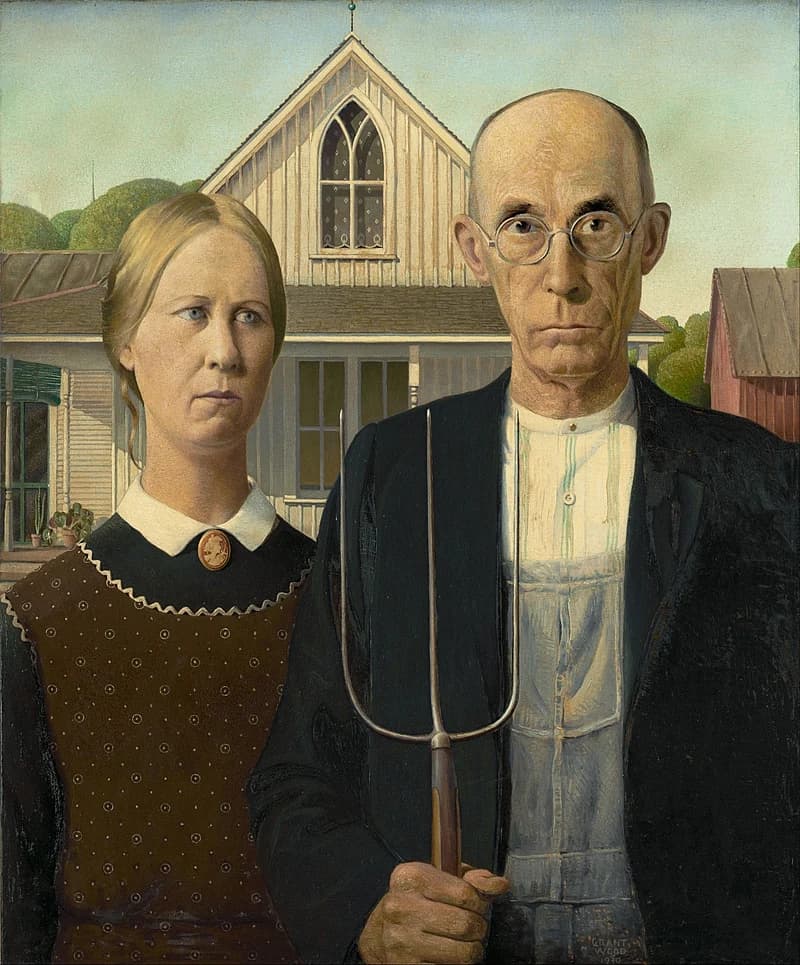
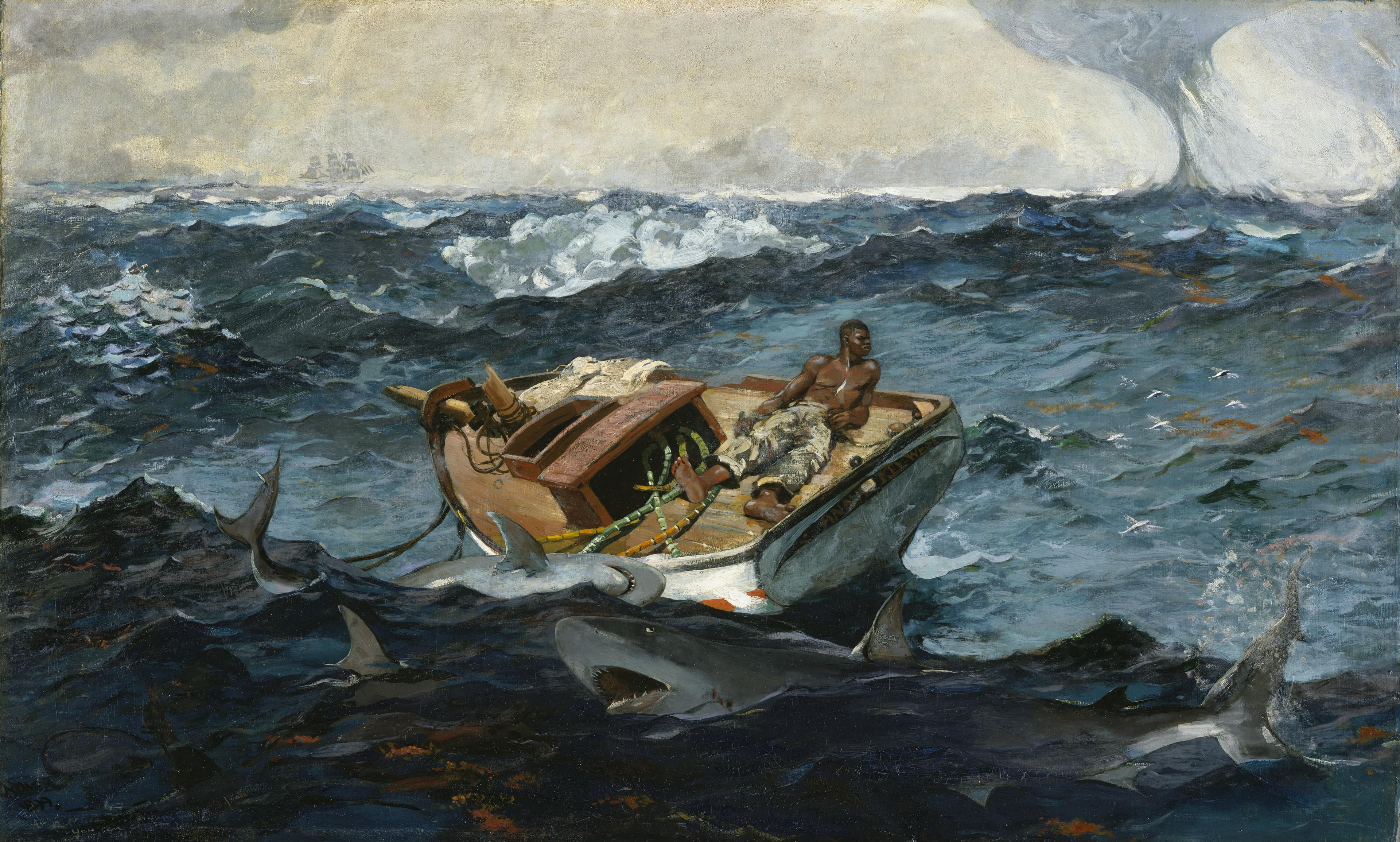
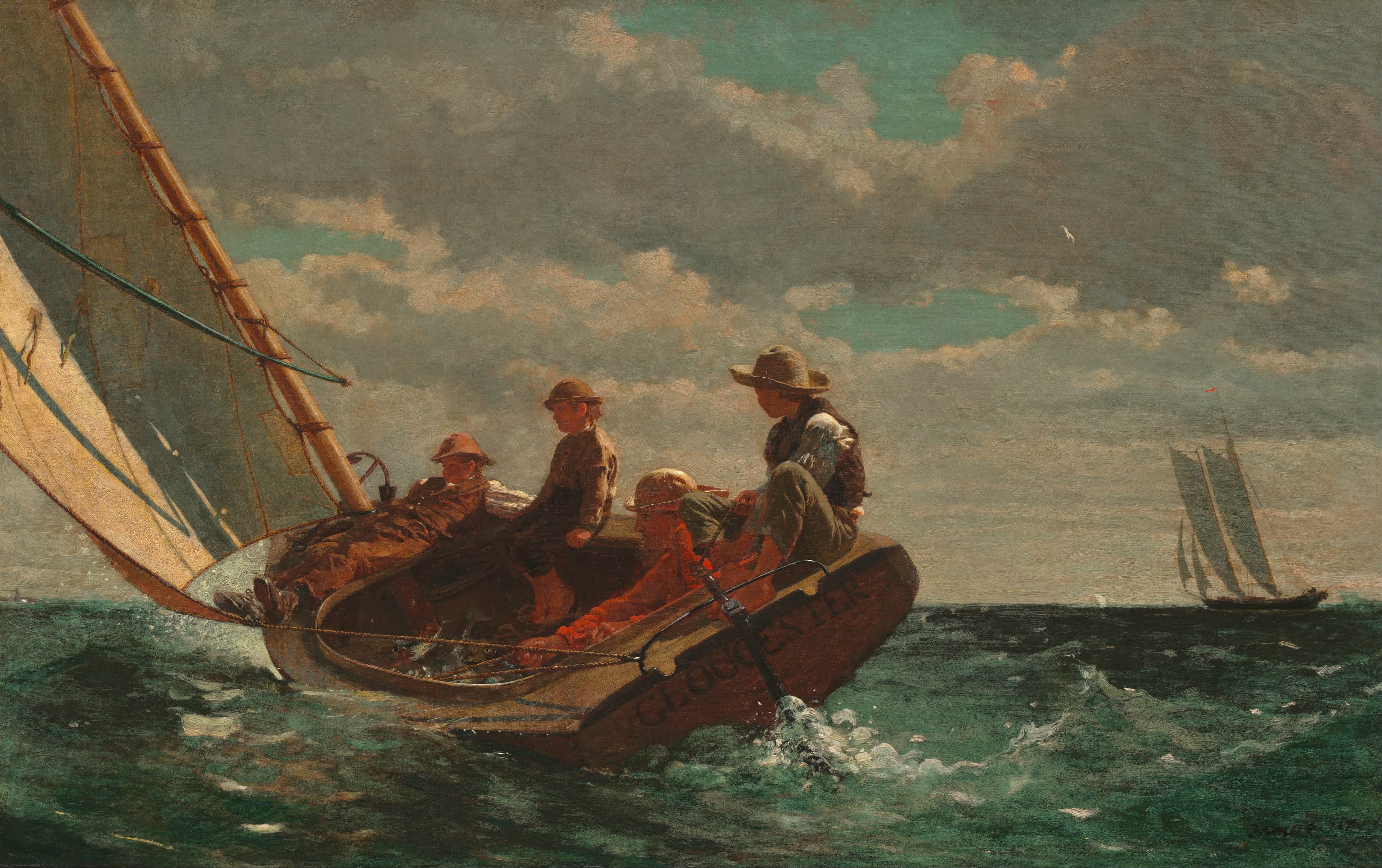
<p>American Realism developed in the decades around 1900 as artists turned away from European academic ideals to paint the country as it actually looked: city streets, diners, farms, and working people, rendered without romantic softening. The movement grew partly out of the Ashcan School's gritty urban scenes and continued through the interwar years into a broader style sometimes tied to Regionalism.</p> <p><a href="/apps/masterpieces/artist/edward-hopper"><strong>Edward Hopper</strong></a> became the movement's defining voice, using stark light and empty compositions to capture a specific American loneliness. His <a href="/apps/masterpieces/art/nighthawks"><strong>Nighthawks</strong></a> shows a nearly deserted diner lit up against a dark city street, while <a href="/apps/masterpieces/art/cape-cod-evening-hopper"><strong>Cape Cod Evening</strong></a> finds the same quiet unease in a rural setting. <a href="/apps/masterpieces/artist/grant-wood"><strong>Grant Wood</strong></a> took a different tack in the Midwest, painting the stiff, dignified farm couple of <a href="/apps/masterpieces/art/american-gothic"><strong>American Gothic</strong></a>, an image that has been parodied more than almost any other painting in American history.</p> <p><a href="/apps/masterpieces/artist/winslow-homer"><strong>Winslow Homer</strong></a> painted the sea and rural labor with a rougher, more physical hand decades earlier, and <a href="/apps/masterpieces/artist/george-bellows"><strong>George Bellows</strong></a> brought that same directness to boxing rings and construction sites. Together these artists built a visual record of American life that prized honesty over prettiness, and their influence still shapes how illustrators and photographers depict everyday American scenes today.</p>

1904 – 1908
Fauvism
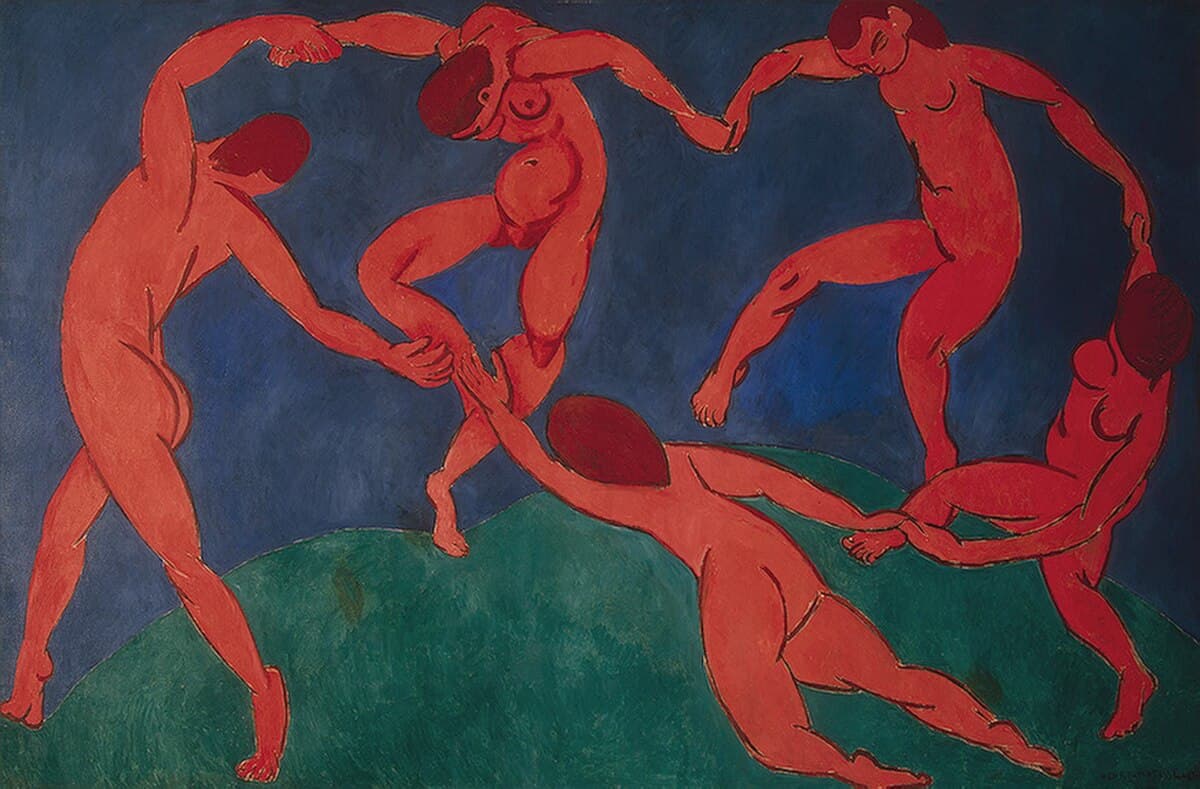
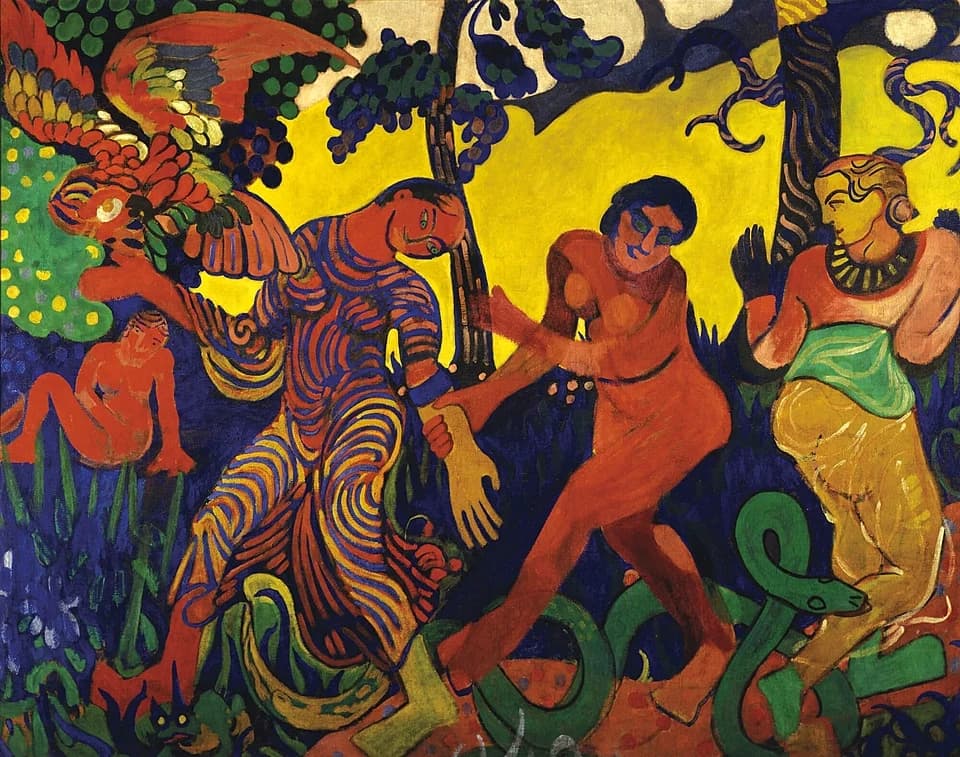
<p>Fauvism burned brightly for only about four years, from 1904 to 1908, but it was the first major art movement of the 20th century and helped break color free from any obligation to look natural. The name came from a critic who, seeing the wild, unmixed colors at the 1905 Salon d'Automne, dismissively called the painters "les fauves," or wild beasts. The label stuck, and the artists more or less embraced it.</p> <p><a href="/apps/masterpieces/artist/henri-matisse"><strong>Henri Matisse</strong></a> led the group, using flat planes of pure, often non-naturalistic color to build a painting's structure rather than relying on shading or gradual tone. His <a href="/apps/masterpieces/art/femme-au-chapeau-woman-with-hat"><strong>Femme au chapeau (Woman with a Hat)</strong></a> shocked its first audience with a face painted in patches of green and orange, a portrait of his wife rendered less as a likeness and more as a study in color relationships. <a href="/apps/masterpieces/artist/andre-derain"><strong>André Derain</strong></a> worked alongside him, painting the same harbor and landscape scenes in equally intense, arbitrary color.</p> <p>Fauvist paintings favored simplified forms, spontaneous, visible brushwork, and flattened space over depth, all in service of pure emotional impact. Because the group had no shared theory beyond a love of strong color, it dissolved quickly as its members moved toward Cubism and other directions, but its short run permanently expanded what color was allowed to do in painting.</p>
1905 – 1930
Expressionism
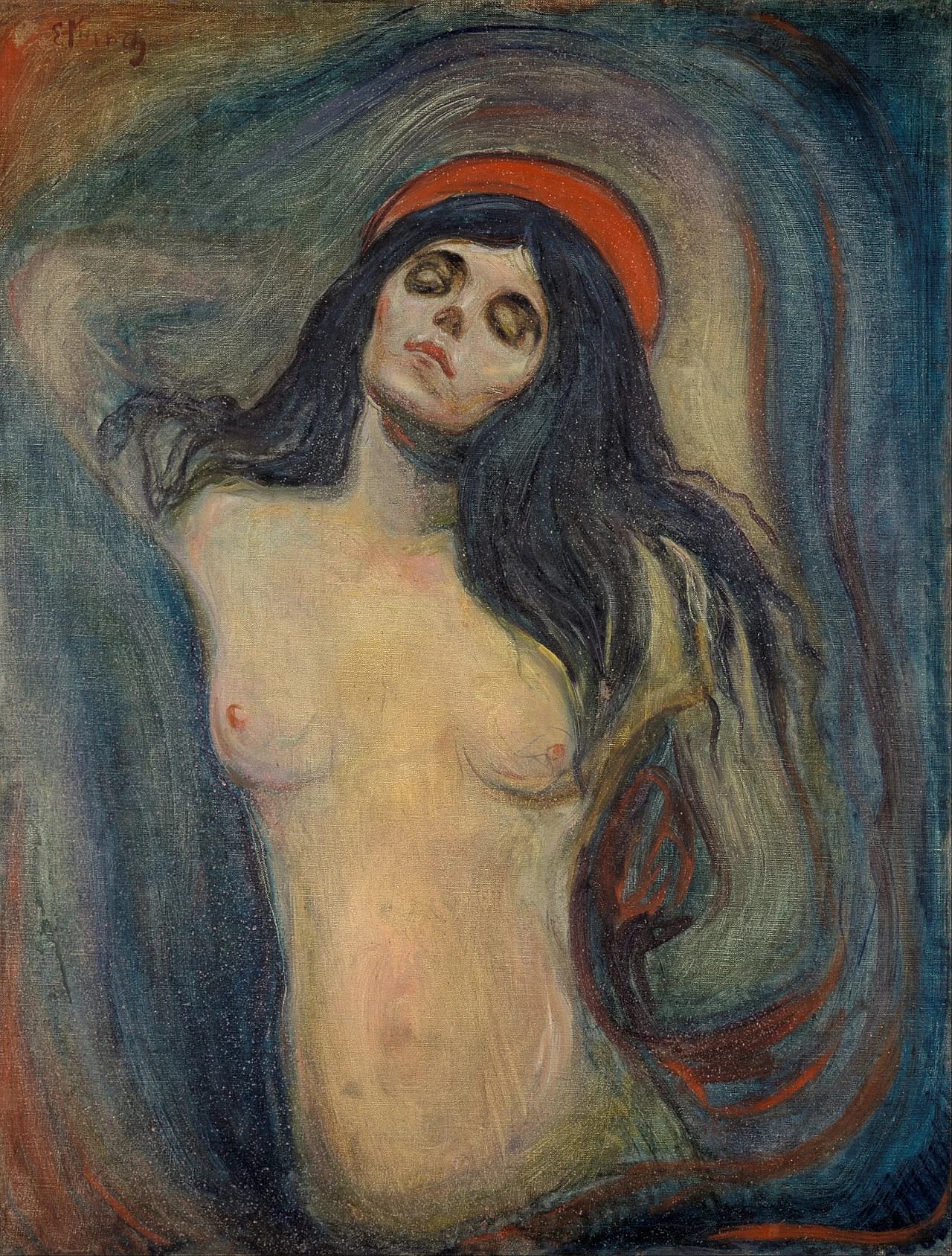
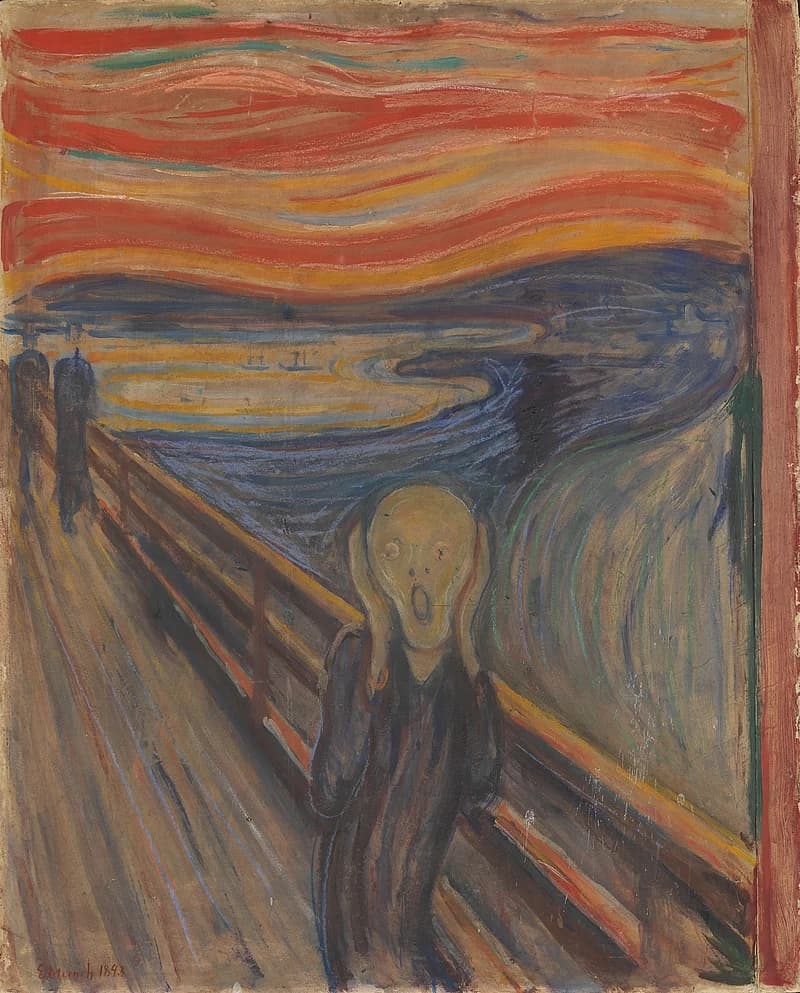
<p>Expressionism developed in Germany and Austria in the early 1900s, built on the idea that painting should convey inner emotional or psychological states rather than record the outside world accurately. Artists distorted color, proportion, and space whenever it served feeling over description, often building on the earlier example of <a href="/apps/masterpieces/artist/edvard-munch"><strong>Edvard Munch</strong></a>, whose <a href="/apps/masterpieces/art/the-scream"><strong>The Scream</strong></a> turned a walk along a fjord into a howling vision of anxiety, its wavy sky and skeletal figure now among the most recognized images in art. Munch returned to that same raw emotional territory in works like <a href="/apps/masterpieces/art/madonna-munch"><strong>Madonna</strong></a> and <a href="/apps/masterpieces/art/sick-child"><strong>The Sick Child</strong></a>, both drawn from personal loss and illness.</p> <p>Two main groups carried the movement forward in Germany. Die Brücke, led by <a href="/apps/masterpieces/artist/ernst-ludwig-kirchner"><strong>Ernst Ludwig Kirchner</strong></a>, favored jagged forms and clashing colors to depict city life and its tensions. Der Blaue Reiter, co-founded by <a href="/apps/masterpieces/artist/wassily-kandinsky"><strong>Wassily Kandinsky</strong></a> and <a href="/apps/masterpieces/artist/franz-marc"><strong>Franz Marc</strong></a>, leaned toward spiritual and symbolic content, with Marc painting animals in unnatural blues and reds to suggest a purer inner life.</p> <p>In Vienna, <a href="/apps/masterpieces/artist/egon-schiele"><strong>Egon Schiele</strong></a> pushed Expressionist distortion into raw, angular figure painting charged with unease, while <a href="/apps/masterpieces/artist/marc-chagall"><strong>Marc Chagall</strong></a> folded in dreamlike imagery from his Russian Jewish childhood. Expressionism's emphasis on emotional truth over realism went on to shape German film, later American Abstract Expressionism, and much of 20th century figurative painting.</p>
1907 – 1920
Cubism
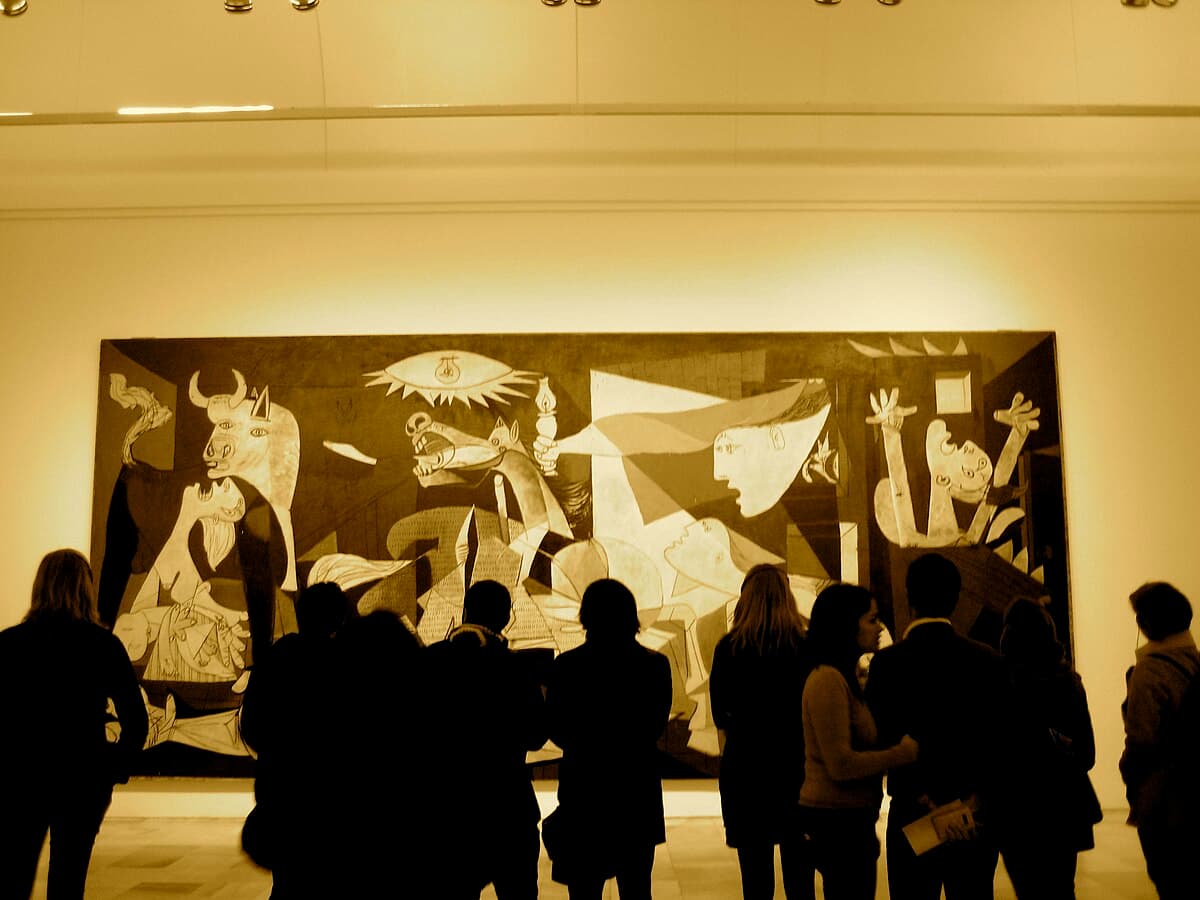
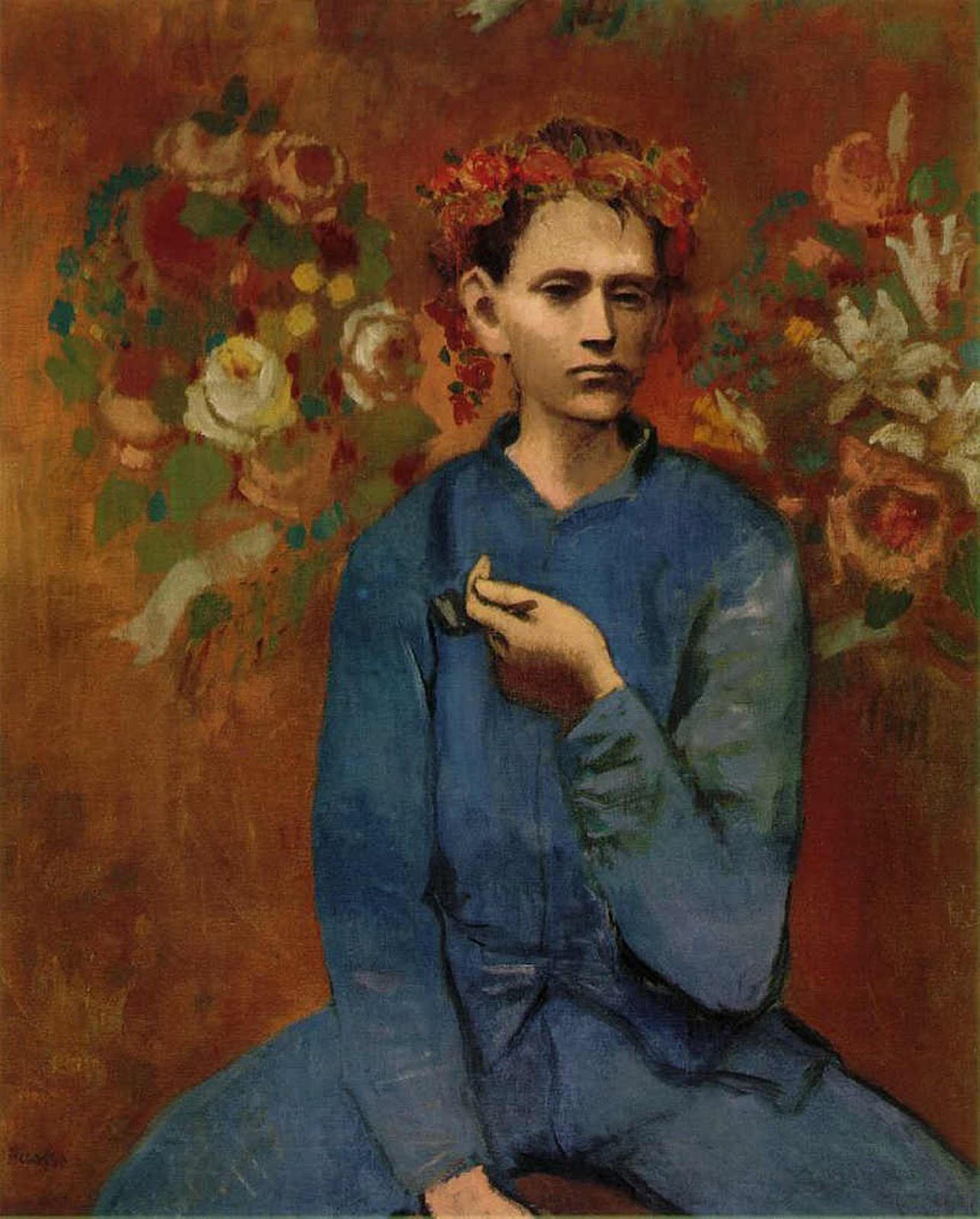
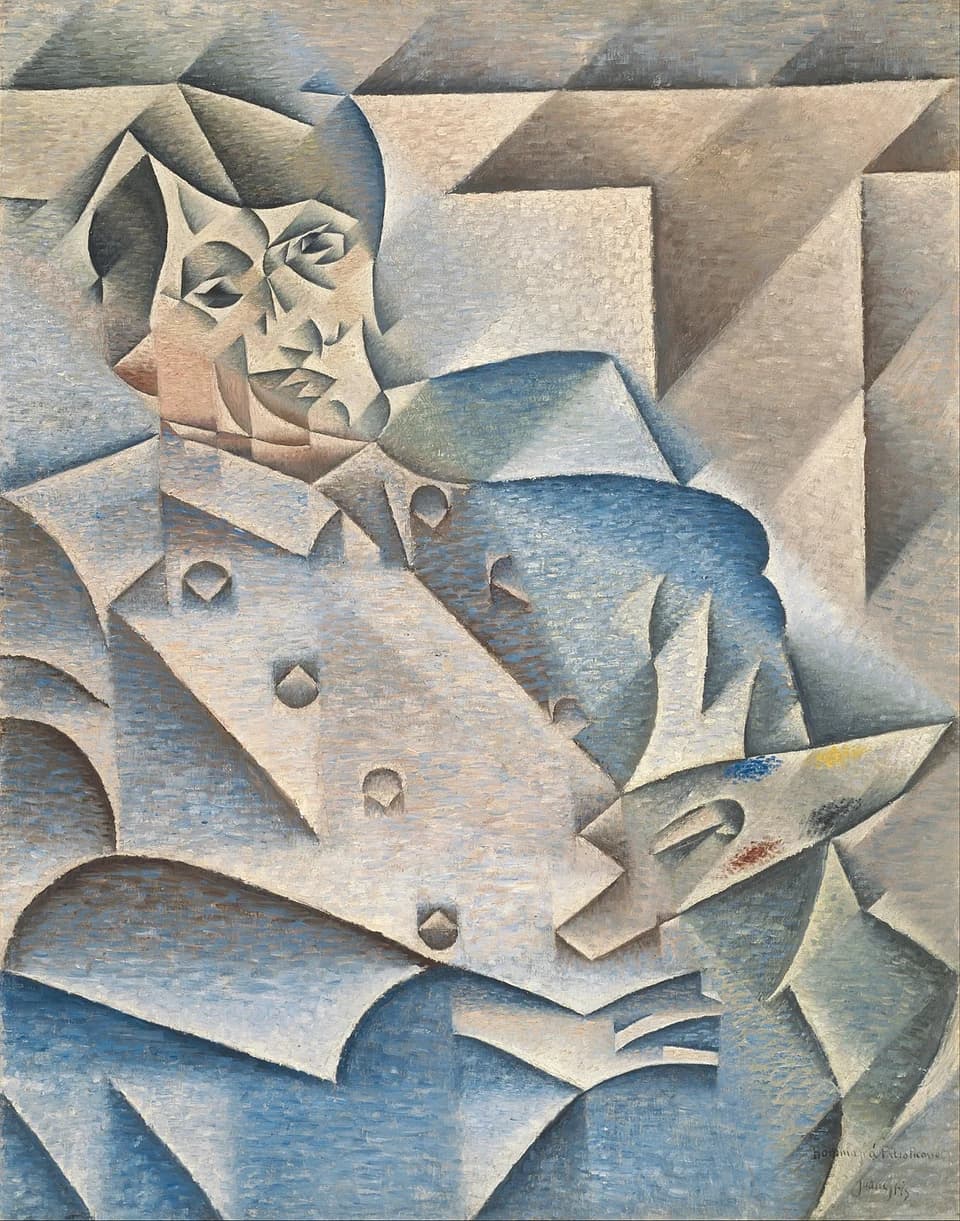
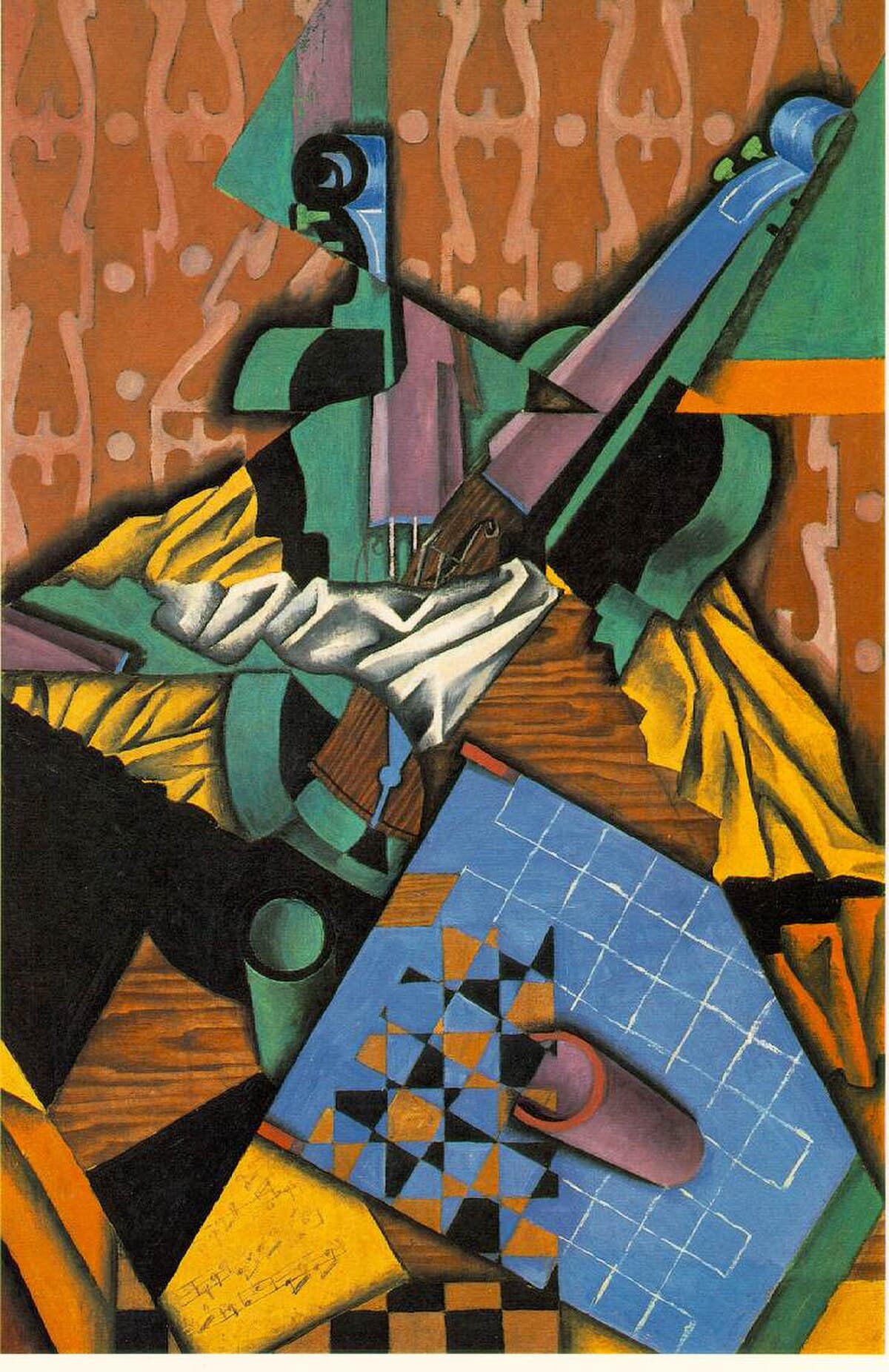
<p>Cubism began in Paris around 1907, when <a href="/apps/masterpieces/artist/pablo-picasso"><strong>Pablo Picasso</strong></a> and Georges Braque started breaking objects apart into geometric facets and showing several viewpoints of the same subject at once. It was the most radical break with centuries of single-point perspective that European painting had ever seen, and it changed how nearly every artist after them thought about representing form on a flat surface.</p> <p>The movement usually gets split into two phases. Analytic Cubism, running through about 1912, fractured subjects into an almost monochrome scaffolding of overlapping planes, visible in transitional works like Picasso's <a href="/apps/masterpieces/art/family-of-saltimbanques"><strong>Family of Saltimbanques</strong></a>. Synthetic Cubism followed with flatter shapes, brighter color, and collaged materials like newspaper and wallpaper glued directly onto the canvas. <a href="/apps/masterpieces/artist/juan-gris"><strong>Juan Gris</strong></a> refined the style into cleaner, more decorative compositions, while <a href="/apps/masterpieces/artist/fernand-leger"><strong>Fernand Léger</strong></a> gave Cubist forms a mechanical, almost industrial quality inspired by machinery and modern city life.</p> <p><a href="/apps/masterpieces/artist/robert-delaunay"><strong>Robert Delaunay</strong></a> pushed the ideas toward pure color and rhythm in a related style sometimes called Orphism. Picasso's later <a href="/apps/masterpieces/art/guernica"><strong>Guernica</strong></a> shows how far Cubist fragmentation could be stretched for political statement, using broken, angular forms to convey the horror of the Spanish Civil War bombing that gave the painting its name. Cubism's influence reached far beyond painting, shaping sculpture, architecture, and design throughout the 20th century.</p>

1909 – 1944
Futurism
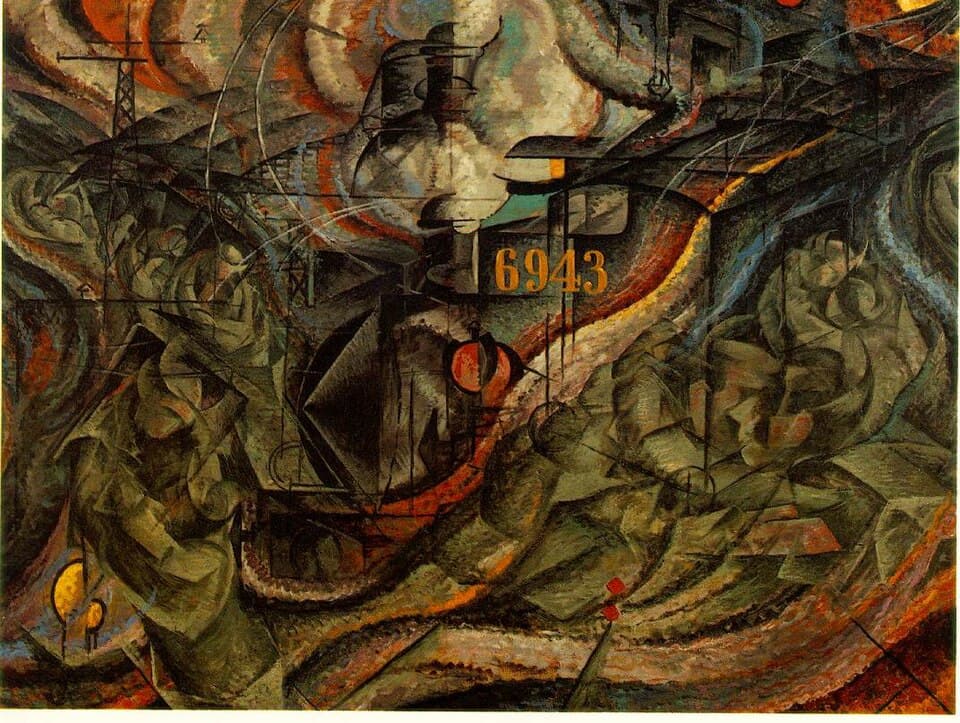
<p>Futurism launched in Italy in 1909, when poet Filippo Tommaso Marinetti published a manifesto in a Paris newspaper celebrating speed, machines, and a total break from the past. Painters and sculptors who joined the movement wanted to capture the sensation of modern life itself: cars, trains, factories, and crowds in motion, at a moment when Italy was rapidly industrializing.</p> <p><a href="/apps/masterpieces/artist/umberto-boccioni"><strong>Umberto Boccioni</strong></a> became the movement's leading artist, developing techniques to show multiple moments of movement layered into a single image, closer to a blurred photograph than a still scene. His bronze sculpture <a href="/apps/masterpieces/art/unique-forms-of-continuity-in-space-umberto-boccioni"><strong>Unique Forms of Continuity in Space</strong></a> shows a striding figure whose body seems to be sliced apart by the wind moving through it, an attempt to sculpt motion rather than a fixed pose. His painting <a href="/apps/masterpieces/art/city-rises"><strong>The City Rises</strong></a> turns construction workers and straining horses into a swirl of color and energy, while <a href="/apps/masterpieces/art/states-mind-farewells"><strong>States of Mind: The Farewells</strong></a> uses fractured, Cubist-influenced forms to capture the emotional chaos of a train station.</p> <p>Futurism's embrace of speed and machinery carried an aggressive, sometimes militaristic edge, and the movement's early enthusiasm for war and its later association with Italian Fascism have complicated its legacy. Boccioni died in 1916 after falling from a horse during military training, cutting short the movement's most talented voice.</p>
Speed and motion
1913 – 1935
Suprematism
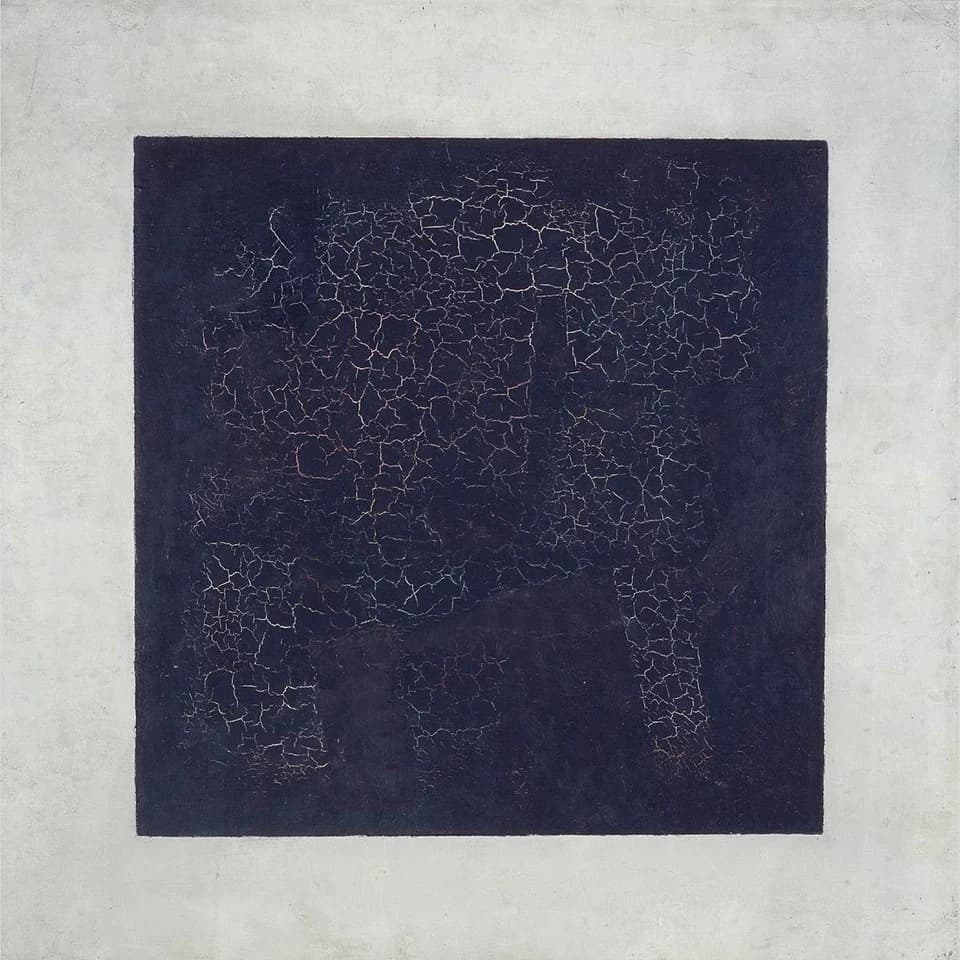
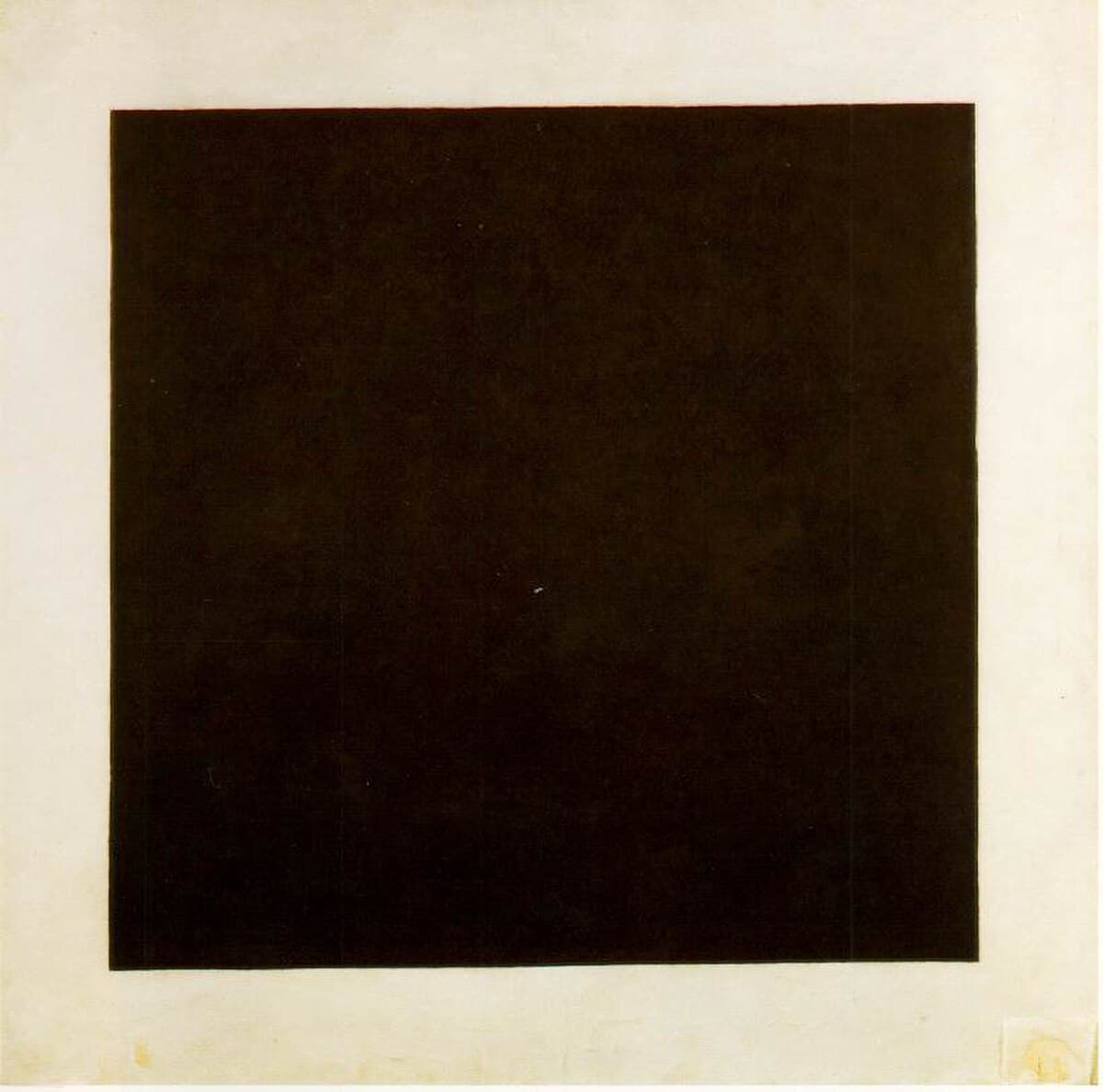
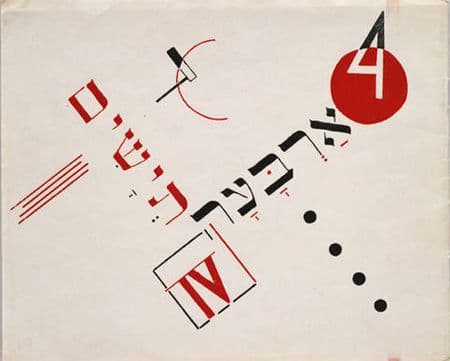
<p>Suprematism began in Russia in 1913 when painter <a href="/apps/masterpieces/artist/kazimir-malevich"><strong>Kazimir Malevich</strong></a> concluded that representing objects from the visible world had become a dead end, and that painting should instead express pure feeling through basic geometric shapes alone. He unveiled the idea publicly in 1915 with a small square of black paint on a white ground, a piece so stripped down it functioned almost as a manifesto rather than a picture.</p> <p>Malevich's <a href="/apps/masterpieces/art/black-square"><strong>Black Square</strong></a> remains the movement's defining image, reducing painting to a single flat shape against an empty field. His later <a href="/apps/masterpieces/art/suprematist-composition"><strong>Suprematist Composition</strong></a> shows how far the idea could be developed, arranging colored rectangles and lines in floating, weightless configurations that ignore gravity and perspective entirely. <a href="/apps/masterpieces/artist/el-lissitzky"><strong>El Lissitzky</strong></a> took Malevich's flat geometric language and extended it into architecture, graphic design, and propaganda posters, helping carry Suprematist ideas beyond painting and into the broader Constructivist movement that followed. Suprematism was short-lived as an organized group, largely suppressed after the Soviet government turned against abstract art in the 1930s, but its reduction of painting to color, shape, and flatness had already influenced abstract art across Europe.</p>
1917 – 1931
De Stijl
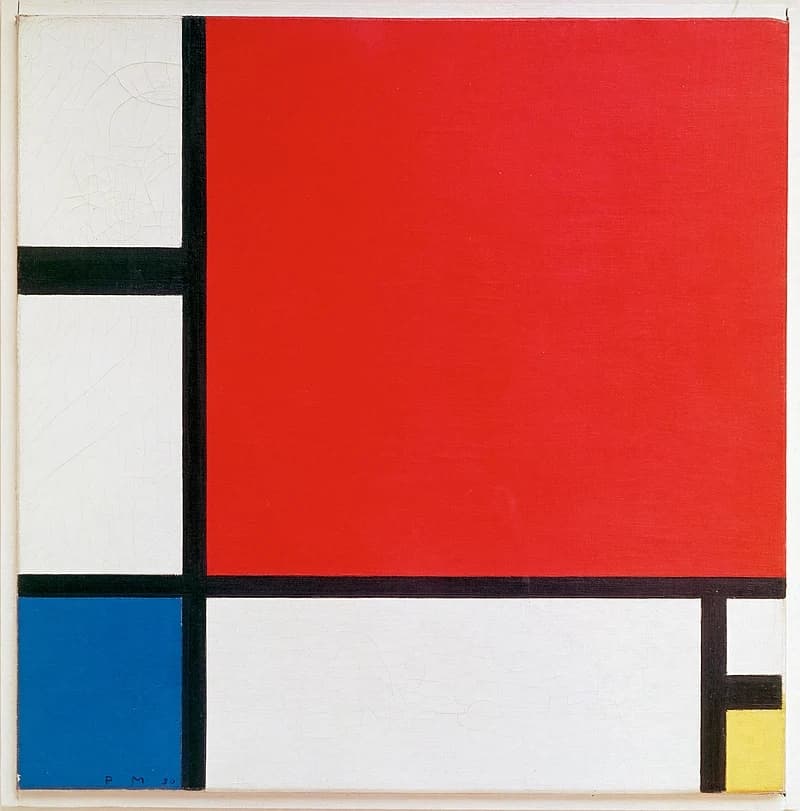
<p>De Stijl, Dutch for "The Style," started in the Netherlands in 1917 as both an art movement and a magazine of the same name, founded by a small group of painters, architects, and designers who wanted to strip art down to its most essential elements. Their goal was a universal visual language built from straight lines, right angles, and a small set of colors, one they believed could apply equally to painting, furniture, and buildings.</p> <p><a href="/apps/masterpieces/artist/piet-mondrian"><strong>Piet Mondrian</strong></a> became the movement's central painter, restricting his mature work to horizontal and vertical black lines dividing white canvases into rectangles filled only with red, yellow, blue, or left empty. His <a href="/apps/masterpieces/art/composition-with-red-blue-and-yellow"><strong>Composition with Red, Blue, and Yellow</strong></a> is the clearest statement of this approach: no curves, no diagonals, no representational content, just balance achieved through the size and placement of flat color blocks.</p> <p>Mondrian arrived at this reduction gradually, moving away from earlier landscape and tree paintings that still showed recognizable subjects. He described the philosophy behind it as Neoplasticism, the idea that pure abstraction could express universal harmony better than any depiction of the visible world. De Stijl's grid-based aesthetic went on to influence Bauhaus design, modernist architecture, and even later graphic design and fashion, far outliving the movement's own brief run through 1931.</p>
Primary colors onlyGeometric shapes

1920 – 1960
Surrealism
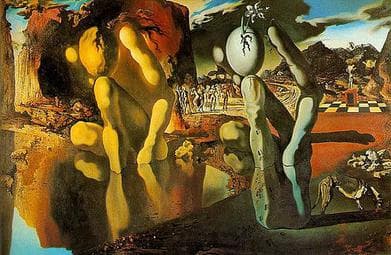
<p>Surrealism grew out of the Dada movement in Paris in 1924, when poet André Breton published a manifesto calling for art that bypassed rational thought entirely and drew instead from dreams, free association, and the unconscious mind. Painters translated this idea into two broad approaches: some rendered impossible scenes with the crisp, believable detail of a photograph, while others worked more automatically, letting shapes emerge without a fixed plan.</p> <p><a href="/apps/masterpieces/artist/salvador-dali"><strong>Salvador Dalí</strong></a> represents the first approach at its most extreme, painting melting clocks draped over a barren landscape with total technical control in <a href="/apps/masterpieces/art/the-persistence-of-memory"><strong>The Persistence of Memory</strong></a>. <a href="/apps/masterpieces/artist/rene-magritte"><strong>René Magritte</strong></a> used a similarly precise style to question the relationship between images and the objects they represent, as in <a href="/apps/masterpieces/art/the-son-of-man"><strong>The Son of Man</strong></a> and <a href="/apps/masterpieces/art/la-condition-humaine"><strong>The Human Condition</strong></a>. <a href="/apps/masterpieces/artist/marc-chagall"><strong>Marc Chagall</strong></a> painted floating figures and inverted village scenes drawn from memory and folklore, work that predated the formal movement but shared its dreamlike logic. <a href="/apps/masterpieces/artist/frida-kahlo"><strong>Frida Kahlo</strong></a> was embraced by the Surrealists in Paris in the late 1930s, though she maintained that her own paintings depicted her lived reality rather than dreams.</p>

1940 – 1960
Abstract Expressionism
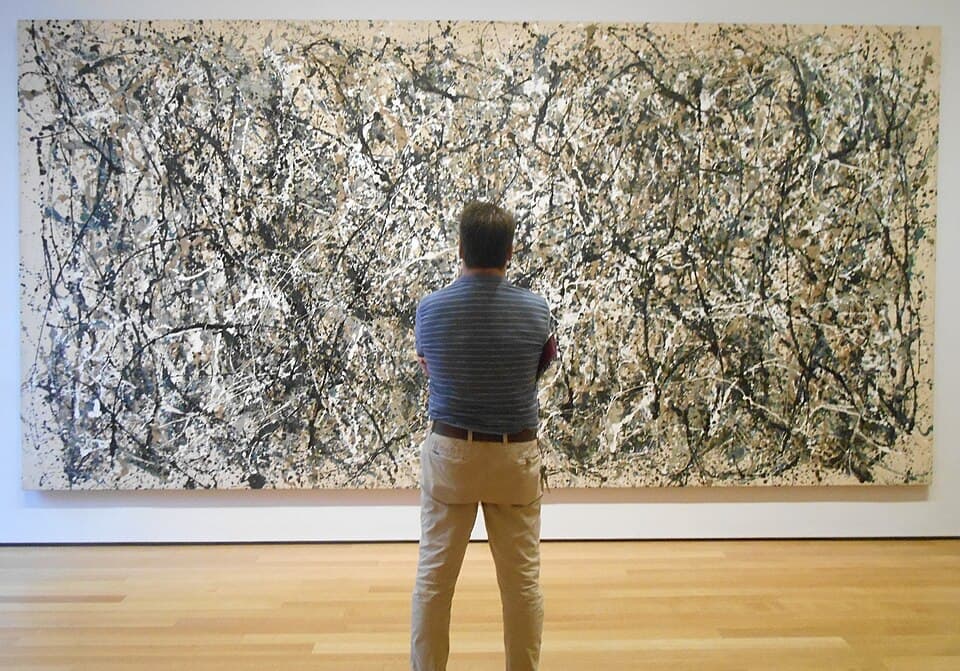
<p>Abstract Expressionism emerged in New York during the 1940s, the first art movement to shift the center of the art world from Paris to America. Painters working in the aftermath of World War II wanted an art that expressed raw emotion and the unconscious directly, without depicting recognizable objects. The result split into two broad approaches: gestural "action painting," where the physical act of painting became the subject, and color field painting, which used large expanses of color to create a mood.</p> <p><a href="/apps/masterpieces/artist/jackson-pollock"><strong>Jackson Pollock</strong></a> became the movement's most famous name by dripping and flinging paint across canvases laid on the floor, a method visible in works like <a href="/apps/masterpieces/art/lavender-mist-pollock"><strong>Number 1, 1950 (Lavender Mist)</strong></a>. <a href="/apps/masterpieces/artist/mark-rothko"><strong>Mark Rothko</strong></a> took the opposite route, stacking soft rectangles of color meant to be viewed up close so they could overwhelm the senses. <a href="/apps/masterpieces/artist/willem-de-kooning"><strong>Willem de Kooning</strong></a> kept the human figure in play but attacked it with slashing, aggressive brushwork, especially in his Woman series.</p> <p>The movement drew on earlier European abstraction, including <a href="/apps/masterpieces/artist/wassily-kandinsky"><strong>Wassily Kandinsky</strong></a>'s belief that color and form could carry emotional content on their own, seen in paintings like <a href="/apps/masterpieces/art/improvisation-31-kandinsky"><strong>Improvisation 31 (Sea Battle)</strong></a>. Canvases grew huge, meant to surround the viewer rather than sit as a framed window. By the 1960s the style had given way to Pop Art and Minimalism, but it permanently established large-scale abstraction as a serious American art form.</p>
1955 – 1970
Pop Art
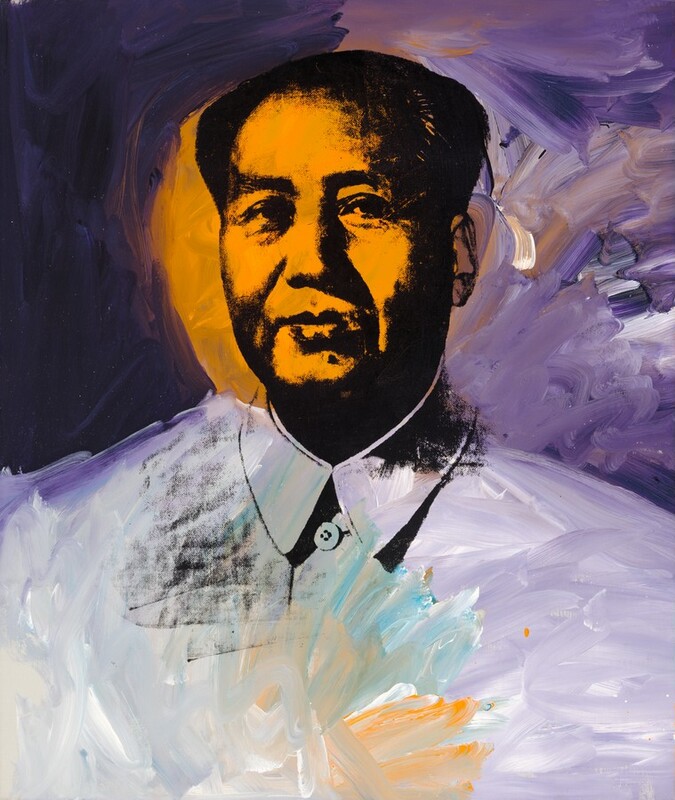
<p>Pop Art emerged in the mid-1950s in Britain and the United States, gathering full force through the 1960s before fading by 1970. It rejected the emotional seriousness of Abstract Expressionism in favor of imagery pulled straight from consumer culture: soup cans, celebrity photographs, comic strip panels, advertising logos. The point was not to dress up these images with fine art technique but to present them almost unchanged, forcing viewers to look again at pictures they normally scrolled past without thinking.</p> <p><a href="/apps/masterpieces/artist/andy-warhol"><strong>Andy Warhol</strong></a> became the movement's central figure, repeating a single image across a grid until it lost its original meaning and turned into pure pattern, as in <a href="/apps/masterpieces/art/campbells-soup-cans"><strong>Campbell's Soup Cans</strong></a> and <a href="/apps/masterpieces/art/shot-sage-blue-marilyn"><strong>Shot Sage Blue Marilyn</strong></a>. <a href="/apps/masterpieces/artist/jasper-johns"><strong>Jasper Johns</strong></a> painted flags and targets, familiar shapes so common they were almost invisible, and asked whether a painted flag was a picture of a flag or simply a flag made of paint. <a href="/apps/masterpieces/artist/david-hockney"><strong>David Hockney</strong></a> brought a different, more personal version of Pop sensibility to Los Angeles swimming pools and portraits, using flat color and bright light to describe a specific place and a specific circle of friends rather than mass culture in general.</p>
Popular culture imageryBold colorsIrony and parody
3 artists
Common Questions About Art Movements
Art history is typically organized into major movements that each redefined artistic practice. The Renaissance (1400-1600) revived classical ideals and introduced linear perspective. The Baroque (1600-1750) brought dramatic lighting and emotional intensity. Impressionism (1860-1890) broke from tradition with visible brushstrokes and everyday subjects. Post-Impressionism pushed further into personal expression. The 20th century saw rapid change with Expressionism, Cubism, Surrealism, and Abstract Expressionism.
Each movement has distinctive visual signatures. Renaissance paintings show realistic human anatomy, mathematical perspective, and often religious subjects with calm, balanced compositions. Baroque works use chiaroscuro (dramatic light/dark contrasts) and diagonal compositions that create movement. Impressionist paintings have visible brushstrokes, bright colors, and capture fleeting moments of light. Surrealist art features dreamlike imagery and impossible juxtapositions. Look at the brushwork, color palette, subject matter, and how light is handled to identify the movement.
An art movement is a specific period when artists with shared ideas, techniques, and goals worked together or influenced each other. Movements have rough start and end dates, founding artists, and often manifestos. An art style refers to visual characteristics that can appear across different time periods. For example, Impressionism was a movement that started in 1860s Paris with Monet, Renoir, and others. But impressionistic style (loose brushwork, light focus) continues to influence artists today. Movements are historical; styles are ongoing.
Impressionism is widely considered the key turning point in Western art. Before 1860, paintings were expected to look polished and photographic. When Monet, Renoir, and Degas exhibited rough, unfinished-looking works, critics mocked them. But they proved art could prioritize personal perception over academic technique. Every modern art movement that followed built on this freedom. Post-Impressionism pushed emotion further. Cubism fragmented form. Abstract Expressionism abandoned representation entirely. All trace their roots to Impressionism's initial break.
Several factors accelerated artistic change after 1900. Photography freed painters from documenting reality, pushing them toward abstraction. World Wars shattered optimism and prompted movements like Expressionism and Surrealism that explored trauma and the unconscious. Faster communication and travel spread ideas globally. Galleries and critics actively promoted new movements for commercial reasons. Picasso alone cycled through Blue Period, Rose Period, Cubism, Neoclassicism, and Surrealist influences within decades. The 20th century valued novelty in ways earlier eras did not.
Italy gave birth to the Renaissance, Mannerism, Baroque, and Futurism. France produced Rococo, Neoclassicism, Impressionism, Post-Impressionism, and Fauvism. Germany was home to Expressionism. The Netherlands produced the Dutch Golden Age and De Stijl. Russia developed Suprematism. The United States originated Abstract Expressionism, the Hudson River School, and Pop Art.
Of the documented Western art movements, the Renaissance is typically considered the first true movement, beginning around 1400 in Florence, Italy. Earlier periods like Medieval, Byzantine, and Romanesque art are classified as periods rather than movements because they lacked the self-conscious artistic philosophy that defines a movement. Renaissance artists like Leonardo da Vinci and Michelangelo actively studied ancient Greek and Roman art, developed new techniques like linear perspective, and wrote about their artistic principles.
The Italian Renaissance emphasized idealized beauty, classical mythology, and mathematical perspective. Artists like Raphael created serene, balanced compositions. The Northern Renaissance in Flanders, Germany, and the Netherlands focused on extreme realism and minute detail. Artists like Jan van Eyck pioneered oil painting techniques that captured textures of fabric, jewelry, and skin with almost photographic precision. Northern works often included hidden religious symbolism in domestic scenes, while Italian works were more openly classical.
Art History for Your Walls
Luxury wall art featuring gallery-quality prints from every era and movement.
Browse Collection