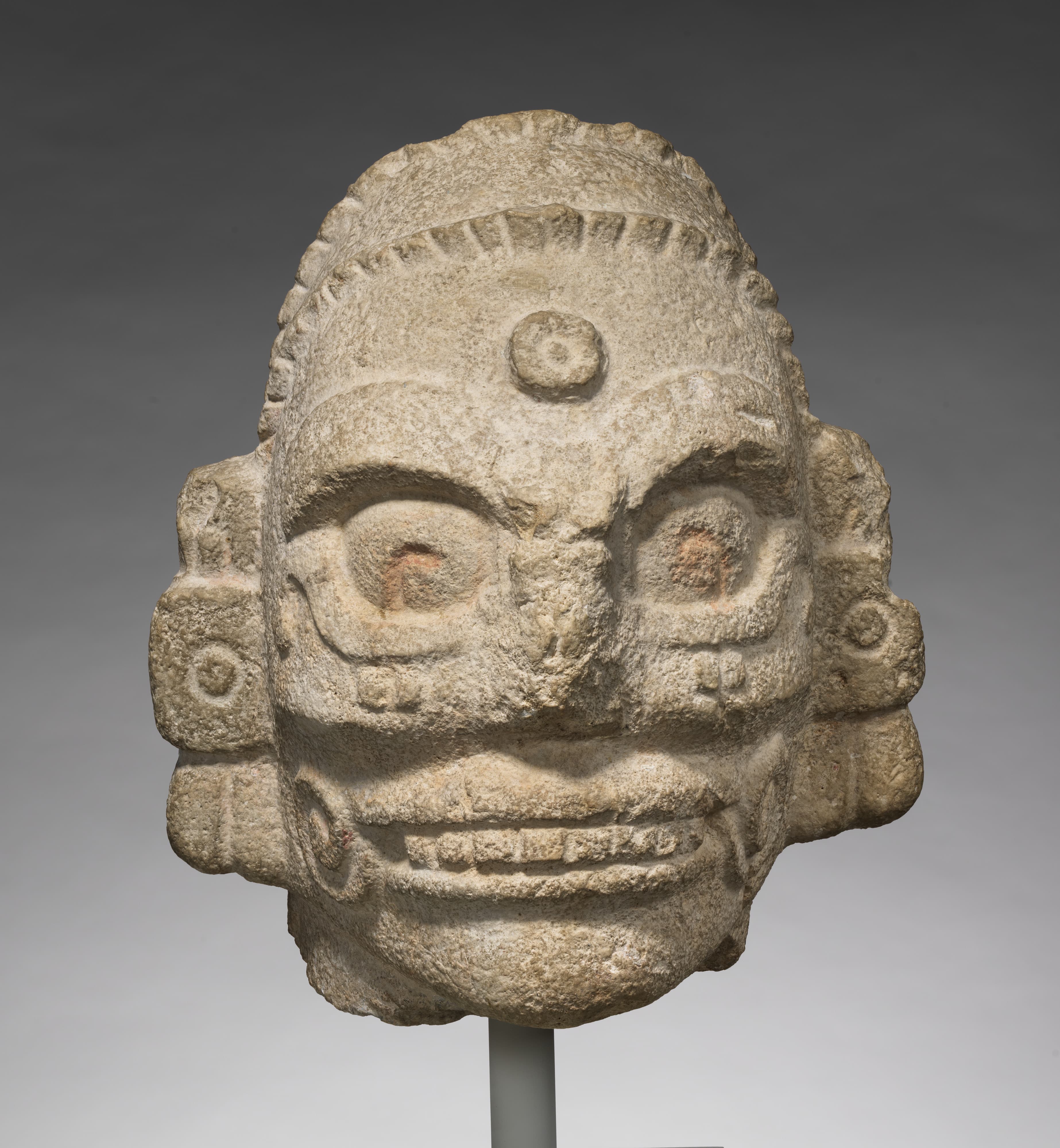
Chac Mool (Chichen Itza)
by Ancient Maya (Unknown), 1100
Artwork Details
Details
- Year
- 1100
- Medium
- Limestone
- Size
- 105 cm (41 in) long
Maya The Chac Mool from Chichén Itzá depicts a reclining figure holding a bowl or plate on its stomach, believed to have received offerings, possibly including human hearts. Created around 1100 CE during the Terminal Classic period, these distinctive sculptures appear throughout Mesoamerica. The name "Chac Mool" was coined by 19th-century explorer Augustus Le Plongeon, though its original meaning remains unknown.
This Chac Mool sat at the entrance to the Temple of the Warriors at Chichén Itzá, guarding access to the inner sanctuary. The reclined position and turned head create an alert, watchful presence. Similar figures appear in Toltec and Aztec contexts, suggesting the form spread through cultural exchange or conquest.
This example is at the Museo Nacional de Antropología.