Wikimedia Commons • Public Domain
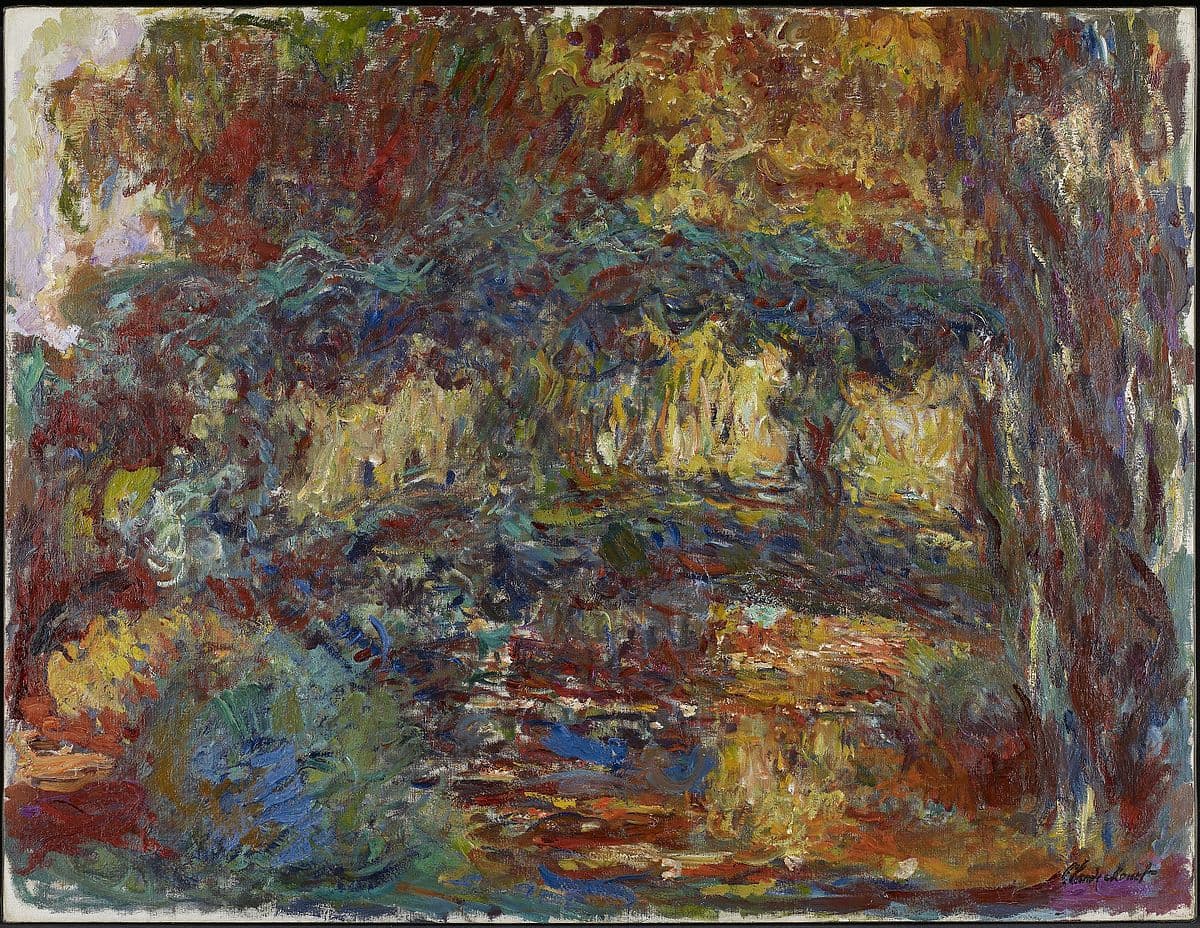
The Japanese Bridge
by Claude Monet
Artwork Details
Claude Monet completed this view of his water garden in 1899, one of eighteen canvases from that year showing the Japanese-style bridge he built at Giverny. Wisteria drapes the curved wooden structure, while water lilies float on the pond below. The composition became his defining subject for the last three decades of his life.
Monet purchased land adjacent to his property in 1893 and created the water garden. He modeled the arched bridge on examples from Japanese prints, which he collected avidly. This 1899 series established the visual vocabulary he would explore obsessively, eventually producing around 250 water lily paintings. Examples hang at the National Gallery in London and the Metropolitan Museum.