Wikimedia Commons • Public Domain
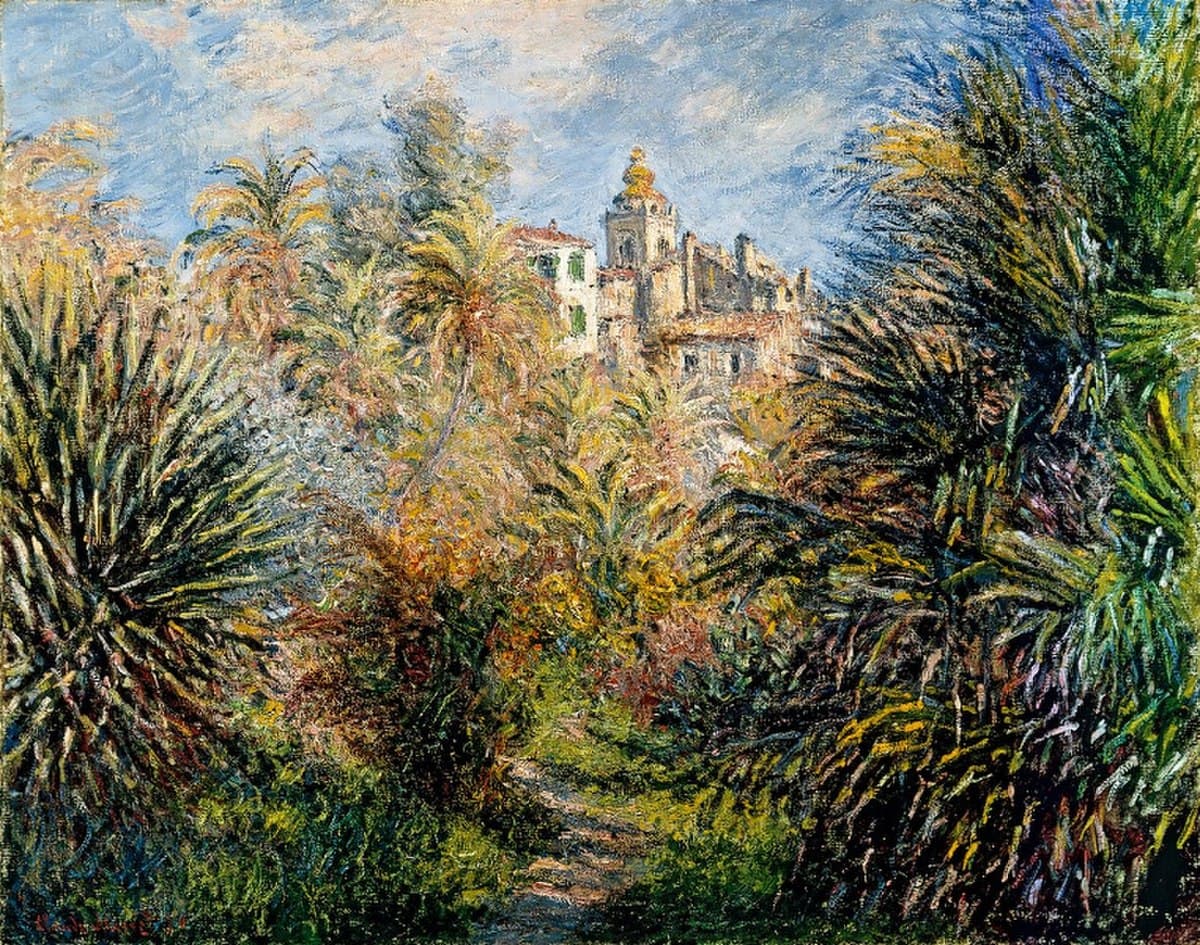
The Moreno Garden at Bordighera
by Claude Monet
Artwork Details
Claude Monet completed this vibrant garden scene in 1884 during a trip to the Italian Riviera, where the Mediterranean light and subtropical vegetation offered entirely new subjects for his brush. The Moreno Garden in Bordighera dazzled him with its exotic palm trees, citrus groves, and intense colors that differed dramatically from the muted tones of northern France.
The painting bursts with brilliant blues and greens that capture the unique luminosity of the southern coast. Tall palms thrust upward against an azure sky while dense undergrowth fills the lower canvas with layered foliage. Monet worked quickly during his Italian stay, producing numerous canvases despite complaining in letters that the scenery was almost too beautiful, too perfect to paint.
This work marked a departure from the river scenes and Norman landscapes that dominated Monet's earlier career. The exotic vegetation challenged him to find new ways of rendering light through unfamiliar forms. He would return to French subjects afterward, but the Mediterranean palette influenced his color choices for years to come. The painting now belongs to the Art Institute of Chicago, where it represents Monet's ability to respond to new landscapes with fresh vision.