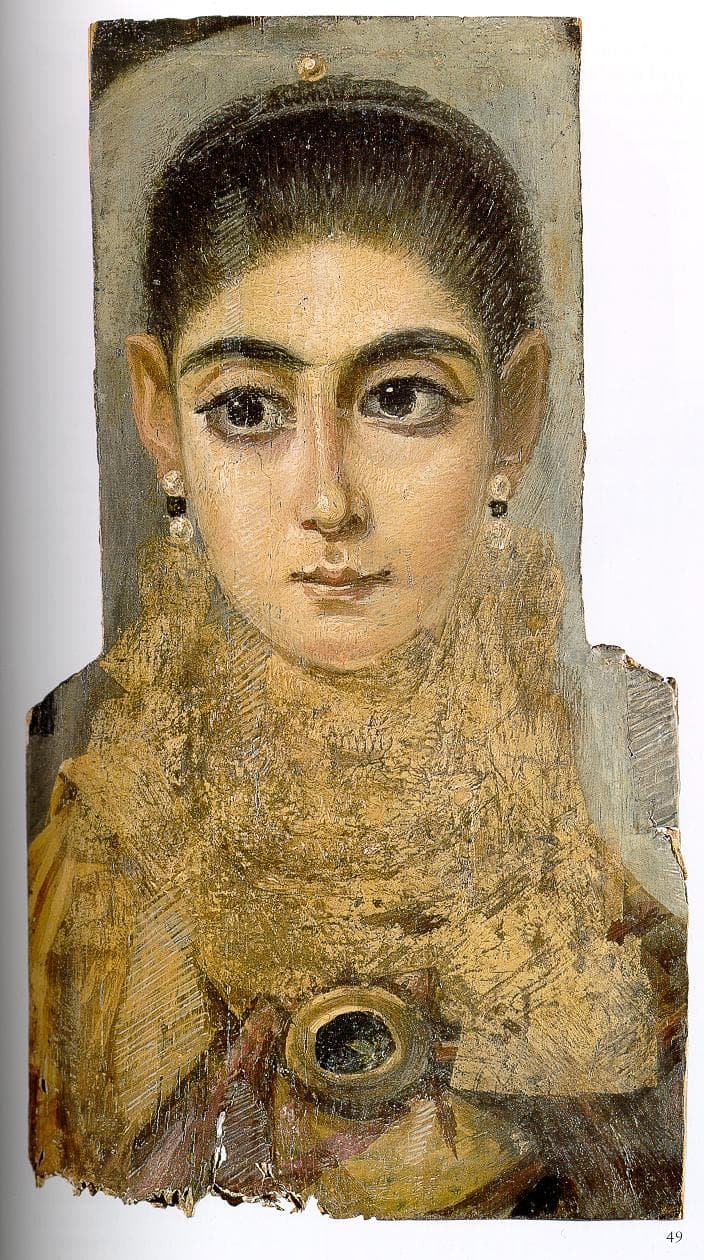
Fayum Mummy Portrait
by Ancient Egyptian (Unknown), 150
GenrePortrait
Artwork Details
Details
- Year
- 150
- Medium
- Encaustic on wood
Cite or Embed This Work
APA · MLA · Chicago1-click academic citation and embeddable “On View” museum badge for articles, syllabi, and research.
Fayum mummy portraits are panel paintings attached to Egyptian mummies during the Roman period (1st-3rd centuries AD). Painted in encaustic (hot wax pigment) or tempera on wood, they show individuals with startlingly lifelike faces: large dark eyes, individual hairstyles, jewelry, and clothing fashionable in the Roman Empire.
These portraits were produced in the Fayum oasis region of Egypt, where Greek, Roman, and Egyptian cultures blended. The subjects were likely middle-class Romans living in Egypt. They commissioned the portraits during their lifetimes, then had them placed over the mummy's face at death. It's an extraordinary fusion of Roman portraiture and Egyptian burial customs.
About 900 Fayum portraits survive, scattered across museums worldwide including the British Museum, the Met, and the Petrie Museum. They're the earliest surviving examples of Western portrait painting and offer an uncanny window into faces from nearly two thousand years ago.
More by Ancient Egyptian (Unknown)
View all →Sculpture
A

Architectural Fragment with Relief Carving
Ancient Egyptian (Unknown), 401
Art Institute of Chicago, Chicago
Sculpture
S
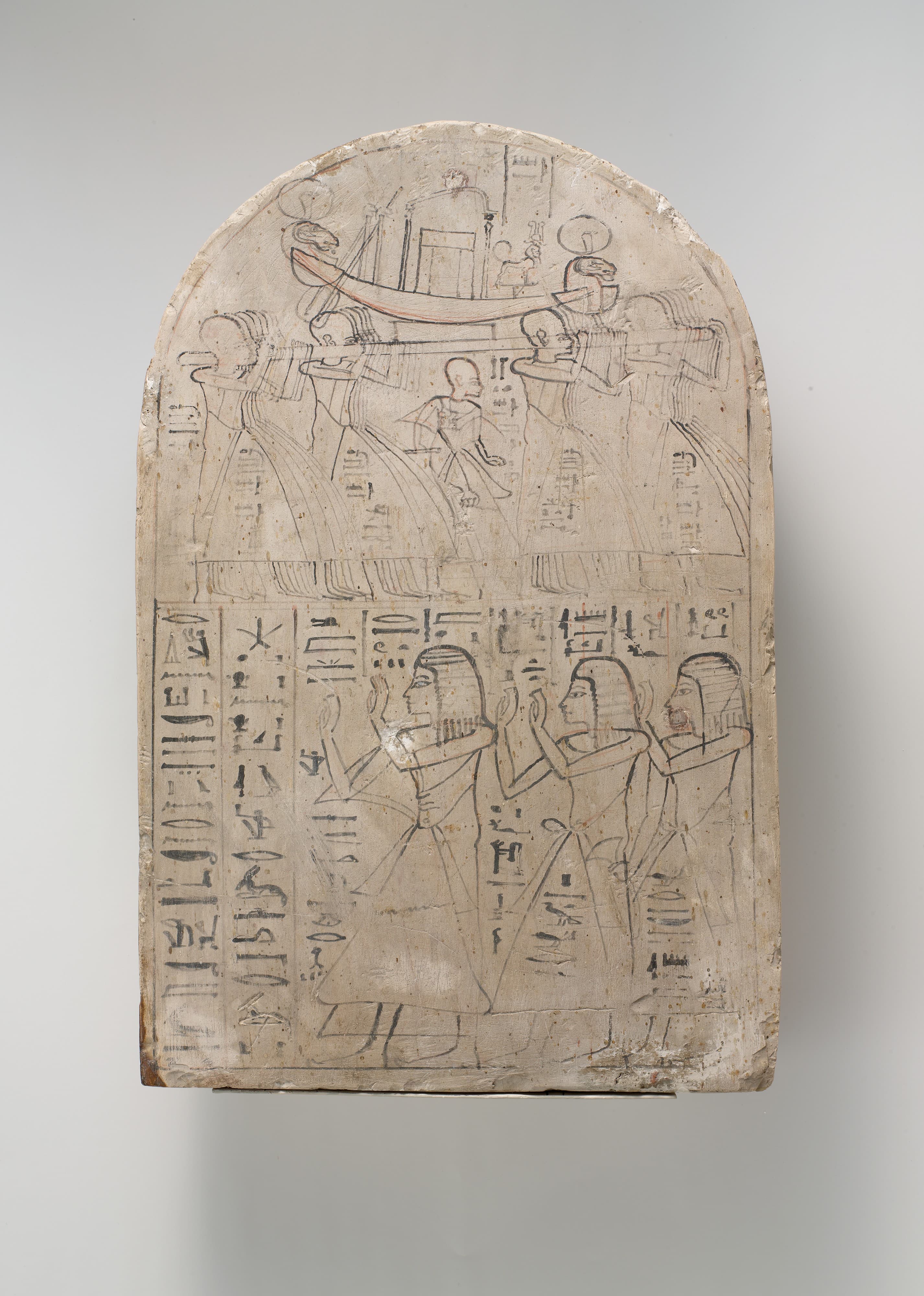
Stela of the royal scribe Amunnakht praising the divine barque of Amun-Re, Lord of the Thrones of the Two Lands
Ancient Egyptian (Unknown), -1070
The Metropolitan Museum of Art, New York