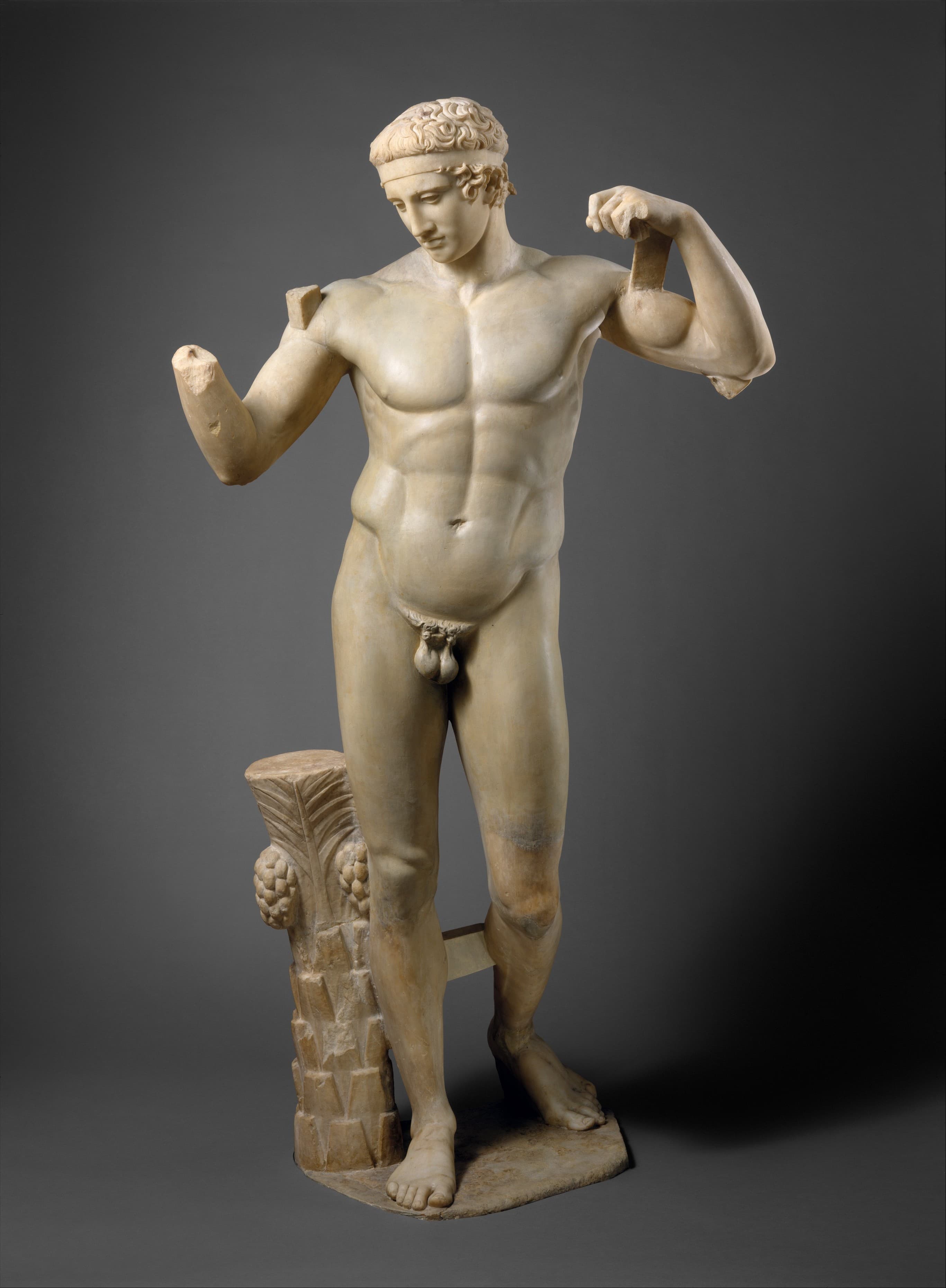
Fragments of a marble statue of the Diadoumenos (youth tying a fillet around his head)
by Polykleitos
Artwork Details
Details
- Medium
- Marble
- Size
- H. 73 in. (185.4 cm)
Cite or Embed This Work
APA · MLA · Chicago1-click academic citation and embeddable “On View” museum badge for articles, syllabi, and research.
This marble figure shows a young athlete tying a victory fillet (ribbon) around his head. It's a Roman copy of a lost Greek bronze by Polykleitos of Sikyon, one of the most celebrated sculptors of antiquity. "Diadoumenos" means "the man who is tying or binding."
Over 40 ancient copies of this composition survive, all replicating the lost original from around 430 BCE. Polykleitos authored the Kanon, the most famous ancient treatise on ideal human proportions. Roman workshops used plaster molds taken from Greek originals to produce copies that could be shipped anywhere in the empire.
This version stands 73 inches (185.4 cm) tall in Gallery 162 at the Metropolitan Museum of Art. Missing sections were supplemented with casts from a marble copy found on the island of Delos, now in the National Museum in Athens.
More by Polykleitos
View all →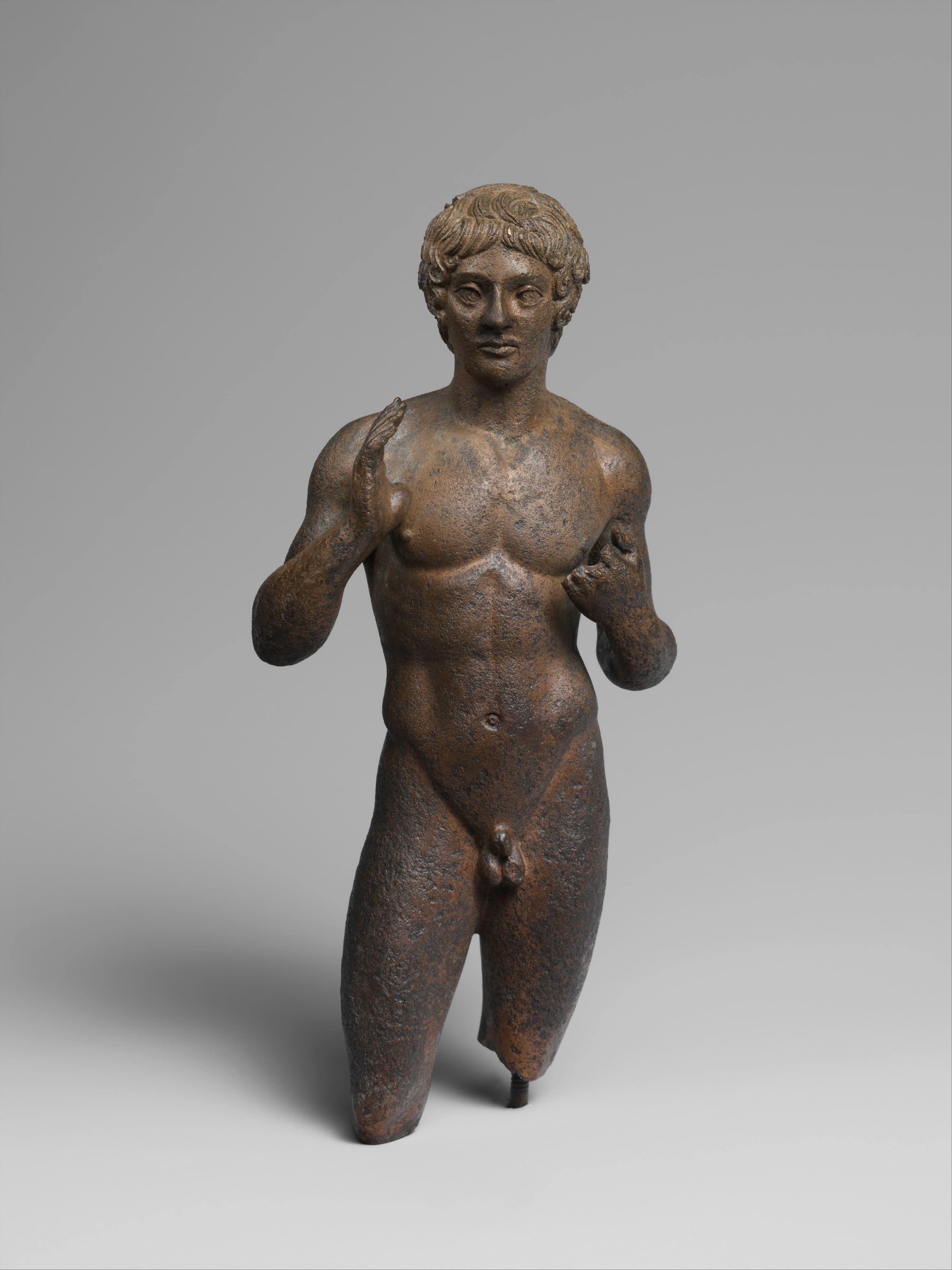
Also at The Metropolitan Museum of Art
View all →Sculpture
R

Rolltop desk
David Roentgen, 1776
The Metropolitan Museum of Art, New York
Sculpture
L
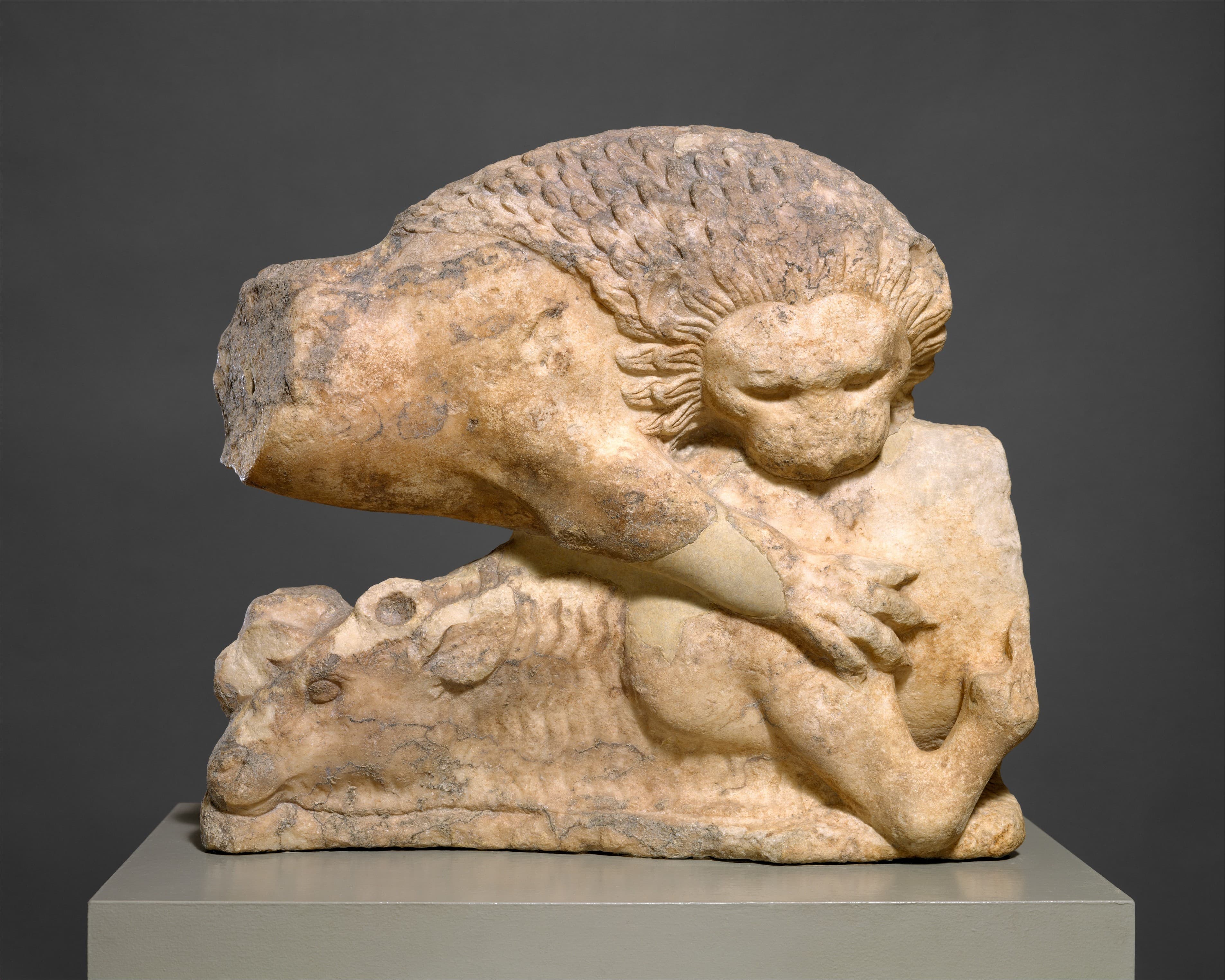
Lion felling a bull, from a marble pediment
Ancient Greek (Unknown), -500
The Metropolitan Museum of Art, New York
Sculpture
M
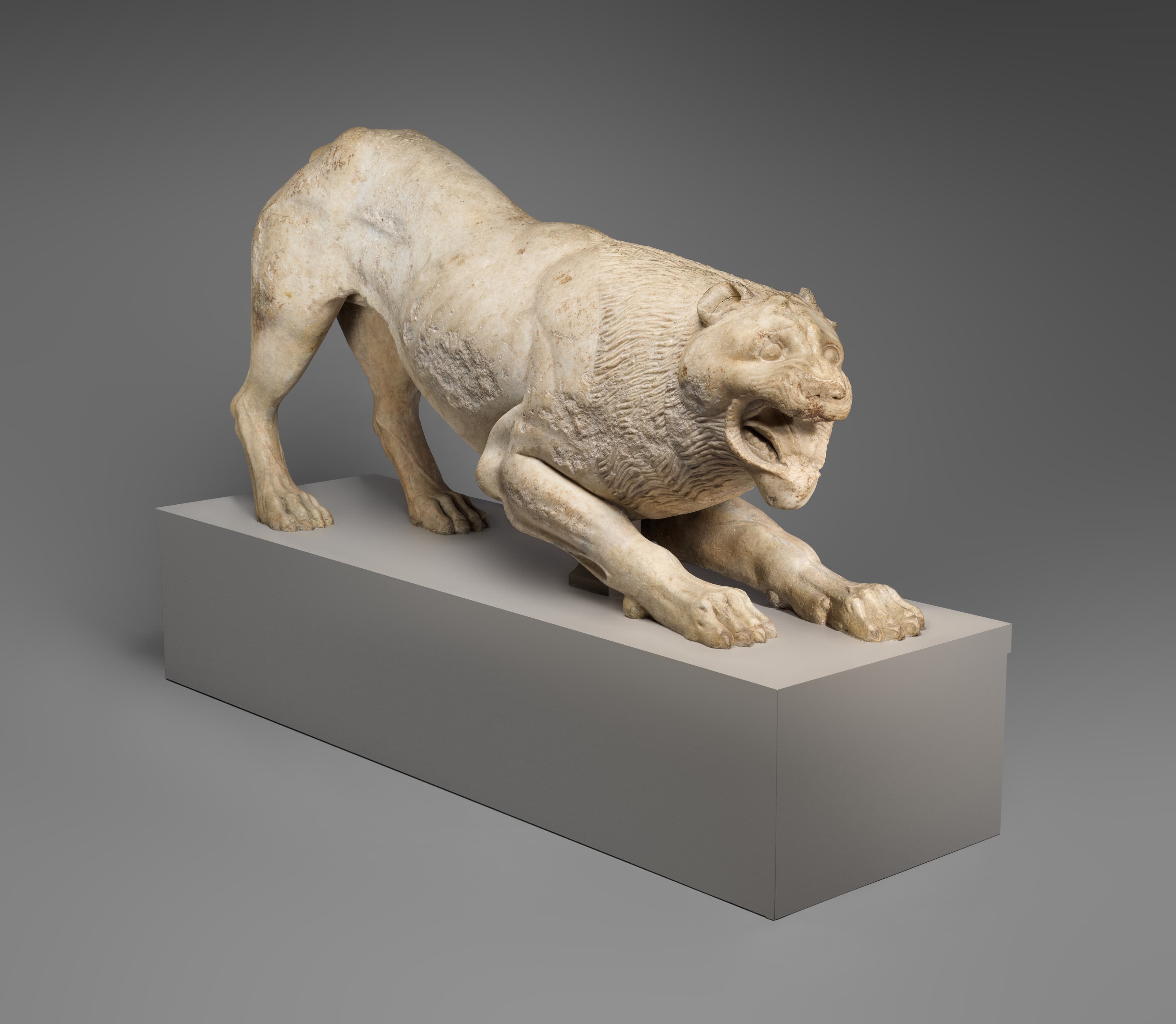
Marble statue of a lion
Ancient Greek (Unknown), -390
The Metropolitan Museum of Art, New York
S
Supper at Emmaus
Diego Velázquez
The Metropolitan Museum of Art, New York
Related Works
Works that share an artist, movement, museum, genre, palette or theme with Fragments of a marble statue of the Diadoumenos (youth tying a fillet around his head).
- Same museum
Marble Statue of a Kouros (Youth)
Ancient Greek (Unknown), -590
- Same museum
Marble funerary lekythos
Ancient Greek (Unknown), -350
- Same museum
Ten marble fragments of the Great Eleusinian Relief
Ancient Greek (Unknown), -27

- Same museum
Marble statue of a wounded Amazon
Ancient Roman (Unknown), 150
- Same museum
Marble head and torso of Athena
Ancient Roman (Unknown), 150

- Same museum
Bridge over a Pond of Water Lilies
Claude Monet, 1899
- Same museum
La Grenouillère
Claude Monet, 1869
- Same museum
Portrait of Adele Bloch-Bauer I
Gustav Klimt, 1907
- Same museum
Still Life with Apples
Paul Cézanne, 1898
- Same museum
Mont Sainte-Victoire
Paul Cézanne, 1904
- Same museum
Portrait of a Young Man
Bronzino (Agnolo di Cosimo di Mariano), 1530
- Same museum
Reclining Nude (Le Grand Nu)
Amedeo Modigliani, 1917
About Fragments of a marble statue of the Diadoumenos (youth tying a fillet around his head)
The word means 'the man who is tying or binding.' The figure is wrapping a victory fillet (ribbon) around his head, a sign of winning an athletic competition in ancient Greece. The original bronze by Polykleitos dates to about 430 BCE.
Over 40 ancient copies survive, all based on the lost bronze original by Polykleitos. Roman workshops made plaster molds from Greek originals and shipped them across the empire for reproduction.
It's in Gallery 162 at the Metropolitan Museum of Art. It stands 73 inches (185.4 cm) tall. Missing sections were filled using casts from a version found on Delos.
Own Art Like This
Luxury wall art with the same mood and energy. Gallery-quality canvas, no museum crowds.
Browse Collection