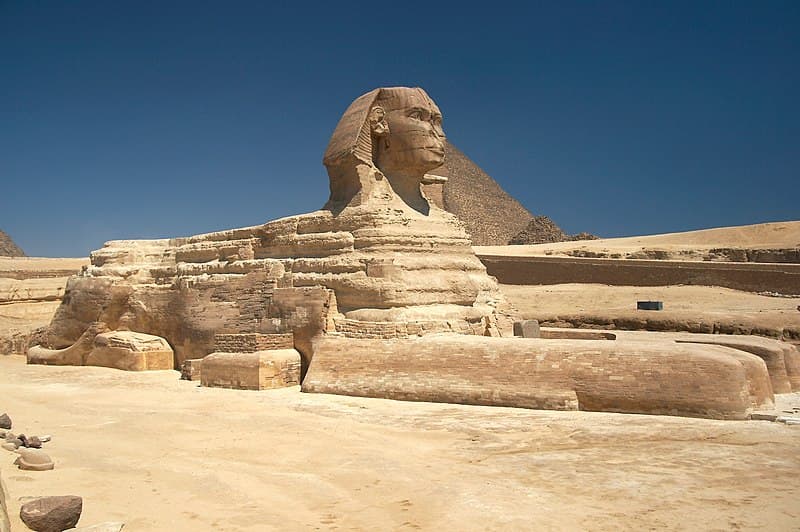
Great Sphinx of Giza
by Ancient Egyptian (Unknown), -2500
Artwork Details
Details
- Year
- -2500
- Medium
- Limestone
- Size
- 73 m (240 ft) long, 20 m (66 ft) tall
The Great Sphinx of Giza is a limestone statue with the body of a lion and the head of a human, believed to represent Pharaoh Khafre. Carved from the bedrock of the Giza plateau around 2500 BCE by Ancient Egyptian craftsmen, it is the oldest and largest monumental sculpture in the ancient world. The Sphinx guards the pyramid complex, facing east toward the rising sun.
The statue measures 73 meters (240 feet) long and 20 meters (66 feet) high, roughly the length of a Boeing 747 and as tall as a six-story building. Its nose is famously missing, broken off sometime between the 3rd and 10th centuries CE. Popular legend blames Napoleon's troops, but drawings made before his invasion show the damage already existed.
The Sphinx sits on the Giza plateau near Cairo, Egypt, between the Great Pyramid of Khufu and Khafre's pyramid. Sand has buried it repeatedly throughout history. A restoration effort begun in 1990 stabilized the crumbling limestone. The monument remains one of Egypt's most visited attractions, drawing millions yearly to wonder at its silent gaze across the desert.
More by Ancient Egyptian (Unknown)
View all →Sculpture
A

Architectural Fragment with Relief Carving
Ancient Egyptian (Unknown), 401
Art Institute of Chicago, Chicago
Sculpture
S
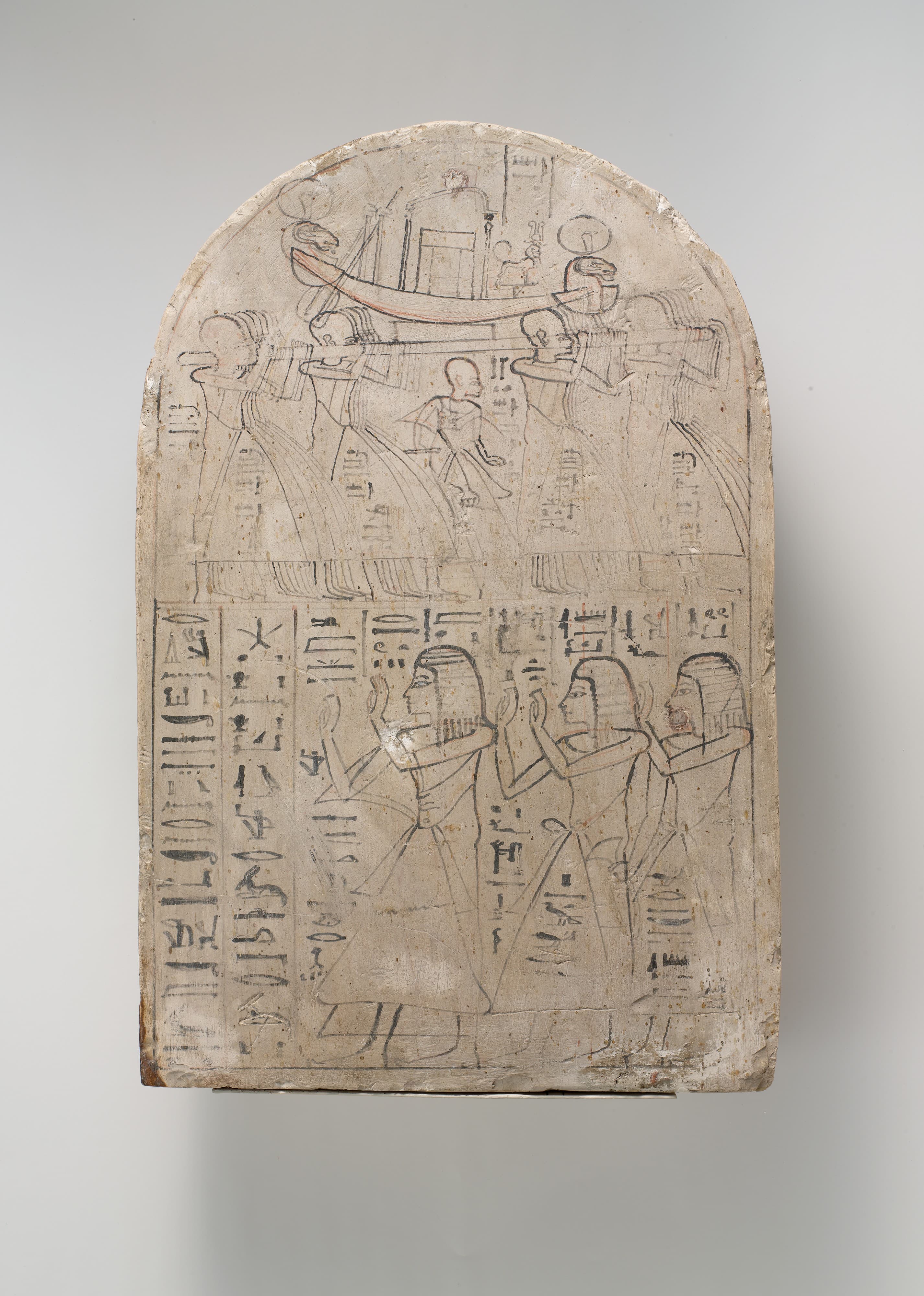
Stela of the royal scribe Amunnakht praising the divine barque of Amun-Re, Lord of the Thrones of the Two Lands
Ancient Egyptian (Unknown), -1070
The Metropolitan Museum of Art, New York

