Public Domain
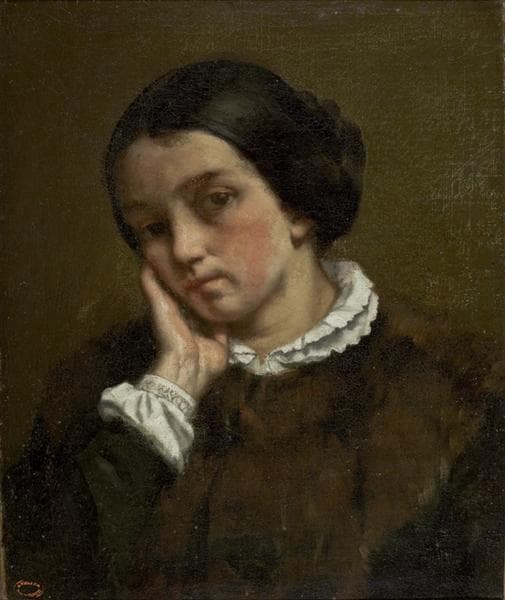
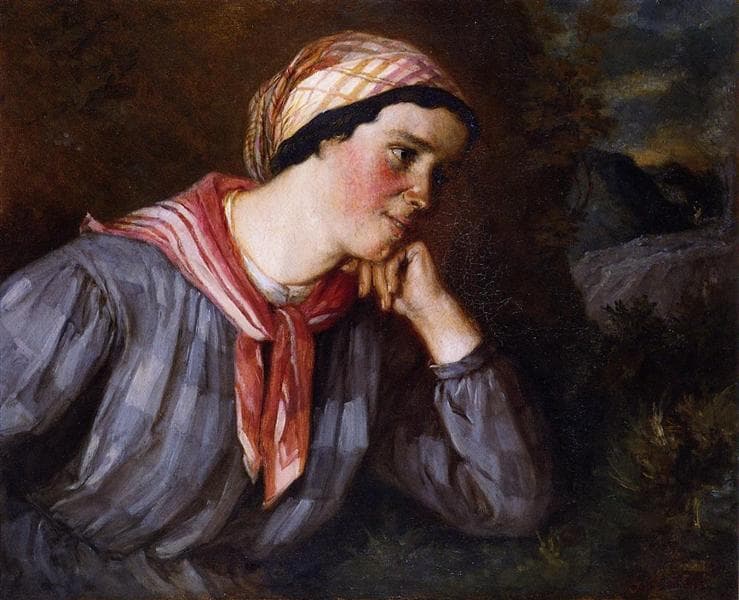
Peasant Wearing Madras
Artwork Details
Gustave Courbet completed this portrait of a peasant woman around 1848, during the period that first brought him recognition. The subject wears a madras headscarf, a patterned fabric associated with working-class women. Courbet's approach was direct: he observed his subject from life rather than idealizing or romanticizing her appearance.
Courbet led the Realism movement in 19th-century French painting. He committed to painting only what he could see, rejecting academic convention and the Romanticism of the previous generation. His paintings of peasants and workers in the late 1840s and early 1850s challenged expectations by depicting ordinary people on a scale traditionally reserved for religious or historical subjects.
Unlike the smooth lines of Romantic painters, Courbet employed spontaneous brushstrokes and rough paint texture. He was controversial not just for his working-class subjects but for showing them without sentimentality. The portrait demonstrates his belief that artists should document their own time rather than escape into classical themes. This approach set an example that later influenced the Impressionists and Cubists. The painting remains in a private collection.