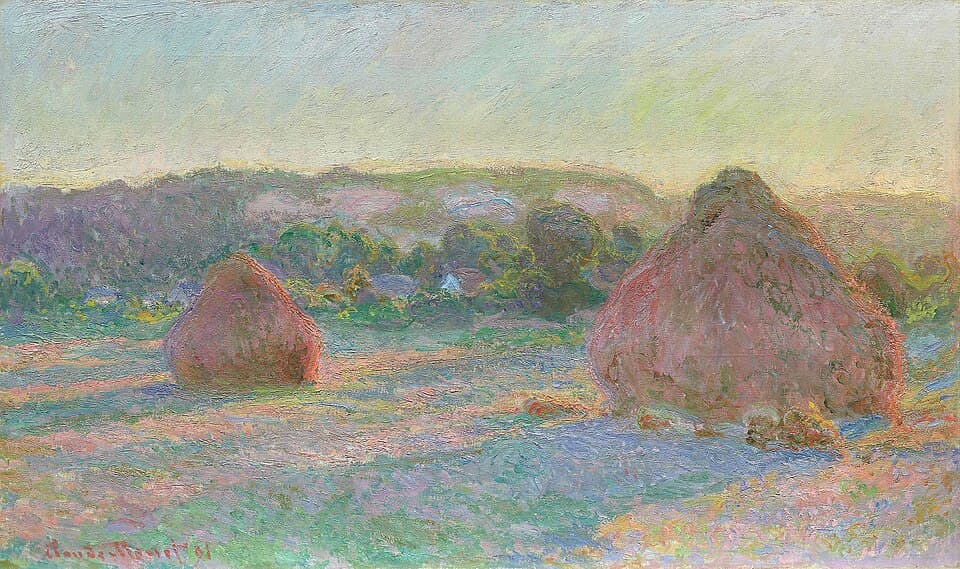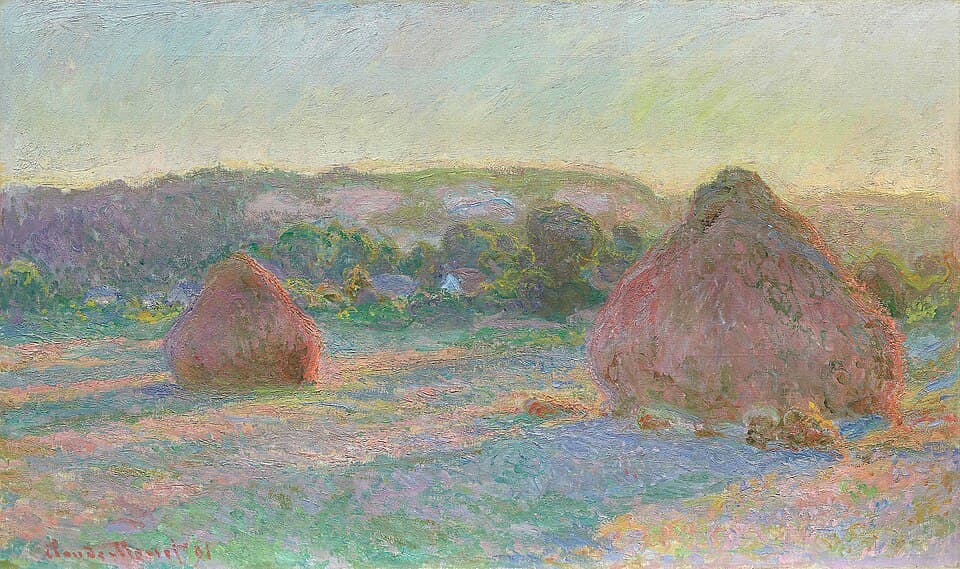
Haystacks (End of Summer)
by Claude Monet, 1891
Artwork Details
Details
- Year
- 1891
- Medium
- Oil on canvas
- Size
- 60 cm × 100 cm
- Gallery
- Gallery 243
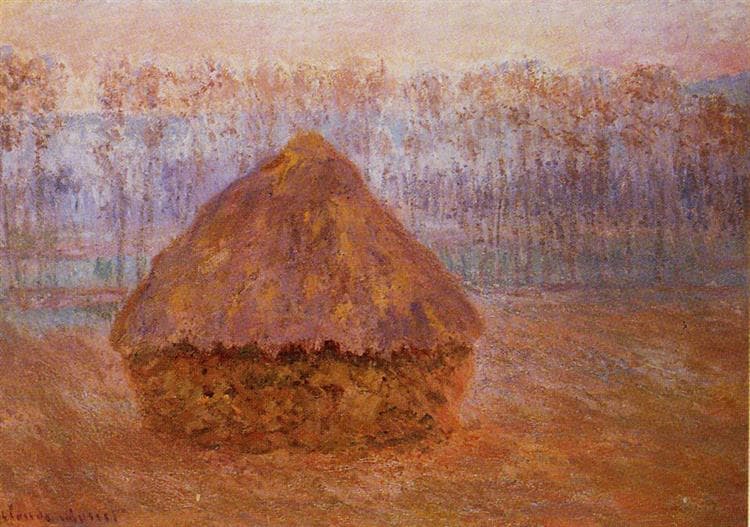
French artist Claude Monet painted this canvas as part of his pioneering Haystacks series from 1890 to 1891. The monumental wheat stacks, rising fifteen to twenty feet high, stood just outside his farmhouse at Giverny. Monet worked on multiple canvases simultaneously in the fields, capturing how light and color shifted throughout the day and across seasons.
In May 1891, Monet exhibited fifteen of these canvases together at Galerie Durand-Ruel in Paris. Critics and collectors were stunned. The exhibition sold out within days and marked a turning point in Impressionism. For the first time, a painter had systematically explored how a single subject transforms under different conditions of light and atmosphere.
The Art Institute of Chicago holds the world's largest collection of Monet's Haystacks series with six paintings. This particular version captures the warm golden light of late summer evening. Berthe Morisot reportedly praised the series: "These canvases breathe contentment."
Historical Significance
One of Monet's most celebrated series, demonstrating his obsession with light and atmosphere.