
Head of an Adorant
by Unknown Artist, 201
Artwork Details
Details
- Year
- 201
- Medium
- Stucco
- Size
- 24.1 × 16.8 × 18.2 cm (9 1/2 × 6 5/8 × 7 1/8 in.)
Cite or Embed This Work
APA · MLA · Chicago1-click academic citation and embeddable “On View” museum badge for articles, syllabi, and research.
This stucco head from the 3rd-5th century CE depicts an adorant (worshipper or devotee) from the Gandhara region. Wealthy donors to Buddhist temples had their likenesses incorporated into temple decorations as expressions of gratitude and devotion. Stucco widely replaced the earlier gray schist as the preferred material for Gandharan sculpture, adorning the walls of stupa courts and monasteries throughout the region.
The 3rd to mid-5th centuries saw a surge in patronage of Buddhist sacred areas at sites like Taxila and Takht-i-Bahi. Gandhara merged Greek and Buddhist visual cultures following Alexander the Great's conquest in 327 BCE, and this blending remained visible centuries later in the naturalistic modeling of faces like this one. The piece is at the Art Institute of Chicago, a gift from Marilynn B. Alsdorf.
Also at Art Institute of Chicago
View all →Sculpture
T

The Solitude of the Soul
Lorado Taft, 1901
Art Institute of Chicago, Chicago
Sculpture
W

Walking Buddha
, 201
Art Institute of Chicago, Chicago
Sculpture
A

Architectural Fragment with Relief Carving
Ancient Egyptian (Unknown), 401
Art Institute of Chicago, Chicago
Sculpture
A

Allegory of Science
Jean-Baptiste Carpeaux, 1865
Art Institute of Chicago, Chicago
Related Works
Works that share an artist, movement, museum, genre, palette or theme with Head of an Adorant.

- Same museum
- Similar themes
Head of Emaciated Siddhartha
101

- Same museum
God Triton
101

- Same museum
Buddha Shakyamuni Meditating in the Indrashala Cave [top] and Buddha Dipankara [bottom]
101

- Same museum
Oval Cosmetic Box Lid with a Man Being Entertained by a Lyrist
401

- Same museum
Pensive Bodhisattva
101

- Same museum
Bust of a Female Figurine
-300

- Same museum
Woman with a Headdress
-100

- Same museum
Veneration of the Bodhi Tree
201

- Same museum
Veneration of the Buddha's Relics
150

- Same museum
Stupa Reliquary
195

- Same museum
Stamped Tile with Crouching Ascetics
301
- Same museum
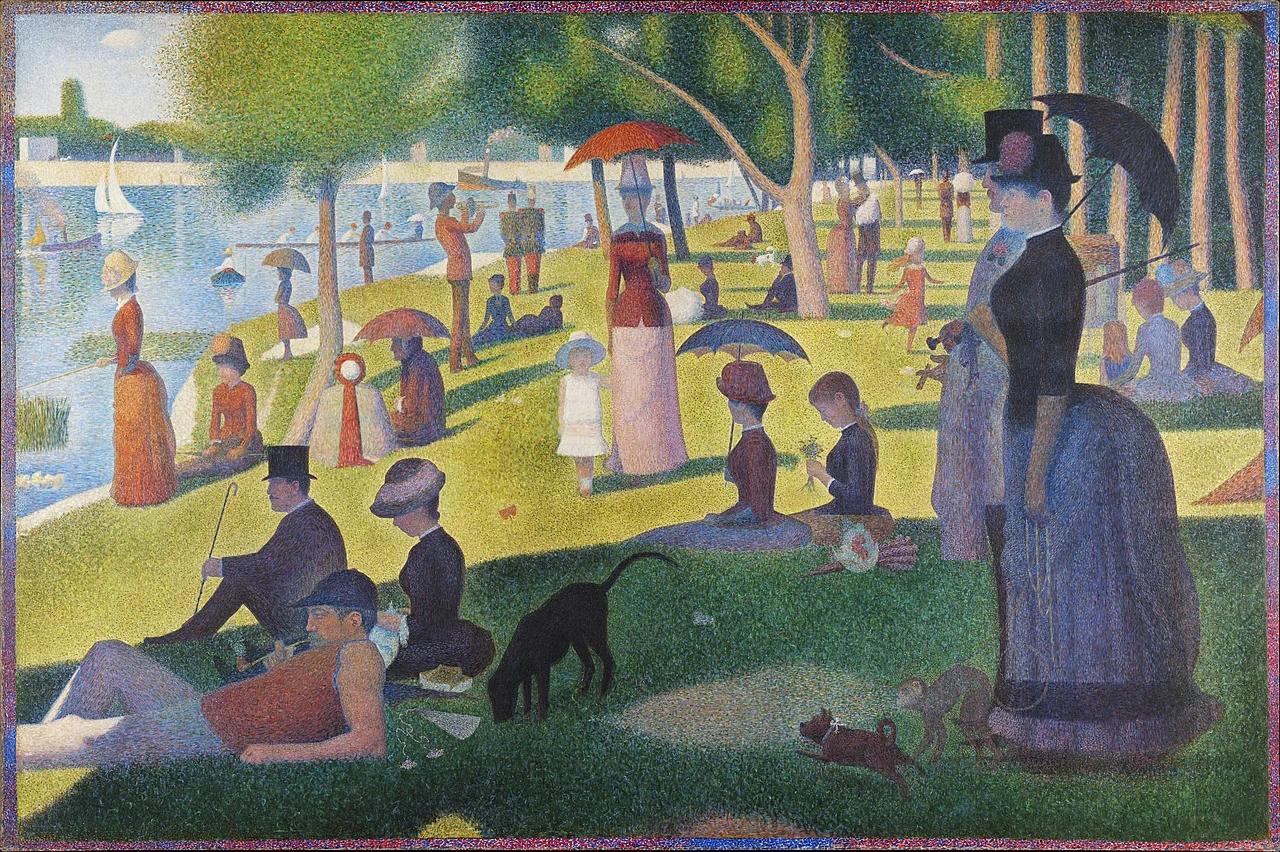
A Sunday Afternoon on the Island of La Grande Jatte
Georges Seurat, 1886
About Head of an Adorant
A worshipper or devotee. Wealthy donors to Buddhist temples had their likenesses incorporated into temple decorations. This recorded their patronage and demonstrated devotion to the Buddhist community.
Stucco replaced the earlier gray schist as the preferred material for Gandharan sculpture from roughly the 3rd century CE onward. It was cheaper, faster to work with, and allowed for detailed surface modeling when applied to walls of stupas and monasteries.
A fusion of Greek and Buddhist visual cultures from the region of modern Pakistan/Afghanistan. It emerged after Alexander the Great's conquest (327 BCE) and produced art blending Greco-Roman naturalism with Buddhist subject matter.
At the Art Institute of Chicago. About 9.5 by 6.5 inches in stucco. A gift from Marilynn B. Alsdorf.
Own Art Like This
Luxury wall art with the same mood and energy. Gallery-quality canvas, no museum crowds.
Browse Collection