Ancient Egyptian (Unknown), CC0 1.0, via Wikimedia Commons.
Head of Tutankhamun
by Ancient Egyptian (Unknown), -1327
Artwork Details
Details
- Year
- -1327
- Medium
- Indurated Limestone
- Size
- H. 17.2 cm (6 3/4 in.); W. 16 cm (6 5/16 in.); D. 23.6 cm (9 5/16 in.)
Cite or Embed This Work
APA · MLA · Chicago1-click academic citation and embeddable “On View” museum badge for articles, syllabi, and research.
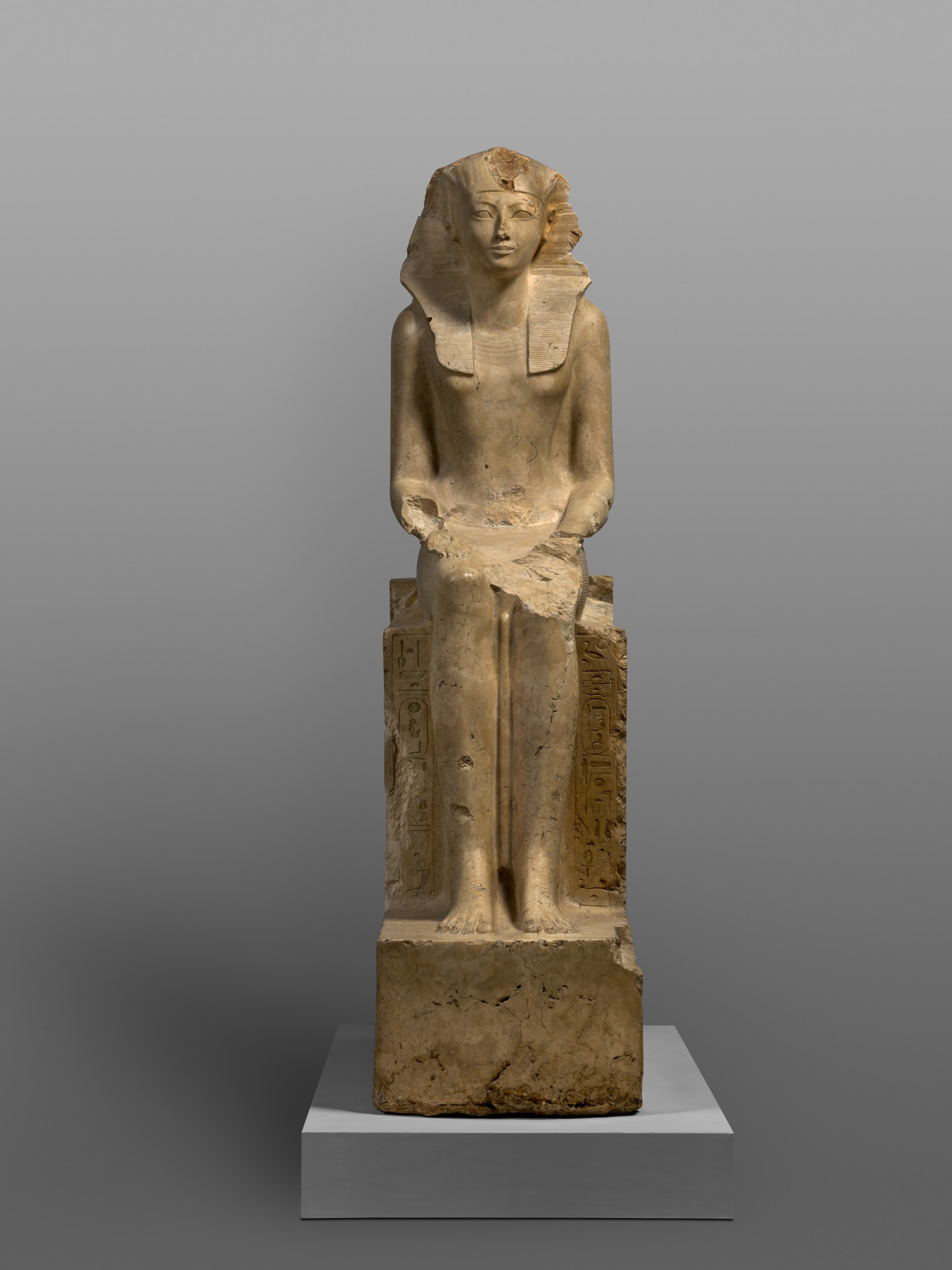
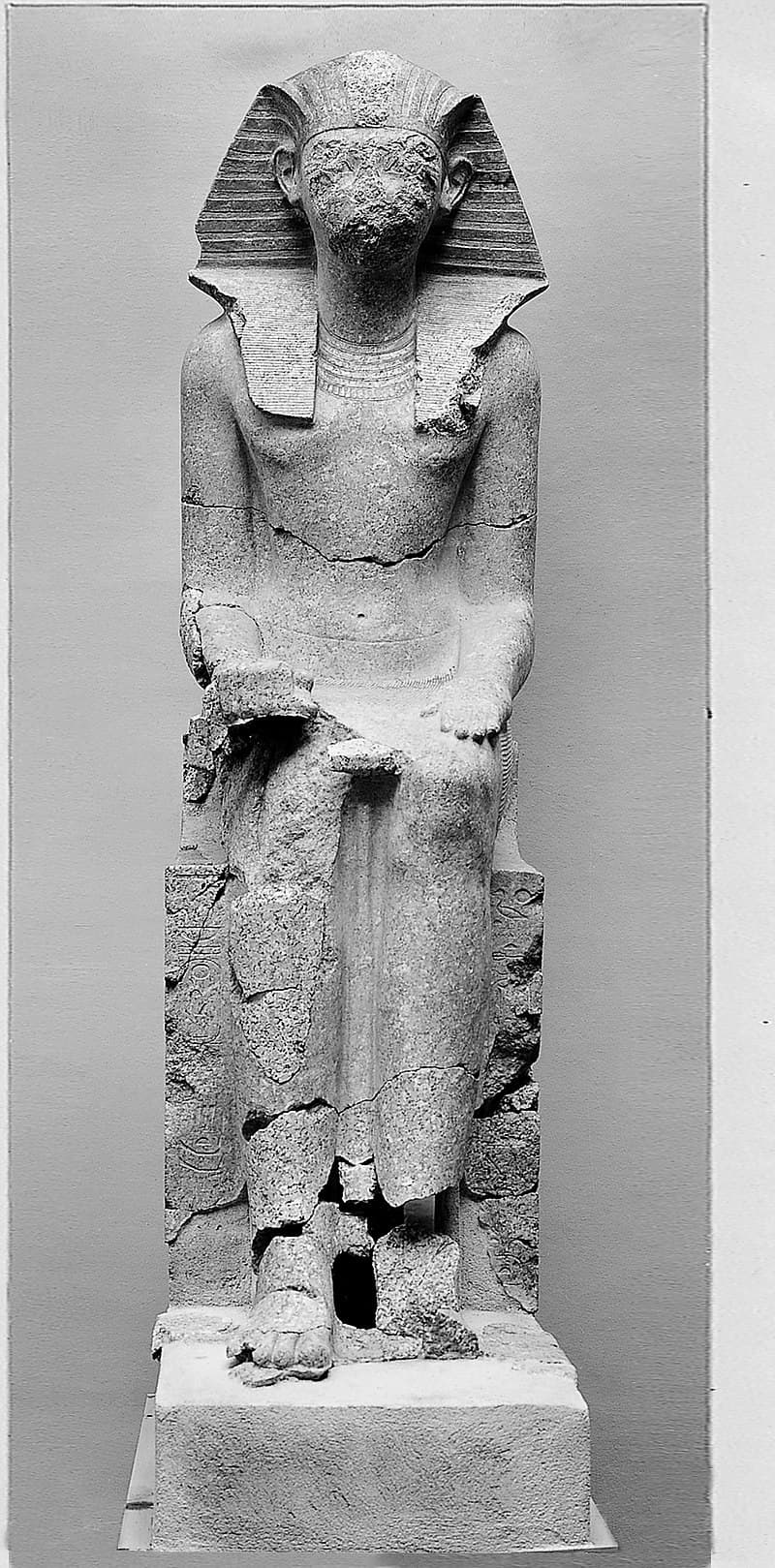
Ancient Egyptian This indurated limestone fragment once belonged to a larger statue group showing the young pharaoh standing before a god. All that remains of the deity is a right hand touching the back of Tutankhamun's crown, a gesture signifying divine investiture of kingship. The king wears the khepresh, commonly called the "blue crown," likely a leather helmet with metal disks sewn onto it.
The sculpture dates to ca. 1336-1327 BCE, during Dynasty 18's post-Amarna period. It blends the naturalism of Akhenaten's artistic revolution with more traditional Egyptian conventions. Tutankhamun's figure was considerably smaller than the god's, following the standard Egyptian practice of hierarchical scaling.
It's on view in Gallery 121 at the Metropolitan Museum of Art, acquired through the Rogers Fund in 1950.
More by Ancient Egyptian (Unknown)
View all →Sculpture
A

Architectural Fragment with Relief Carving
Ancient Egyptian (Unknown), 401
Art Institute of Chicago, Chicago
Sculpture
S
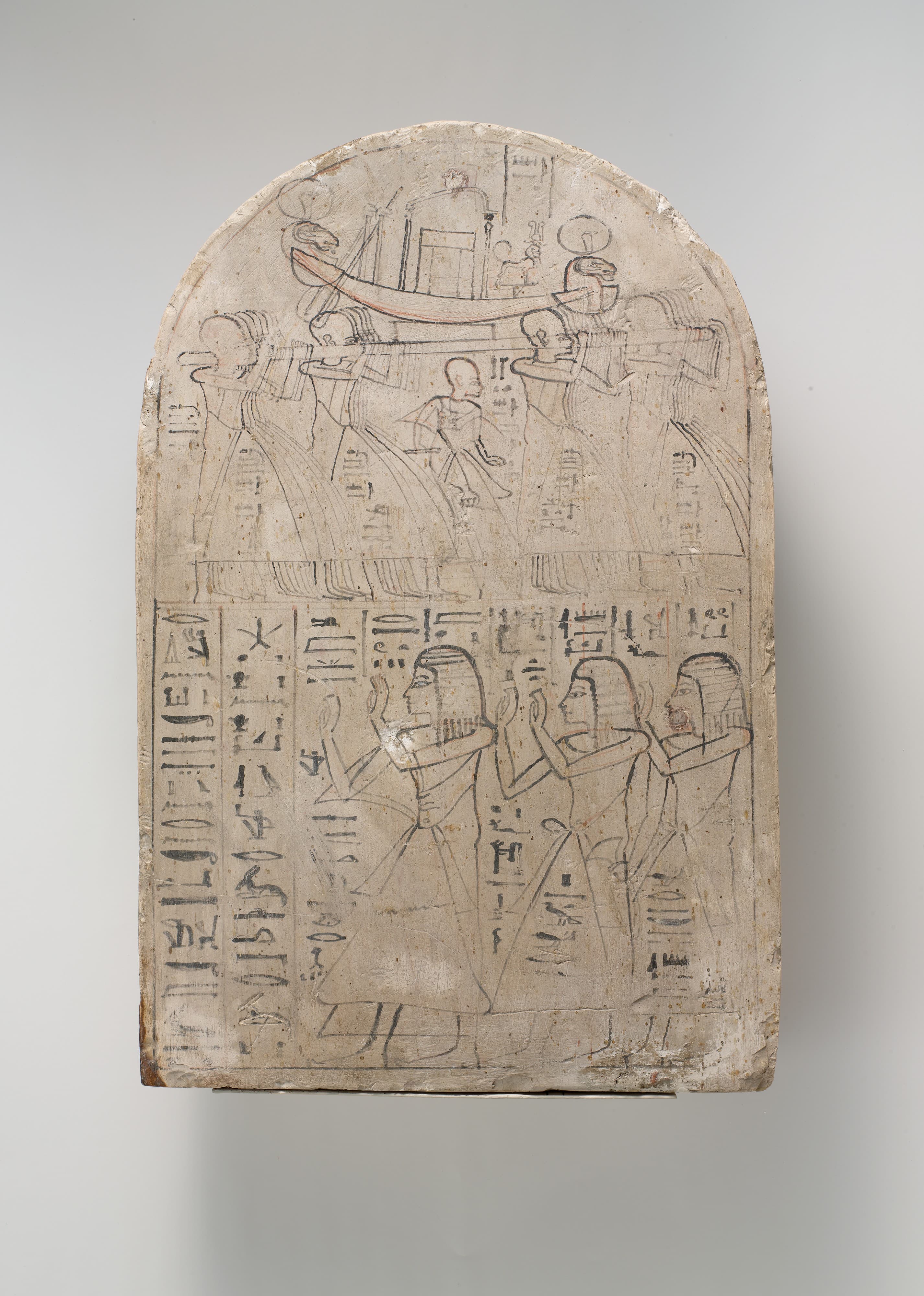
Stela of the royal scribe Amunnakht praising the divine barque of Amun-Re, Lord of the Thrones of the Two Lands
Ancient Egyptian (Unknown), -1070
The Metropolitan Museum of Art, New York