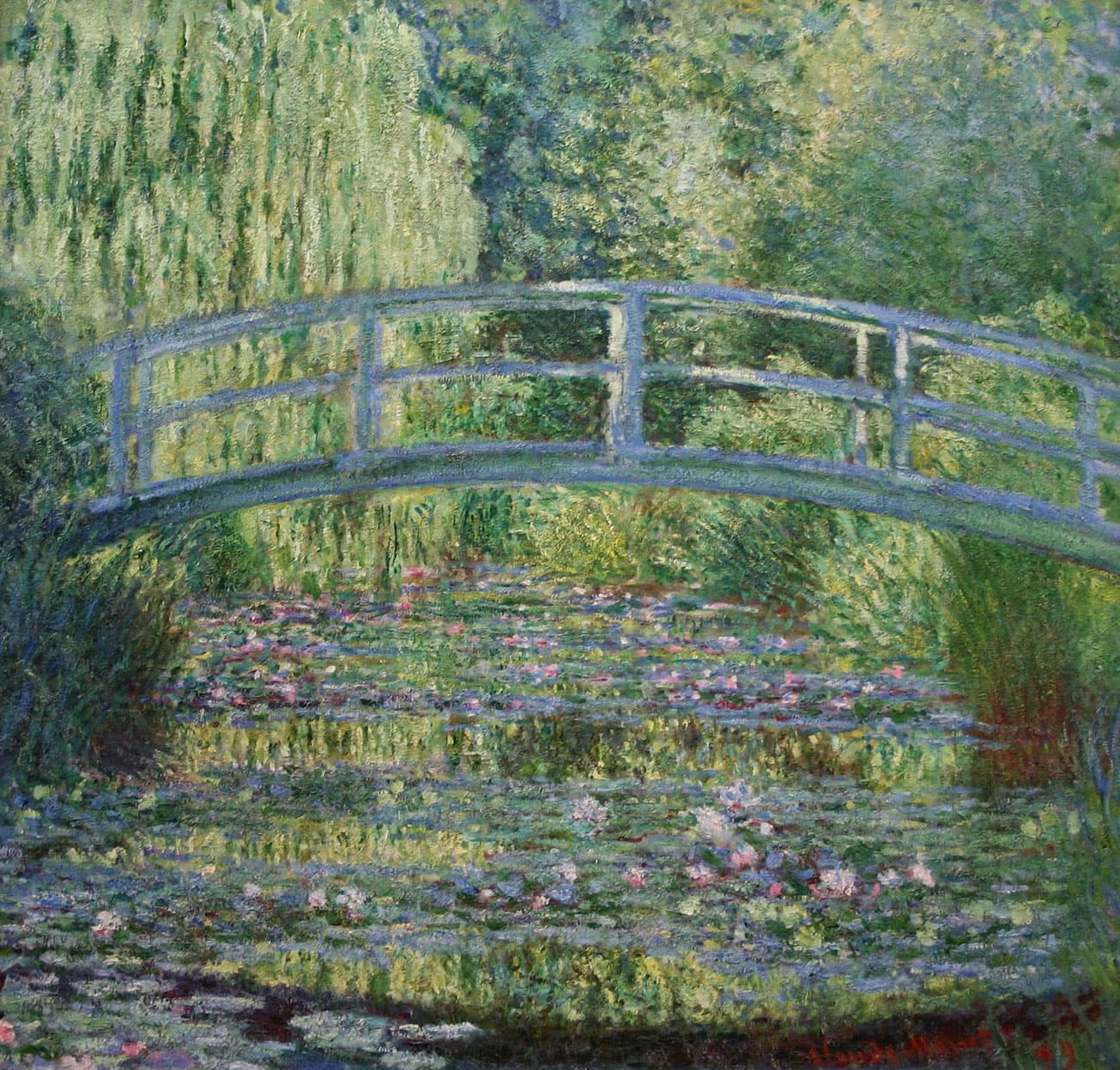
The Japanese Footbridge
by Claude Monet, 1899
StyleImpressionism
Artwork Details
Details
- Year
- 1899
- Medium
- Oil on canvas
- Size
- 89 cm × 93 cm
Cite or Embed This Work
APA · MLA · Chicago1-click academic citation and embeddable “On View” museum badge for articles, syllabi, and research.
Claude Monet painted The Japanese Footbridge in 1899, one of twelve views he made that summer from the same vantage point in his Giverny garden. He had purchased the marshy land in 1893, diverted a stream, planted willows and water lilies, and built the arching wooden bridge himself.
The painting captures soft morning light on the turquoise bridge, its reflection rippling in the pond below. Tall grasses and flowers line the banks. Monet's brushwork is loose but controlled, each stroke suggesting rather than defining. The vertical format, unusual in his water lily series, emphasizes depth over breadth.
The canvas measures 81.3 by 101.6 centimeters and hangs at the National Gallery of Art in Washington, D.C. It came through a bequest from Victoria Nebeker Coberly in memory of her son. Monet would paint his water garden obsessively for the rest of his life, eventually producing around 250 related works, many much larger than this intimate early view.
![Gian Federico Madruzzo Oil Canvas Giovanni Battista[1] by Giovanni Battista Moroni](/apps/masterpieces/_next/image?url=https%3A%2F%2Fyfndmpigludzuzjjdfce.supabase.co%2Fstorage%2Fv1%2Fobject%2Fpublic%2Fartwork-images%2Fartwork-wiki%2Fgiovanni-battista-moroni-gian-federico-madruzzo-oil-canvas-giovanni-battist.jpg&w=3840&q=75)