Wikimedia Commons • Public Domain
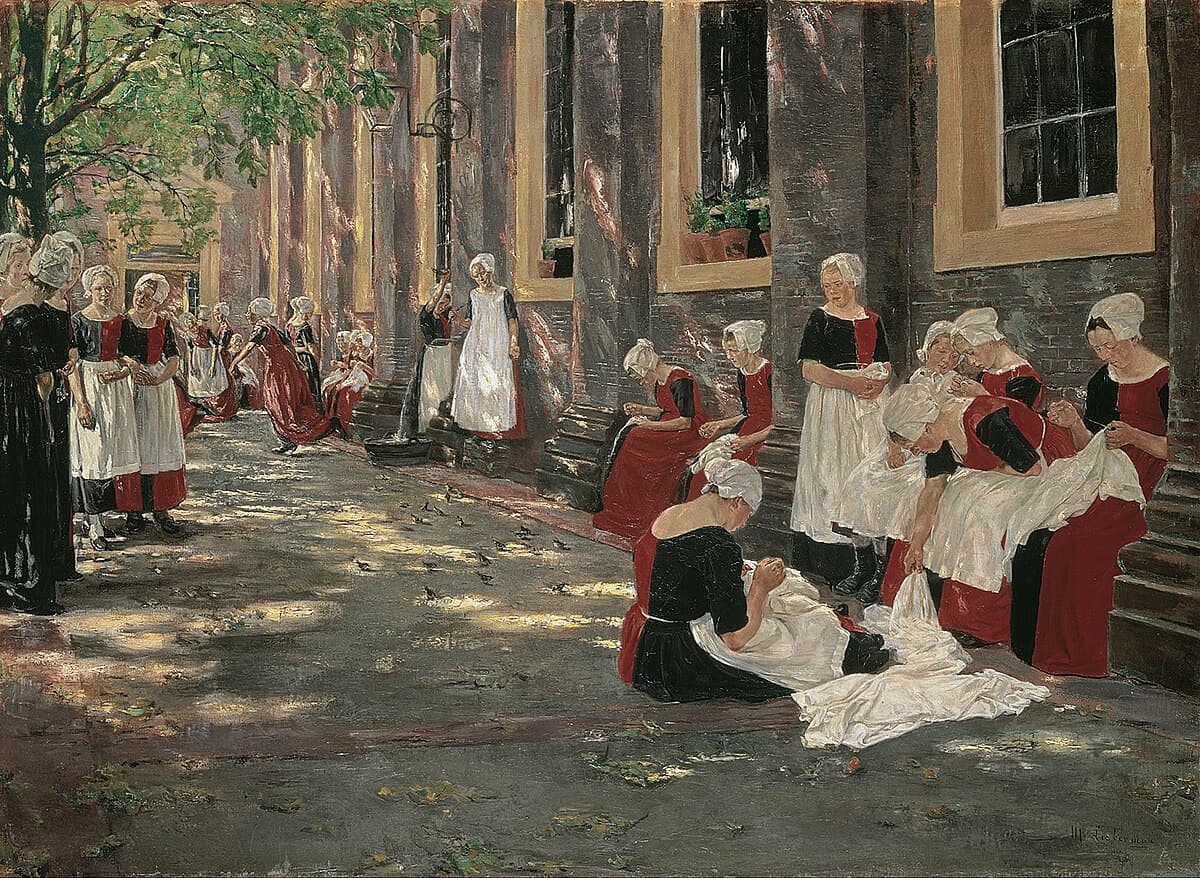
Amsterdam Orphanage
Artwork Details
Cite or Embed This Work
APA · MLA · Chicago1-click academic citation and embeddable “On View” museum badge for articles, syllabi, and research.
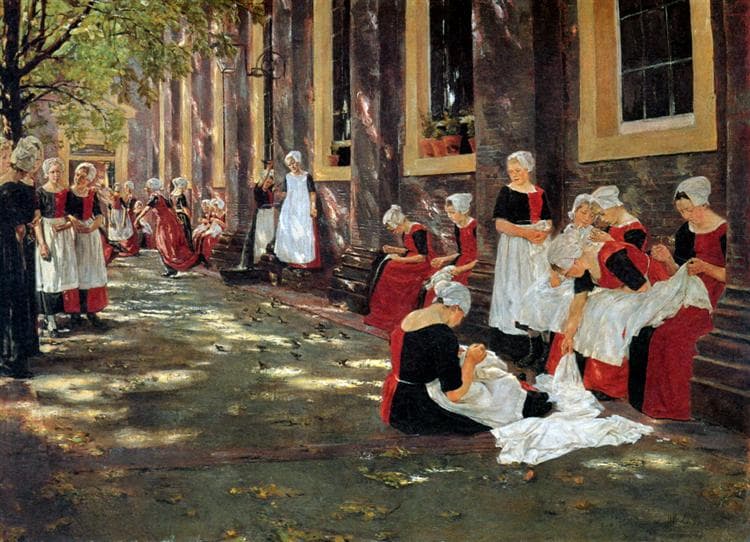
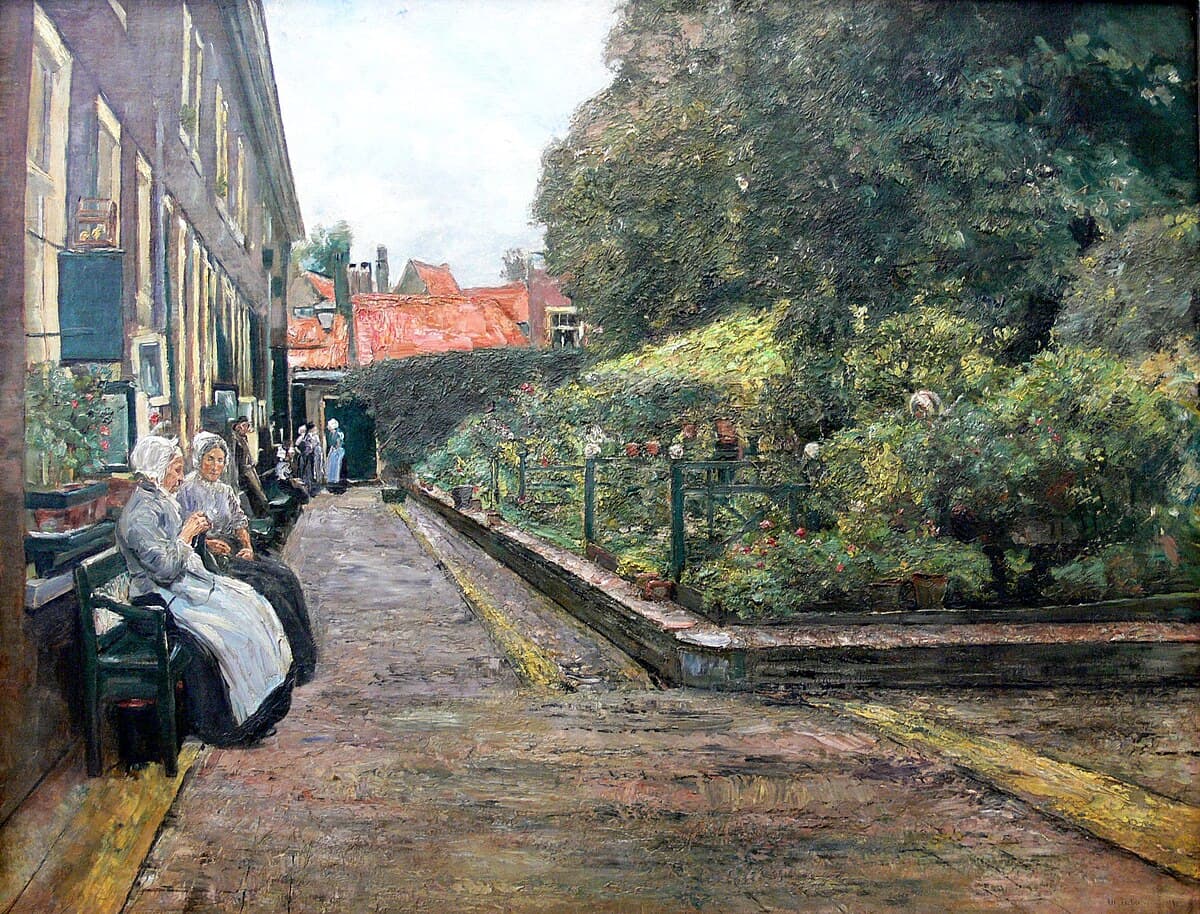
Max Liebermann first encountered the Amsterdam Orphanage on the Kalverstraat in 1876 during a trip from Haarlem. The sunlit courtyard filled with girls in their distinctive red-and-black uniforms captivated him. With help from his friend the etcher William Unger, he secured permission to paint there, an unusual arrangement that surprised fellow artists unaccustomed to plein air work in such settings.
This early work from 1876 belongs to Liebermann's realist period, before his shift toward Impressionism. Conservative critics taunted him as the "apostle of ugliness" for his unidealized depictions of working people. The painting now resides at the Staatliche Museen zu Berlin.
Liebermann returned to the orphanage subject multiple times, creating his most celebrated version, "Recreation Time in the Amsterdam Orphanage," in 1881-82. That larger work marked a turning point toward brighter Impressionist colors and is now at the Städel Museum in Frankfurt.