Saint Serapion
by Francisco de Zurbarán, 1628
Artwork Details
Details
- Year
- 1628
- Medium
- Oil on canvas
- Size
- 120 cm × 103 cm
Cite or Embed This Work
APA · MLA · Chicago1-click academic citation and embeddable “On View” museum badge for articles, syllabi, and research.
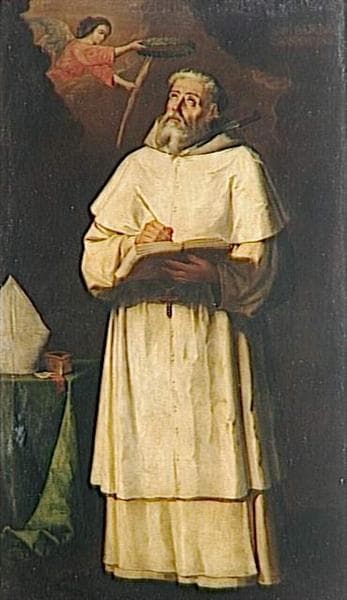
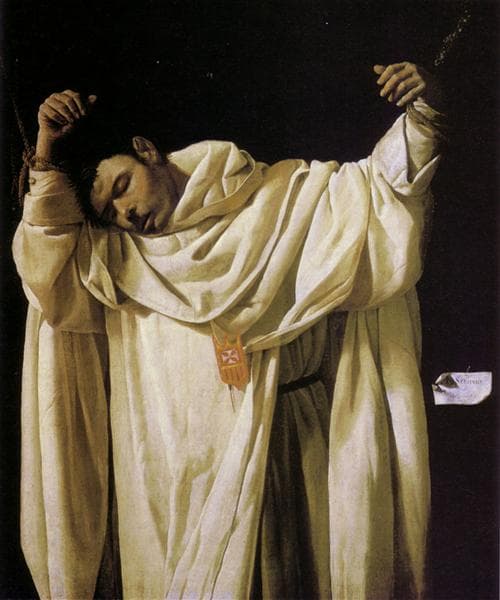
Francisco de Zurbarán's Saint Serapion stands among the most powerful religious images of the Spanish Baroque. Against a featureless dark background, a figure in cream-white robes hangs suspended, arms bound to a wooden beam, head slumped forward in death. The Mercedarian emblem on his chest identifies him as Serapion, a 13th-century English martyr who joined the Order of Our Lady of Mercy and died ransoming Christian captives from North African pirates.
The historical Serapion was captured in 1240 when ransom payment for his prisoners failed to arrive. His captors tortured him for days, eventually killing him by disembowelment. Zurbarán shows none of this violence. He depicts the moment after death, when suffering has ended and the soul has departed. The saint's face is peaceful, his posture suggesting surrender rather than agony. Spanish Counter-Reformation art often presented martyrdom as spiritual triumph rather than physical horror.
Zurbarán built his reputation painting monastic subjects for the religious orders of Seville. His ability to render white fabric became legendary. The rough wool habit here catches light in soft folds, with subtle variations of gray, cream, and shadow creating weight and texture. Darkness behind focuses all attention on the illuminated figure. Wadsworth Atheneum in Hartford, Connecticut holds this work, one of the finest Spanish Baroque paintings in any American collection.