The Three Graces
by Antonio Canova, 1817
Artwork Details
Details
- Year
- 1817
- Medium
- Marble
- Size
- 182 cm (72 in) tall
Cite or Embed This Work
APA · MLA · Chicago1-click academic citation and embeddable “On View” museum badge for articles, syllabi, and research.
Antonio Canova carved two versions of The Three Graces. The first (1814-17) is at the Hermitage Museum in St. Petersburg. The second (1815-17) was jointly purchased by the Victoria and Albert Museum and the National Galleries of Scotland, alternating display between London and Edinburgh.
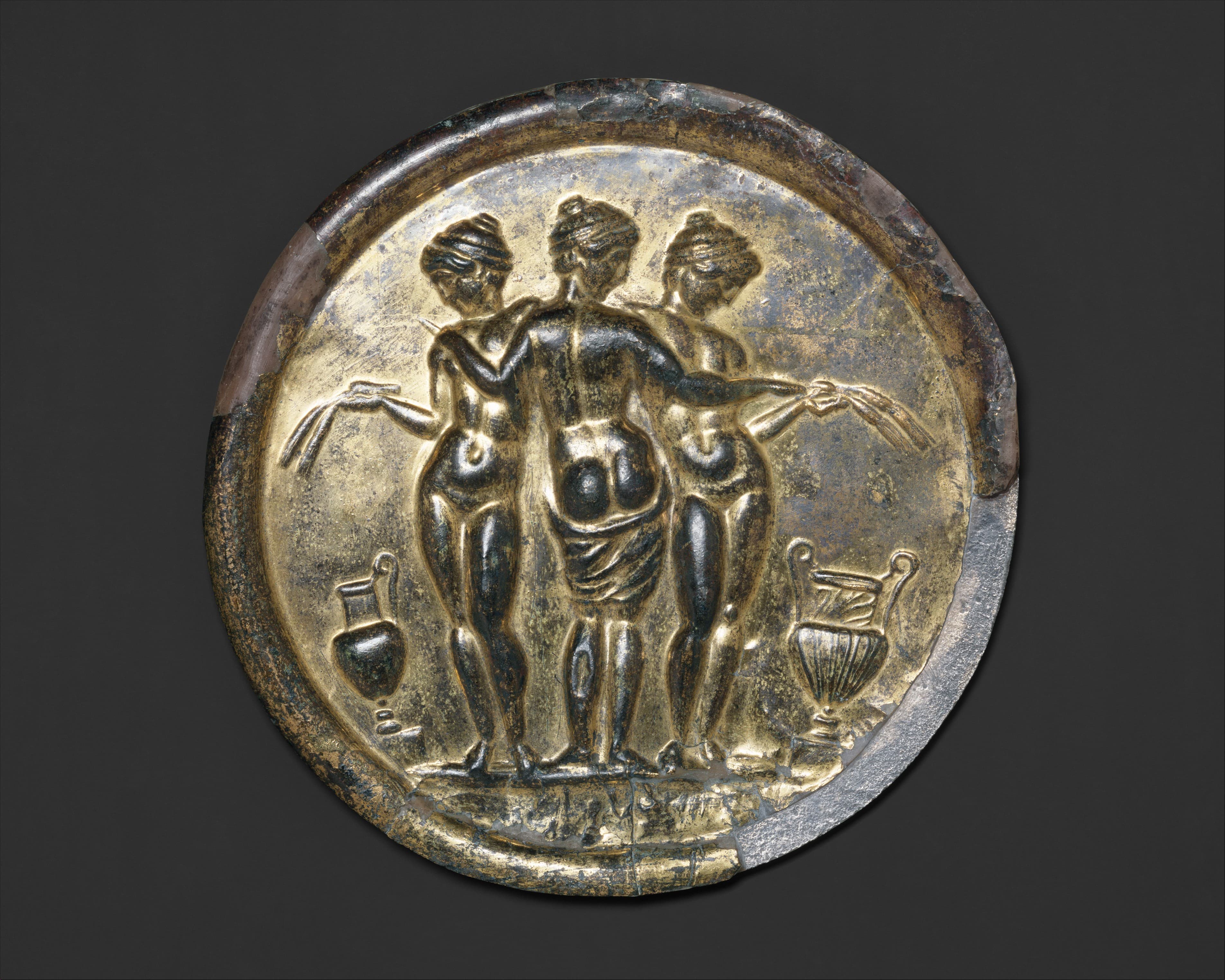
The three figures, Aglaea, Euphrosyne, and Thalia, stand in an embrace, their bodies intertwined. Canova polished the marble to a near-translucent glow and applied a light wax finish to give it a warm, skin-like quality. The group exemplifies Neoclassical ideals: classical subject, restrained emotion, and flawless surface. It's one of the most reproduced sculptures of the 19th century.