Wikimedia Commons - CC BY 4.0
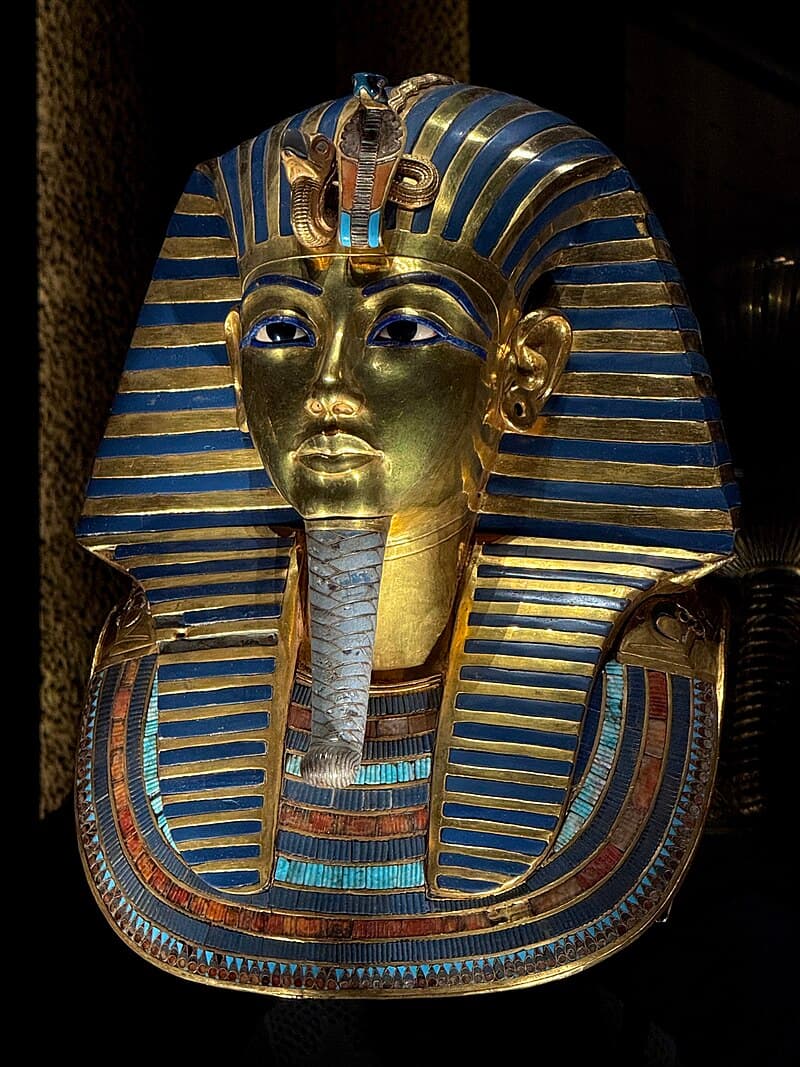
Tutankhamun's Golden Mask
by Ancient Egyptian (Unknown), -1323
Artwork Details
Details
- Year
- -1323
- Medium
- Gold, lapis lazuli, carnelian, obsidian, turquoise
- Size
- 54 cm (21 in) tall, 11 kg
Ancient Egyptian The funerary mask of Tutankhamun is ancient Egypt's most famous artifact, created around 1323 BCE to cover the mummified face of the young pharaoh. Weighing 11 kilograms of solid gold, the mask features inlaid stripes of blue lapis lazuli on the nemes headdress. The eyes are crafted from obsidian and quartz, giving the 19-year-old king an eternal gaze across millennia.
British archaeologist Howard Carter discovered the mask in 1925 when he opened the innermost coffin in Tutankhamun's tomb. The burial chamber had remained untouched for over 3,200 years. X-ray analysis revealed the mask was hammered from two separate sheets of gold, with the face sheet being thicker and of higher purity than the headdress. In 2015, the mask's braided beard was accidentally knocked off during cleaning and hastily reglued, requiring professional restoration.
The mask now resides at the Grand Egyptian Museum near the Giza pyramids, where it anchors the complete Tutankhamun collection. Its striking black and gold color scheme has inspired countless reproductions and remains an icon of ancient luxury.
More by Ancient Egyptian (Unknown)
View all →Sculpture
A

Architectural Fragment with Relief Carving
Ancient Egyptian (Unknown), 401
Art Institute of Chicago, Chicago
Sculpture
S
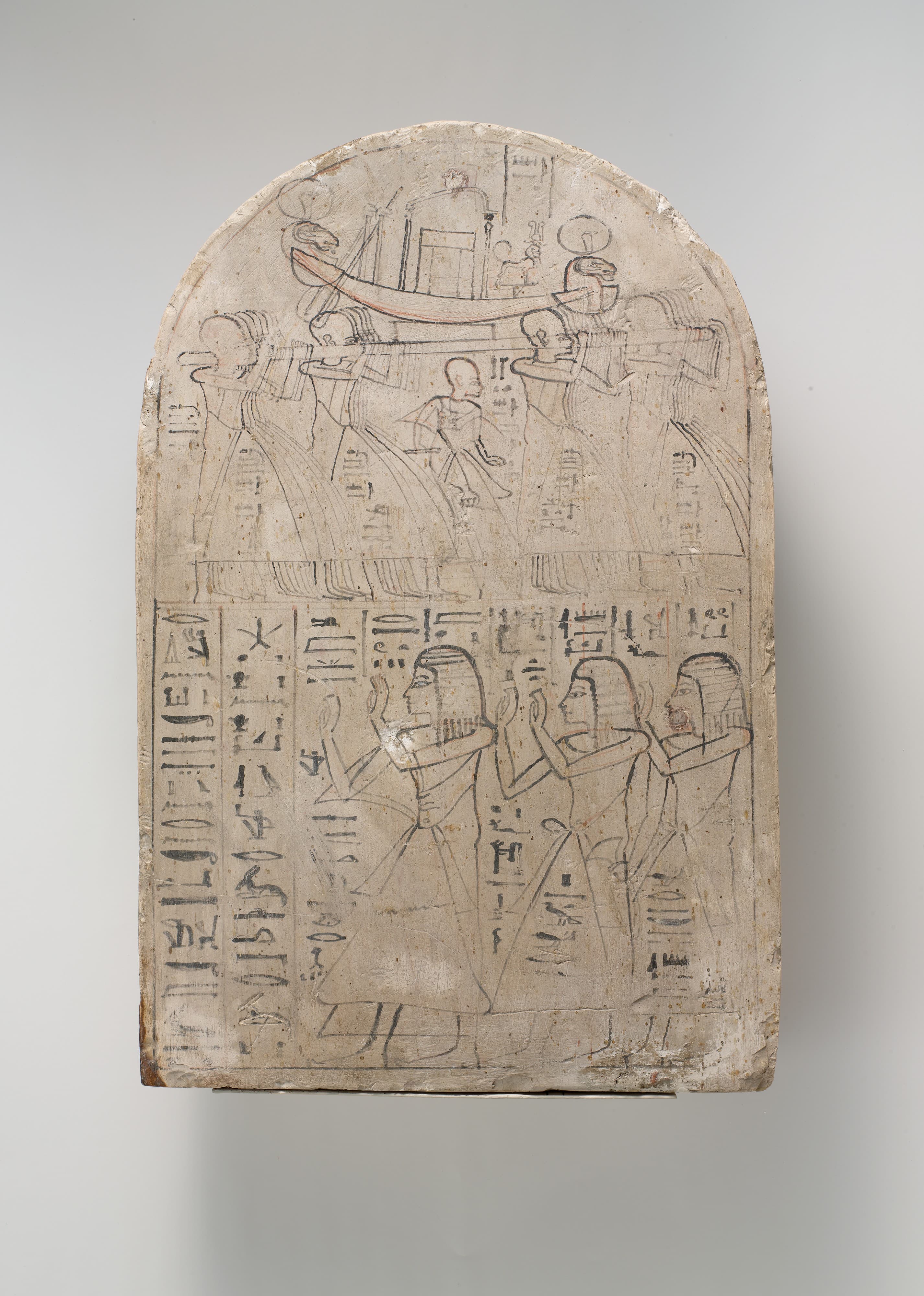
Stela of the royal scribe Amunnakht praising the divine barque of Amun-Re, Lord of the Thrones of the Two Lands
Ancient Egyptian (Unknown), -1070
The Metropolitan Museum of Art, New York