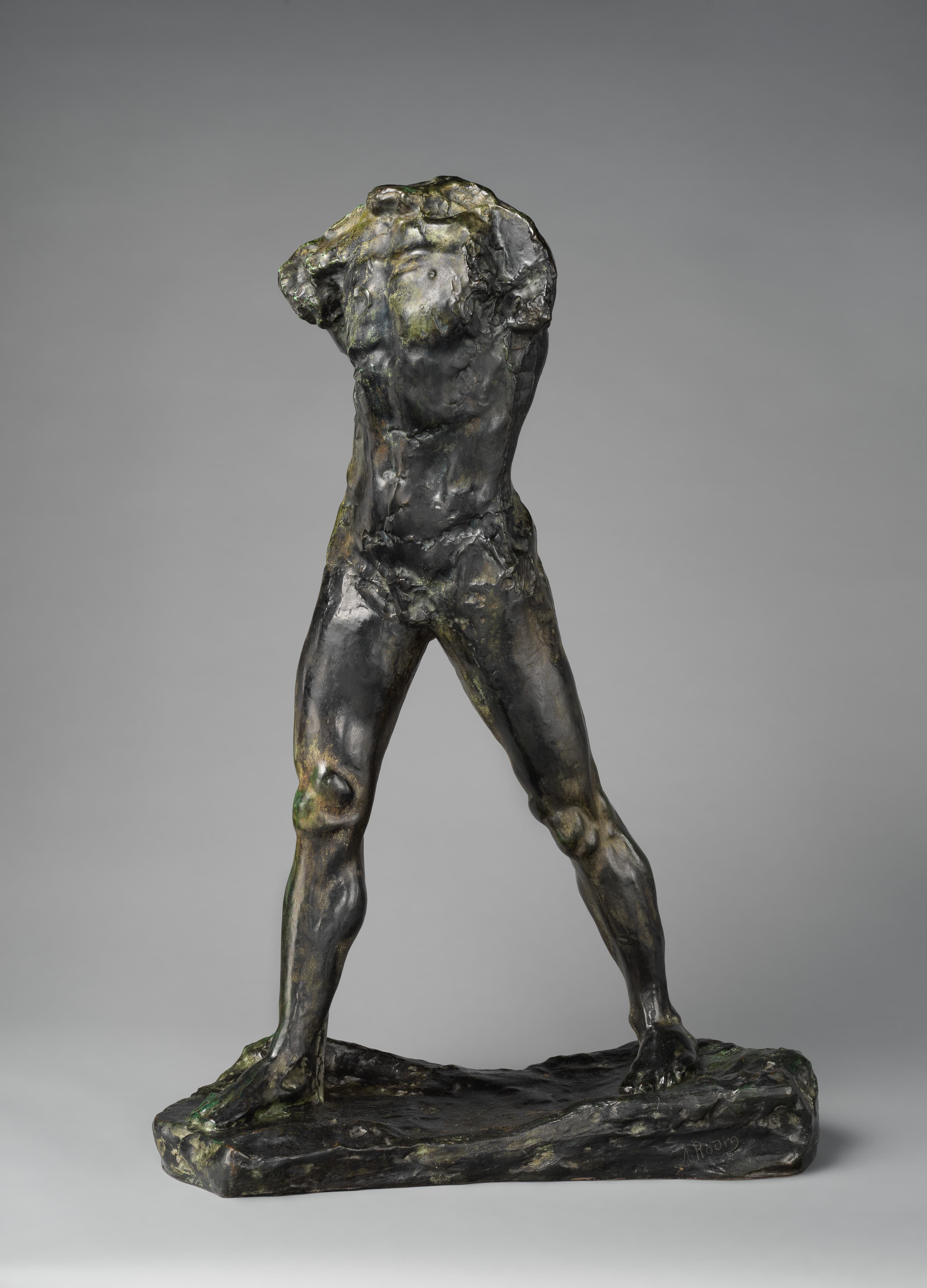
The Walking Man
by Auguste Rodin, 1907
Artwork Details
Details
- Year
- 1907
- Medium
- Bronze
- Size
- 213 cm (84 in) tall
Cite or Embed This Work
APA · MLA · Chicago1-click academic citation and embeddable “On View” museum badge for articles, syllabi, and research.
Auguste Rodin created this The Walking Man around 1877-1907, a headless, armless bronze torso captured in mid-stride. The figure represents Rodin's radical approach to sculpture: rather than depicting complete idealized bodies, he presented fragments that carry their own expressive power. The missing parts are not damage but deliberate artistic choice.
Rodin developed the figure from studies for his monumental Saint John the Baptist Preaching. He recognized that the torso and legs alone, stripped of head and arms, communicated motion and energy more powerfully than any complete figure. The Walking Man became influential in modern sculpture's embrace of the fragment.
Bronze casts exist in the Musée Rodin in Paris and other major museums. The sculpture influenced Giacometti and other 20th-century sculptors who found expressive power in incomplete forms. Rodin proved that sculpture need not be whole to be complete, that the fragment could achieve its own formal and emotional perfection.