W
No Image Available
We don't have a photograph of this work yet.
See the original at The Metropolitan Museum of Art in New York
William the Hippo
by Ancient Egyptian (Unknown), -1961
Artwork Details
Details
- Year
- -1961
- Medium
- Faience
- Size
- 11.2 cm × 20 cm (4.4 × 7.9 in)
This small faience hippopotamus is the unofficial mascot of the Metropolitan Museum of Art. It was made during Egypt's Middle Kingdom, Dynasty 12, around 1961-1878 BCE. The blue-green glaze comes from copper, silica, and calcium. Lotus flowers and marsh plants painted on his body in black manganese pigment represent the Nile habitat where hippos lived.
Three of his four legs were deliberately broken off in antiquity. Ancient Egyptians believed that representations of living creatures could magically come alive in the afterlife. A hippo was one of the most dangerous animals in Egypt, so breaking the legs neutralized the threat while keeping the figure's symbolic power of fertility and rebirth.
He got the name "William" in 1931 from a caption in the British humor magazine Punch. He's been at the Met for over 100 years, acquired in 1917 from the tomb of Senbi at Meir, and remains one of the museum's most popular and most reproduced objects.
More by Ancient Egyptian (Unknown)
View all →Sculpture
A

Architectural Fragment with Relief Carving
Ancient Egyptian (Unknown), 401
Art Institute of Chicago, Chicago
Sculpture
S
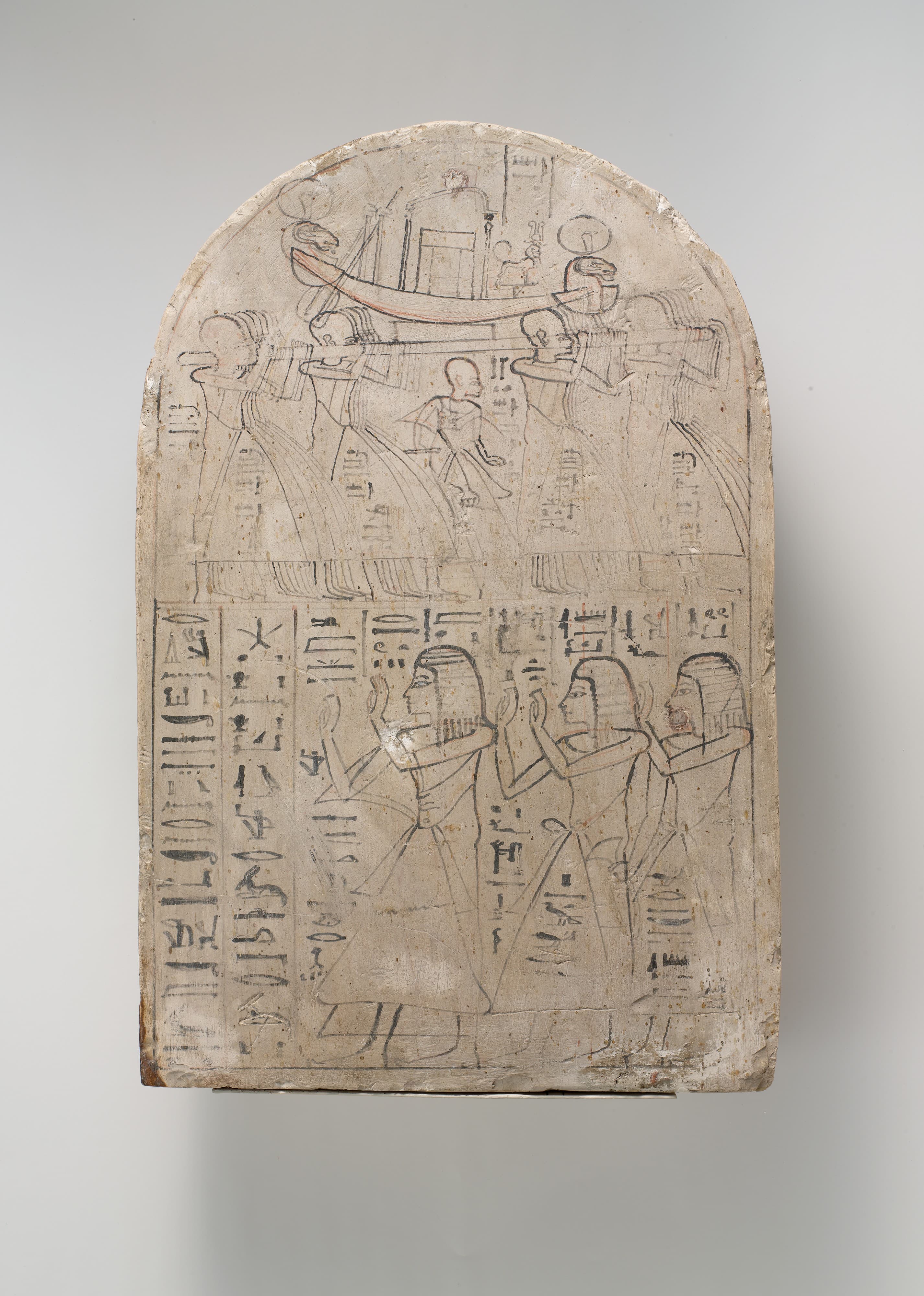
Stela of the royal scribe Amunnakht praising the divine barque of Amun-Re, Lord of the Thrones of the Two Lands
Ancient Egyptian (Unknown), -1070
The Metropolitan Museum of Art, New York