Praxiteles
Greek (Athenian)·-400–-330
No Portrait Available
Praxiteles (c. 400–326 BC) was the most celebrated sculptor in ancient Athens and arguably the most influential Greek artist of the 4th century BC. He came from a dynasty of sculptors: his father Kephisodotos and both his sons all practiced the craft. Details of his life are scarce, but his impact on Western art is enormous.
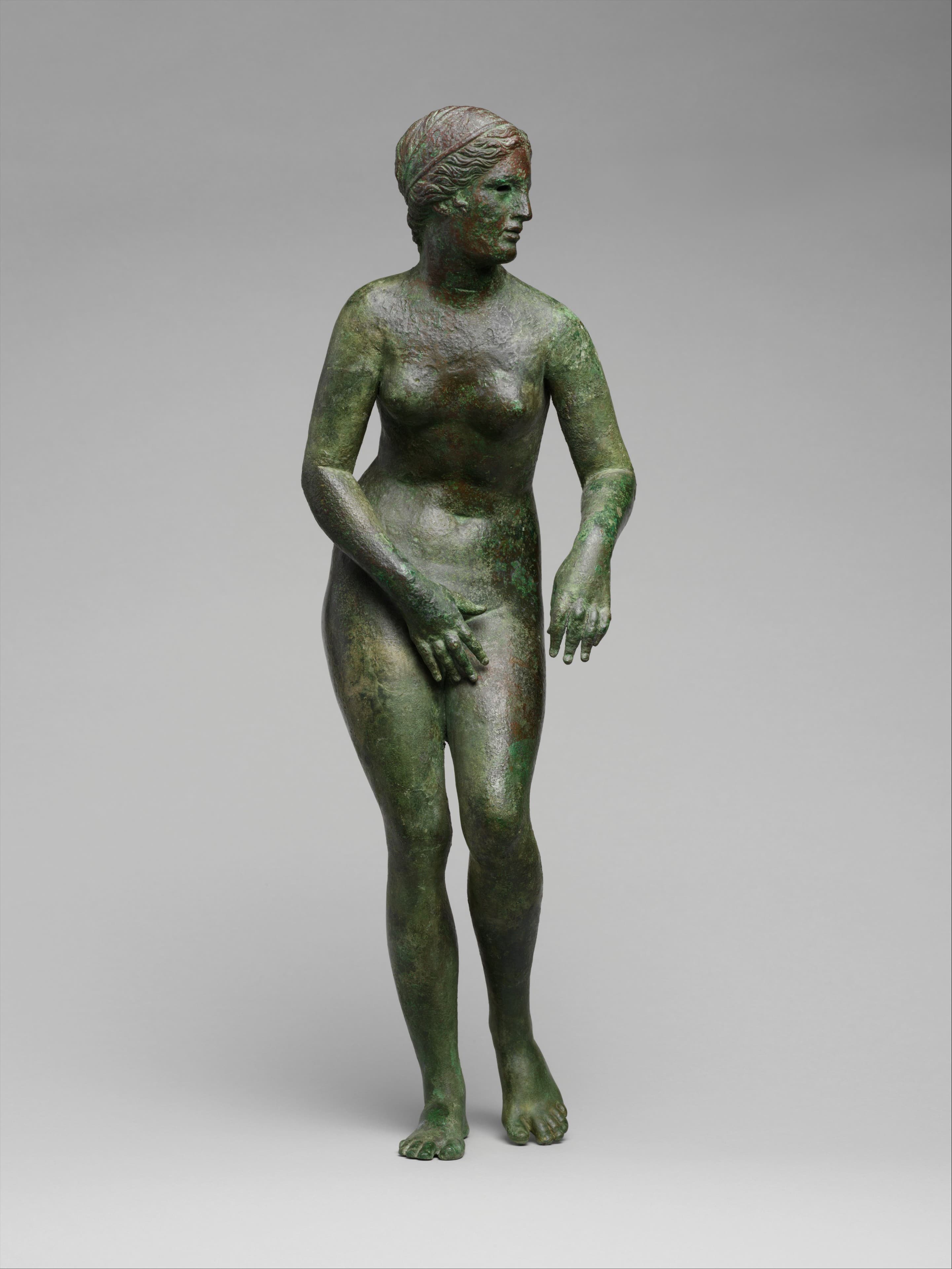
Praxiteles introduced a softer, more sensual approach to the human figure that broke with the severe Classical style. His signature "Praxitelean curve", a languid S-shaped pose with the figure leaning on a support, became one of the most copied poses in art history. He preferred younger gods like Hermes, Apollo, and Aphrodite over the stern older Olympians. His Aphrodite of Knidos was the first life-size female nude in Greek sculpture. The island of Kos rejected it as too provocative, but Knidos bought it and the statue became so famous that tourists traveled from across the Mediterranean to see it.
The only surviving work possibly from his own hand is the Hermes Carrying the Infant Dionysus, found at Olympia in 1877 (though some scholars dispute the attribution). Everything else we know comes from Roman copies and ancient literary descriptions. His influence can be traced through Neoclassical sculpture all the way to Canova. Copies of his works survive at the Louvre, Vatican Museums, and British Museum.