Willem van de Velde the Younger
Dutch·1633–1707
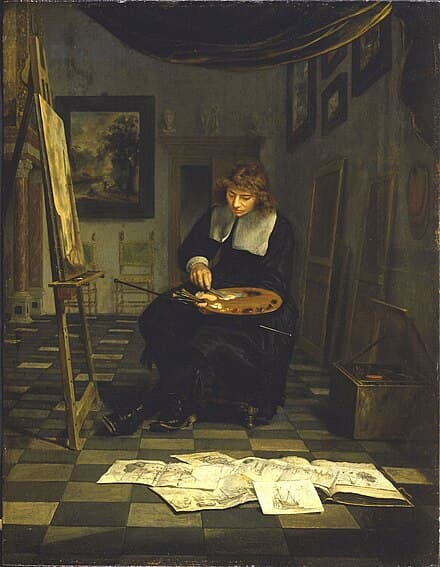
Dutch Golden Age marine painter Willem van de Velde the Younger (1633-1707) became the leading seascape artist of the late 17th century, working closely with his father, the maritime draftsman Willem van de Velde the Elder. Born in Leiden, he trained with marine artist Simon de Vlieger before joining his father's studio in Amsterdam. While the Elder was a master of detail, the Younger excelled at rendering light on water. Their complementary talents made them the leading marine painters in Amsterdam for twenty years, receiving important naval battle commissions from the Admiralty.
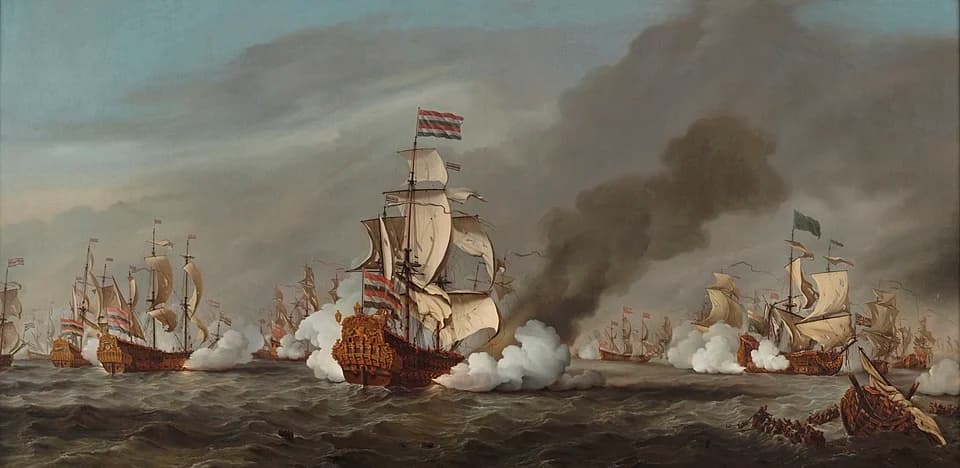
When the Dutch Republic entered the "Disaster Year" of 1672, with multiple countries declaring war, the market for marine paintings collapsed. Father and son emigrated to England, where King Charles II gave them each a £100 annual salary and studio space at the Queen's House in Greenwich. Van de Velde the Younger's English works shaped the development of British marine painting for the next century. His ships are portrayed with almost photographic accuracy, making his paintings valuable guides to 17th-century naval architecture. Works featuring dramatic coastal scenes and naval battles hang at the National Gallery in London, the National Maritime Museum in Greenwich, the Rijksmuseum, and the Metropolitan Museum of Art. He died in Westminster in 1707 and is memorialized at St James's Church, Piccadilly.
Primary Genres
Notable Works by Willem van de Velde the Younger
1 painting catalogued with museum locations
Museums with Willem van de Velde the Younger's Work
1 museum displays Younger's works. Click any museum to see visiting info and the specific works they hold.
About Willem van de Velde the Younger
He was a Dutch Golden Age marine painter who became the most influential maritime artist of the 17th century. After moving to England in 1672-73, he shaped English seascape painting for generations. J.M.W. Turner owned several of his drawings and studied his treatment of coastal light and atmosphere.
Major collections are at the National Gallery and National Maritime Museum in London (both at Greenwich), the Rijksmuseum in Amsterdam, and the Metropolitan Museum of Art. The Queen's House at Greenwich served as the family's studio under royal patronage.
The 1672 'Disaster Year' (Rampjaar), when France, England, and German bishops simultaneously declared war on the Dutch Republic, devastated the art market. Marine painting commissions collapsed. King Charles II offered the father-son team royal patronage, £100 annual retainer each, and studio space at the Queen's House in Greenwich.
His ships are rendered with almost photographic accuracy, making his paintings invaluable historical documents for understanding 17th-century naval architecture, rigging, and battle formations. His father Willem the Elder was official artist to the Dutch fleet, sketching battles from small boats amid combat, providing meticulous source material.
Father and son worked as an extraordinarily effective team: the Elder (1611-1693) created precise ship drawings in pen and ink (called 'pen paintings'), while the Younger (1633-1707) excelled at translating these into atmospheric oil paintings with sophisticated rendering of light, water, and sky. This collaboration produced over a thousand works.
Love Willem van de Velde the Younger's Style?
Explore art inspired by their style.
Browse Collection