Wikimedia Commons • Public Domain
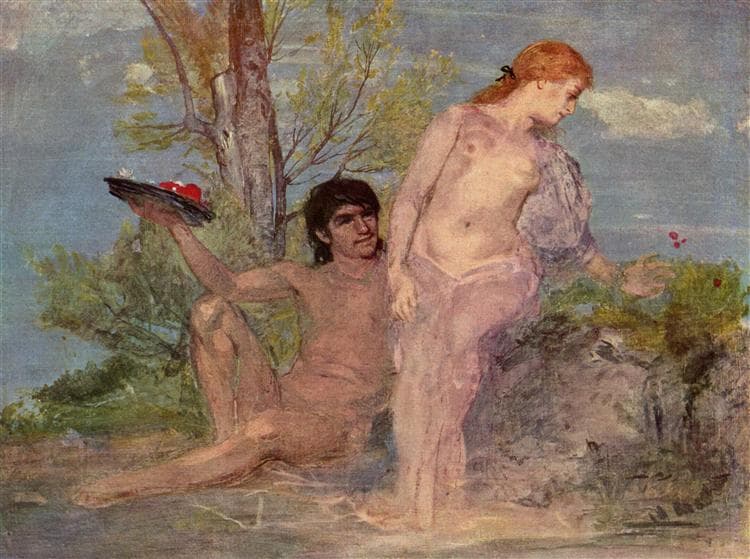
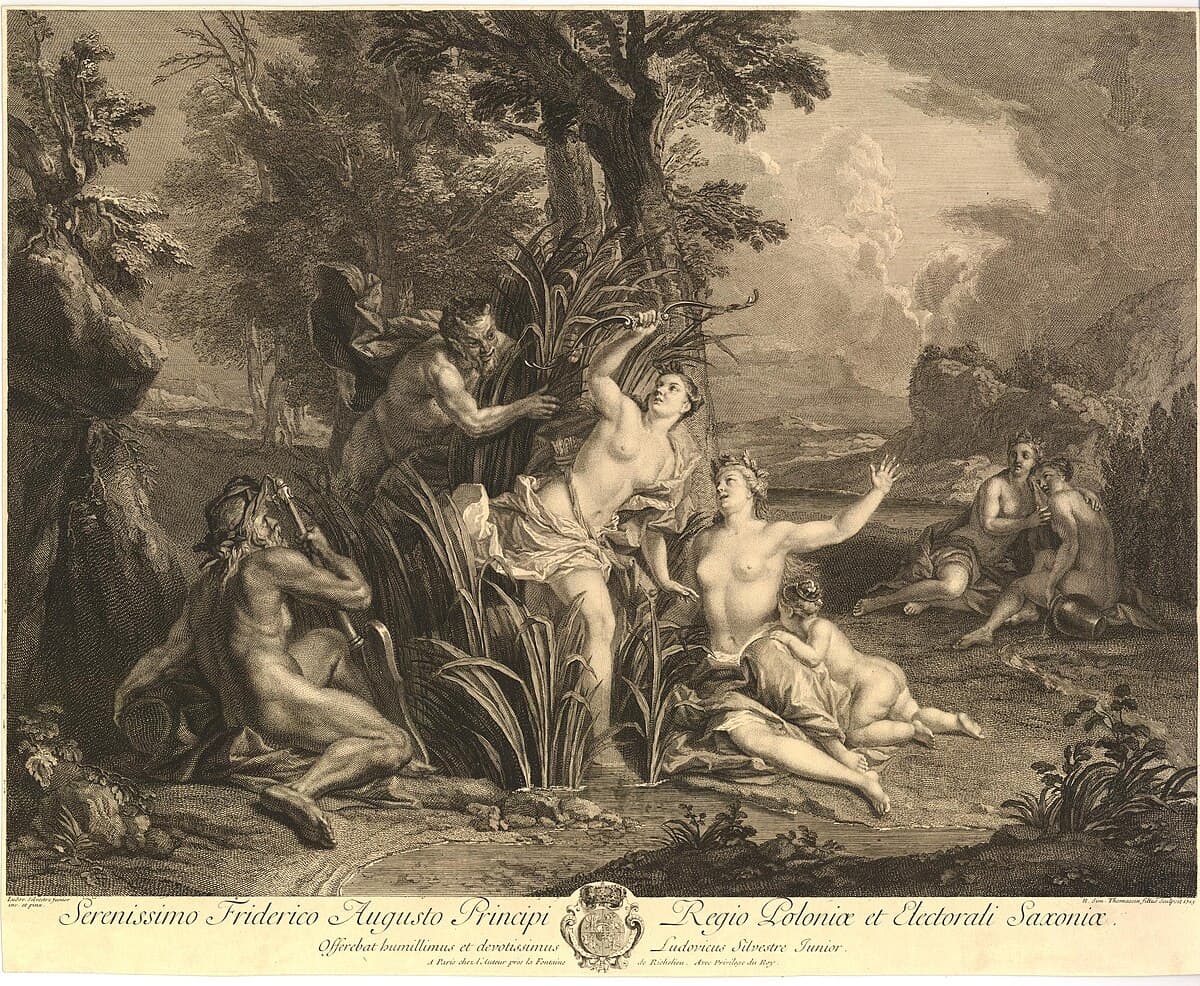
Pan chasing a Nymph
GenreMythological
Artwork Details
Cite or Embed This Work
APA · MLA · Chicago1-click academic citation and embeddable “On View” museum badge for articles, syllabi, and research.
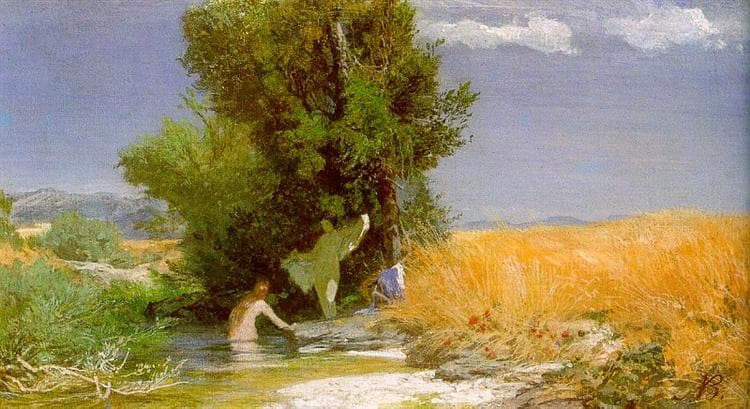
Arnold Böcklin completed this pastel study in Rome in 1855, capturing the moment when Pan surprises a nymph who attempts to flee. The work relates to the myth of Pan and Syrinx from Ovid's Metamorphoses, where the lustful god pursues the nymph until she begs the gods to save her. They transform her into reeds, from which Pan later fashions his famous flute.
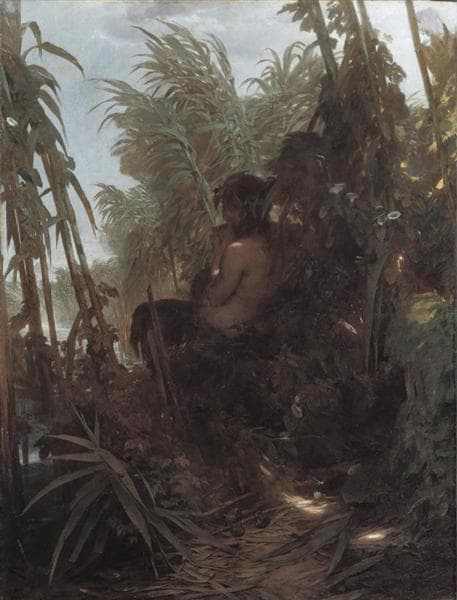
This sketch appears on the verso (back) of another pastel study, "A Nymph at the Fountain." Both works show Böcklin developing his approach to mythological subjects that would define his mature career. The figure of Pan, the lascivious Greek god of nature, became one of the most repetitive motifs in Böcklin's work.
After his first stay in Italy in 1850, Böcklin's style shifted from landscapes influenced by Caspar David Friedrich toward a Romanticism tinged with classical references. His evocative landscapes, inhabited by forest spirits and figures from classical mythology, aimed to represent nature's internal forces, his fears and his dreams. The Thyssen-Bornemisza Museum in Madrid holds this work.