Public Domain
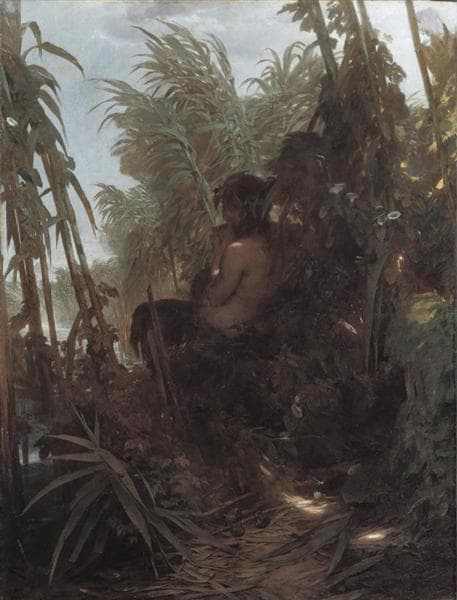
Pan Among the Reeds
Artwork Details
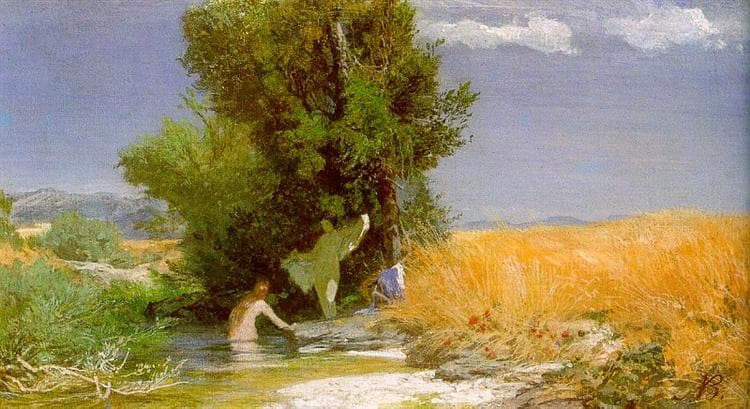
Arnold Böcklin rendered this scene of the Greek god Pan in 1858 during his first stay in Rome. The work depicts the aftermath of a tragic myth. According to Ovid's Metamorphoses, Pan fell in love with the nymph Syrinx, but she fled from him and begged the gods for help. They transformed her into reeds. When Pan's breath brushed through those reeds, it produced a haunting sound. He fashioned them into the pan flute, an instrument whose melancholy tones consoled him for his failed romance.
The painting marks a turning point in Böcklin's career. Created under difficult circumstances at the end of his Roman period, its sale allowed the artist and his young family to return to Basel. King Maximilian II of Bavaria purchased the work in 1859 after seeing it at the Munich Kunstverein, giving Böcklin his first major success.
Pan emerges from the darker foliage almost as camouflage, not sharply outlined but suggested. This approach aligns with Symbolism, where meaning arises through suggestion rather than explicit representation. To Böcklin, Mediterranean antiquity represented a golden age when humanity lived in harmony with nature. The Neue Pinakothek in Munich holds this canvas, which measures 152.7 by 199.7 centimeters.