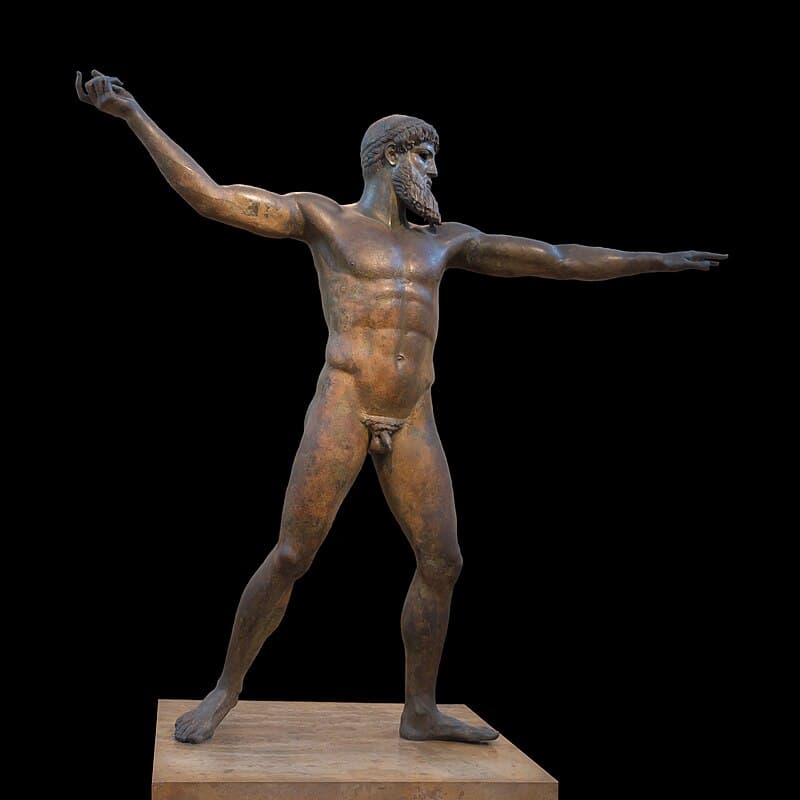
Wikimedia Commons - CC0
Artemision Bronze
by Ancient Greek (Unknown), -460
Artwork Details
Details
- Year
- -460
- Medium
- Bronze
- Size
- 209 cm (6 ft 10 in) tall
Cite or Embed This Work
APA · MLA · Chicago1-click academic citation and embeddable “On View” museum badge for articles, syllabi, and research.
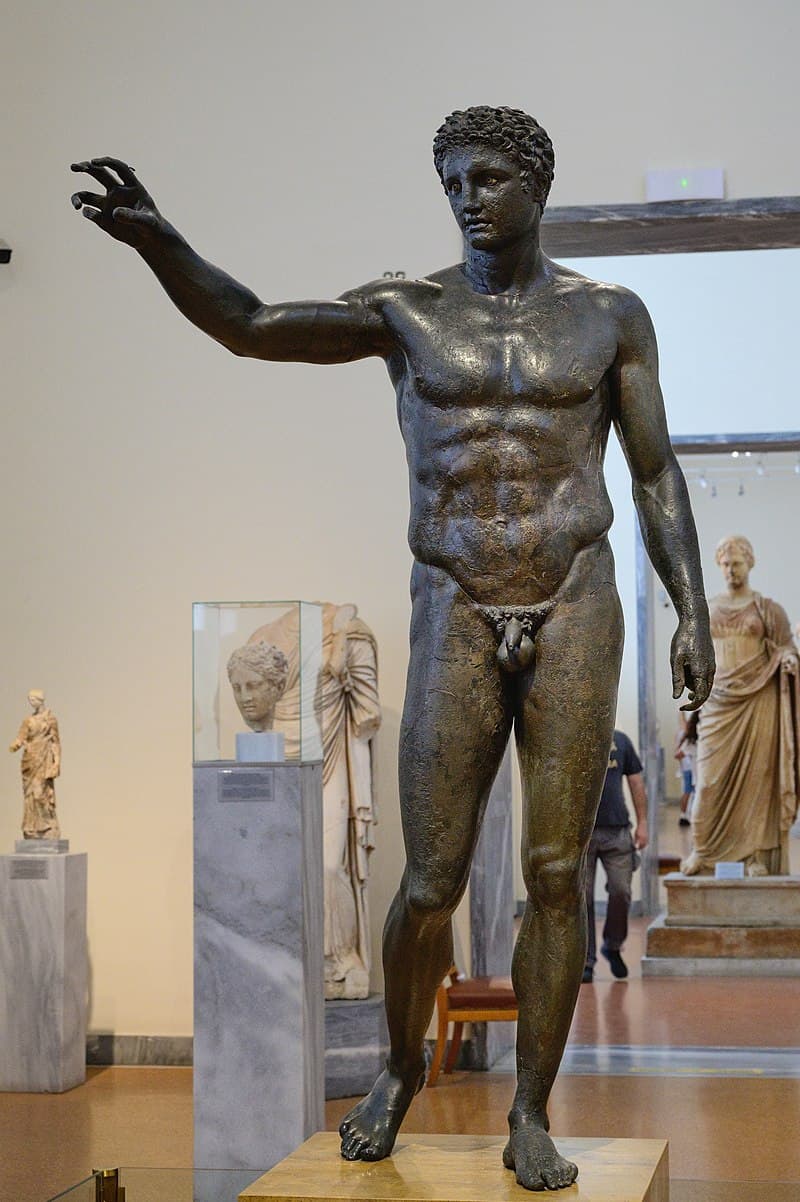
Ancient Greek The Artemision Bronze depicts a god (probably Zeus or Poseidon) poised to hurl a weapon, his arms extended in perfect balance. Created around 460 BCE, this is one of the few original Greek bronzes to survive, most having been melted down in antiquity. Fishermen found the statue in a shipwreck off Cape Artemision in 1926, giving the work its name.
The god's identity remains hotly debated. The stance suits either Zeus throwing a thunderbolt or Poseidon hurling a trident, though no weapon survives. The figure's anatomical precision and dynamic pose represent the Early Classical period's breakthrough from rigid archaic forms. At 209 centimeters, the statue is slightly larger than life.
The bronze is the prize of the National Archaeological Museum of Athens, one of the finest ancient bronzes in existence.