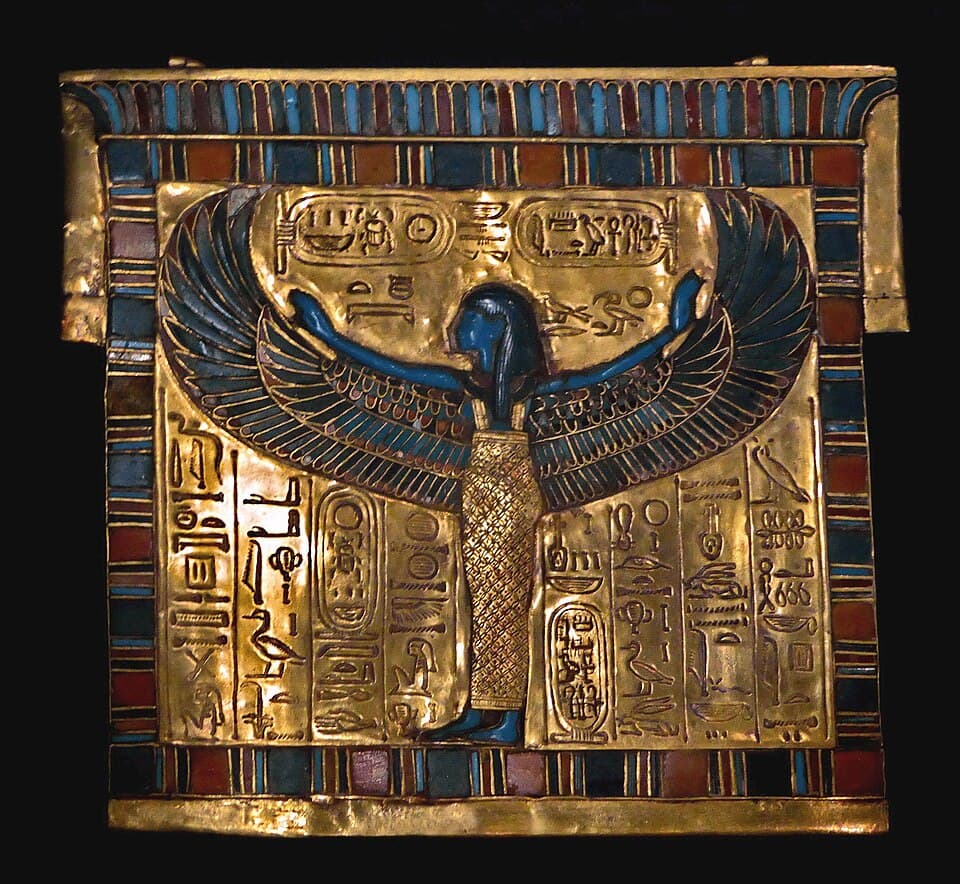
Canopic Jars of Tutankhamun
by Ancient Egyptian (Unknown), -1323
Artwork Details
Details
- Year
- -1323
- Medium
- Calcite (Egyptian alabaster)
The canopic jars of Tutankhamun (c. 1323 BC) held the young pharaoh's mummified internal organs: stomach, intestines, lungs, and liver. Each miniature golden coffin nestles inside a compartment of the calcite canopic chest, protected by one of the four sons of Horus. The stoppers are carved in Tutankhamun's likeness, inlaid with obsidian, glass, and blue pigment.
The canopic shrine is one of the most elaborate ever found. An outer gilded wooden shrine houses an alabaster chest, which in turn holds the four compartments. Carter's team found the organ bundles wrapped in linen and placed in miniature gold coffins identical in style to the full-size coffins that held the king's body.
The jars are displayed at the Grand Egyptian Museum. The Four Sons of Horus (Imsety, Hapy, Duamutef, and Qebehsenuef) each protected one organ, ensuring the pharaoh's body would be complete in the afterlife.
More by Ancient Egyptian (Unknown)
View all →Sculpture
A

Architectural Fragment with Relief Carving
Ancient Egyptian (Unknown), 401
Art Institute of Chicago, Chicago
Sculpture
S
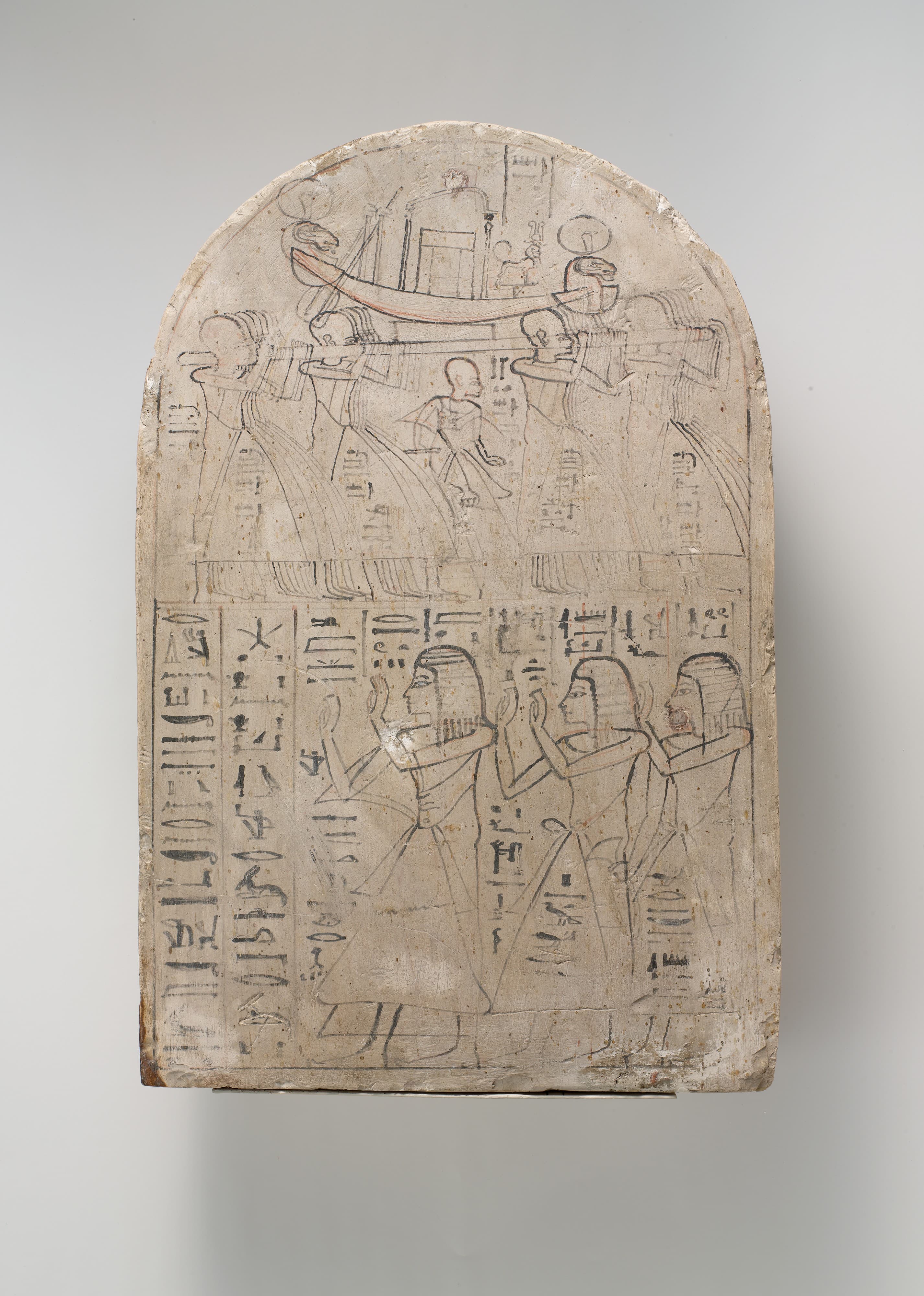
Stela of the royal scribe Amunnakht praising the divine barque of Amun-Re, Lord of the Thrones of the Two Lands
Ancient Egyptian (Unknown), -1070
The Metropolitan Museum of Art, New York