Public Domain
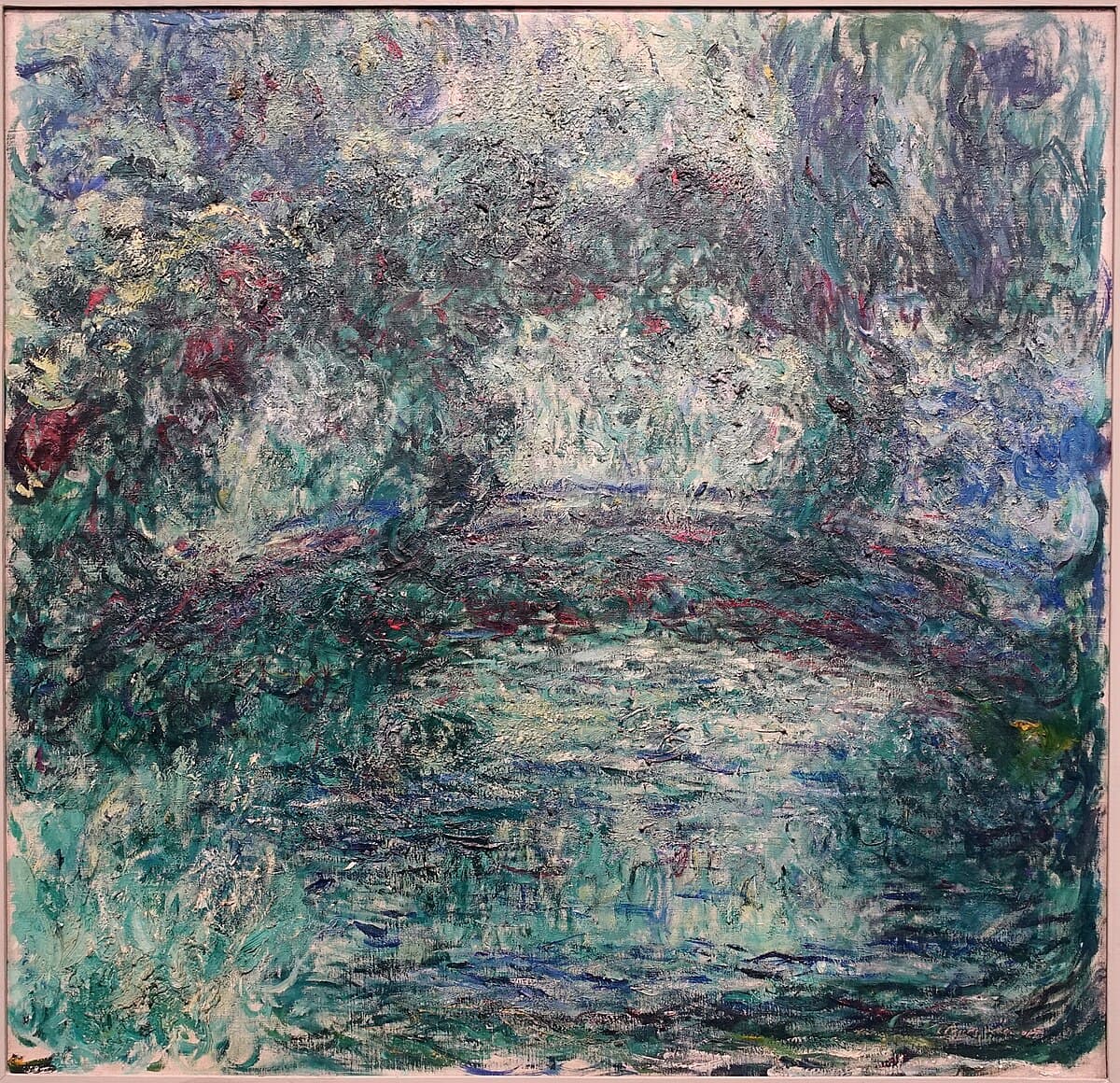
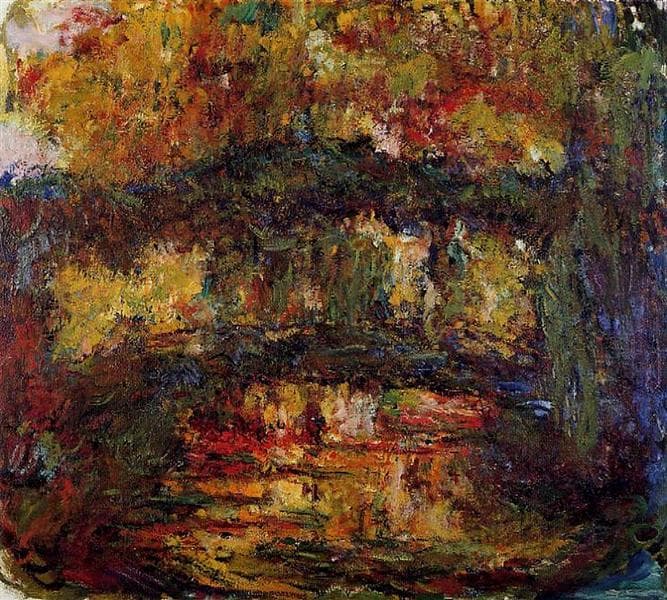
The Japanese Bridge 4
by Claude Monet
StyleImpressionism
Artwork Details
Cite or Embed This Work
APA · MLA · Chicago1-click academic citation and embeddable “On View” museum badge for articles, syllabi, and research.
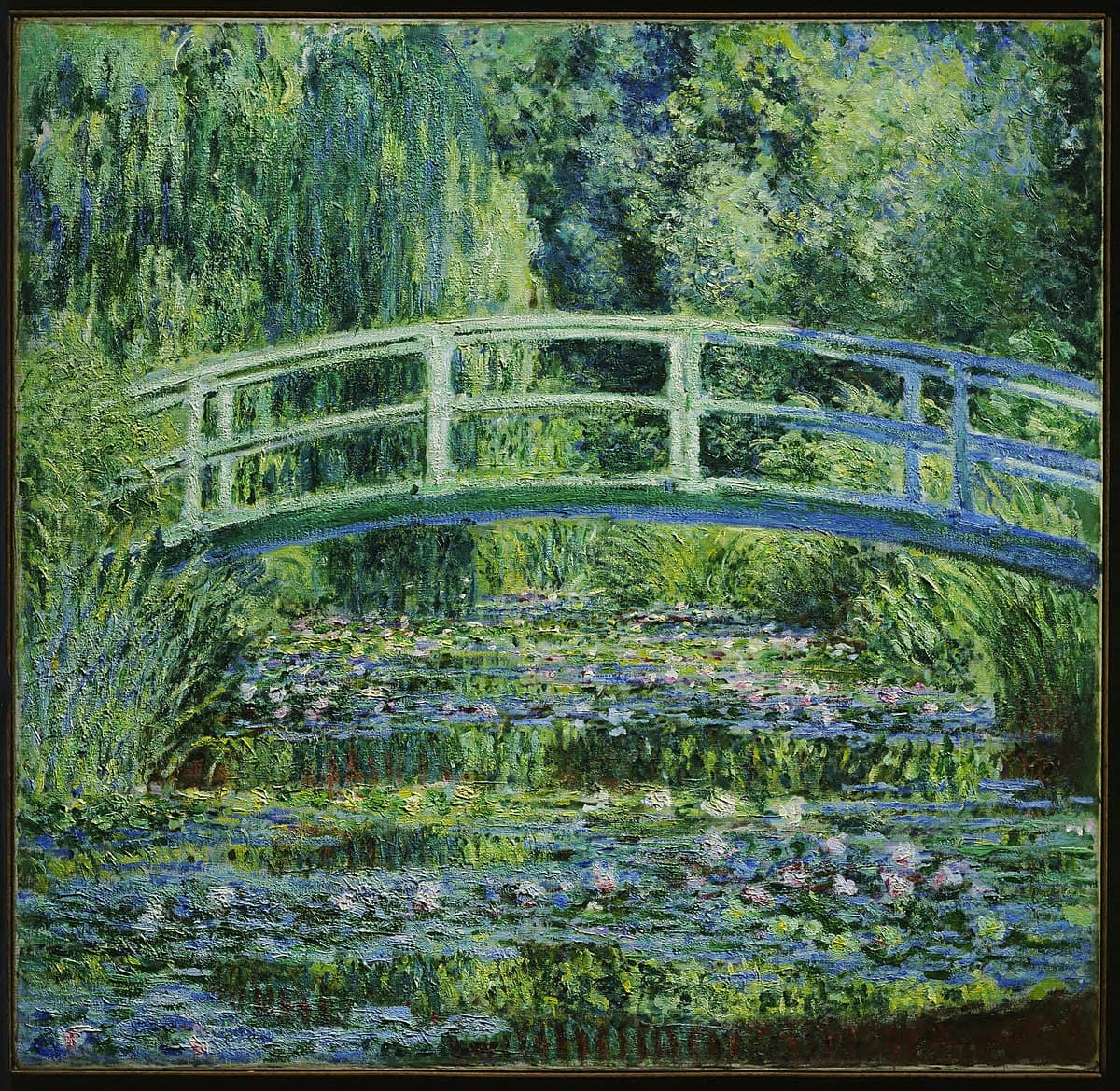
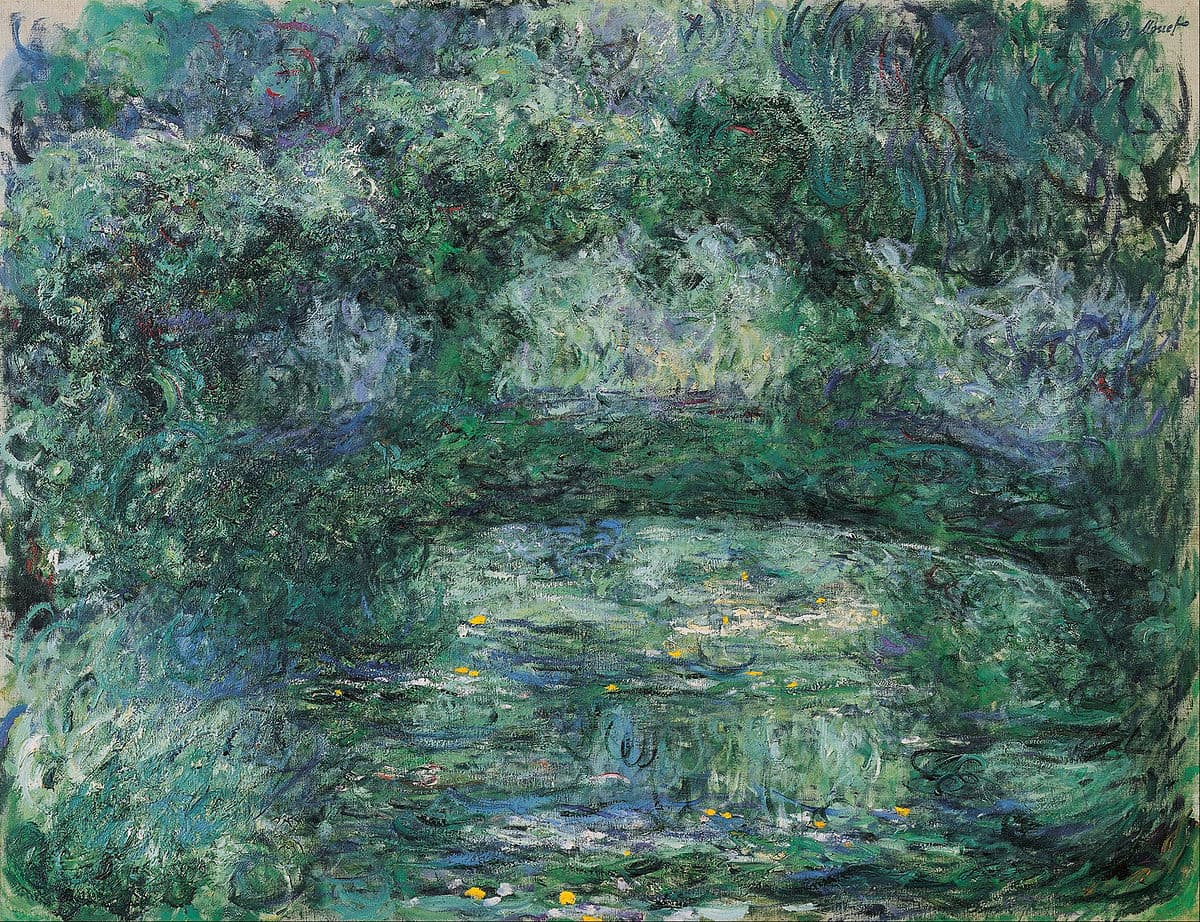
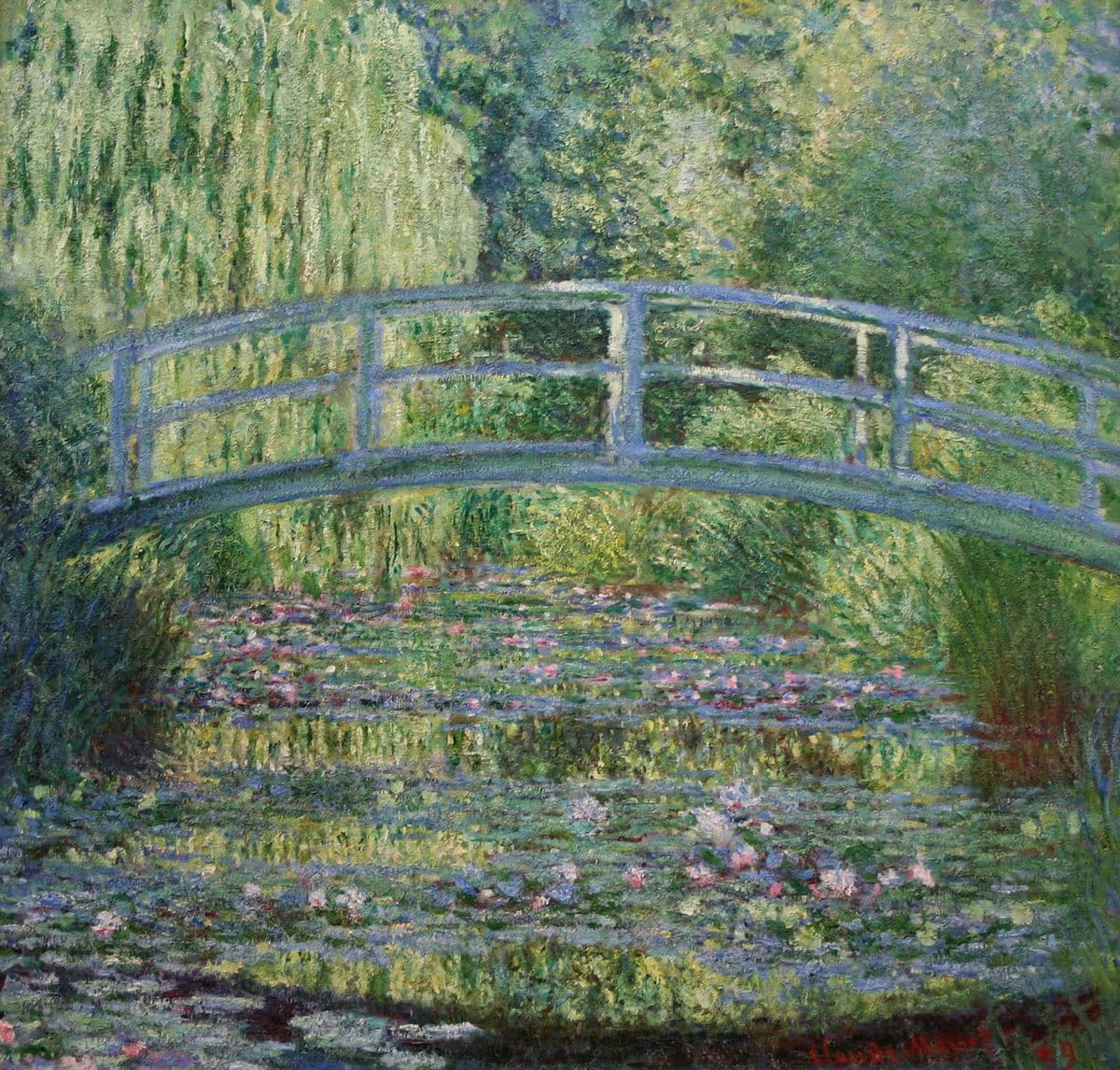
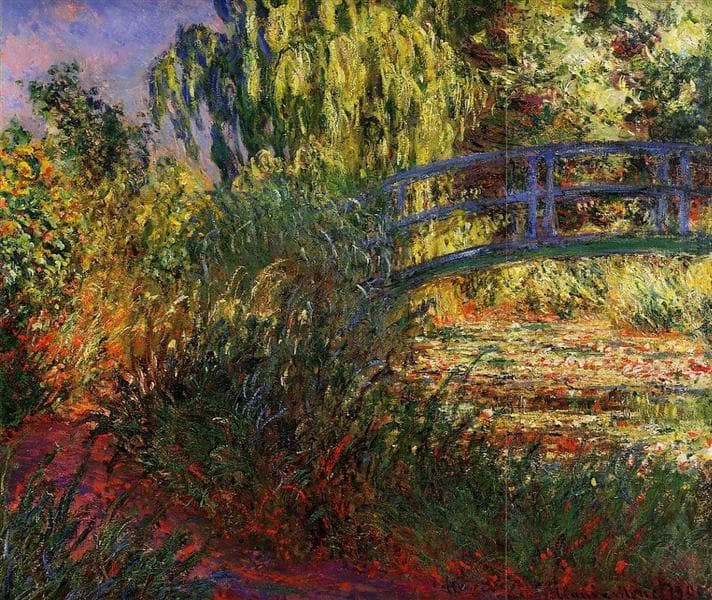
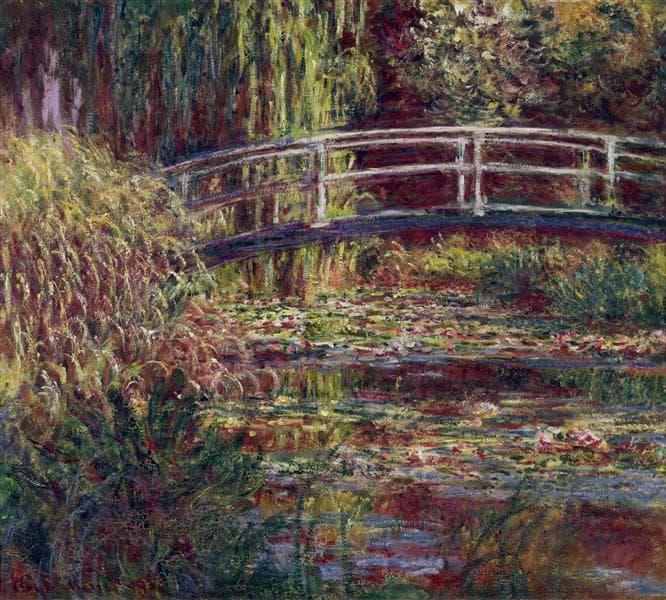
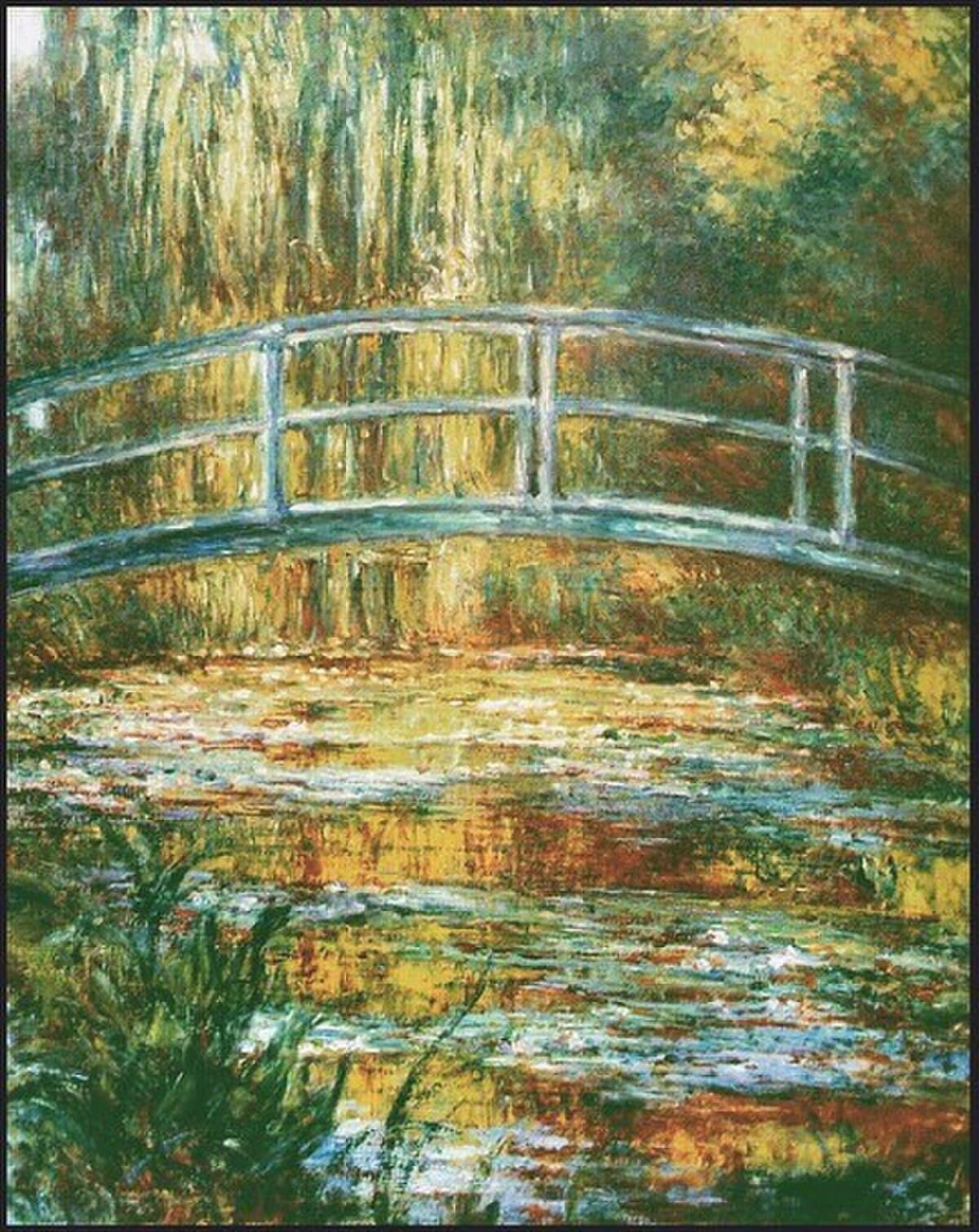
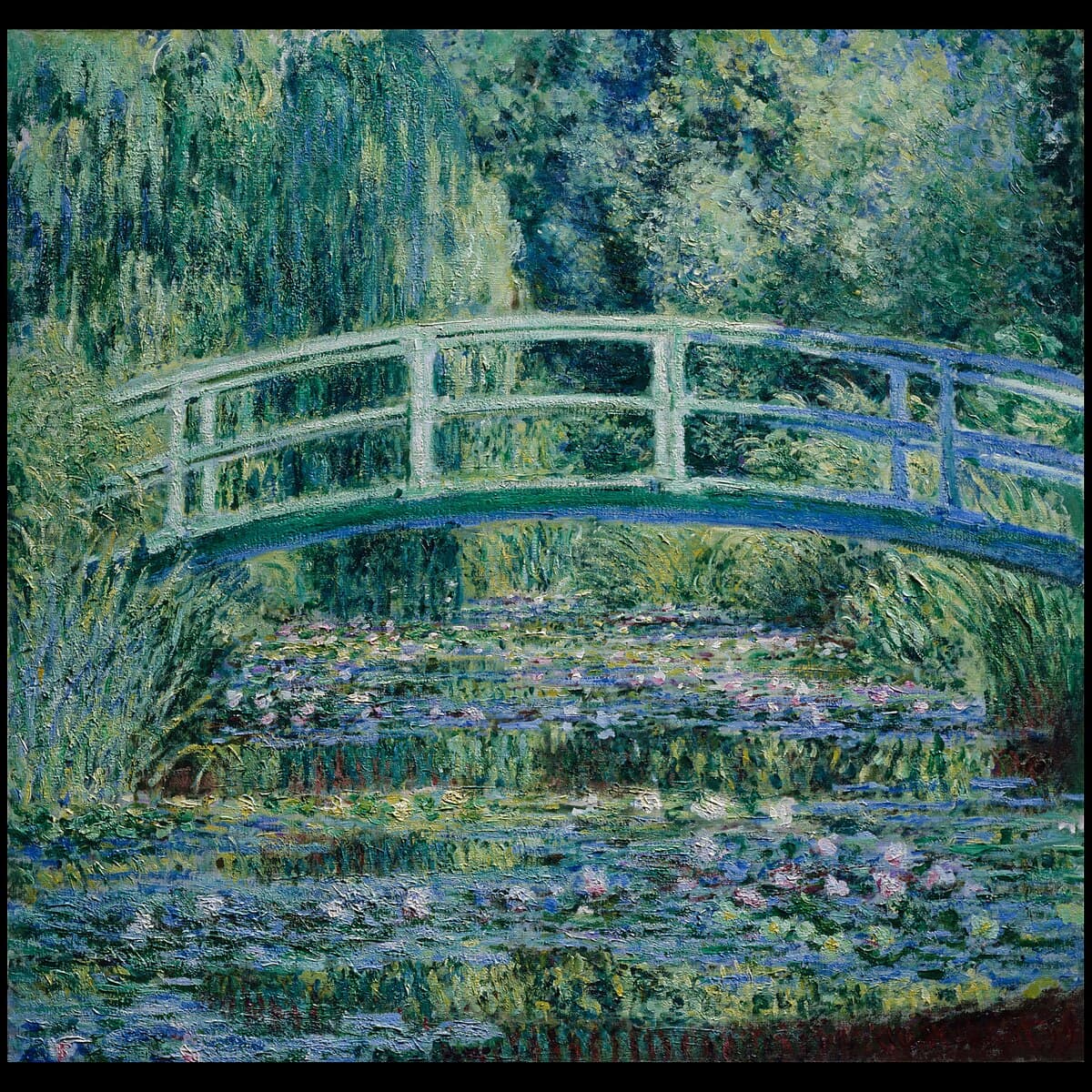
Claude Monet composed this view of the Japanese bridge at Giverny in 1899, capturing one of the most iconic subjects in his entire body of work. The green arched bridge spans the water lily pond he had created on his property, its curves echoed by the drooping wisteria that hangs from its rails. Dappled light filters through the foliage, creating a shimmering atmosphere above the calm water.
Monet designed this garden specifically for painting. He diverted a stream to create the pond, planted water lilies, and constructed the Japanese-style bridge inspired by prints by Hiroshige and other ukiyo-e artists he collected. The result was a living canvas that changed with seasons, weather, and time of day, providing him subjects for the rest of his life.
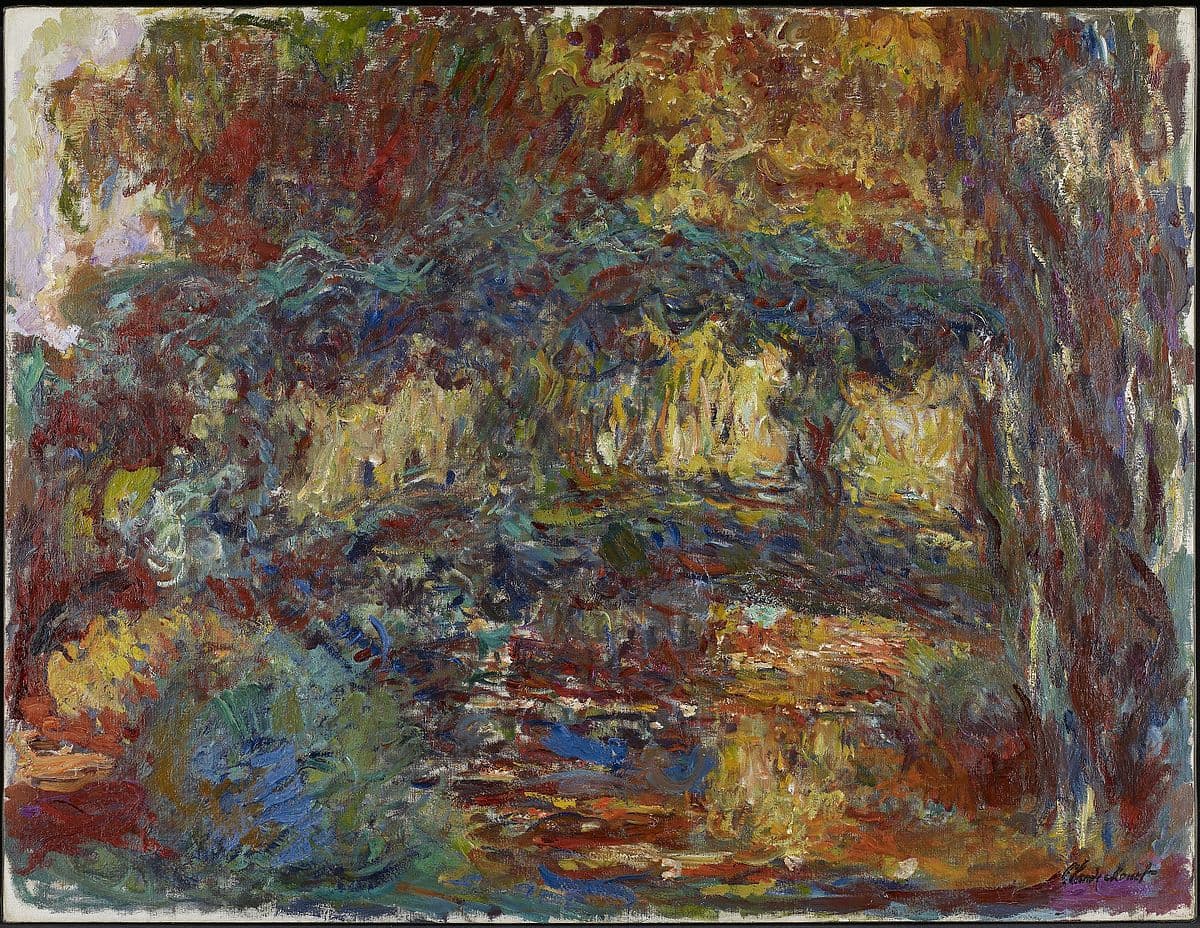
This painting comes from the beginning of Monet's late period, when he increasingly focused on his garden rather than traveling to find subjects. He would paint the bridge and pond hundreds of times over the following decades, moving toward ever greater abstraction. The work now hangs at the Metropolitan Museum of Art in New York, representing the start of an obsessive project that would produce some of Impressionism's final major works.