Wikimedia Commons • Public Domain
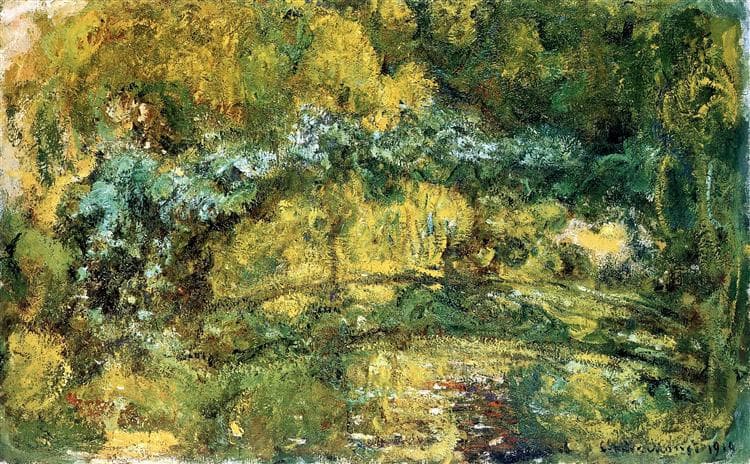
Weeping Willow and Water-Lily Pond
by Claude Monet
Artwork Details
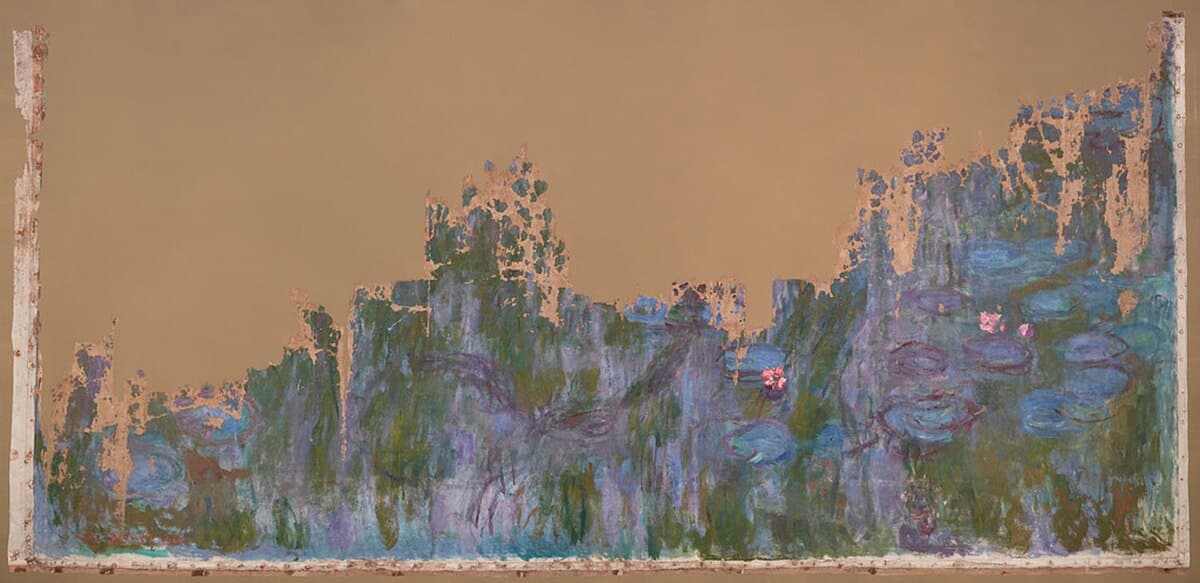
French painter Claude Monet painted this view of his water garden at Giverny between 1916 and 1919, during the final decade of his life. Cascading willow branches frame the famous lily pond, their green tendrils reflected in dark water alongside floating blossoms. The large scale and loose handling push the image toward abstraction, dissolving forms into pure color and gesture.
Monet created this work during World War I, when the sound of artillery could be heard from his garden. While France bled, the elderly painter found refuge in his pond, producing meditations on nature that ignored the surrounding catastrophe. His eyesight was failing from cataracts, which may explain the increasingly bold brushwork and intense colors. He refused surgery until 1923, painting through his deteriorating vision.
The weeping willow appears throughout Monet's late work, its drooping branches suggesting mourning even as the water lilies promise renewal. Some scholars read these paintings as elegies for the war dead, though Monet rarely discussed such meanings. The painting now hangs at the National Gallery in London, where its immersive scale anticipates Abstract Expressionism by decades.