
Eight-Armed Dancing God Ganesha
by Unknown Artist, 1601
Artwork Details
Details
- Year
- 1601
- Medium
- Wood
- Size
- 88.5 × 47.5 × 19.5 cm (34 7/8 × 18 3/4 × 7 11/16 in.)
Cite or Embed This Work
APA · MLA · Chicago1-click academic citation and embeddable “On View” museum badge for articles, syllabi, and research.
This wooden sculpture from the Kathmandu Valley depicts Ganesha, the elephant-headed Hindu deity, in a dynamic dancing pose with eight arms. The dancing form, known as Nritya Ganapati, represents the joy and enthusiasm of spiritual realization. Eight arms signify the deity's superhuman capacity for purposeful action. In Hindu iconography, deities are never shown with just two hands. The figure is surrounded by smaller human figures in animated poses.
Ganesha is one of the most widely worshipped Hindu gods, known as the remover of obstacles and the patron of beginnings, arts, and sciences. The dancing pose connects him to the cosmic dance of creation and destruction. This piece dates to the 17th-18th century and stands about 35 inches tall. It's at the Art Institute of Chicago, a gift from Marilynn B. Alsdorf.
Also at Art Institute of Chicago
View all →Sculpture
T

The Solitude of the Soul
Lorado Taft, 1901
Art Institute of Chicago, Chicago
Sculpture
W

Walking Buddha
, 201
Art Institute of Chicago, Chicago
Sculpture
A

Architectural Fragment with Relief Carving
Ancient Egyptian (Unknown), 401
Art Institute of Chicago, Chicago
Sculpture
A

Allegory of Science
Jean-Baptiste Carpeaux, 1865
Art Institute of Chicago, Chicago
Related Works
Works that share an artist, movement, museum, genre, palette or theme with Eight-Armed Dancing God Ganesha.

- Same museum
- Similar themes
Twenty-Armed Dancing God Ganesha, Remover of Obstacles
901

- Same museum
- Similar themes
Six-Armed God Ganesha
1601

- Same museum
- Similar themes
Four-Armed Dancing God Ganesha with His Rat Mount
1501

- Same museum
- Similar themes
God Ganesha, Remover of Obstacles
801

- Same museum
- Similar themes
Four-Armed Seated God Ganesha
601

- Same museum
- Similar themes
Fragment of a Plaque with Dancing Ganesha and the Mother Goddesses Brahmani and Maheshvari
901

- Same museum
- Similar themes
Bodhisattva Amoghapasha Lokeshvara
1401

- Same museum
Dancing God Shiva (Natesha)
901

- Same museum
Shiva as Lord of the Dance (Nataraja)
901

- Same museum
Walking Elephant with Floral Caparison
1601

- Same museum
God Krishna Dancing on the Head of the Snake Demon Kaliya (Kaliyadamana)
1301
- Same museum
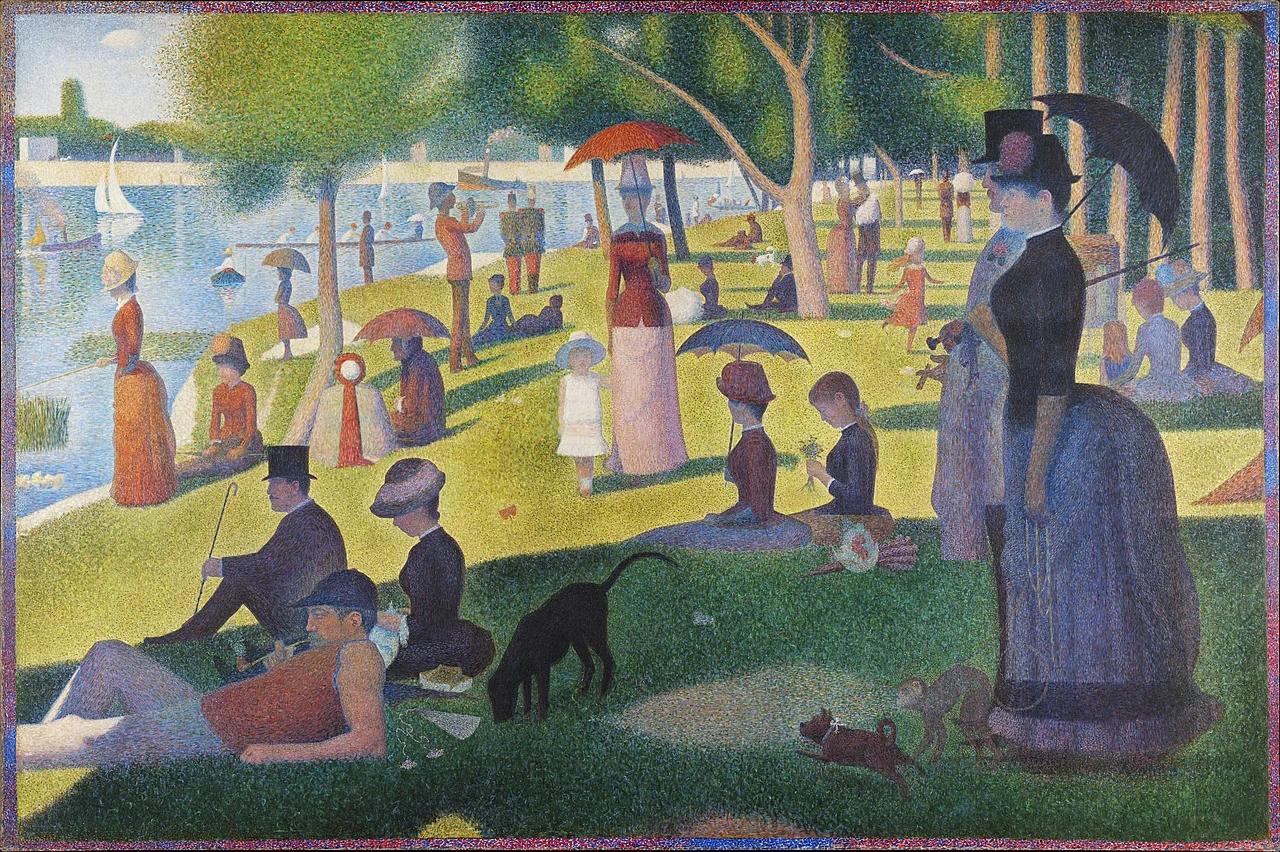
A Sunday Afternoon on the Island of La Grande Jatte
Georges Seurat, 1886
About Eight-Armed Dancing God Ganesha
The dancing form (Nritya Ganapati) represents the joy of spiritual realization and the cosmic rhythm of creation and destruction. It balances both vigorous masculine energy (Tandava) and graceful feminine energy (Lasya).
Superhuman capacity for simultaneous purposeful action. Each hand typically holds a specific attribute or forms a gesture (mudra) with doctrinal meaning. Hindu deities are never depicted with only two hands.
He's the remover of obstacles and patron of beginnings, arts, and sciences. Hindus invoke him before starting new efforts: journeys, business ventures, exams, or religious ceremonies.
At the Art Institute of Chicago. About 35 inches tall, carved from wood. A gift from Marilynn B. Alsdorf.
Own Art Like This
Luxury wall art with the same mood and energy. Gallery-quality canvas, no museum crowds.
Browse Collection