Wikimedia Commons - CC BY 2.5
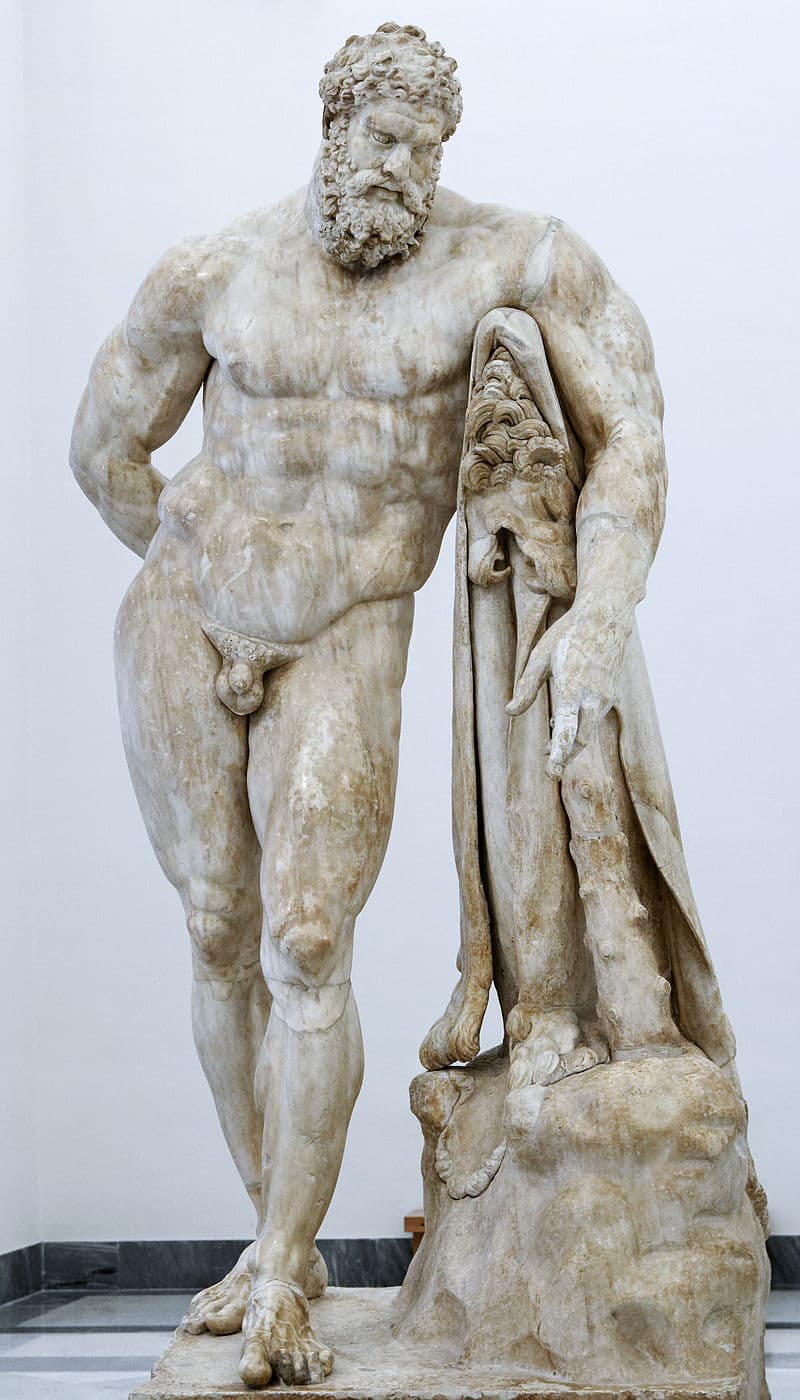
Farnese Hercules
by Lysippos, -320
Artwork Details
Details
- Year
- -320
- Medium
- Marble (Roman copy)
- Size
- 317 cm (10 ft 5 in) tall
Cite or Embed This Work
APA · MLA · Chicago1-click academic citation and embeddable “On View” museum badge for articles, syllabi, and research.
The Farnese Hercules shows the Greek hero exhausted after completing his twelve labors, his massive body slumped against a club draped with the Nemean lion's skin. This Roman marble copy was carved by Glykon of Athens in the early 3rd century CE, based on a Greek bronze original by Lysippos from around 320 BCE.
Standing over three meters tall, the statue depicts Hercules with exaggerated musculature that influenced bodybuilding ideals for centuries. Behind his back, his right hand clutches the golden apples of the Hesperides, proof of his final labor. The weary pose contrasts with heroic triumphalism, showing even demigods must rest.
Excavated from the Baths of Caracalla in 1546, the sculpture is now a centerpiece of the Naples Archaeological Museum.