Wikimedia Commons • Public Domain
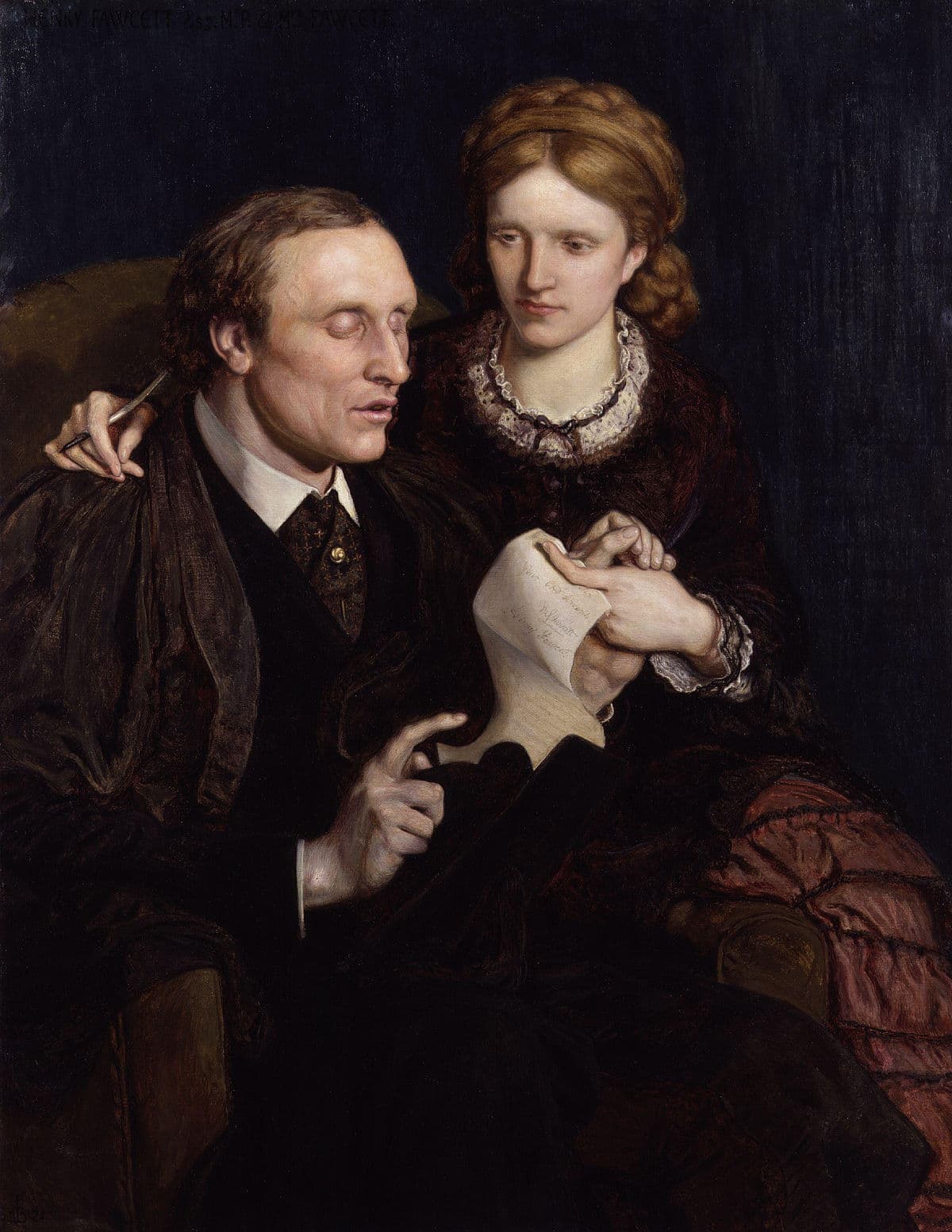
Henry Fawcett; Dame Millicent Garrett Fawcett
Artwork Details
British artist Ford Madox Brown painted this double portrait in 1872, capturing two of Victorian England's most influential liberal thinkers. Henry Fawcett sits in an armchair while his wife Millicent perches on its arm, leaning in toward him with her arm around his shoulder. The intimacy is striking for formal portraiture of the era.
Henry had been blinded in a shooting accident in 1858 but refused to let it derail his ambitions. He became the first blind Member of Parliament and served as Professor of Political Economy at Cambridge. Millicent acted as his guide and secretary, often taking notes for him in the House of Commons. She would go on to lead the women's suffrage movement, becoming president of the National Union of Women's Suffrage Societies in 1897.
The painting was commissioned by Sir Charles Dilke, a friend and political ally of the Fawcetts. It now belongs to the National Portrait Gallery in London, where it serves as a rare example of disability represented in Victorian portraiture.