Beata Beatrix
by Dante Gabriel Rossetti, 1870
Artwork Details
Details
- Year
- 1870
- Medium
- Oil on canvas
- Size
- 86.4 cm × 66 cm
Cite or Embed This Work
APA · MLA · Chicago1-click academic citation and embeddable “On View” museum badge for articles, syllabi, and research.
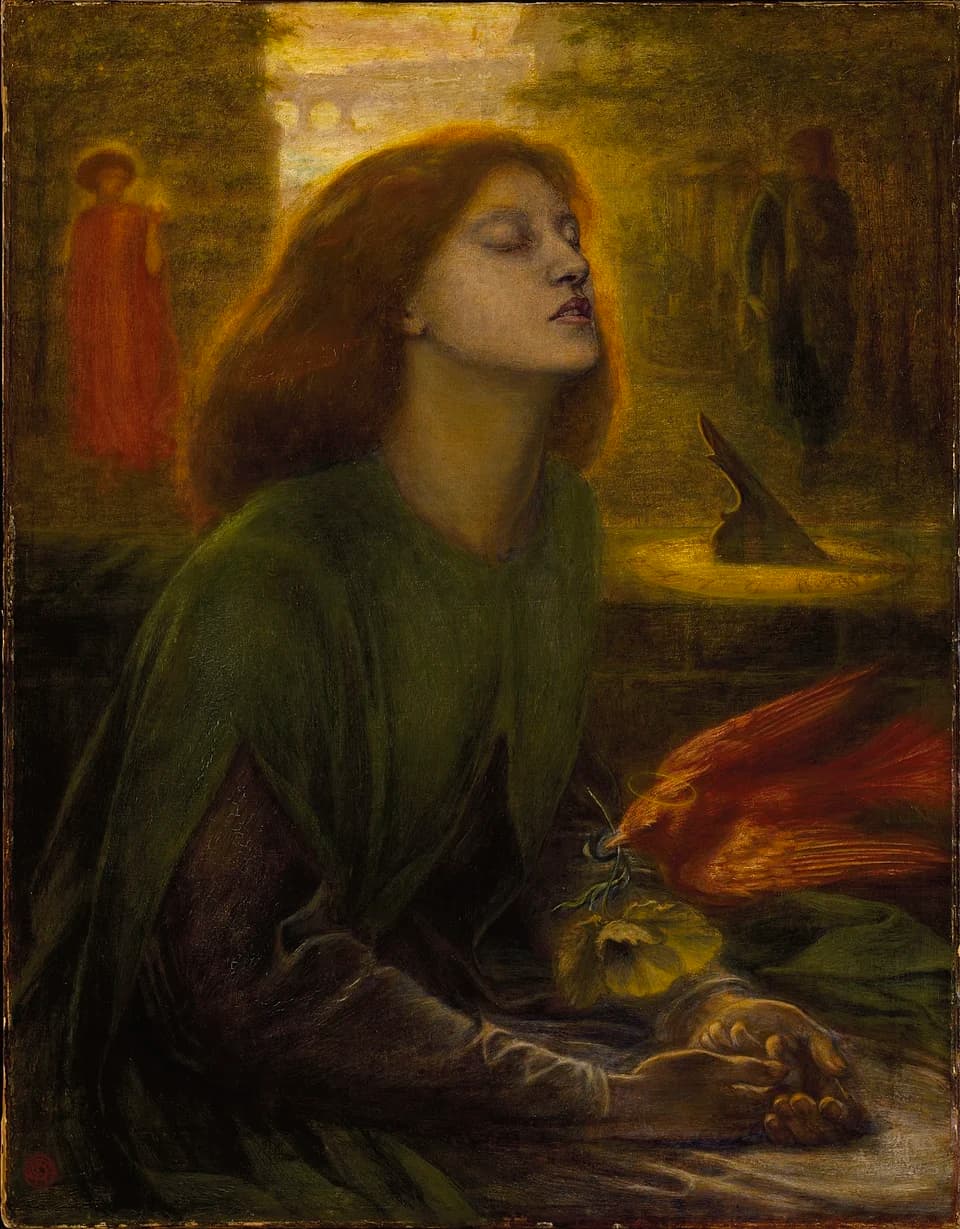
British artist Dante Gabriel Rossetti painted this Beata Beatrix between 1864 and 1870, depicting Beatrice from Dante Alighieri's La Vita Nuova at the moment of her death. The model was Rossetti's wife Elizabeth Siddal, who had died of a laudanum overdose in 1862. He always identified Siddal with Beatrice, making her death a chilling repetition of the medieval poem.
A red dove, messenger of love, places a white poppy in Beatrice's hands. The poppy symbolizes the laudanum that killed Siddal. A sundial above points to nine o'clock, referencing Beatrice's death at nine o'clock on June 9, 1290. In the background, Dante and Love walk through a green Florentine cityscape.
Rossetti said he intended not a "representation of death" but "an ideal of the subject, symbolized by a trance or sudden spiritual transfiguration." The painting hangs at Tate Britain in London, a gift from 1889. A replica with a predella showing Dante meeting Beatrice in paradise is at the Art Institute of Chicago.