Wikimedia Commons • Public Domain
Passion
Artwork Details
Cite or Embed This Work
APA · MLA · Chicago1-click academic citation and embeddable “On View” museum badge for articles, syllabi, and research.
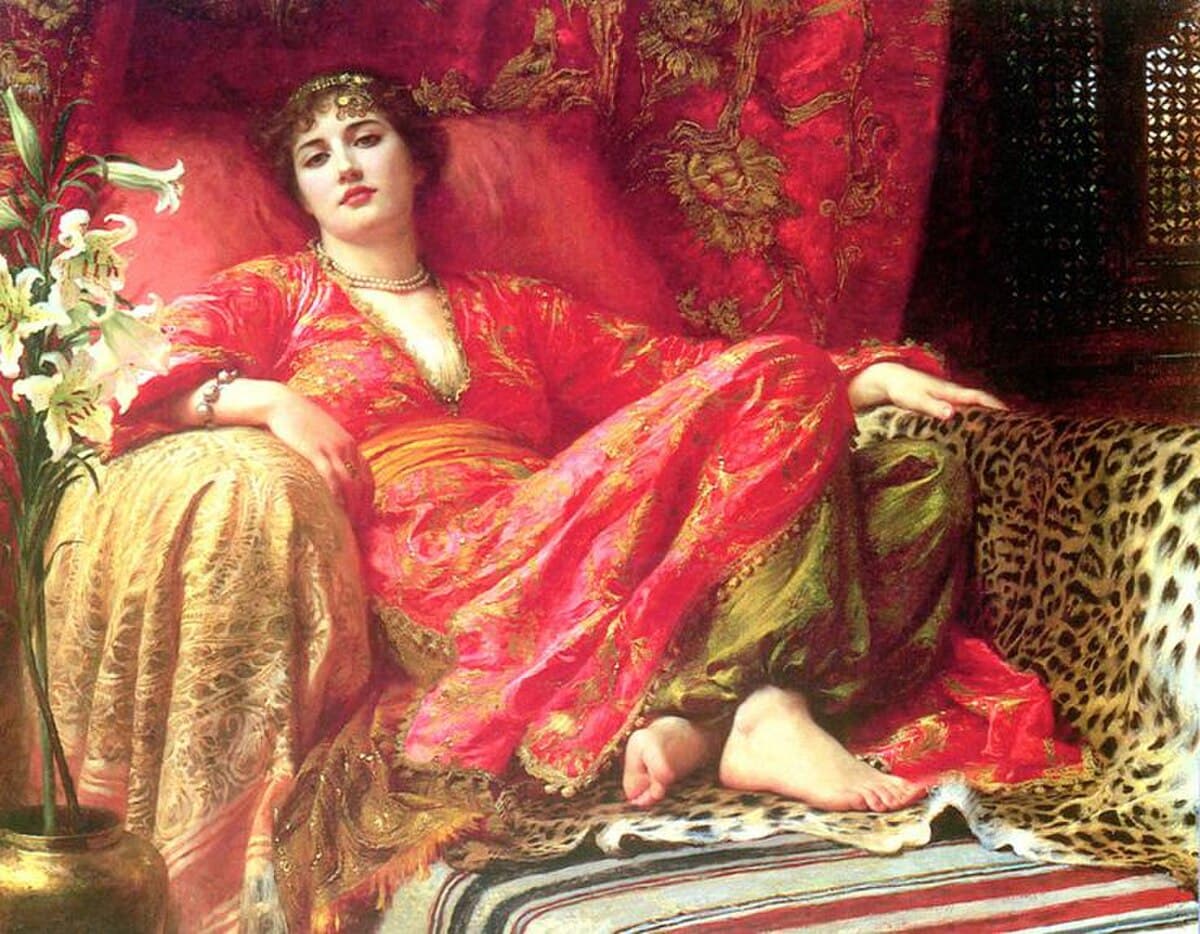
Sir Frank Dicksee composed this "Passion" in 1892, during his peak years as one of Victorian England's leading romantic painters. The composition captures an intense emotional moment between two figures. Critics noted the convincing physicality of the pose: "no arm is stretched meaninglessly out into the air; the depiction of passion is undisturbed by anything whatsoever."
Dicksee came from an artistic family in London's Bloomsbury. His father, brother, and sister Margaret were all painters. He trained initially with his father before entering the Royal Academy schools in 1870, where Frederic Leighton and John Everett Millais served as visiting lecturers. Throughout his formative years, Dicksee leaned toward Romanticism, focusing on people, their emotions, and subjectivity.
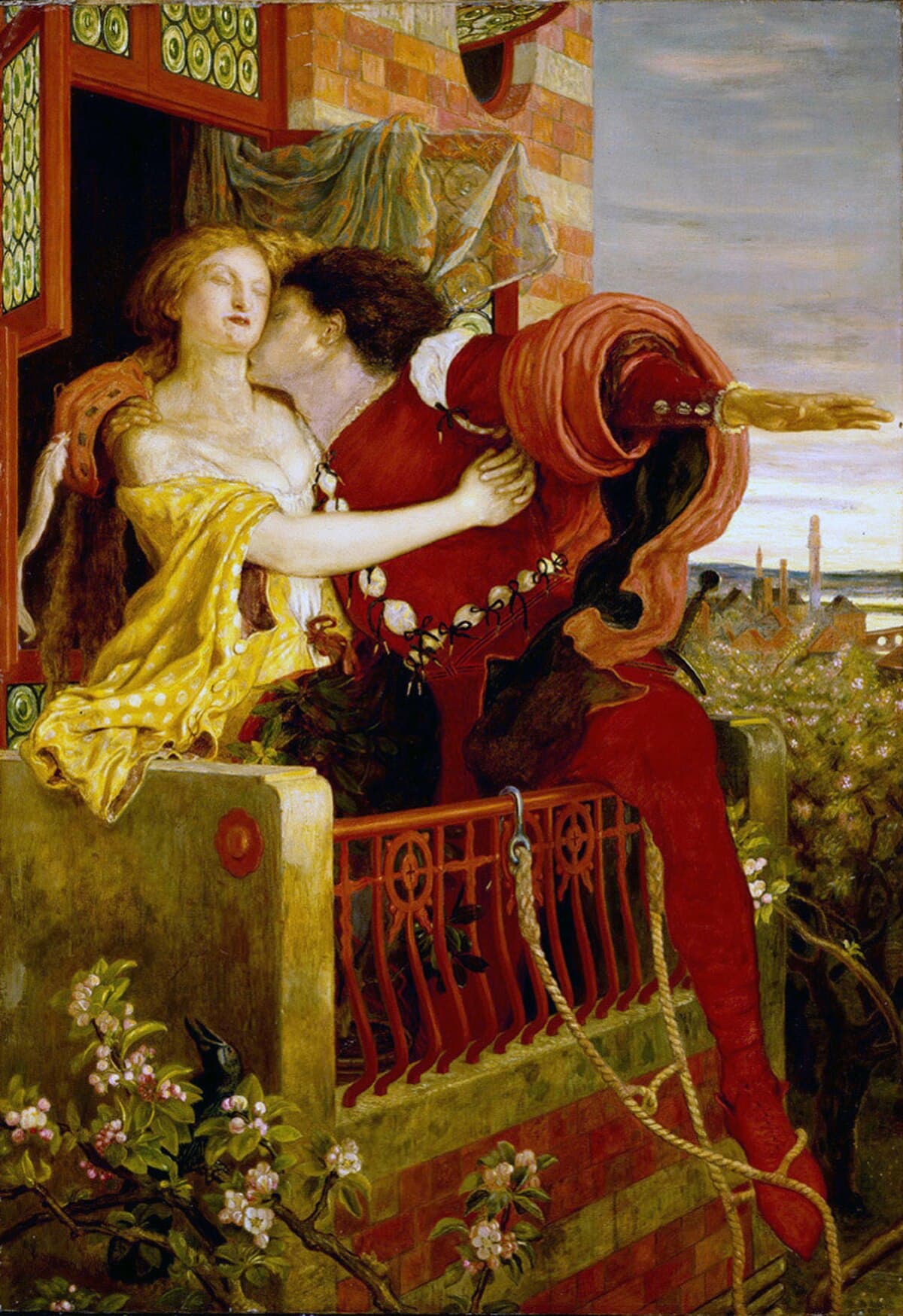
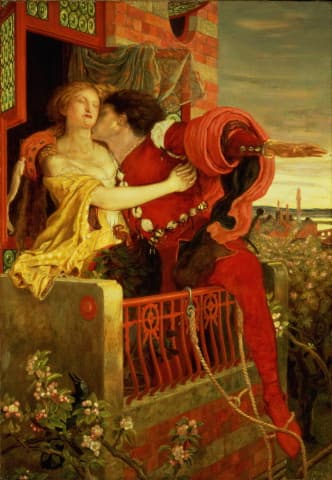
He specialized in romantic historical scenes, often from his own imagination rather than specific literary sources. "Passion" belongs alongside his other notable works: "Romeo and Juliet" (1884), "Paolo and Francesca" (1894), "The Mirror" (1896), and "Chivalry" (1885). Though a Realist in technique, the Pre-Raphaelite and Aesthetic movements influenced his subjects. Dicksee was elected to the Royal Academy in 1891, became its President in 1924, and was knighted in 1925.