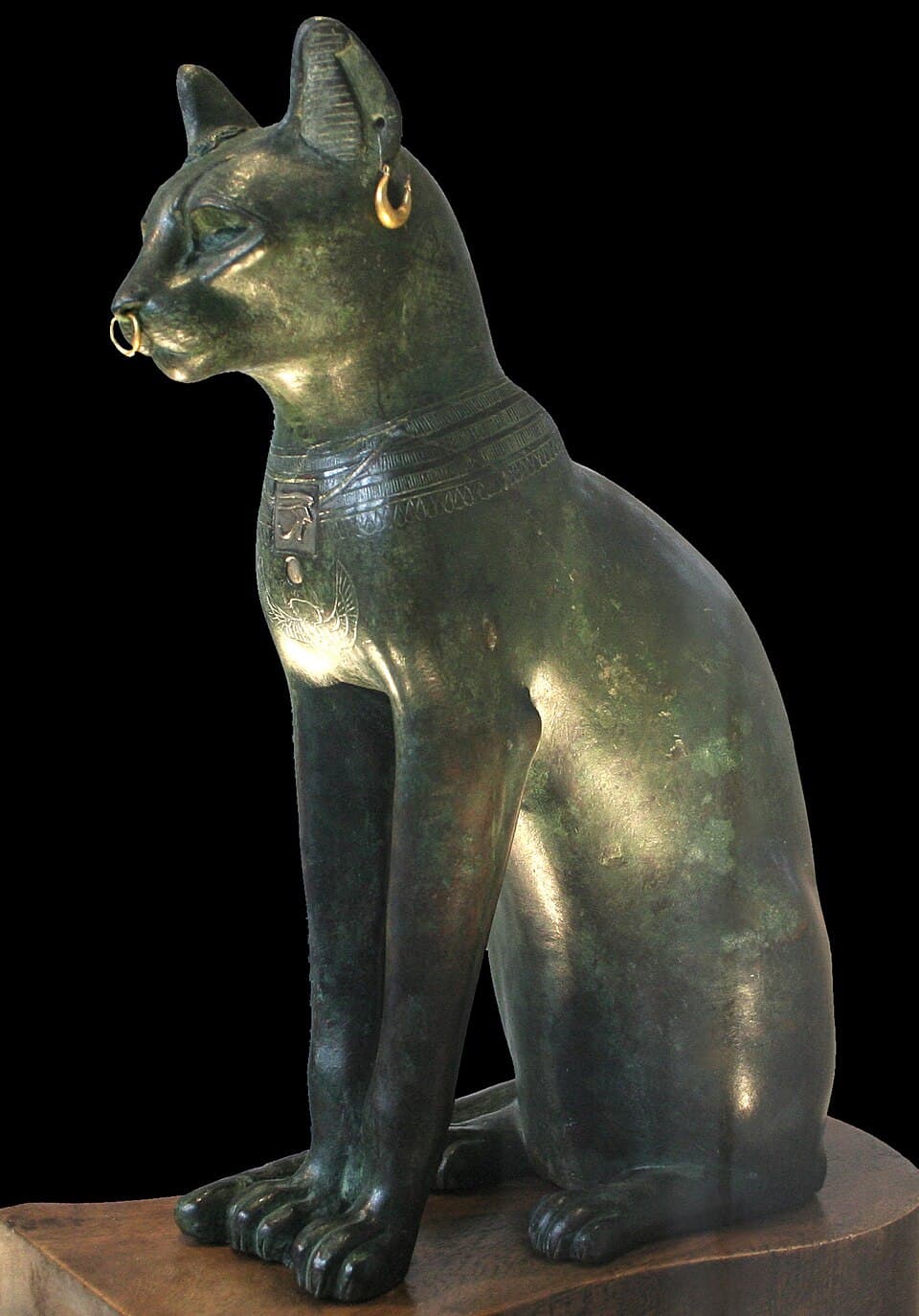
Gayer-Anderson Cat
by Ancient Egyptian (Unknown), -600
GenreAnimal
Artwork Details
Details
- Year
- -600
- Medium
- Bronze
- Size
- 42 cm
Cite or Embed This Work
APA · MLA · Chicago1-click academic citation and embeddable “On View” museum badge for articles, syllabi, and research.
The Gayer-Anderson Cat is a bronze sculpture from ancient Egypt, dating to around 600 BC during the Late Period. The cat sits upright in a regal pose, wearing a gold nose ring and silver protective wedjat (Eye of Horus) pectoral. Gold earrings once decorated its pierced ears. The sleek, idealized form captures the elegance Egyptians saw in cats as sacred to the goddess Bastet.
The sculpture takes its name from Major Robert Grenville Gayer-Anderson, a British army officer who collected it in Egypt and donated it to the British Museum in 1939. It's become one of the museum's most recognizable objects, reproduced on everything from postcards to jewelry.
Ancient Egyptians revered cats as protectors of the home and embodiments of Bastet, goddess of fertility and the hearth. Thousands of cat mummies have been found in Egyptian cemeteries, and harming a cat was a serious crime. This bronze represents the finest expression of that devotion.
More by Ancient Egyptian (Unknown)
View all →Sculpture
A

Architectural Fragment with Relief Carving
Ancient Egyptian (Unknown), 401
Art Institute of Chicago, Chicago
Sculpture
S
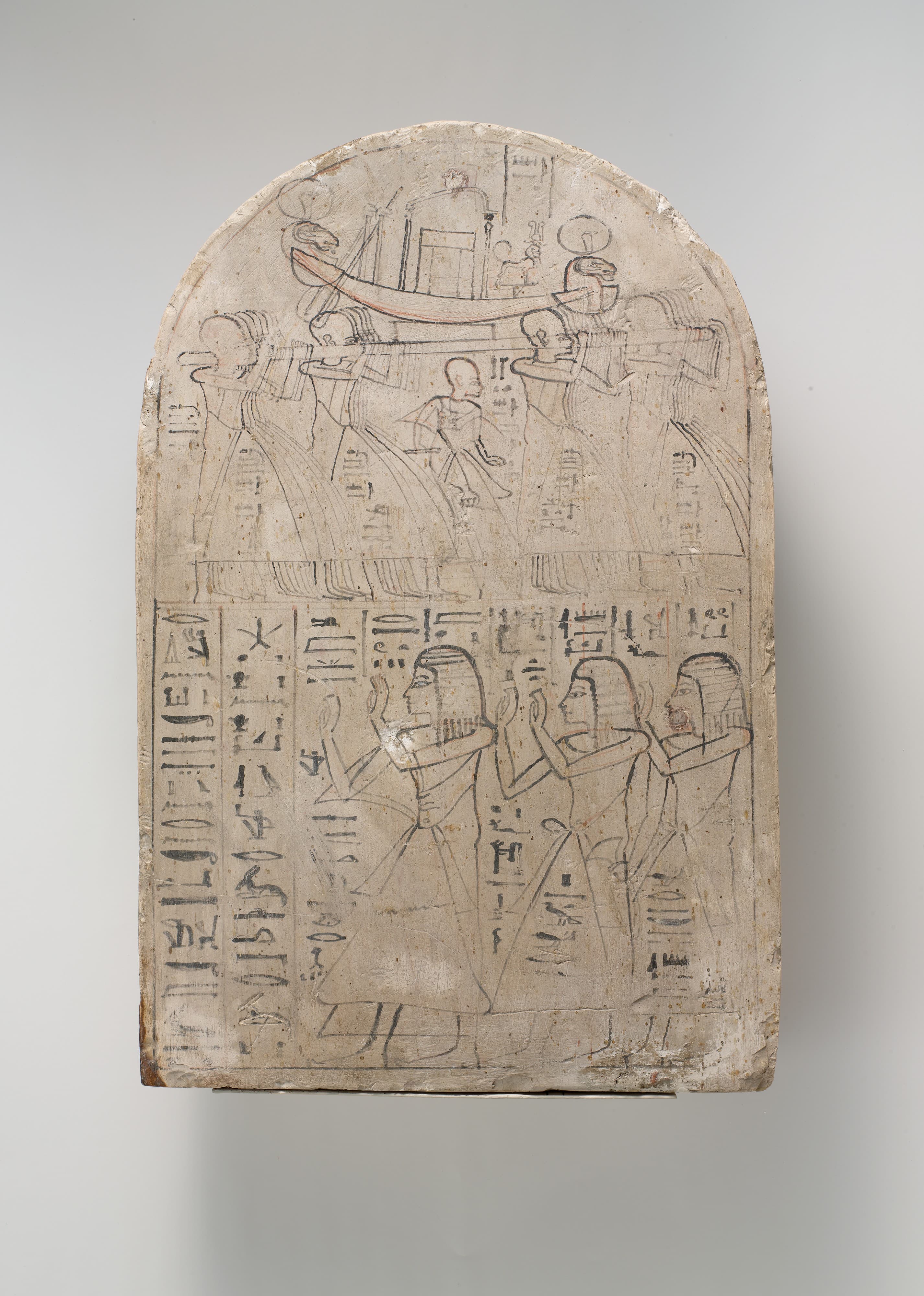
Stela of the royal scribe Amunnakht praising the divine barque of Amun-Re, Lord of the Thrones of the Two Lands
Ancient Egyptian (Unknown), -1070
The Metropolitan Museum of Art, New York