Wikimedia Commons - Public Domain
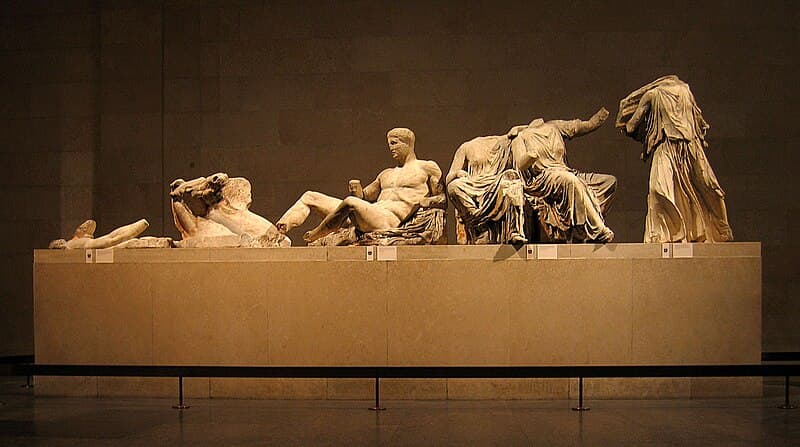
Horse from the Chariot of Selene
by Ancient Greek (Unknown), -438
Artwork Details
Details
- Year
- -438
- Medium
- Pentelic marble
- Size
- 83 cm × 62 cm (33 × 24 in)
Cite or Embed This Work
APA · MLA · Chicago1-click academic citation and embeddable “On View” museum badge for articles, syllabi, and research.
Ancient Greek This powerful sculpture of a horse's head originally adorned the east pediment of the Parthenon in Athens, created around 438 BCE. It belonged to the chariot of Selene, goddess of the moon, depicted descending below the horizon as dawn broke. The sculpture is now among the Parthenon Marbles at the British Museum.
Despite significant weathering, the exhausted animal's expression remains extraordinarily powerful. The horse's bulging eyes, flared nostrils, and open mouth convey the strain of having pulled the moon goddess's chariot across the night sky. This naturalistic rendering of animal emotion demonstrates the notable achievement of Classical Greek sculptors.