Public Domain
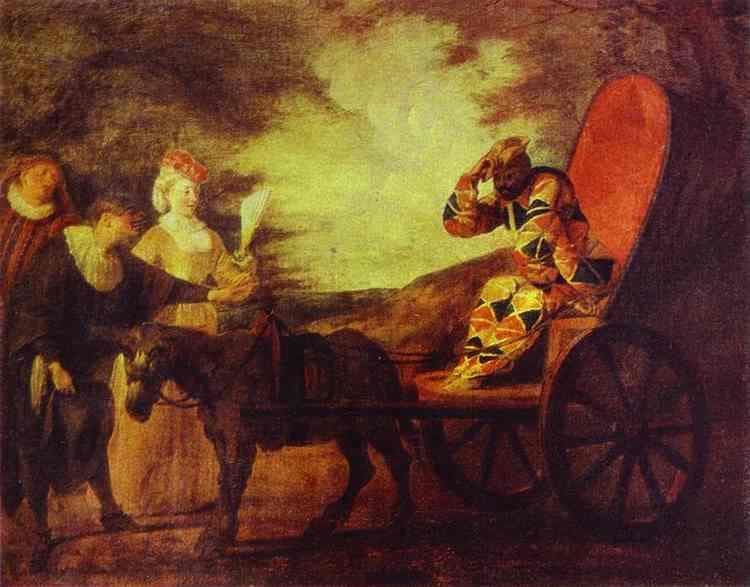
Arlecchino Emperor in the Moon
Artwork Details
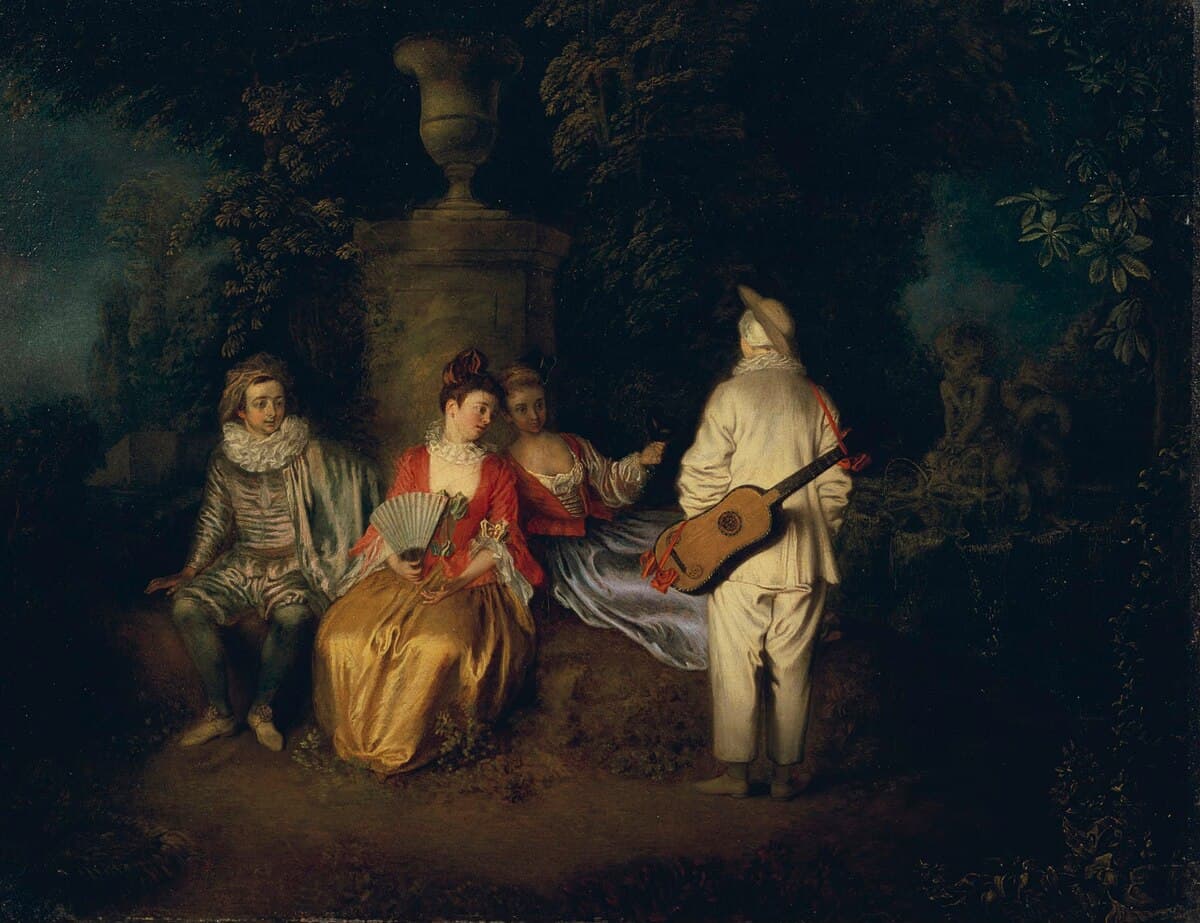
French artist Jean-Antoine Watteau painted this Arlecchino Emperor in the Moon in 1708, an early work depicting the beloved commedia dell'arte character Harlequin. The subject reflects Watteau's lifelong fascination with Italian theater, sparked during his apprenticeship with Claude Gillot, who specialized in theatrical scenes.
Harlequin, or Arlecchino in Italian, wears his characteristic diamond-patterned costume symbolizing poverty patched together. The character originated in Bergamo and was known for acrobatics, gluttony, and romantic pursuits with Columbina. The "Emperor in the Moon" refers to a popular theatrical farce of the period.
The painting uses oil on canvas and exemplifies the Rococo style that Watteau would perfect in his short life. He died at 36, having revolutionized French painting with his fetes galantes, invented scenes of aristocratic pleasure set in dreamlike landscapes. This early work shows his emerging interest in theatrical subjects and graceful figures. It hangs at the Musee des Beaux-Arts de Nantes.