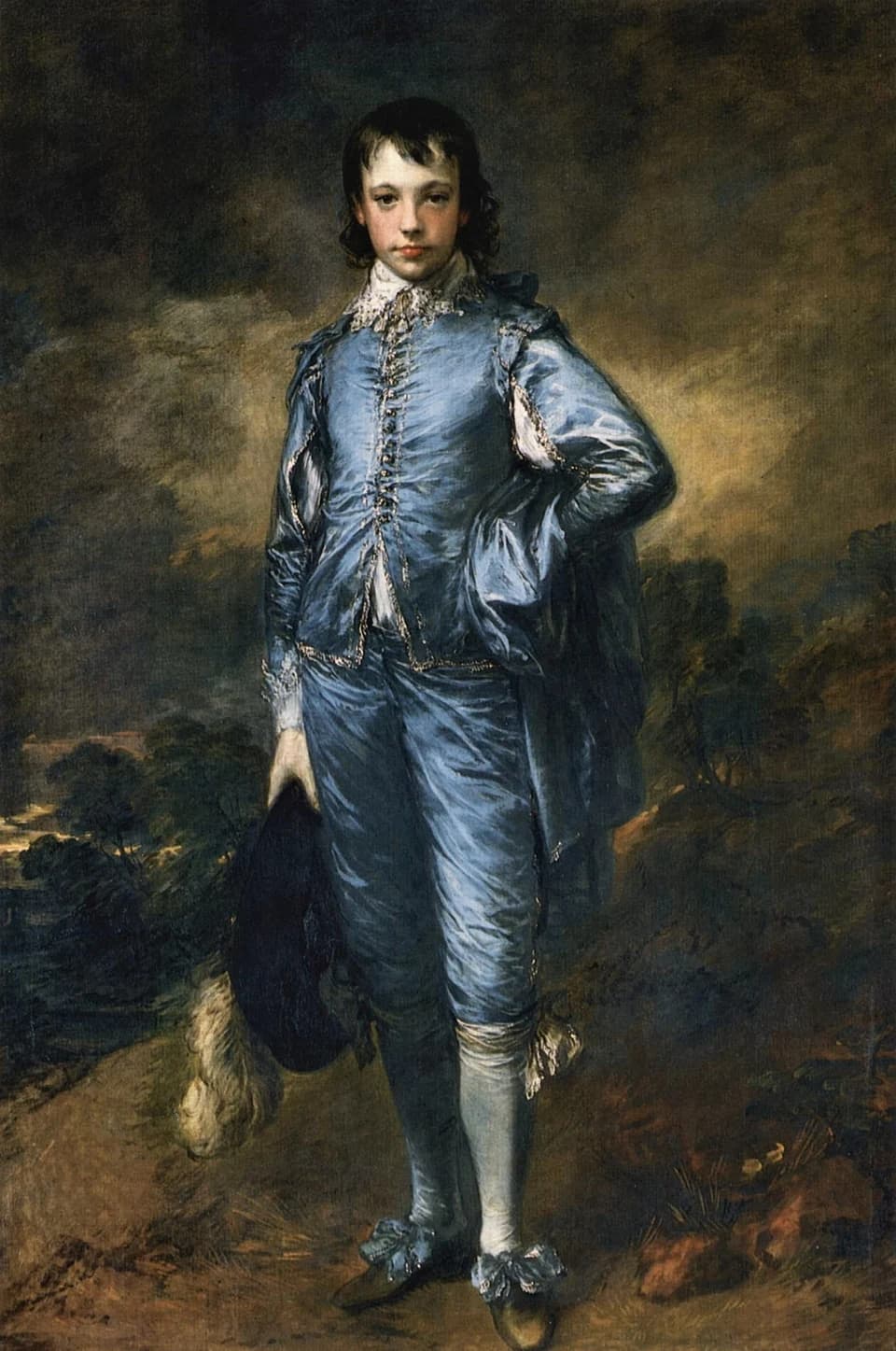
The Blue Boy
by Thomas Gainsborough, 1770
Artwork Details
Details
- Year
- 1770
- Medium
- Oil on canvas
- Size
- 179.4 cm × 123.8 cm
Cite or Embed This Work
APA · MLA · Chicago1-click academic citation and embeddable “On View” museum badge for articles, syllabi, and research.
Thomas Gainsborough painted The Blue Boy around 1770, dressing his subject in 17th-century costume as a tribute to Anthony van Dyck. The identity of the sitter remains uncertain. For generations, scholars assumed it was Jonathan Buttall, a hardware merchant's son who owned the painting early on. Recent research suggests Gainsborough's nephew Gainsborough Dupont may have posed instead.
The painting established itself as one of the most famous English portraits. When the Duke of Westminster sold it to California railroad magnate Henry Huntington in 1921 for $728,000, Britain mourned. The National Gallery displayed it for a farewell viewing; 90,000 people came. Director Charles Holmes scrawled "Au Revoir, C.H." on the back of the canvas.
The oil-on-linen painting measures 179 by 125 centimeters and now hangs at The Huntington in San Marino, California, paired with Thomas Lawrence's Pinkie. X-rays reveal Gainsborough painted over an incomplete portrait of an older man, and a dog was edited out in favor of rocky ground.