Wikimedia Commons • Public Domain
John Ruskin
Artwork Details
John Everett Millais rendered this portrait of the art critic John Ruskin during the summer of 1853 in Glenfinlas, Scotland. The painting shows Ruskin standing beside a cascading waterfall in the Trossachs, surrounded by rocks and Scottish flora that Millais rendered with characteristic Pre-Raphaelite precision. Every stone and plant is observed with almost scientific accuracy.
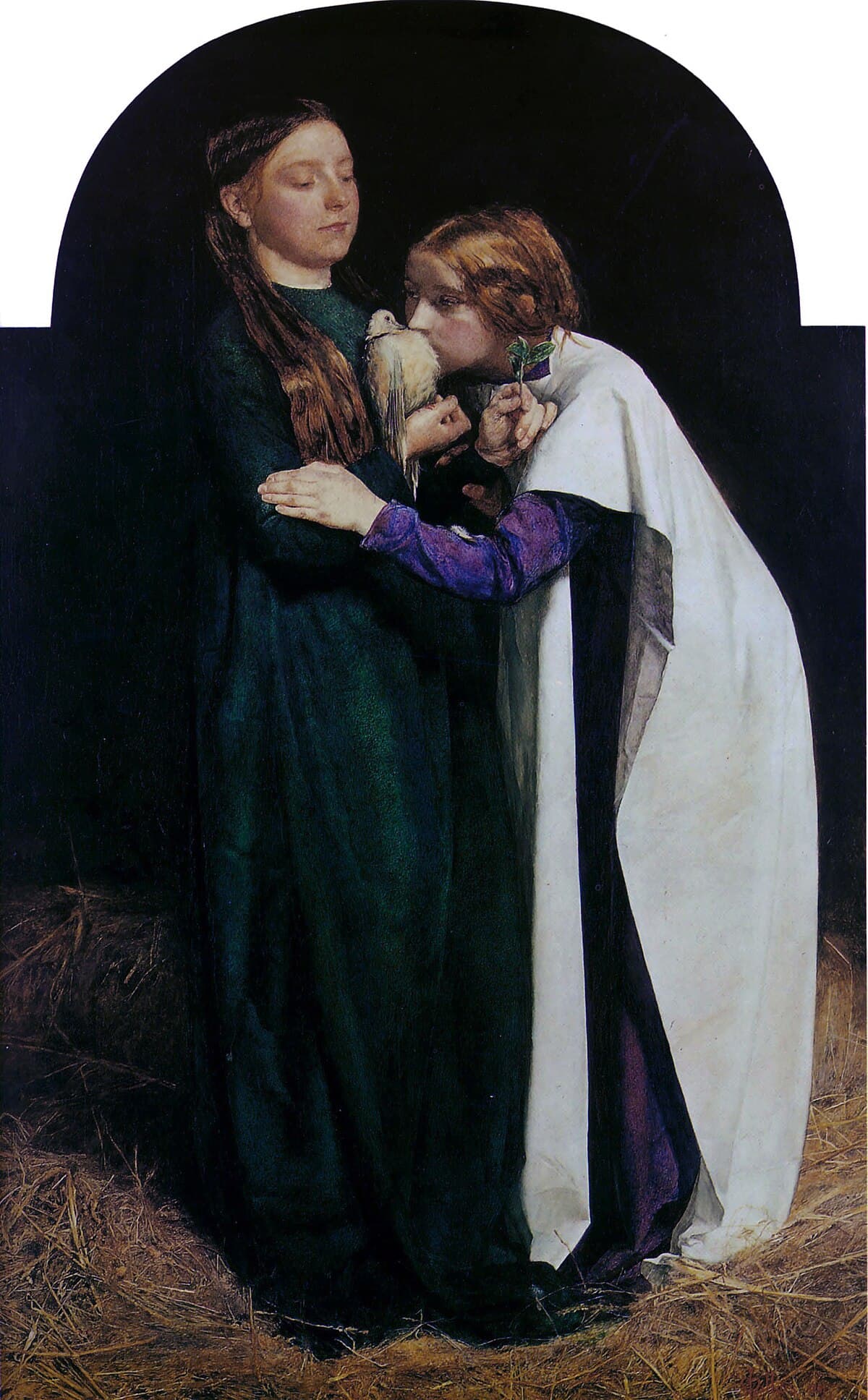
The circumstances of this portrait became one of Victorian art's most dramatic stories. Millais had traveled to Scotland with Ruskin and his wife Effie, who had posed for his painting "The Order of Release" the previous year. During the trip, Millais and Effie fell in love. She would leave Ruskin, have their marriage annulled on grounds of non-consummation, and marry Millais in 1855. Finishing the portrait became difficult for Millais, who called it "the most hateful task I have ever had to perform."
The painting was valued at £7 million in 2012-13 and is now at the Ashmolean Museum in Oxford, accepted by the British Government in lieu of inheritance tax in 2013. Ruskin himself gave it to his friend Henry Wentworth Acland in 1871.