Wikimedia Commons - CC BY-SA 4.0
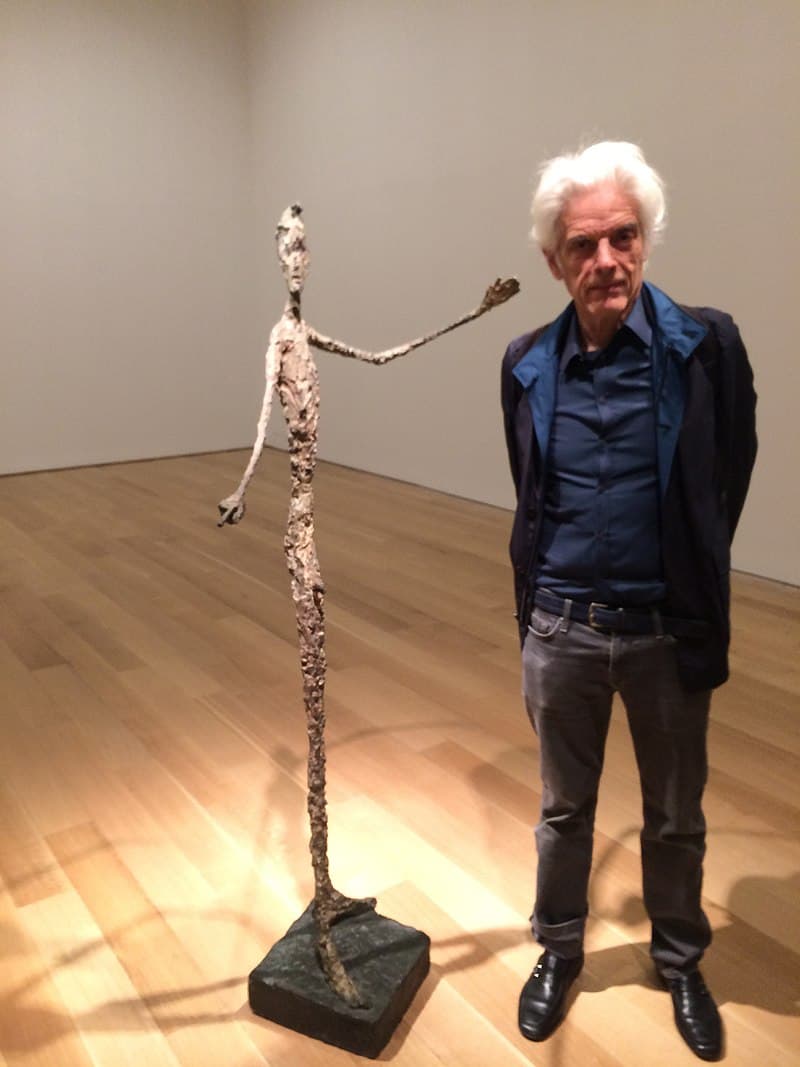
L'Homme au doigt (Pointing Man)
by Alberto Giacometti, 1947
Artwork Details
Details
- Year
- 1947
- Medium
- Bronze
- Size
- 178 cm (70 in) height
Auction History
$141.3M
Christie's / New York
May 11, 2015
Seller
Private Collection
Buyer
Private Collector
That's 2 superyachts
The Artist
Alberto Giacometti produced this L'Homme au doigt (Pointing Man) in 1947, working through the night to finish it for his first solo exhibition after World War II. The nearly six-foot bronze figure stands with elongated limbs and an extended index finger, its attenuated form stripped to essential gesture. Giacometti created six casts plus one artist's proof.
After experiencing the trauma of wartime Paris, Giacometti obsessively reworked his sculptures, making figures progressively thinner until they resembled shadows striding through space. The elongated forms reflect existential themes of isolation and human vulnerability that preoccupied postwar artists. His figures appear frozen mid-step, caught between action and stillness.
The cast sold at Christie's in May 2015 was unique among the six: Giacometti had hand-painted it himself to heighten its expressive impact. Collector Sheldon Solow owned it for 45 years before it sold for $141.3 million, becoming the most expensive sculpture ever auctioned. Hedge fund manager Steven A. Cohen acquired it. Other casts reside at MoMA, the Tate, and the Fondation Giacometti.