Copyrighted - Alberto Giacometti
Walking Man I
by Alberto Giacometti, 1960
Artwork Details
Details
- Year
- 1960
- Medium
- Bronze
- Size
- 183 cm (72 in) tall
Cite or Embed This Work
APA · MLA · Chicago1-click academic citation and embeddable “On View” museum badge for articles, syllabi, and research.
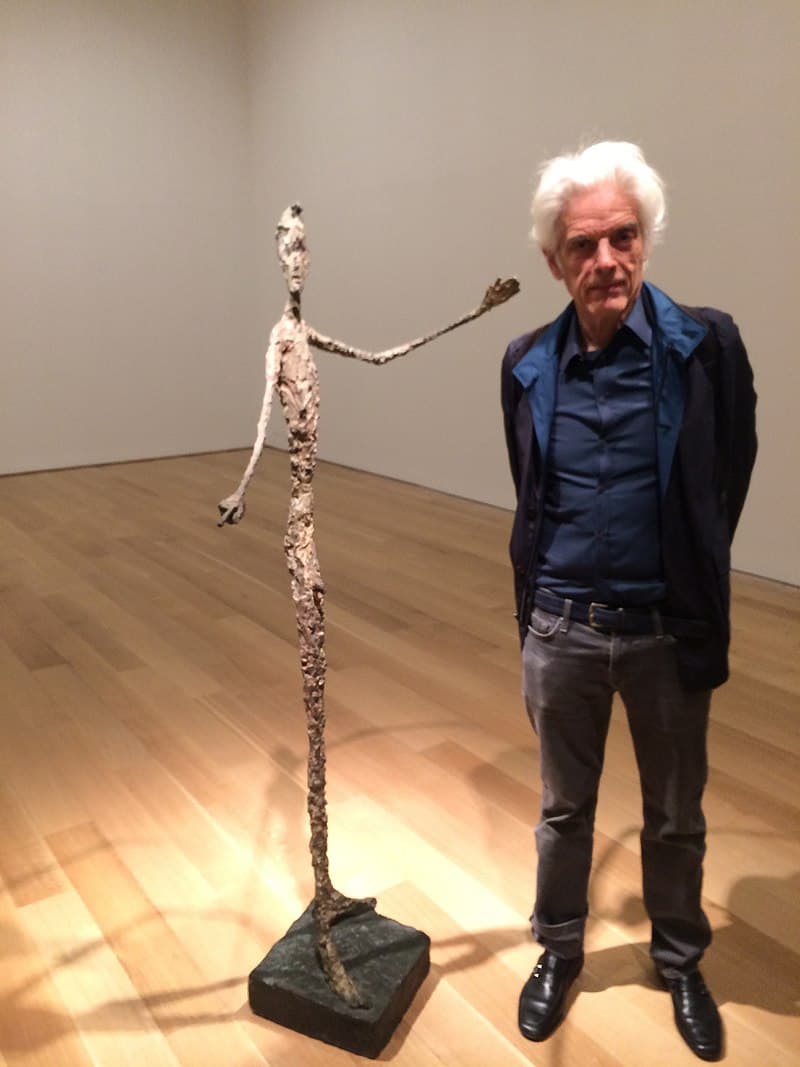
Working in bronze, Alberto Giacometti created this Walking Man I in 1960, a life-sized bronze figure stripped to skeletal essence. The elongated man strides forward on impossibly thin legs, arms hanging, surface rough and eroded. The figure embodies existential isolation: alone, moving through space, going nowhere in particular.
Giacometti developed his signature thin figures after World War II, influenced by Surrealism and existentialist philosophy. He worked obsessively, often destroying pieces that didn't capture his vision. The walking figure became a recurring motif, representing humanity's solitary journey through life. "The more I work," he said, "the more I see things differently."
Six bronze casts exist, scattered among major museums and private collections. In 2010, a cast sold at auction for $104.3 million, then the highest price ever paid for a sculpture. The Fondation Giacometti in Paris preserves the artist's studio and archive. Walking Man I remains one of the most recognized sculptures of the 20th century, its haunted figure speaking to human vulnerability.