Wikimedia Commons - CC0
Tutankhamun's Crook and Flail
by Ancient Egyptian (Unknown), -1323
Artwork Details
Details
- Year
- -1323
- Medium
- Gold, bronze, blue glass, obsidian
- Size
- Crook: 33.5 cm, Flail: 34 cm
Cite or Embed This Work
APA · MLA · Chicago1-click academic citation and embeddable “On View” museum badge for articles, syllabi, and research.
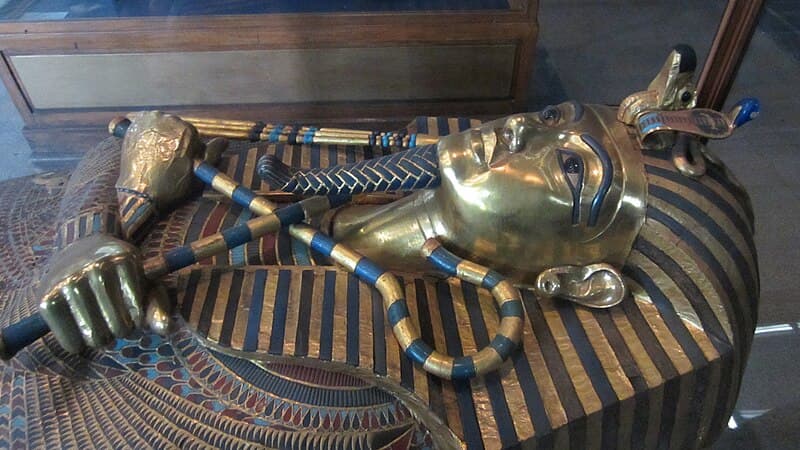
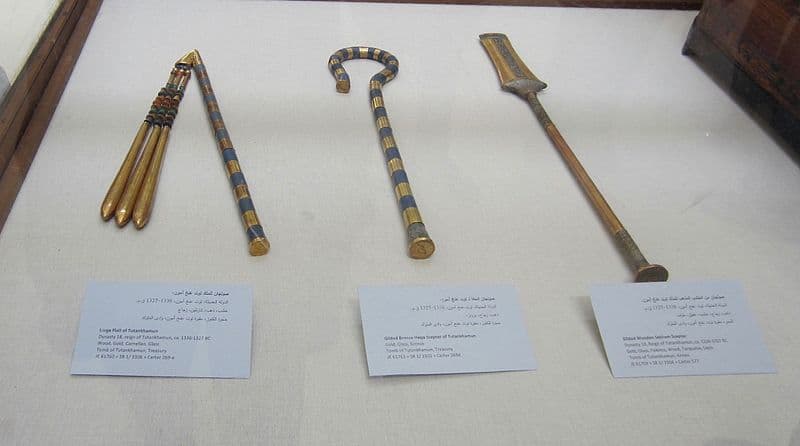
Ancient Egyptian The Crook and Flail of Tutankhamun are the quintessential symbols of Egyptian kingship, found crossed over the pharaoh's mummified chest. The crook (heka) resembles a shepherd's staff, while the flail (nekhakha) features three strands of beads. Created around 1323 BCE, both are crafted from gold, bronze, and blue glass, with alternating bands of dark and light creating a striking pattern.
These objects symbolized the pharaoh's dual role as shepherd of his people (the crook) and provider of grain (the flail, possibly representing a threshing tool). Every pharaoh held these implements in official portraits, and mummies were buried with them for use in the afterlife. Tutankhamun's examples preserve their original binding and materials remarkably well.
The crook and flail are displayed at the Grand Egyptian Museum near the mummy's other funerary objects.
More by Ancient Egyptian (Unknown)
View all →Sculpture
A

Architectural Fragment with Relief Carving
Ancient Egyptian (Unknown), 401
Art Institute of Chicago, Chicago
Sculpture
S
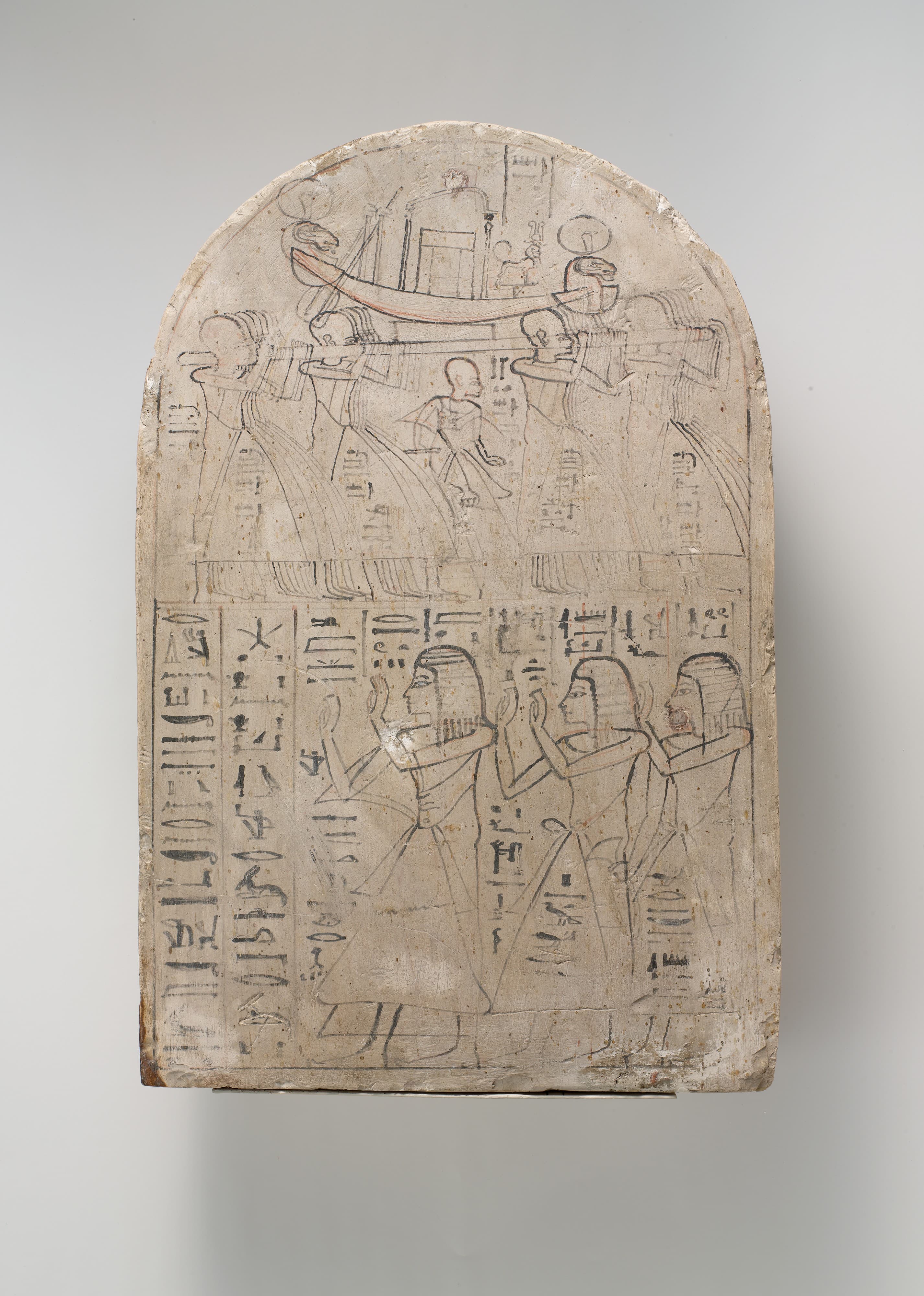
Stela of the royal scribe Amunnakht praising the divine barque of Amun-Re, Lord of the Thrones of the Two Lands
Ancient Egyptian (Unknown), -1070
The Metropolitan Museum of Art, New York