Winged Human-Headed Bulls from Khorsabad
by Ancient Mesopotamian (Unknown), -713
Artwork Details
Details
- Year
- -713
- Medium
- Gypsum alabaster
- Size
- 440 cm (14.4 ft) tall
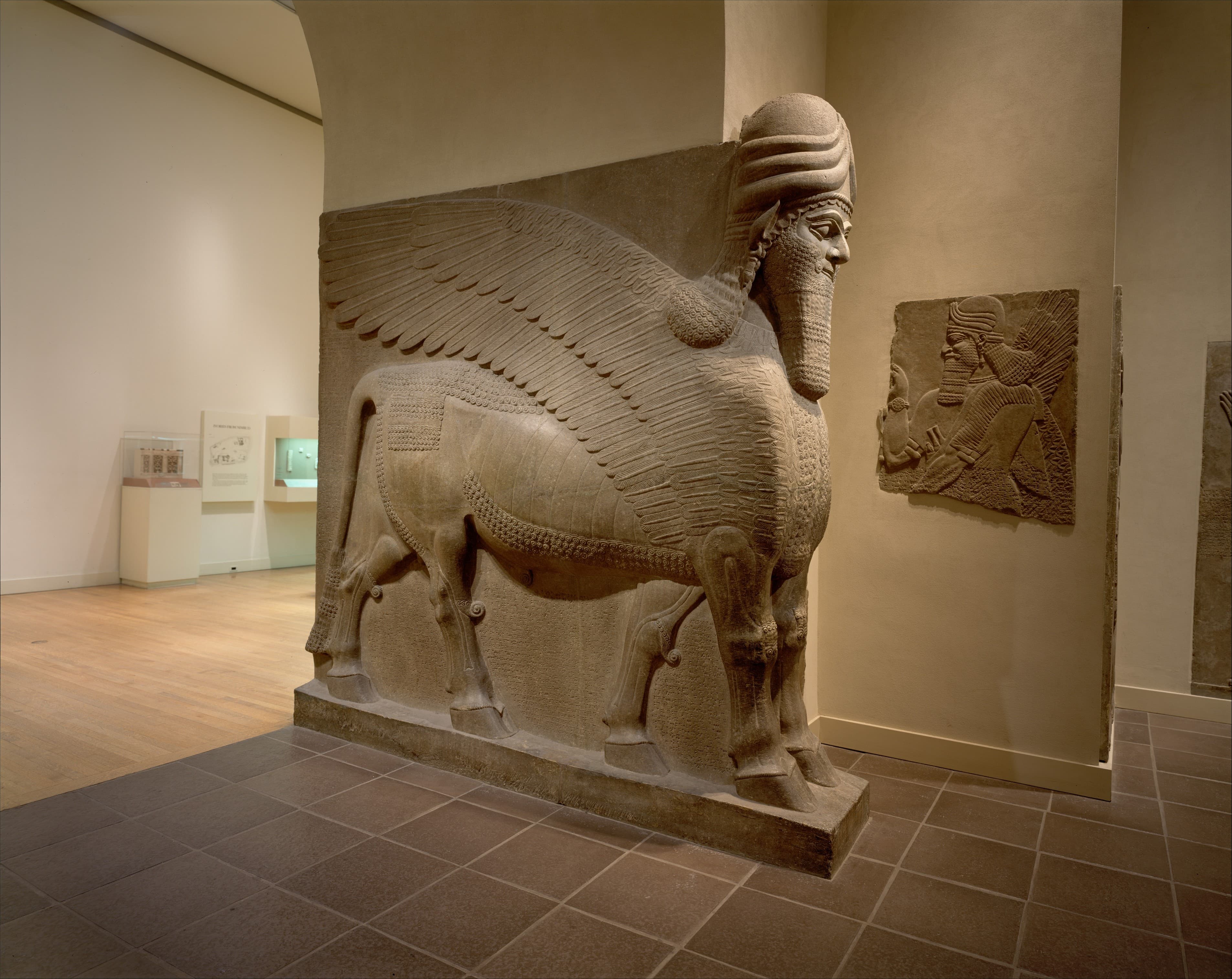
Mesopotamian These massive winged human-headed bulls, called lamassu, once guarded the palace of Assyrian king Sargon II at Khorsabad. Carved around 713-706 BCE from single blocks of gypsum alabaster, each figure stands over four meters tall and weighs approximately 30 tons. Five legs allowed the lamassu to appear stationary from the front and striding from the side.
The elaborate detailing includes curled beards, feathered wings, and muscular bodies covered in inscribed cuneiform texts. These guardian spirits combined human intelligence (the bearded face), leonine power (the body), and divine reach (the wings) to protect the palace from evil spirits and human enemies alike.
French archaeologist Paul-Émile Botta excavated Khorsabad beginning in 1843, the first major Assyrian site explored by Europeans. Transporting these colossal sculptures to the Louvre required engineering innovation and considerable expense.