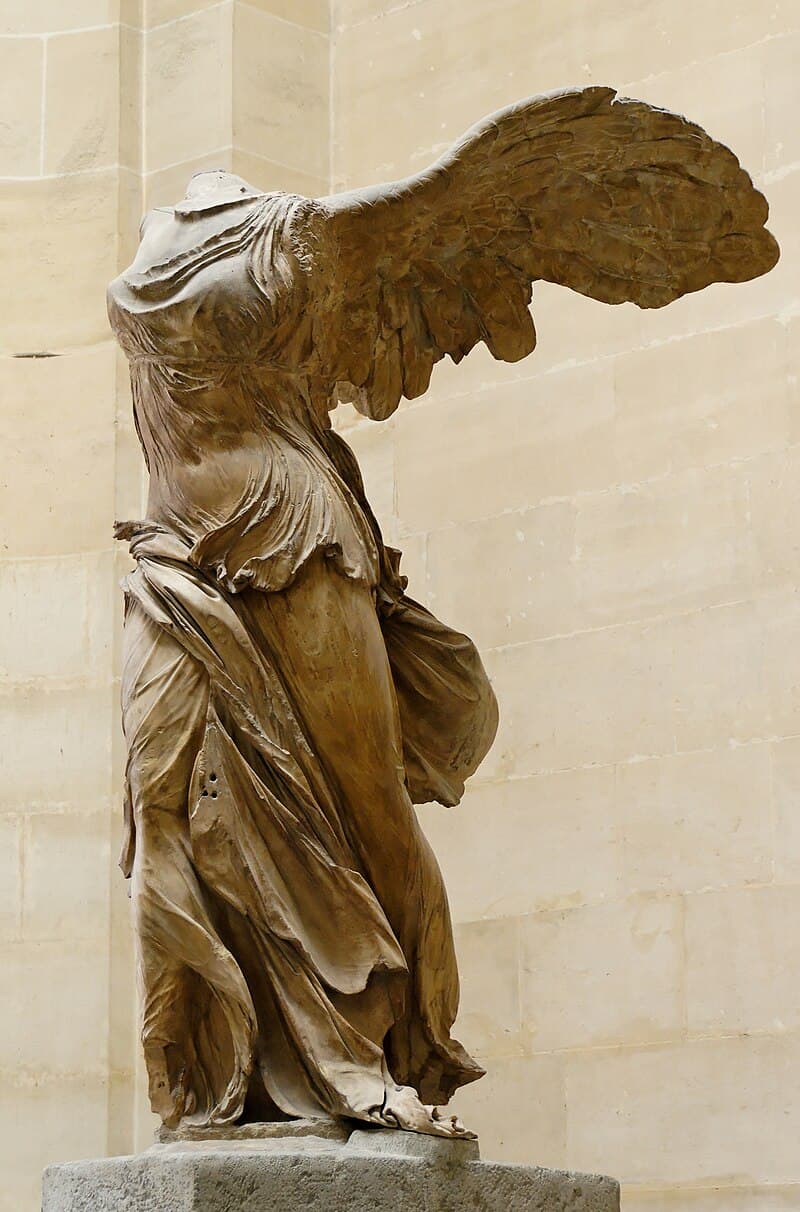
Winged Victory of Samothrace
by Ancient Greek (Unknown), -190
Artwork Details
Details
- Year
- -190
- Medium
- Marble
- Size
- 244 cm (8 ft) tall
Cite or Embed This Work
APA · MLA · Chicago1-click academic citation and embeddable “On View” museum badge for articles, syllabi, and research.
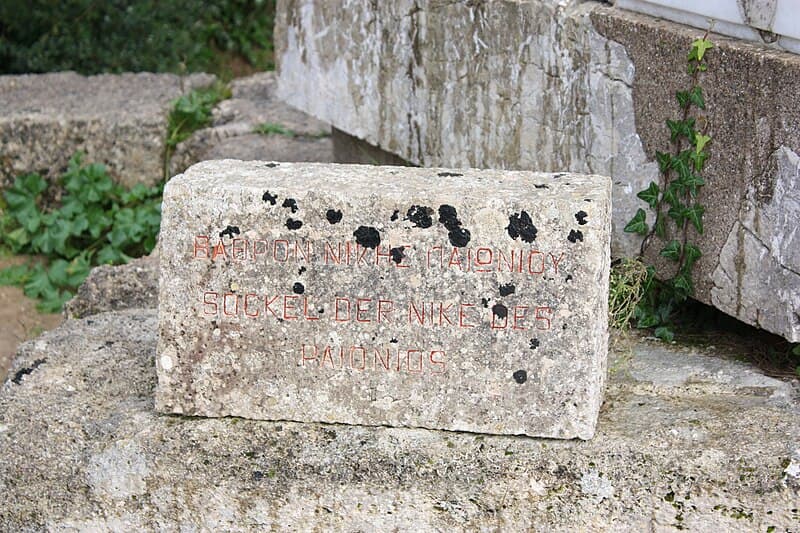
The Winged Victory of Samothrace, also called Nike of Samothrace, dates to approximately 190 BCE. This Hellenistic Greek sculpture depicts Nike, the goddess of victory, alighting on the prow of a warship. Her wings spread wide, her drapery whipped by sea wind, she celebrates a naval triumph.
French archaeologists discovered the statue in 1863 on the island of Samothrace in the Aegean Sea. It arrived at the Louvre in 118 fragments and was painstakingly reconstructed. The head and arms were never found, though a single hand appeared decades later. The statue originally stood on a hilltop sanctuary overlooking the sea.
The sculptor mastered the illusion of wet fabric clinging to the body, revealing the form beneath while suggesting powerful forward motion. Standing at the top of the Daru staircase, the Nike remains one of the Louvre's most photographed works and among the greatest surviving examples of Hellenistic art.