Alexej von Jawlensky
Russian·1864–1941
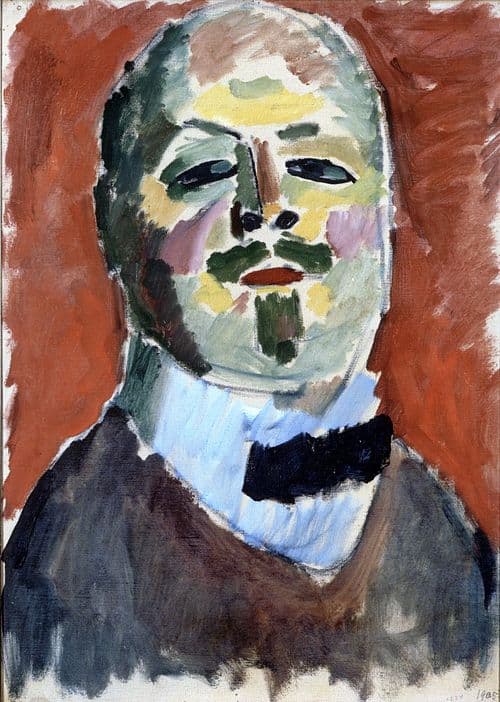
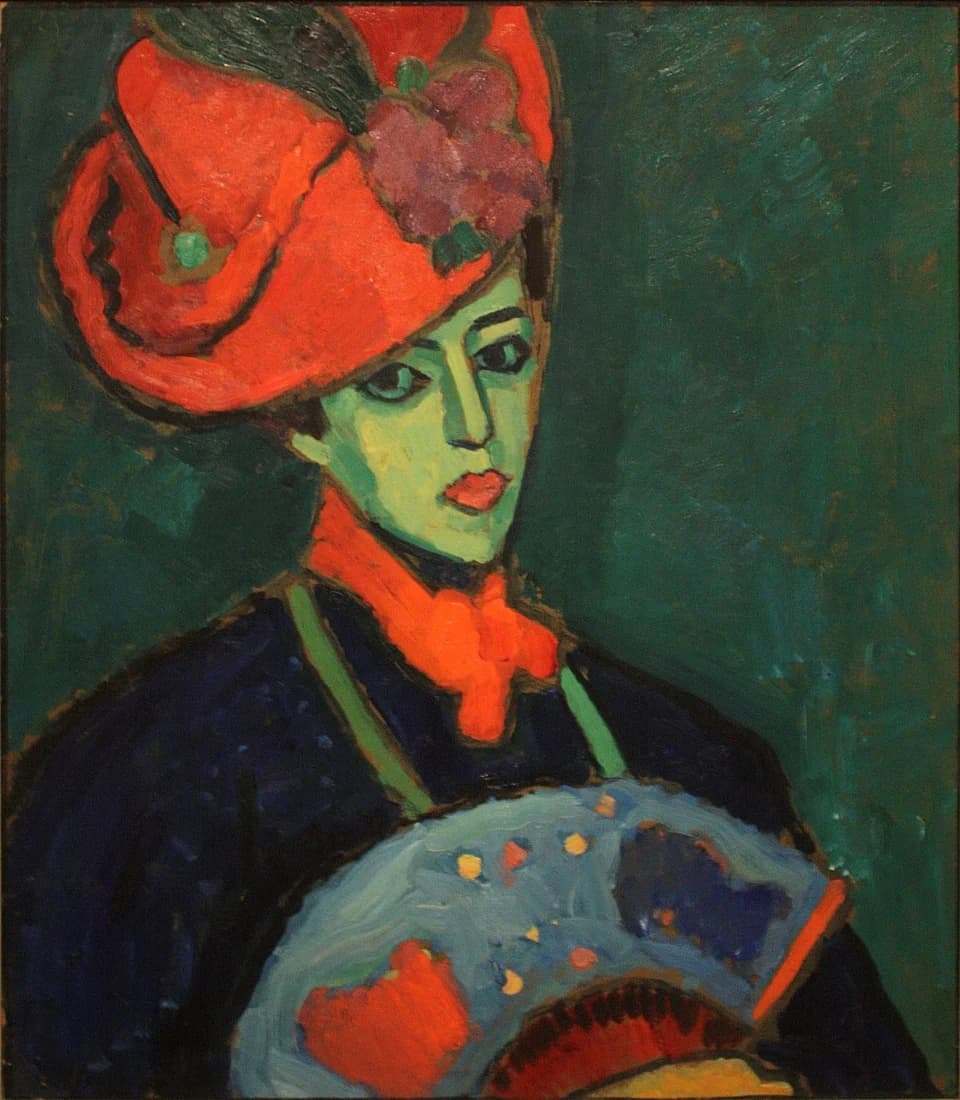
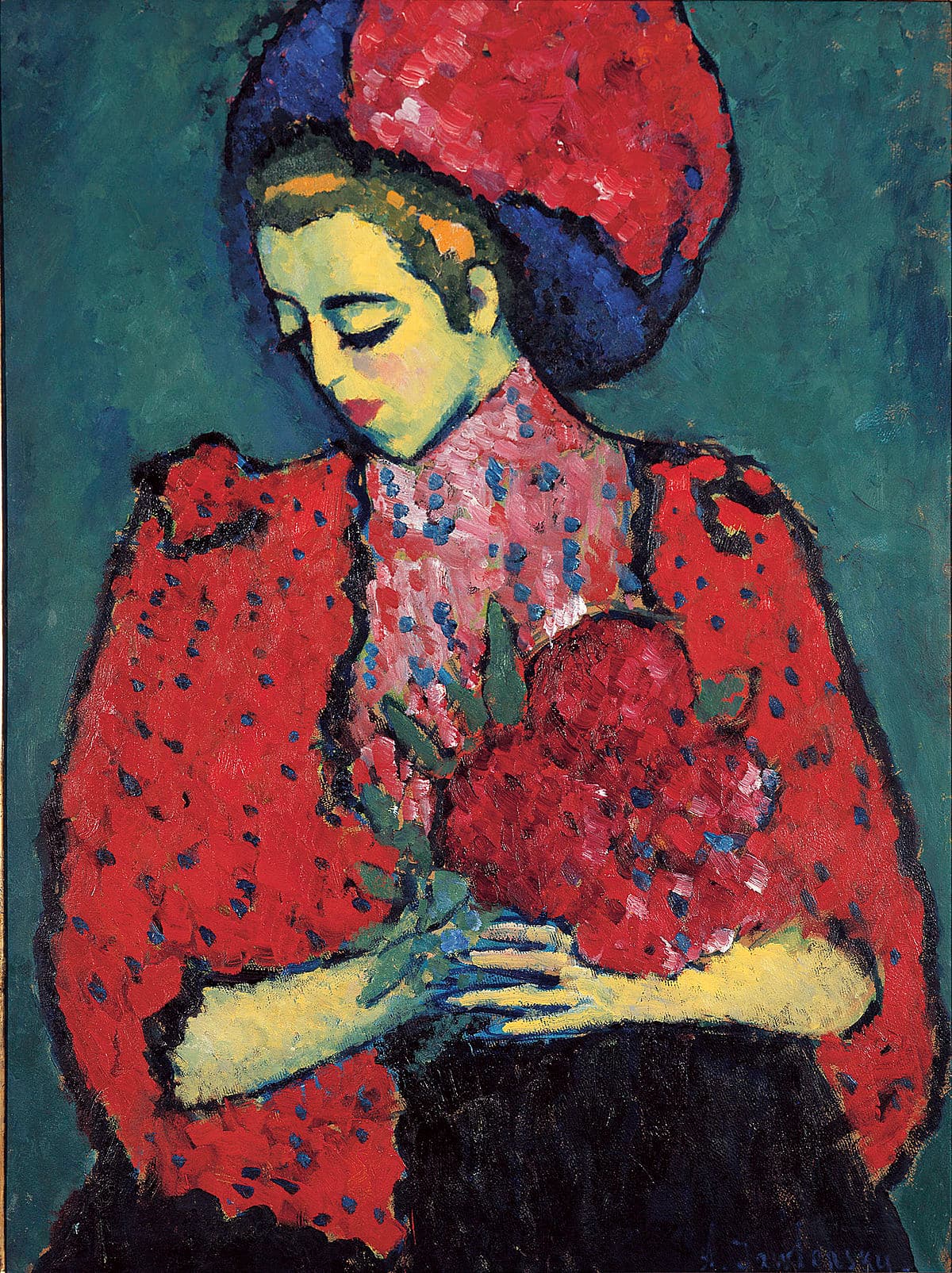
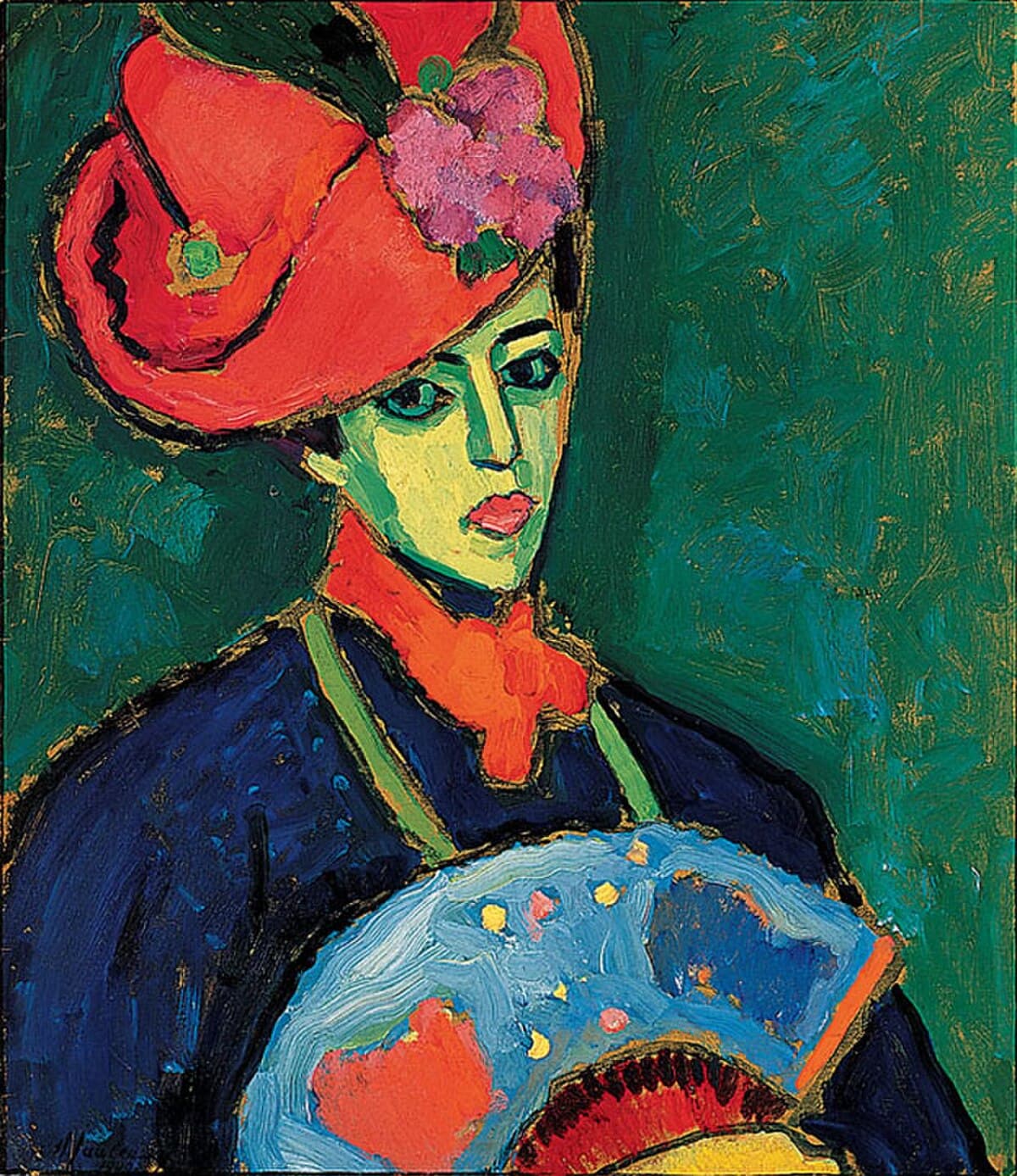
Expressionist painter Alexej von Jawlensky (1864-1941) developed a mystical approach to portraiture that bridged Russian icon traditions and European modernism. Born in Torzhok, Russia, he left the Imperial Guard to pursue art, eventually settling in Munich where he became a central figure in the German avant-garde. His portraits use bold, contrasting colors and directional brushstrokes to convey spiritual intensity. The "Mystical Heads" series (1917-19) and "Savior's Faces" series (1918-20) transformed the human face into vehicles for meditation.
Jawlensky studied under Ilya Repin in Russia before moving to Munich in 1896, where he enrolled at Anton Ažbe's school alongside Wassily Kandinsky. Exposure to Paul Gauguin, Vincent van Gogh, and Henri Matisse at Paris exhibitions shaped his bold color sense. In 1909, he co-founded the Munich New Artists' Association, and in 1912 he joined Der Blaue Reiter (The Blue Rider). During World War I, he fled to Switzerland, where his series paintings took on increasingly abstract, spiritual qualities. In 1924, he established Die Blaue Vier (The Blue Four) with Paul Klee, Lyonel Feininger, and Kandinsky. Crippling arthritis forced him to stop painting in 1937, the same year Nazi Germany condemned his work as "degenerate." His paintings hang at the Museum of Modern Art, the Guggenheim, and Museum Wiesbaden.
Notable Works by Alexej von Jawlensky
4 paintings catalogued with museum locations
Museums with Alexej von Jawlensky's Work
3 museums display Jawlensky's works. Click any museum to see visiting info and the specific works they hold.
About Alexej von Jawlensky
Jawlensky was a leading Expressionist and exhibited with Der Blaue Reiter in Munich. In 1924, he founded Die Blaue Vier (The Blue Four) with Kandinsky, Paul Klee, and Lyonel Feininger, continuing to promote abstract and spiritual art in America.
The "Mystical Heads" series (1917-19) and "Savior's Faces" series (1918-20) are his most celebrated works. These increasingly simplified faces became devotional objects, with features reduced to geometric shapes that Jawlensky described as spiritual meditations on the human soul.
His work hangs at the Museum of Modern Art in New York, the Guggenheim, and Museum Wiesbaden in Germany, which holds the largest collection. The Norton Simon Museum in Pasadena also preserves important early works from his Munich years.
He studied under Ilya Repin at the St. Petersburg Academy and was transformed by encounters with Gauguin, Van Gogh, and Matisse in Paris. Russian Orthodox icon traditions also shaped his approach, leading him toward bold color and frontal, hieratic compositions.
Crippling arthritis forced him to stop painting entirely in 1937. That same year, the Nazis condemned his work as "degenerate" and removed it from German museums. He spent his final years in Wiesbaden, paralyzed, visited by friends including his former colleague Kandinsky.
Love Alexej von Jawlensky's Style?
Explore art inspired by their style.
Browse Collection