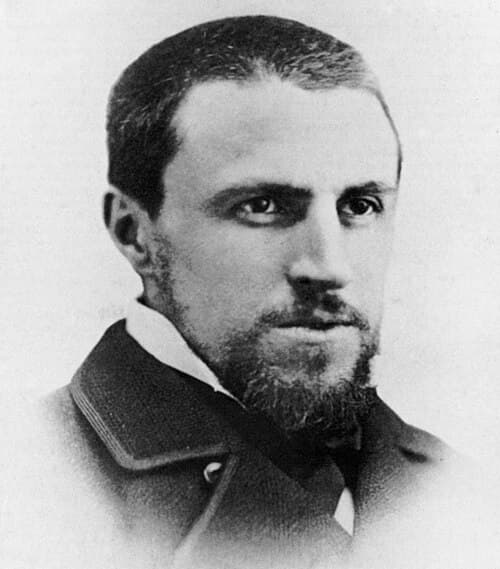
Bruno Liljefors
Swedish·1860–1939
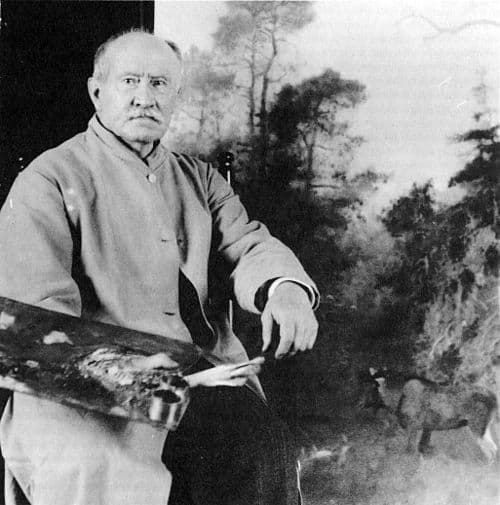
Swedish wildlife painter Bruno Liljefors (1860-1939) revolutionized animal art by combining Impressionist techniques with precise naturalistic observation. Born in Uppsala, he was sickly as a child and spent years indoors, where a tutor introduced him to painting at age six. As he grew stronger through gymnastics and hunting, he never lost his passion for art. He studied at the Swedish Royal Academy of Fine Arts before traveling to Germany, Italy, and Paris between 1882 and 1883.
Liljefors's breakthrough was showing animals truly integrated with their environments rather than posed against neutral backgrounds. His depictions of predator and prey, particularly foxes hunting hares, sea eagles pursuing eiders, and goshawks striking black grouse, capture movement with dramatic energy. A lifelong hunter himself, he painted without sentimentality, neither exaggerating the predator's ferocity nor the prey's suffering. He kept collections of living animals as models and studied their behavior directly. The influence of Impressionism shows in his attention to light and atmosphere, while Art Nouveau and Japanese art shaped his compositions.
Critics called him the "prince of animal artists." His paintings injected vital energy into Swedish National Romanticism during the 1890s. Works like Rävfamilj (Fox Family, 1886) and Havsörnar (Sea Eagles, 1897) defined the genre. The National Museum in Stockholm holds major works. Paintings also hang at the Thielska Gallery and Waldemarsudde in Stockholm. American wildlife artists cite him as a primary influence.
Notable Works by Bruno Liljefors
1 painting catalogued with museum locations
Museums with Bruno Liljefors's Work
1 museum displays Liljefors's works. Click any museum to see visiting info and the specific works they hold.
Related Artists
Other Impressionism artists you might like
About Bruno Liljefors
Liljefors pioneered modern wildlife painting by showing animals fully integrated with their environments. His predator-prey scenes combine Impressionist light effects with naturalistic precision.
The National Museum in Stockholm holds major works. Paintings also hang at the Thielska Gallery and Waldemarsudde, both in Stockholm.
Liljefors specialized in birds and mammals in dramatic hunting scenes. Sea eagles, foxes, hares, and game birds appear frequently in his work.
Liljefors combined Impressionism's light effects with precise naturalism. Art Nouveau and Japanese art also shaped his compositions, particularly in works from the 1890s.
Yes. Liljefors was a lifelong hunter who used his field experience to paint authentic predator-prey scenes. He kept living animals as models and observed wildlife behavior directly.
Liljefors elevated wildlife art from illustration to fine art. American painters like Michael Coleman acknowledge him as a major influence on modern wildlife painting.
Love Bruno Liljefors's Style?
Explore art inspired by Impressionism.
Browse Collection