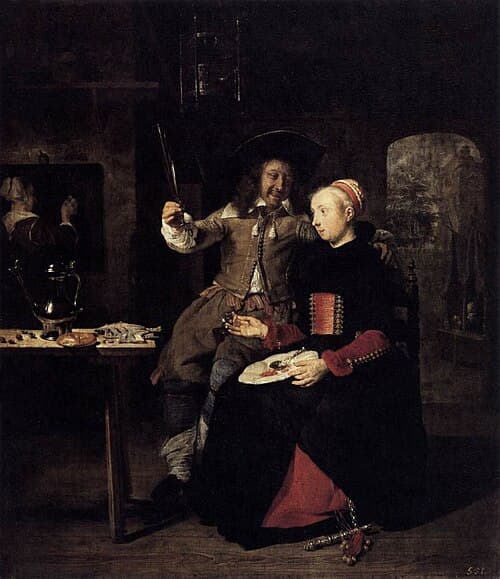
Caspar Netscher
Dutch·1639–1684
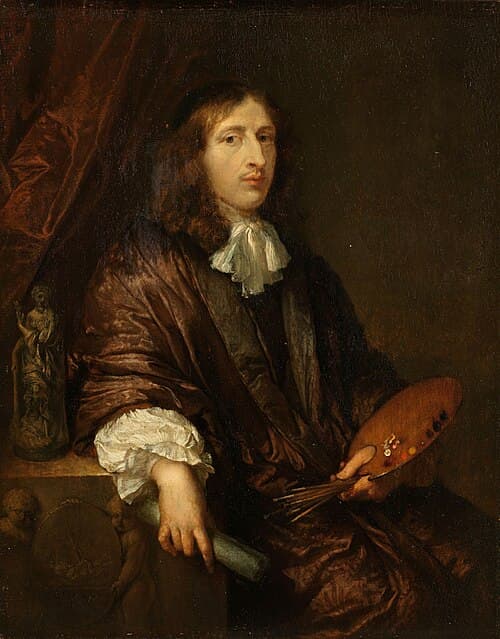
Dutch Golden Age painter Caspar Netscher (1639-1684) achieved renown for his refined genre scenes and fashionable portraits, becoming one of the most sought-after artists in The Hague. Born in Heidelberg during the Thirty Years' War, he fled with his mother through dangerous territory, eventually finding refuge in Arnhem where a physician adopted him.
Netscher trained under Gerard ter Borch in Deventer, becoming his most gifted pupil and sometimes modeling for the master's paintings. He developed exceptional skill in rendering textures, particularly the costly white satin fabrics that became his signature. Planning to travel to Rome, he stopped in Bordeaux, married the daughter of a fountain designer, and settled in The Hague by 1662. There he turned from genre paintings to portraits, finding wealthy clients among the city's patriciate, diplomats, and eventually royalty.
Works like The Lacemaker show his meticulous attention to surface textures and domestic intimacy, qualities he shared with Vermeer and Metsu. His portraits typically place sitters before sumptuous draperies with parklike landscape views. William III patronized him, leading to commissions from Charles II and other Dutch aristocracy. Netscher was gaining both fame and wealth when gout forced him to paint lying in bed. He died at forty-five, still working. His sons Theodoor and Constantijn continued his style. The Mauritshuis in The Hague holds major works. Paintings also hang at the Rijksmuseum, National Gallery London, and Louvre.
Notable Works by Caspar Netscher
1 painting catalogued with museum locations
Museums with Caspar Netscher's Work
1 museum displays Netscher's works. Click any museum to see visiting info and the specific works they hold.
Related Artists
Other Dutch Golden Age artists you might like
About Caspar Netscher
Netscher excelled at refined genre scenes and fashionable portraits, especially his skill rendering costly fabrics like white satin. He became one of The Hague's most sought-after painters.
The Mauritshuis in The Hague holds major works. Paintings also hang at the Rijksmuseum, National Gallery London, and Louvre.
Netscher studied under Gerard ter Borch in Deventer, becoming his most talented pupil. He sometimes posed as a model for ter Borch's paintings.
Netscher worked during the Dutch Golden Age. His refined technique and attention to textiles places him alongside Vermeer and Metsu in the Leiden Fine Painting tradition.
The Lacemaker demonstrates Netscher's gift for rendering textures and domestic intimacy. The subject shows a woman at delicate needlework, a popular theme among Dutch painters.
Netscher developed gout and was forced to paint while lying in bed. He died at forty-five in 1684, still actively working despite his illness.
Love Caspar Netscher's Style?
Explore art inspired by Dutch Golden Age.
Browse Collection