Duccio di Buoninsegna
Italian·1255–1319
No Portrait Available
Sienese painter Duccio di Buoninsegna (c. 1255-1319) was one of the greatest Italian artists of the Middle Ages and the founder of the Sienese school. First mentioned in 1278 when Siena's treasurer commissioned him to decorate strongboxes, he soon established himself as the city's leading painter. In 1280, Duccio received a large fine for unrecorded misconduct, the first of many fines suggesting a restless and rebellious temperament. In his art, the formality of the Italo-Byzantine tradition fuses with the new spirituality of the Gothic style.
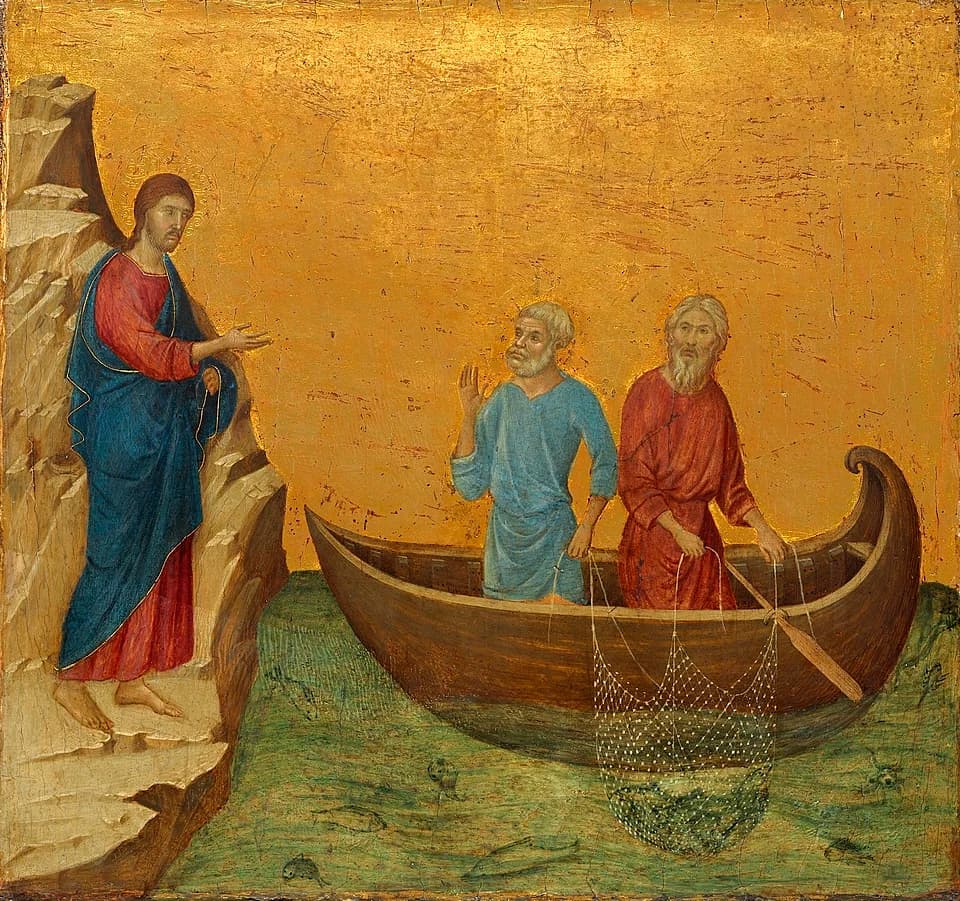
Duccio's great Maestà, commissioned for the high altar of Siena Cathedral, stands as his masterpiece and one of the defining works of the Proto-Renaissance. Commissioned on October 9, 1308, for 3,000 gold florins (the highest sum paid to an artist until then), he completed it by June 1311. The Sienese carried it in procession around the city before installing it in the cathedral. Painted on both front and back, this massive altarpiece comprised some 80 separate scenes. The front shows an enthroned Madonna and Child with saints and angels; the reverse depicted 43 panels of the Life of the Virgin and Life of Christ.
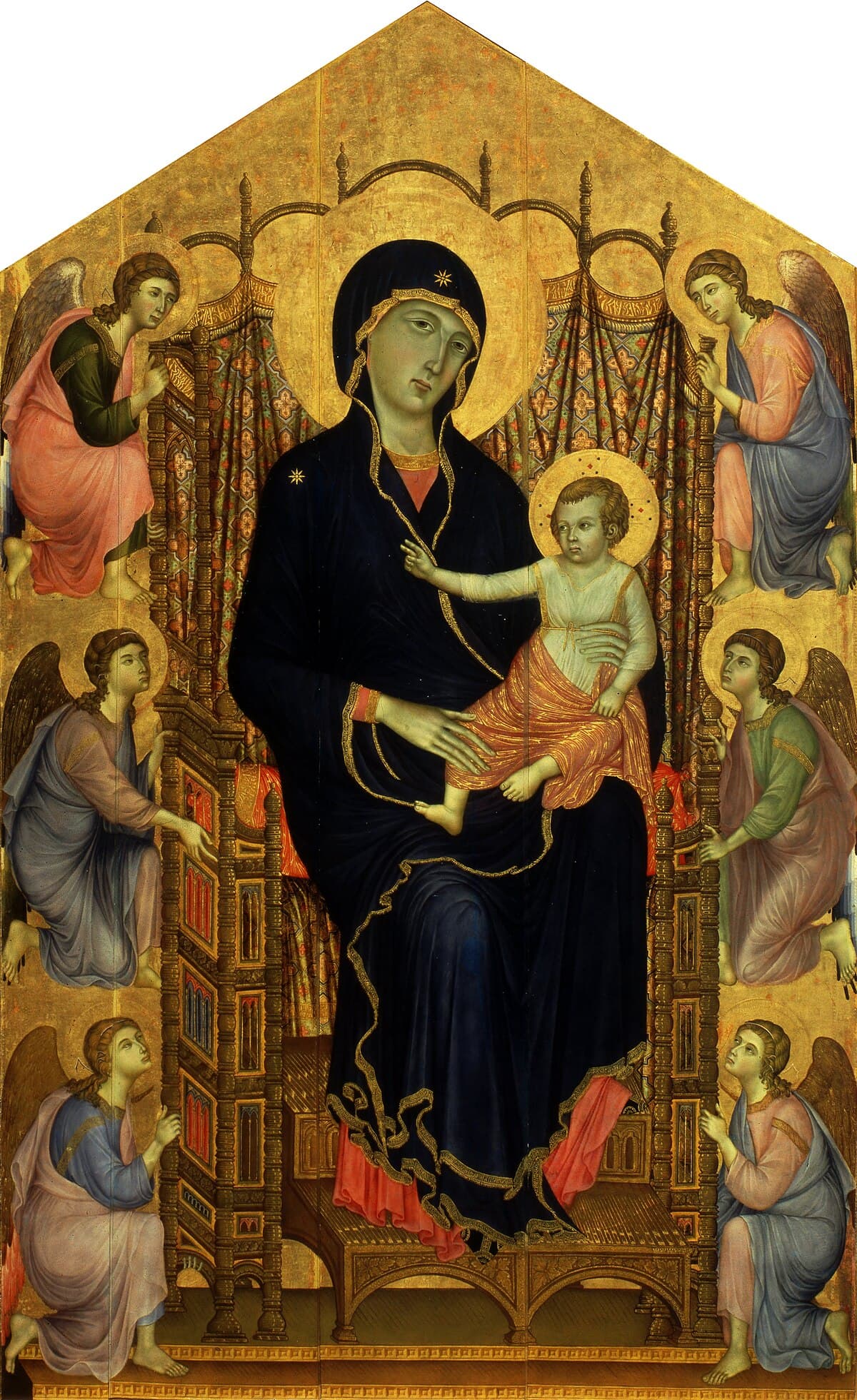
The Maestà remained in place until 1771, when it was dismantled to distribute pieces between two altars. The 5-metre construction was sawn up, damaging paintings and losing pieces. Today the main panels hang in the Museo dell'Opera del Duomo in Siena. Scattered fragments exist in other museums: his "Stoclet Madonna" (c. 1300) was purchased by the Metropolitan Museum of Art in 2004 for an estimated $45 million. His earlier "Rucellai Madonna" (1285) hangs at the Uffizi Gallery. Duccio influenced Simone Martini and the brothers Ambrogio and Pietro Lorenzetti, shaping Sienese painting for generations.
Notable Works by Duccio di Buoninsegna
3 paintings catalogued with museum locations
Museums with Duccio di Buoninsegna's Work
2 museums display Buoninsegna's works. Click any museum to see visiting info and the specific works they hold.
Related Artists
Other Renaissance artists you might like
About Duccio di Buoninsegna
Duccio founded the Sienese school and is considered a Proto-Renaissance master. His art fused the Italo-Byzantine tradition with Gothic spirituality, creating the distinctive Sienese style of decorative surfaces and elongated figures.
The main panels of his Maestà hang at the Museo dell'Opera del Duomo in Siena. His "Rucellai Madonna" is at the Uffizi Gallery, and his "Stoclet Madonna" is at the Metropolitan Museum.
The Maestà (1308-1311), painted for Siena Cathedral's high altar, is his masterpiece. This massive double-sided altarpiece comprised about 80 separate scenes and cost 3,000 gold florins, the highest sum paid to any artist until then.
The Maestà remained intact until 1771, when it was dismantled and sawn up to distribute pieces between two altars. Some panels were damaged or lost. Surviving pieces are now scattered across several museums worldwide.
Duccio influenced major Sienese painters including Simone Martini and the brothers Ambrogio and Pietro Lorenzetti. His founding of the Sienese style shaped Italian painting for generations after his death.
In 2004, the Metropolitan Museum of Art purchased Duccio's "Stoclet Madonna" (c. 1300) for an estimated $45 million, reflecting his enduring significance in art history.
Love Duccio di Buoninsegna's Style?
Explore art inspired by Renaissance.
Browse Collection