Wikimedia Commons • Public Domain
Madonna Rucellai
StyleRenaissance
GenreReligious
Artwork Details
Cite or Embed This Work
APA · MLA · Chicago1-click academic citation and embeddable “On View” museum badge for articles, syllabi, and research.
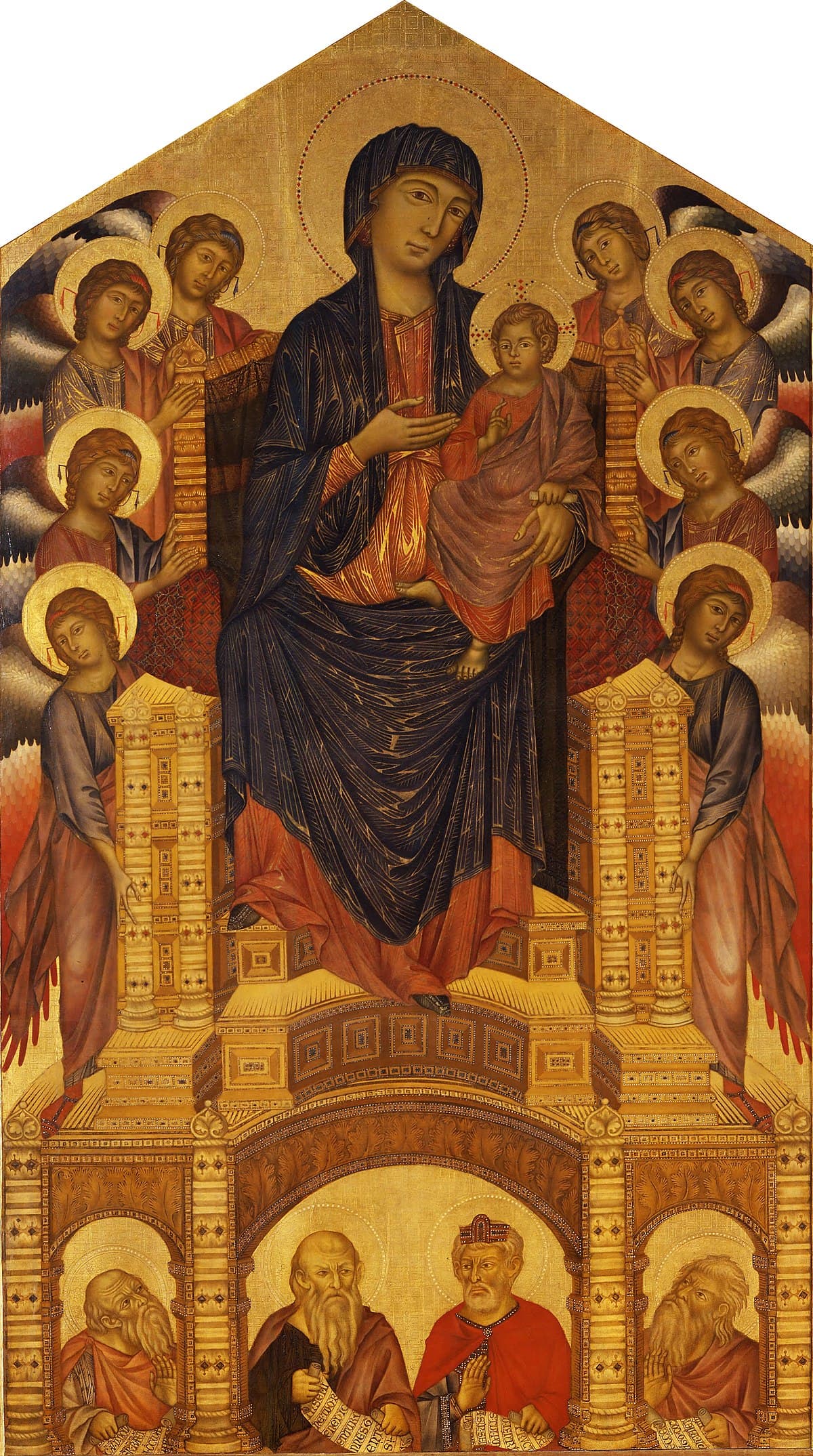
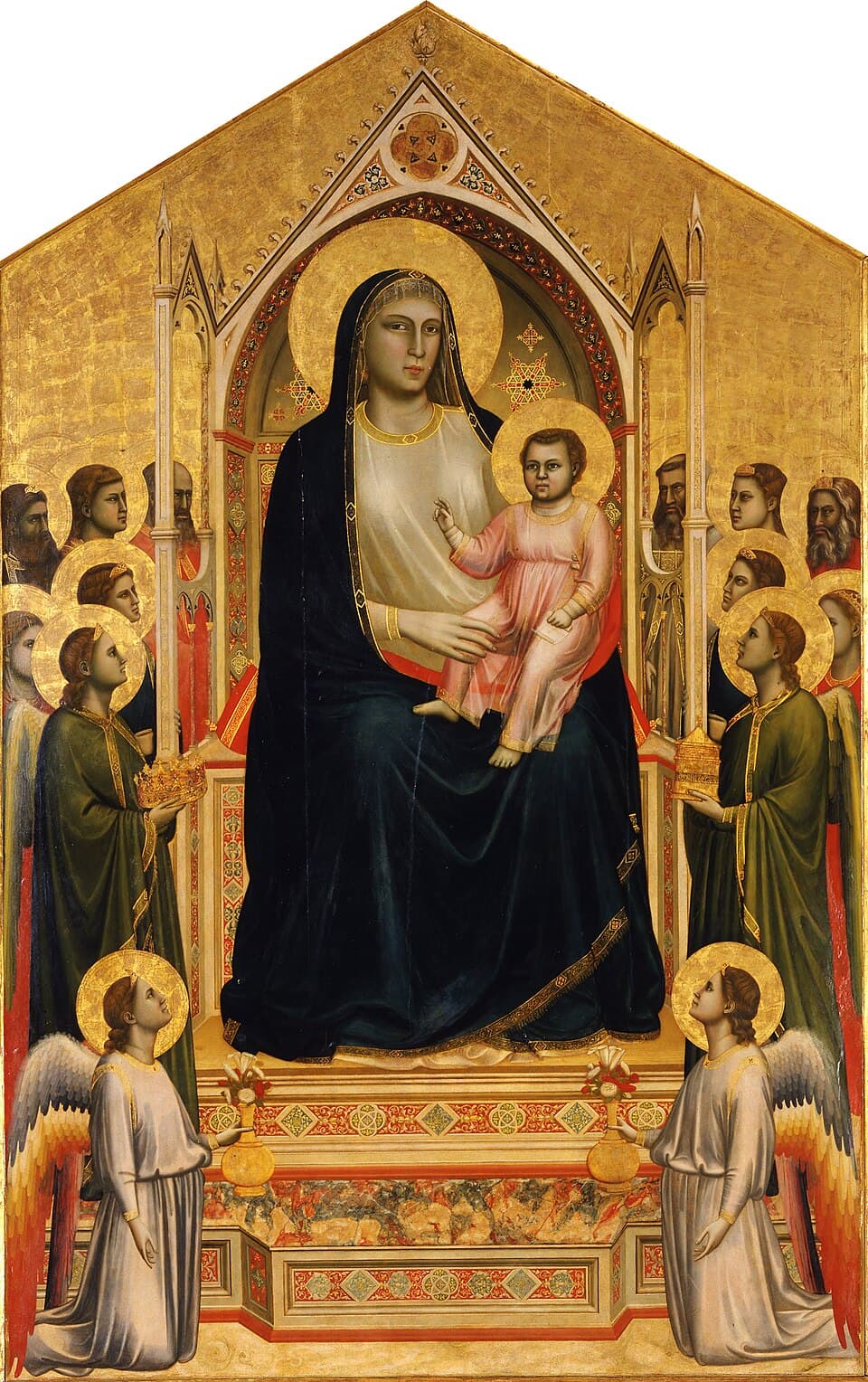
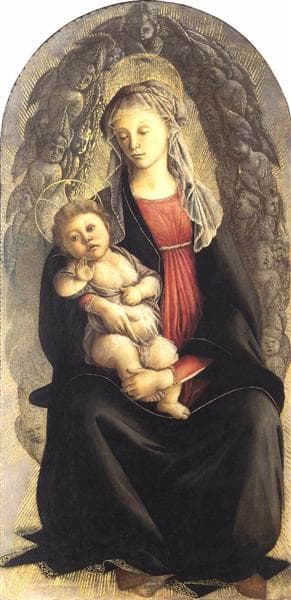
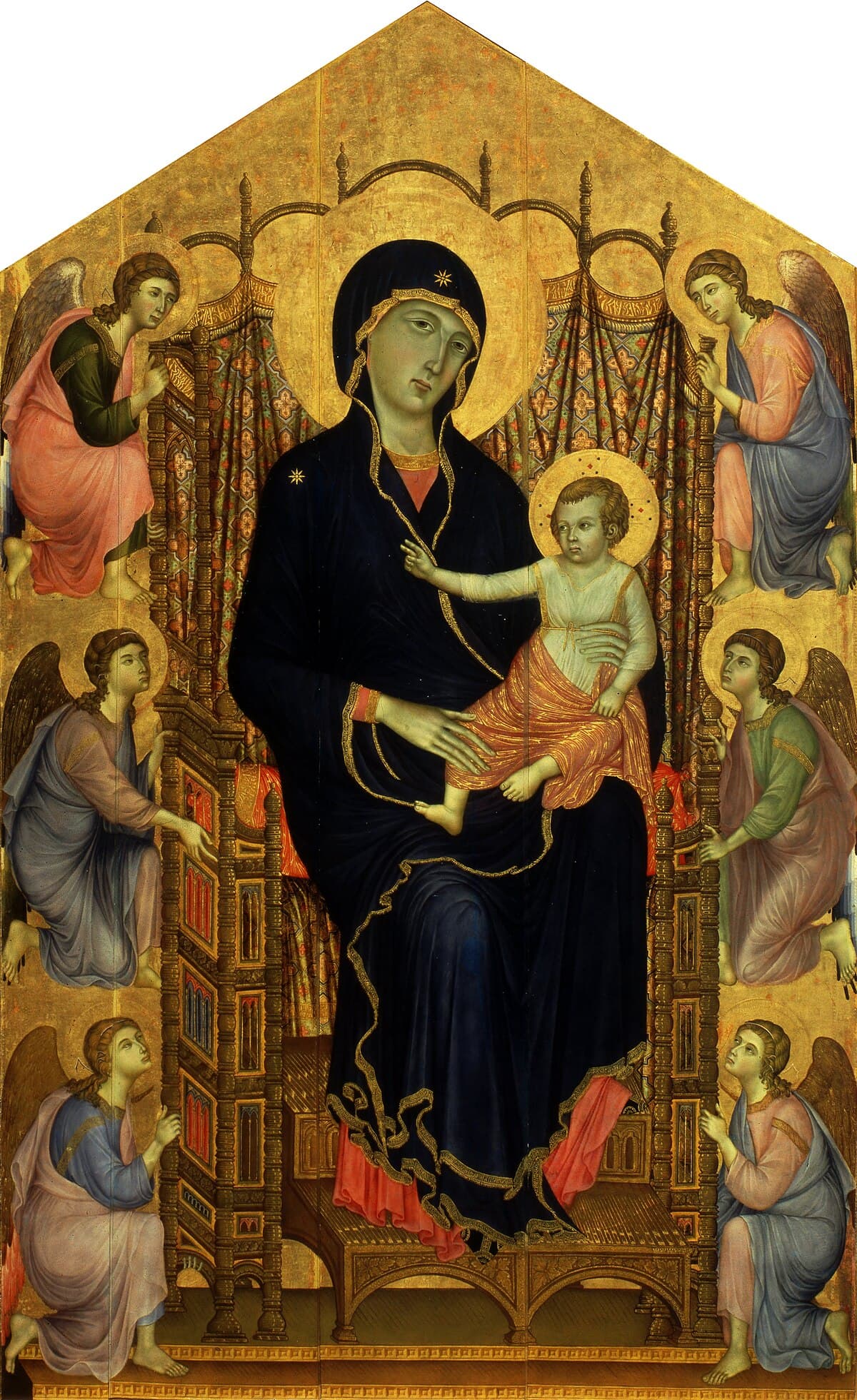
Duccio di Buoninsegna painted the Rucellai Madonna in 1285 for a confraternity at Santa Maria Novella in Florence. The massive altarpiece rises over fourteen feet tall, showing the Virgin enthroned with the Christ child while six angels kneel at either side. It remains Duccio's first documented work and established his reputation as a master of the Sienese school.
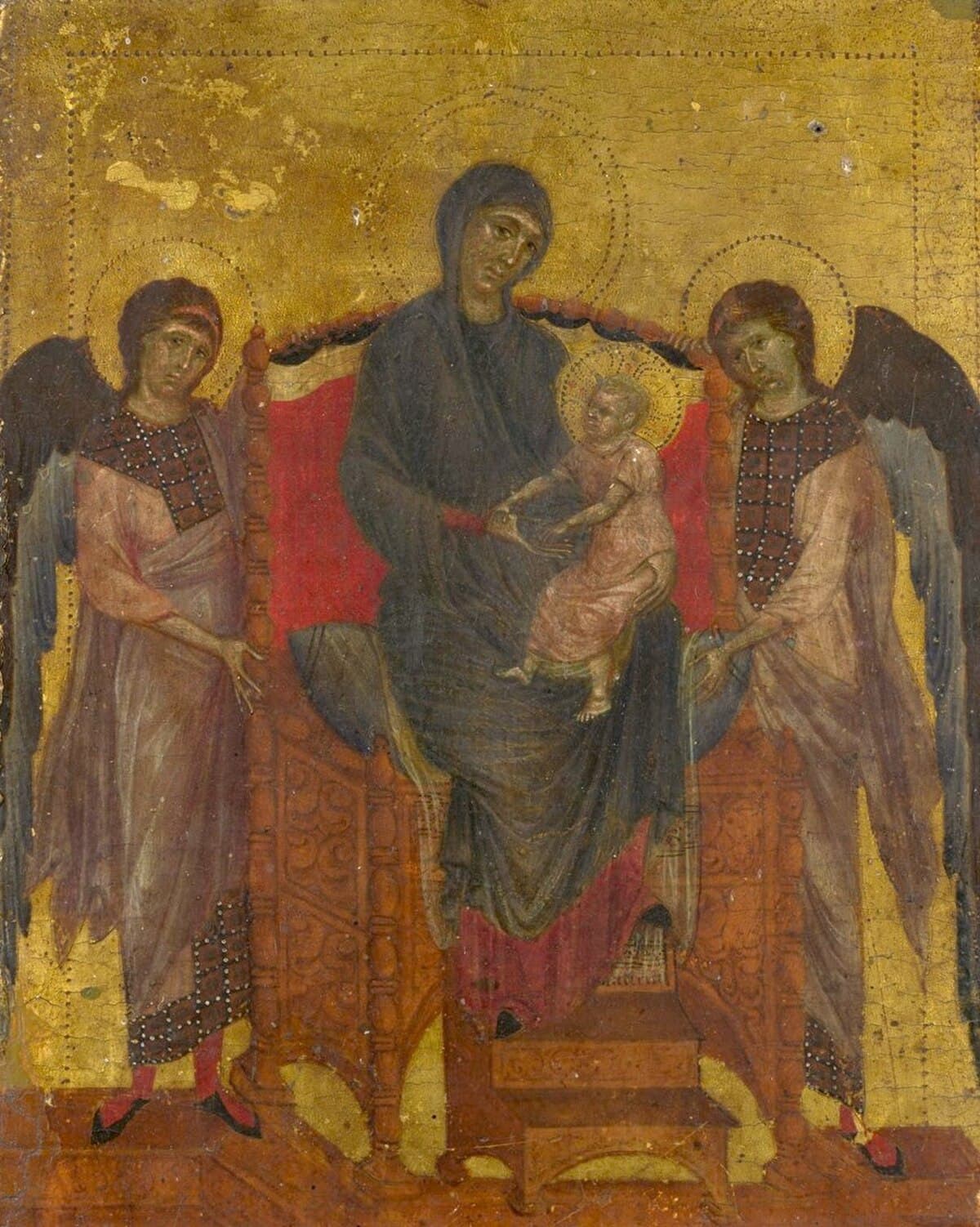
For centuries, this painting was wrongly attributed to Cimabue. Only in 1889 did scholars discover documents proving Duccio as the true artist. The confusion speaks to how closely these two masters worked within similar traditions, though Duccio's approach shows distinctly Sienese characteristics: more elegant lines, sweeter expressions, and more decorative treatment of the angels' robes and wings.
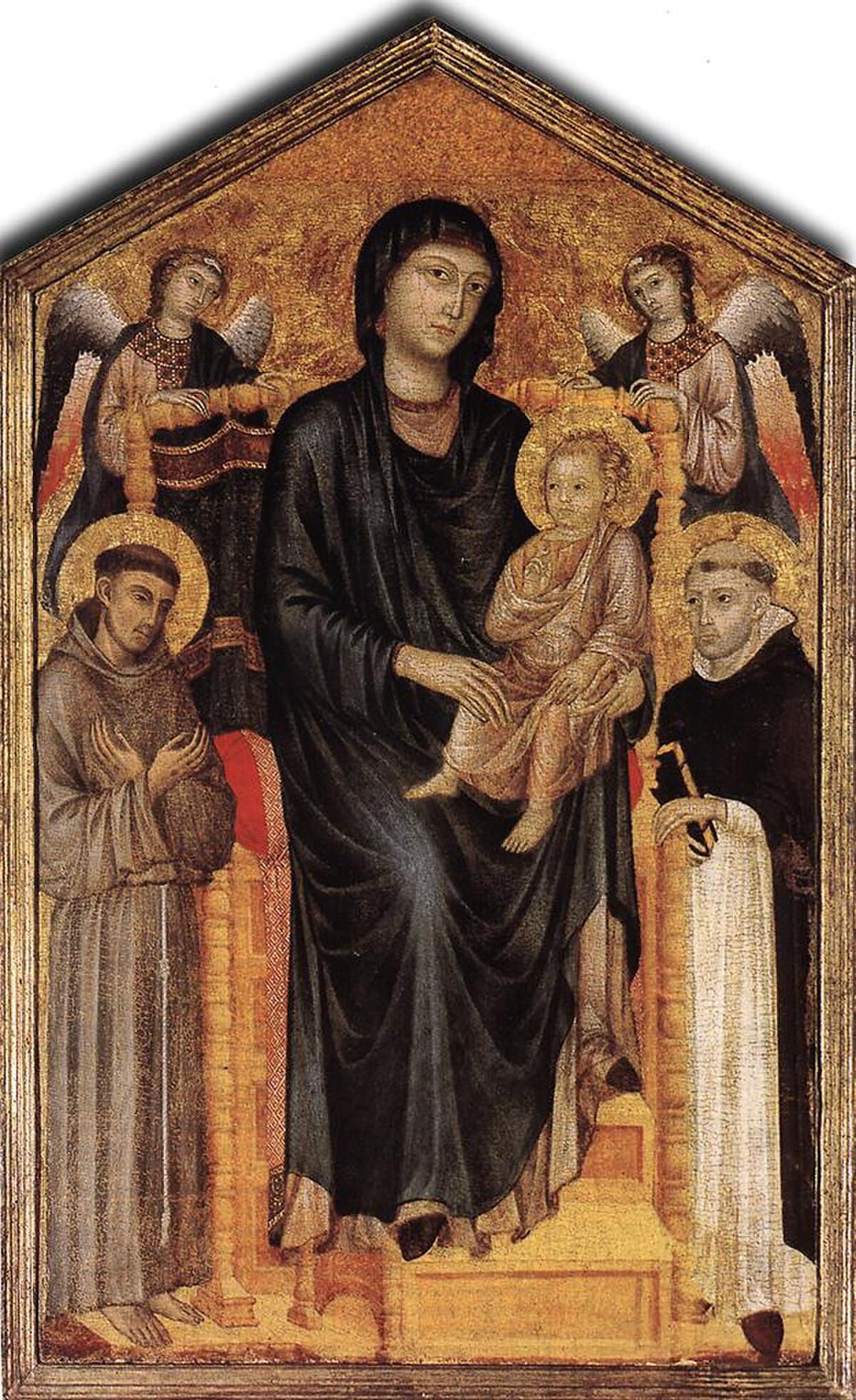
The name "Rucellai" comes from the chapel in Santa Maria Novella where the painting hung for centuries, not from the patron who commissioned it. Today it occupies a place of honor at the Uffizi Gallery, displayed alongside the monumental Madonnas of Cimabue and Giotto. This grouping offers a rare chance to compare how three different masters approached the same sacred subject during Italian art's defining decades.