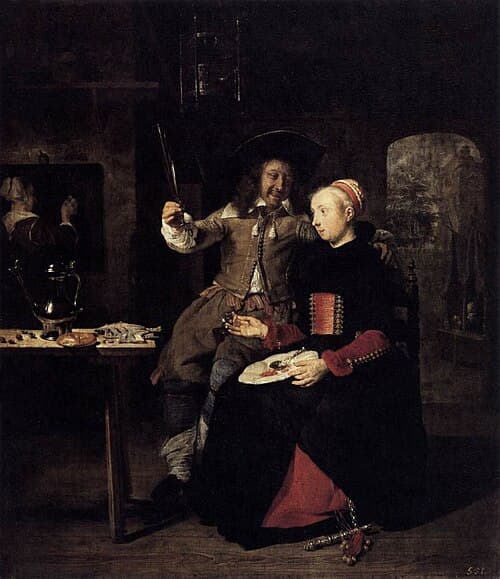
Emanuel de Witte
Dutch·1617–1692
No Portrait Available
Dutch Golden Age painter Emanuel de Witte (c. 1616-1692) became the foremost painter of church interiors in the Netherlands, bringing unprecedented drama to architectural subjects through his handling of light and shadow. Born in Alkmaar to a schoolteacher's family, he trained under the still-life painter Evert van Aelst in Delft.
De Witte moved between Rotterdam, Delft, and Amsterdam during his career. Until about 1650, when he was thirty-four, he painted primarily figure compositions. Then he turned to the subject that would define him: church interiors. Unlike contemporaries Gerard Houckgeest and Hendrick van Vliet, who focused on accurate architectural rendering, de Witte created imaginative compositions that prioritized atmosphere over topographical precision. He merged elements from different churches into fantasy spaces flooded with dramatic light.
Arnold Houbraken wrote that "in the painting of churches, no one was his equal with regard to orderly architecture, innovative use of light and well-formed figures." De Witte also painted market scenes, harbor views, and domestic interiors. His personal life was troubled by constant debt. Late in life, he moved in with painter Hendrick van Streeck in exchange for teaching him church interiors. According to Houbraken, after an argument about rent, de Witte hanged himself from a canal bridge in Amsterdam in 1692; the rope broke and he drowned. The Rijksmuseum holds major works. Paintings also hang at the Metropolitan Museum and National Gallery London.
Notable Works by Emanuel de Witte
1 painting catalogued with museum locations
Museums with Emanuel de Witte's Work
1 museum displays Witte's works. Click any museum to see visiting info and the specific works they hold.
Related Artists
Other Dutch Golden Age artists you might like
About Emanuel de Witte
De Witte was the leading Dutch painter of church interiors, known for dramatic light effects and imaginative compositions that merged elements from different buildings.
The Rijksmuseum in Amsterdam holds major works. Paintings also hang at the Metropolitan Museum and National Gallery London.
De Witte worked during the Dutch Golden Age. His atmospheric church interiors represent the final flowering of architectural painting in the Netherlands.
Unlike Houckgeest and Van Vliet, who painted accurate views, de Witte created fantasy interiors combining elements from different churches, prioritizing dramatic light over topographical precision.
Besides churches, de Witte painted market scenes, harbor views, and domestic interiors. His earlier career focused on figure compositions before he specialized in architecture.
According to Arnold Houbraken, de Witte hanged himself from a canal bridge in Amsterdam after an argument about rent. The rope broke and he drowned. His body was found in the canal.
Love Emanuel de Witte's Style?
Explore art inspired by Dutch Golden Age.
Browse Collection