Grant Wood
American·1891–1942
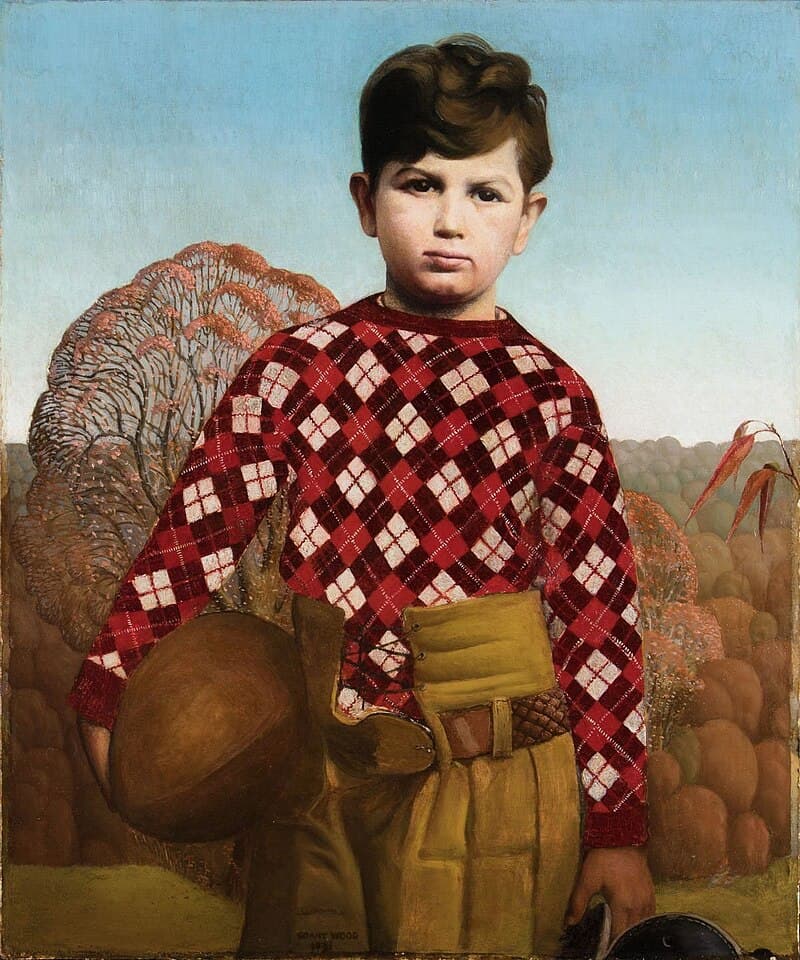
American Regionalist painter Grant Wood (1891-1942) created one of the most recognized images in American art history with his 1930 painting American Gothic. Born on a farm near Anamosa, Iowa, Wood studied at the School of the Art Institute of Chicago and later traveled to Munich, where the precise technique of Northern Renaissance masters deeply influenced his mature style. Along with Thomas Hart Benton and John Steuart Curry, Wood championed Regionalism, a movement advocating realistic depictions of rural American life as a counterpoint to European modernism and abstraction.
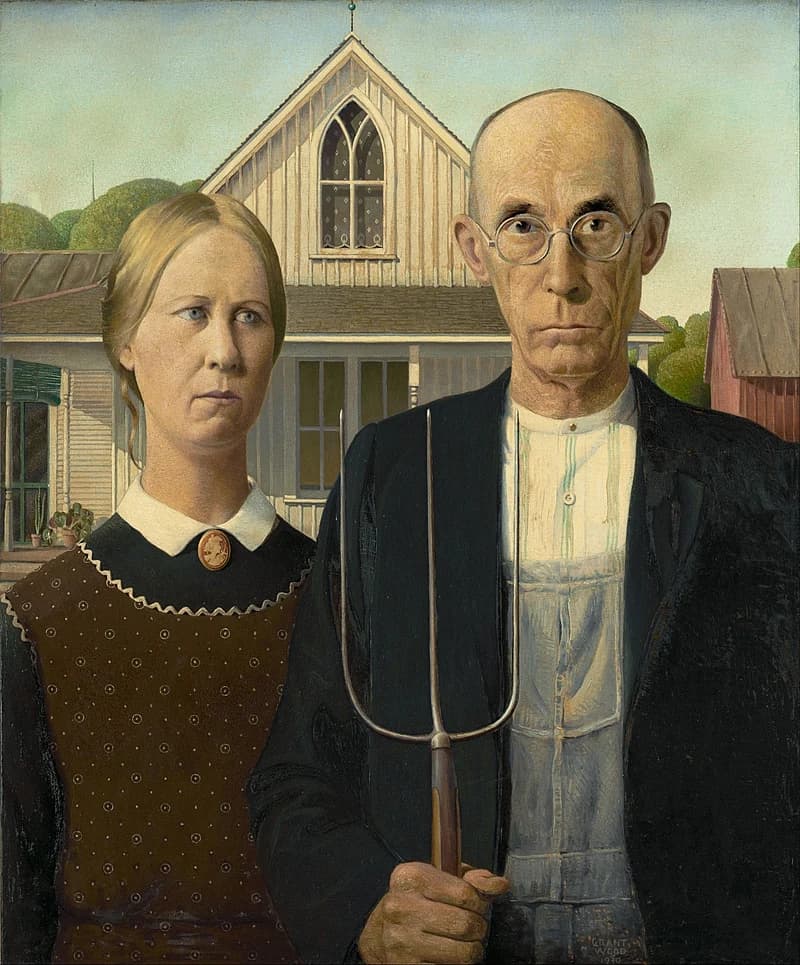
American Gothic, depicting a farmer and daughter (modeled by Wood's dentist and sister) before a Carpenter Gothic house in Eldon, Iowa, won him a $300 prize at its debut and instant national fame. The painting now hangs at the Art Institute of Chicago, where it remains one of their most visited works. Wood's other celebrated paintings include Daughters of Revolution, Stone City, Iowa, and Young Corn, all featuring the rolling hills and neat patterns of the Iowa landscape. He taught at the University of Iowa from 1935 until his death and published his artistic manifesto "Revolt Against the City" the same year. The Cedar Rapids Museum of Art holds the world's largest collection of his work. Wood died of pancreatic cancer in 1942, one day before his 51st birthday, leaving behind images of rural America that continue to define national identity.
Primary Genres
Notable Works by Grant Wood
2 paintings catalogued with museum locations
Museums with Grant Wood's Work
2 museums display Wood's works. Click any museum to see visiting info and the specific works they hold.
Related Artists
Other American Realism artists you might like





About Grant Wood
Wood led American Regionalism during the 1930s, a movement that championed realistic depictions of rural Midwestern life as an alternative to European modernism and urban subjects. Along with Thomas Hart Benton and John Steuart Curry, he wanted American artists to find inspiration in their own country rather than looking abroad.
Grant Wood's iconic American Gothic has been in the permanent collection of the Art Institute of Chicago since 1930, when it won a bronze medal and $300 prize at the museum's annual exhibition. The painting became an instant sensation and remains one of America's most recognized artworks.
Wood's sister Nan Wood Graham posed as the daughter, while his dentist Byron McKeeby modeled as the stern farmer. They never posed together. Wood spotted the Carpenter Gothic house in Eldon, Iowa, and imagined what sort of people might live there, leading to the painting's creation.
A 1928 trip to Munich to supervise stained glass window production exposed Wood to Northern Renaissance masters like Jan van Eyck and Hans Memling. Their precise technique, detailed realism, and smooth surfaces inspired him to abandon Impressionism for the sharp-edged style of his mature work.
The Cedar Rapids Museum of Art in Iowa holds the world's largest Wood collection with over 300 works. Major paintings also hang at the Art Institute of Chicago and Smithsonian American Art Museum. His birthplace in Anamosa, Iowa, operates as a museum and educational center.
Love Grant Wood's Style?
Explore art inspired by American Realism.
Browse Collection