Jan Toorop
Dutch·1858–1928
No Portrait Available
Jan Toorop (1858–1928) brought the exotic influences of his Javanese birthplace to European Symbolism. Born Johannes Theodorus Toorop in Purworejo, Java, in the Dutch East Indies, he lived on the island of Bangka until age nine before being sent to the Netherlands for schooling. He studied at Amsterdam's Rijksakademie and the Brussels École des Beaux-Arts.
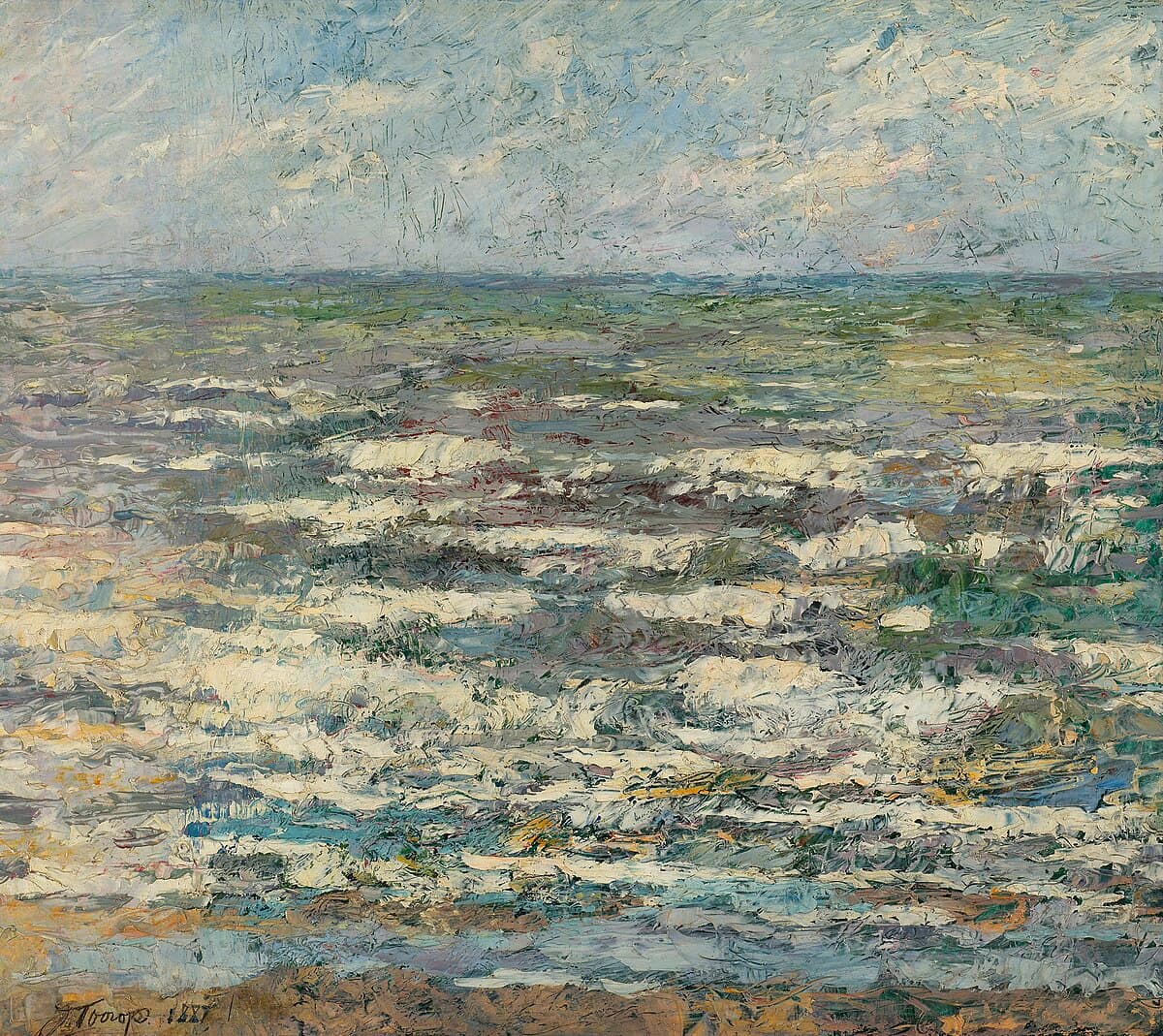
In Brussels, Toorop joined Les XX, the anti-academic group that included only four foreign members. He participated in nearly all their exhibitions between 1884 and 1893. His style evolved through multiple movements: Impressionism, Pointillism, and Symbolism. By the early 1890s, he developed his distinctive approach: sinuous Art Nouveau lines influenced by Javanese shadow puppets, willowy figures, and personal mystical symbols.
His masterpiece, The Three Brides (1893), epitomizes this fusion of Eastern and Western influences. Toorop lived for twenty years in Domburg, where he worked alongside Piet Mondrian, though each pursued individual styles. In 1905, he converted to Catholicism and began producing religious works. A committed social activist, he designed the poster for the first Dutch feminist rally in 1898. Around 1900, Toorop ranked with Van Gogh and Mondrian as one of the Netherlands' most important painters. His daughter Charley Toorop and grandson Edgar Fernhout also became artists. He died in The Hague in 1928. His work is celebrated at the Rijksmuseum and Kröller-Müller Museum.
Notable Works by Jan Toorop
2 paintings catalogued with museum locations
Museums with Jan Toorop's Work
2 museums display Toorop's works. Click any museum to see visiting info and the specific works they hold.
Related Artists
Other Symbolism artists you might like
About Jan Toorop
Toorop worked in Symbolism, Art Nouveau, and Pointillism at different career stages. He joined Les XX in Brussels and later experimented with Neo-Impressionist technique before converting to Catholicism in 1905 and focusing on religious imagery.
Major works are at the Rijksmuseum in Amsterdam and the Kröller-Müller Museum in Otterlo, which holds his masterpiece "The Three Brides." Dutch collections preserve his diverse output across multiple artistic movements.
His work combines Javanese influences from his Indonesian birthplace, including shadow puppet motifs and wayang patterns, with European Symbolist themes. These flowing, decorative lines and exotic elements create a uniquely hybrid style unlike any other European artist of his era.
Toorop was born in Purworejo, Java (present-day Indonesia), then the Dutch East Indies, in 1858. He lived on the island of Bangka until age nine before moving to the Netherlands, and his Southeast Asian heritage profoundly shaped his artistic vision.
The Three Brides (1893), held at the Kröller-Müller Museum, epitomizes his Symbolist style with three female figures representing spiritual, earthly, and satanic love. The work's sinuous lines and mysterious female imagery made it an icon of European Symbolism.
Love Jan Toorop's Style?
Explore art inspired by Symbolism.
Browse Collection